

Was Air Travel In The 1970s As Spectacular As Travelers Believe?
There's no way around the fact that most people view air travel as a means to an end at best, and an absolute drag at worst, unless you're willing to shell out the big bucks for a first-class experience. I've been a flight attendant for more than 10 years, and I've seen my fair share of uncomfortable situations. The amount of personal space allotted on planes has sparked a heated debate among today's travelers. Long security lines, paired with routine flight delays and cancellations, has everyone longing for the "Golden Age of Flying," which dates back to the 1950s, 1960s, and 1970s.
I've heard plenty of first-hand accounts from career flight attendants about how the modern air travel experience differs from when they first started out, and the changes typically aren't for the better. My own grandfather was a pilot for Eastern Airlines from 1954 to 1984, which was one of the biggest players in the aviation industry until it was permanently grounded in 1991. After listening to his stories, it's very clear to me that his work environment differed greatly from my own. From security measures – or a lack thereof all the way up through the 1990s – to seat sizes, to the way people dress, planes today hardly resemble the luxurious experience that only the wealthy could afford during the airline industry's true heyday.
Some of the most glamorous aspects of air travel, like dressing up as if for the red carpet, were actually on the decline by the time the 1970s rolled around. That being said, a flight back then was likely a far superior experience to flying in economy today, so read on to learn about how different your flight would have been 50 years ago.
Flying was a luxury experience in the 1970s
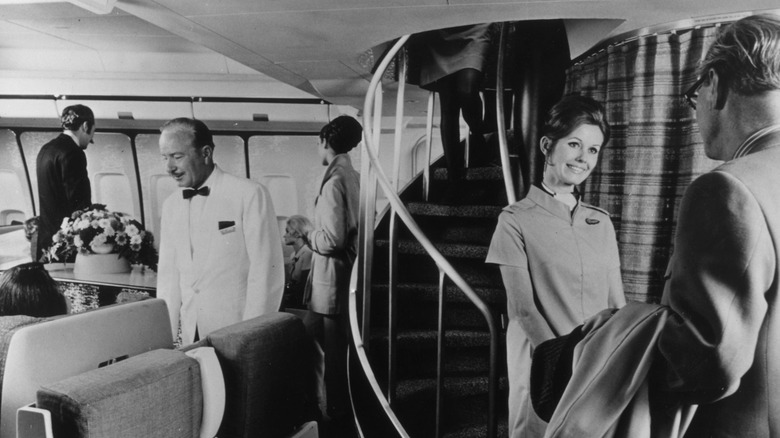
Was flying spectacular in the 1970s compared to today? It was certainly considered a real luxury experience due to the level of service that was provided, but it would cost you. The major amenities of past decades came in the form of fine dining and spacious seats, offering a more enjoyable overall experience. For example, the distance between seat rows used to range from 36 to 40 inches – today's average has shrunk to a cramped 28 inches.
You may be wondering what this has to do with ticket costs, and the answer is simple. Plane tickets during the Golden Age of Flying would often cost the equivalent of several thousand dollars today, making it possible for airlines to make a profit while filling fewer seats. Today's pricing reflects a longstanding shift toward the quantity of tickets sold, in an effort to make flying accessible to the masses, which began with the Airline Deregulation Act of 1978. Once airfares were no longer dictated by the federal government, airlines were free to utilize their own pricing structure, causing fierce competition. Airlines began adding more seats to stay profitable in the newly changing market.
While air travel today isn't exactly affordable, there are ways to work it into most middle class budgets, especially if you take advantage of these tips and tricks for finding deals on flights. Airlines now entice customers by offering loyalty programs that reward frequent fliers, and partnering with credit card companies that allow travelers to book flights with points they earn on everyday purchases. This budget US airline even offers an incredibly affordable, unlimited annual travel pass, making air travel far more accessible than it has been throughout aviation history.
Flights used to offer fine dining
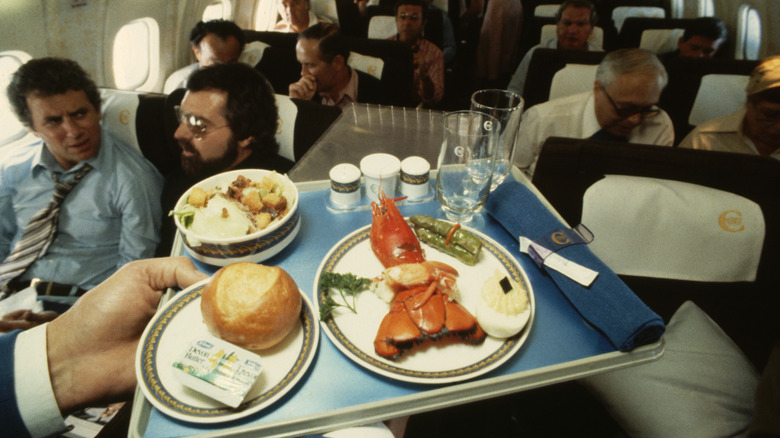
It may surprise you to learn that it was once standard for a full meal to be provided to all passengers. The concept of reheating pre-cooked meals in the air was introduced in the 1940s, and things snowballed from there until white tablecloths, glassware, and metal cutlery arrived. Airlines began to form culinary partnerships with top chefs, such as the one Pan American Airways had with Maxim's, a well-known Parisian restaurant. First-class passengers enjoyed hot hors d'oeuvres during cocktail hour, followed by steak and lobster served at real dining tables in the sky — a far cry from the cookies and pretzels offered today.
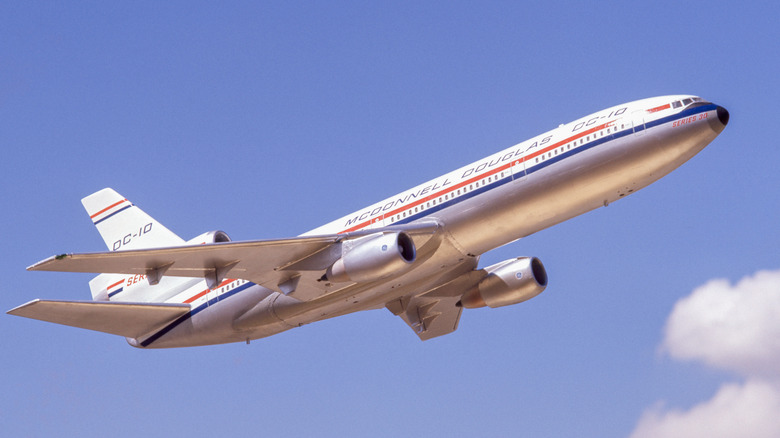
For example, had you flown on the McDonnell Douglas DC-10 wide body jet during a long-haul flight in the 1970s, you'd have been treated to a meal prepared out of sight in a lower galley, and delivered up to the cabin via an actual onboard elevator. Your meal would have included an appetizer, main course, bread and butter, and dessert, finished with your choice of coffee and liqueurs. Today, Hawaiian Airlines is one of the only US carriers that serves complimentary meals to all passengers on domestic and international flights. Most airlines offer complimentary snacks and drinks on shorter domestic flights, and may provide meal service on longer international trips.
People used to dress up more for flights
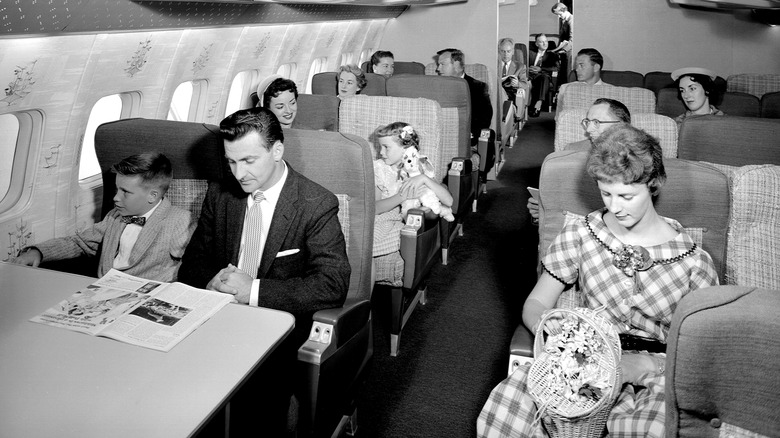
There was a time when people took pride in flying from one place to another, rather than treating it as a necessary evil, and the way passengers dressed for flights reflected that up through the 1970s. People showed up to the airport expecting to have a glamorous experience, and everyone looked the part, with women wearing their best dresses and men typically donning a suit and tie.
As a flight attendant, I fly anywhere from one to five days a week, and I can attest that, when it comes to clothing, times have certainly changed. Sweatshirts, sweatpants, and leggings are the norm — even a nice pair of jeans is more formal than what I'm used to seeing on a typical flight. While casual attire is typically well tolerated, offensive clothing is bound to get you flagged by the TSA. Not meeting appearance standards can lead to additional security screening, or you may be denied boarding altogether. The two biggest offences that I see are clothing items that have profanity, or people who are traveling to and from tropical destinations wearing swimwear. It's safe to say that things aren't like they used to be.
Safety restrictions were minimal in the 1970s
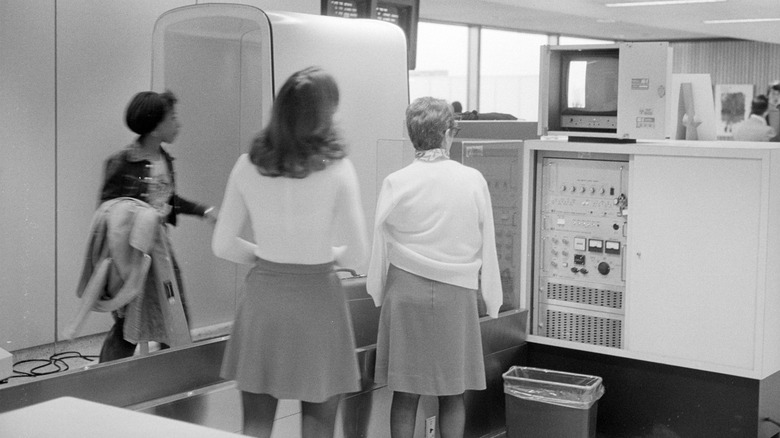
One thing that makes flying more tedious today is the security restrictions. Rules for what you can bring in your luggage can be confusing, and eagle-eyed TSA agents are constantly on the lookout for red flag behaviors, which can make the experience of flying even more stressful. Picture a time where none of this was necessary, when getting on a flight was practically as easy as taking a bus— you've just imagined what it was like to fly in the 1970s.
Safety measures did begin to increase in the wake of several hijacking incidents in the 1960s. Metal detectors and x-ray machines became commonplace, but the strict standards of today did not begin until the event that changed the aviation industry forever. People who are newer to flying may not realize there was a time not so long ago when the Transportation Security Administration (TSA) did not even exist. It was created in response to the terrorist attacks of 9/11 to prevent similar events in the future and establish public trust in airport security.
An obvious safety hazard present on airplanes in the 1970s was the ability to smoke. In-flight smoking was commonplace during this time and wasn't banned until the late 1980s. All in all, the relaxed experience of flying in the 1970s is not something that can be achieved with an economy ticket on today's commercial airlines. If you want your next flight to resemble anything close to what used to be the norm when it comes to comfort, you'll have to save up for a first class experience — or better yet, a private jet.