

Should You Copy Flight Attendants And Sit On Your Hands During Takeoff And Landing?
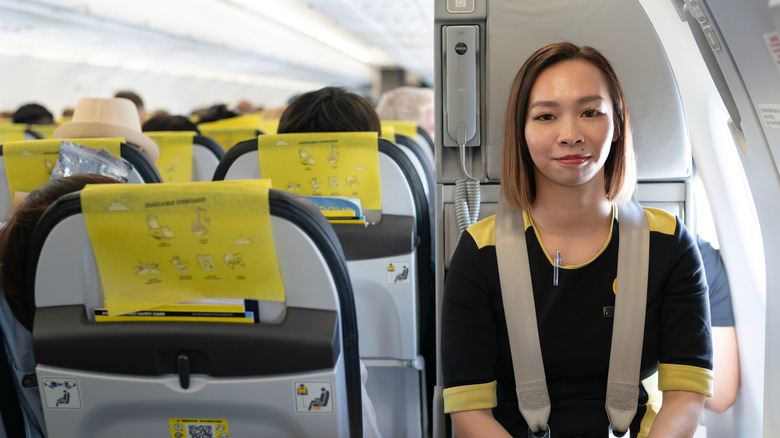
The next time your flight attendants complete the pre-flight safety check, take a moment to watch how they prepare for takeoff. If you have a clear view of the jump seat — the seat that crew members sit in during takeoff and landing — you'll see the flight attendants sitting in a "brace position," with both feet flat on the floor, body upright, and hands tucked under the thighs. This position is standard protocol across all airlines. It may seem unusual, but it allows crew members to remain alert and prepared for emergencies. It also keeps them safe during turbulence or unexpected impact.
There's no need for concern when you see flight attendants in the brace position, and passengers are not required to mimic it. Passengers must keep their seatbelts buckled, trays stowed, and seats upright, but can otherwise sit normally during takeoff and landing. Despite the frustrating lack of legroom, it's also important to place your personal belongings under the seat in front of you.
Why the brace position is essential for flight attendants
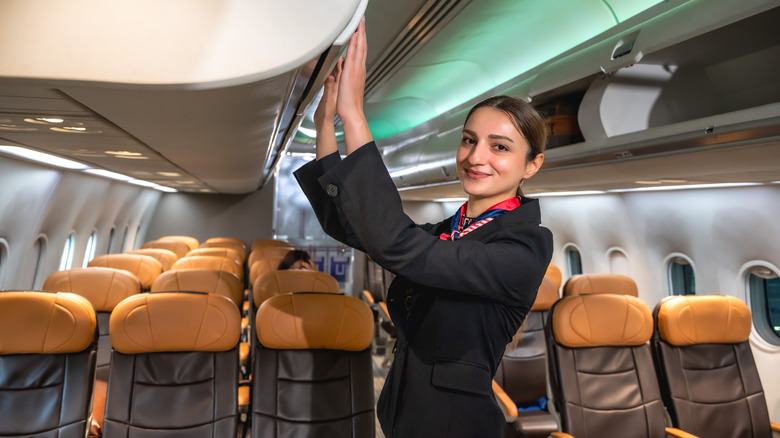
Anyone who has been on a plane is familiar with the organized chaos of boarding. Crew members are busy securing overhead bins, helping passengers find their seats, and taking drink orders, a request that flight attendants can't stand during boarding. When flight attendants get seated for takeoff, they run through a mental checklist of safety protocols — the brace position keeps them in a state of readiness so they can spring into action if necessary.
A key component of the brace position requires crew members to sit on their hands. This simple action helps prevent accidental injury to their hands, so that they can readily assist passengers with oxygen masks, life vests, and other emergency needs. Keeping their feet firmly planted on the floor is another way to avoid injury. If the plane were to stop suddenly, the force could lead to strain, sprains, and other injuries. The brace position helps the body absorb the impact more effectively, reducing the risk of harm. Flight attendants may also sit this way during turbulence. Passenger safety is a top priority, but in order to keep others safe, they must take the appropriate steps to ensure they remain safe, too. To make your flight attendant's job a little easier, follow the rules before they have to ask — and avoid this common (and annoying) beverage request at all costs.