

This National Park In Wyoming Boasts Stunning Views Of Dramatic Landscapes
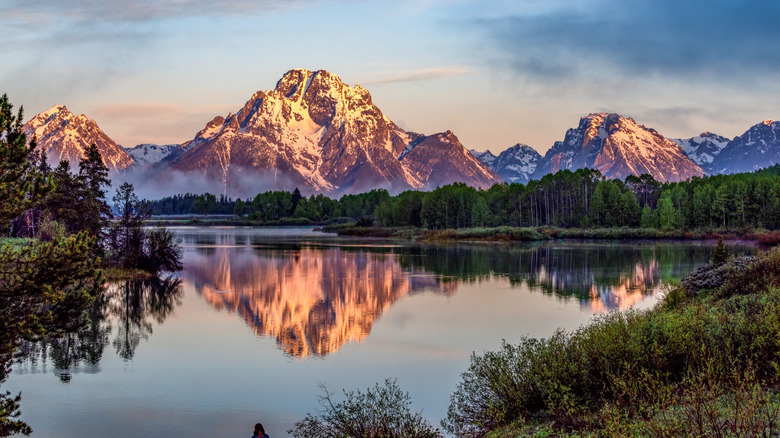
When you think of the best US national parks for hiking, it's worth considering Grand Teton National Park. Located in western Wyoming, the park covers 485 square miles of beautiful scenery, from alpine lakes to granite peaks. Its tallest summit, the Grand Teton, rises 13,770 feet from the valley below. The park is located roughly 133 miles from Yellowstone Park, the world's first national park and a mesmerizing destination for nature lovers.
Unlike most mountain ranges that ease into gentle foothills, the Tetons shoot straight up from the valley of Jackson Hole, creating a striking skyline. It was these same jagged, snow-capped peaks that stopped French explorers in their tracks as they crossed western Wyoming, compelling them to name the range "Les Trois Tétons," which means "the three breasts." These rugged mountains and dramatic landscapes are also home to wildlife such as bison, pronghorn, and elk, while the park's pristine waters provide a rich opportunity for fishing, boating, and other water-based activities.
Grand Teton is the only national park with an airport within its boundaries — the Jackson Hole Airport, which provides visitors quick access to the park's entrance and major attractions. While car rental options are available at the airport for added convenience, note that flight options may be limited. That said, less than five hours away is Salt Lake City International Airport, an underrated airport with the highest on-time departure rate.
Things to do at Grand Teton National Park
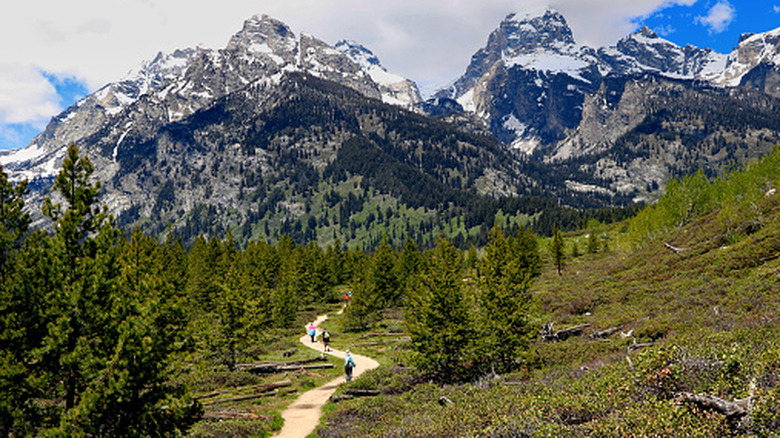
There is no better way to experience the park's towering peaks than by mountaineering or hiking. There are over 250 miles of trails to explore, ranging from beginner-friendly paths to strenuous climbs, catering to every level of hiker. The 39.8-mile Teton Crest Trail is a must for experienced hikers. Since the trail takes more than 24 hours to complete and sits at elevations of no less than 8,000 feet, breaking the hike into days through overnight backpacking is the best way to complete it. The trail takes visitors past cold streams, unbelievable wildflower fields, and spectacular views of the surroundings. Note that permits are required for backcountry camping, which can be obtained at the Jenny Lake Ranger Station from July through September.
The Cascade Canyon Trail is another popular trail, accessible via boat shuttle on Jenny Lake. The start of the hike features a breathtaking waterfall, which then leads to spectacular views over Jenny Lake from the top of Inspiration Point. The Taggart Lake hike is equally rewarding, offering spectacular views of the Tetons before ending at a beautiful lake where visitors can swim.
There are numerous adventures for those looking to get active beyond the trails. Tour companies like Barker-Ewing Scenic Float Trips offer guided whitewater rafting excursions on the Snake River. Or, cool off on a hot day at one of the park's many lakes, including Jenny Lake, Leigh Lake, String Lake, Colter Bay, and Taggart Lake. For wildlife enthusiasts, spotting elk, eagles, river otters and other creatures in their natural habitat is an experience unlike any other.
What to know before visiting Grand Teton National Park
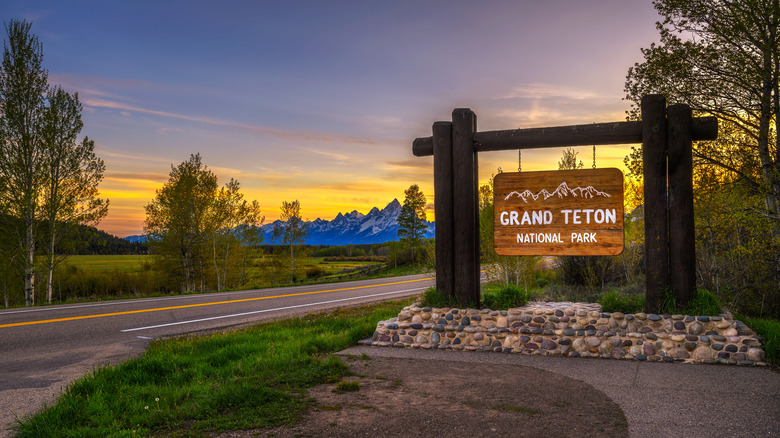
Grand Teton National Park is open all year round, and an entrance fee is required. The standard fee for a seven-day pass is $35 per vehicle, $30 for motorcycles, and $20 for people entering on foot, on skis, or on a bike. There are also annual passes, which cost $70 and are valid for one year through the month of purchase. The annual pass provides entry to the holder and their passengers in a single vehicle.
Those who wish to stay overnight will find a number of lodging options in Grand Teton National Park. Some of these options are the Jackson Lake Lodge, Jenny Lake Lodge, and Colter Bay Village, among others. It is recommended that you book lodging reservations as soon as possible, as spots often fill months in advance. Although the park is always open, the most popular months to visit are May through September, as all roads, facilities, and programs are operational during the busy summer season.
Higher altitude often brings rapid temperature fluctuations and changes in weather, so it is important to prepare accordingly. When packing for a trip to Grand Teton National Park, don't forget to include thermal layers, a waterproof shell, and sunscreen, as UV rays are much stronger here. It's also advisable to get gas before entering, as fuel tends to be cheaper outside of the park's borders. If you plan to camp, add this hack to your routine to stay warm in your sleeping bag.