

These Deadly Diseases Are Lurking On Cruise Ships. Here's How Passengers Can Stay Safe
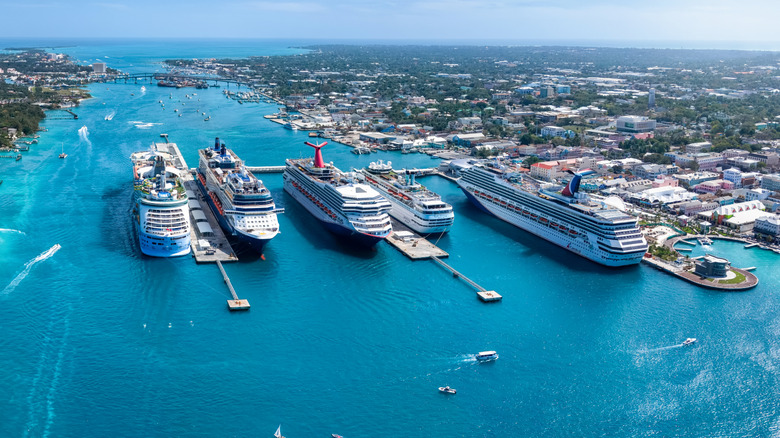
Let's start with some positive news on a morbid topic: Diseases and viral outbreaks aren't likely causes of death on cruise ships; they are far less likely to cause death on board than falls, physical trauma, heart attacks, or natural causes, according to a 2020 study published in the International Journal of Travel Medicine and Global Health. However, there are still instances where a deadly disease or illness will wreak havoc on a ship, as cruises can speed the transmission of diseases due to shared proximity and ease of introducing a new pathogen on board.
To limit this, twice a year, the U.S. Centers for Disease Control and Prevention (CDC) conducts strict inspections on cruise ships regularly utilizing U.S. ports. Further, upon returning to U.S. waters, the CDC requires all cruise ships entering U.S. ports to report all deaths and serious illnesses, including cases of gastrointestinal illness, to the agency in the interest of public health. If 3% or more of the passengers and crew have been sick on board at some time, the CDC will then conduct an investigation and log the ship after arriving at port. Moreover, the CDC also requests reports of individual cases of measles, tuberculosis, whooping cough, and strains of the flu that can cause a pandemic. These can be found in the Federal Register.
While tens of millions of cruisers have a happy and healthy journey, we've found some of the most common deadly diseases on cruises and added strategies to help you remain safe and healthy on board. Have fun and let loose, but note that some common behaviors on cruises can make you more likely to get sick or suffer an accident, per the CDC.
Legionnaires' disease

A private evening soak in your balcony hot tub can be a perfect way to cap off an evening at sea. However, private hot tubs across multiple cruise lines have occasionally been a breeding ground for Legionella bacteria that cause Legionnaires' disease, a severe form of pneumonia that can result in lung and kidney failure, and may be deadly if left untreated. Per the CDC, Legionnaires' disease causes death in approximately 10% of people who are infected. It is not transmissible from person to person; rather, Legionella bacteria can grow in water ranging from 77 to 113 degrees Fahrenheit, which are then inhaled through steam or water droplets. Perhaps surprisingly, even if there are Legionella bacteria present, healthy people will likely not be sickened. However, smokers, the elderly, and those who suffer from a chronic illness are at risk for contracting the disease, per Johns Hopkins Medicine.
In 2026, two passengers who sailed on the Norwegian Encore were stricken with Legionnaires' disease. As of February, the transmission source had not been identified. Additionally, between November 2022 and June 2024, two unnamed cruise ships reported 12 total cases of Legionnaires' disease stemming from private hot tubs after CDC investigations. Ten cruisers were hospitalized, though all survived. Despite both cruises complying with the CDC's requirements for sanitizing private hot tubs, Legionella bacteria still grew on both ships, and "in a single location" in the water system of one of the vessels. All private hot tubs were closed until the CDC reviewed results indicating the bacteria were destroyed. That might've meant even bigger crowds than usual at those small, often disappointing cruise ship pools.
Measles
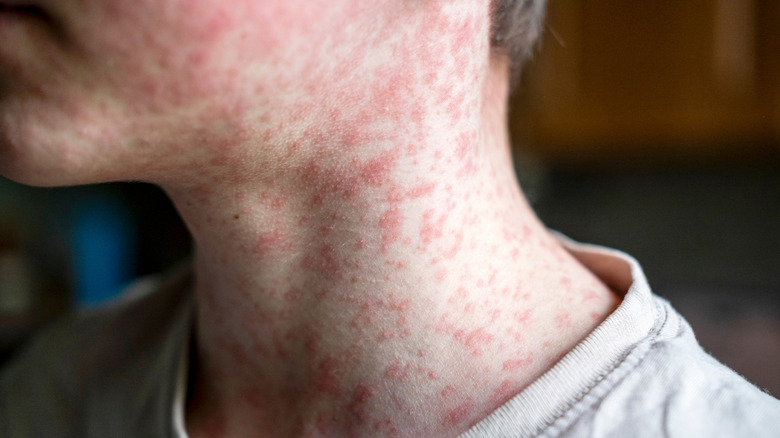
Measles is a highly infectious virus with a low death rate (between one and three in 1,000, according to UChicago Medicine). However, a single measles outbreak on board or in a port of call can put all unvaccinated passengers' health and all cruisers' trips in jeopardy. In 2019, the Freewinds, a cruise ship run by the Church of Scientology, reported a passenger with measles on board in St. Lucia; after St. Lucian officials heard of the outbreak, all 300 passengers were required to quarantine on board. Since the disease is so contagious, quarantines can last a minimum of three weeks, depending on local health regulations.
Fully vaccinated passengers, per the CDC, are largely immune for life and should have little concern, even though the airborne virus can remain transmissible for up to two hours in enclosed quarters, potentially exposing thousands of passengers to the virus. However, unvaccinated passengers should be well aware of the risks of contracting or spreading the disease. Tell-tale signs of measles include a spotty, irregular rash that spreads from the face throughout the body and a cough, though these may appear several days after being infected. One of the long-term dangers of contracting measles, according to Johns Hopkins University, is a weakened immune system for years.
Though the vast majority of American children have been vaccinated against the virus in the last several decades, outbreaks are flaring up across the U.S. Moreover, measles is still prevalent in other parts of the world and remains a risk to people – especially young children – who have not received a measles (MMR or MMRV) vaccine.
Meningococcal disease

Neisseria meningitidis bacteria cause meningococcal disease, a rare, life-threatening bacterial infection that, per the Cleveland Clinic, can appear similar to the flu or a common cold, as symptoms include a fever, headache, or stiff neck. However, the disease can progress rapidly and cause death in a matter of hours. Per the CDC, meningococcal disease is most commonly found in crowded spaces such as dormitories or barracks. In the past, crowded cruise ships have also been the site of meningitis outbreaks that have caused death to crew members and life-altering complications to infants, who have a higher risk of contracting the disease due to weaker immune systems.
The CDC reports that most meningococcal disease cases on board cruise ships strike crew members; in October 2012, four crew members working in the kitchen on an MSC cruise were stricken with the disease, causing the death of one. In this particular outbreak, no passengers were sickened, and they were provided with antibiotics.
Though crew members are more likely to be affected due to often coming from countries where vaccination rates are lower, babies, teens, and smokers are also at a higher risk. In February 2020, a 9-month-old infant was stricken with meningococcal meningitis on a Royal Caribbean ship and had to undergo a triple amputation to save her life. Cruising or not, if you or loved ones will be staying in close quarters with others, the CDC recommends vaccinations as the best form of prevention for the disease, especially for youth and others who are at risk.
Influenza
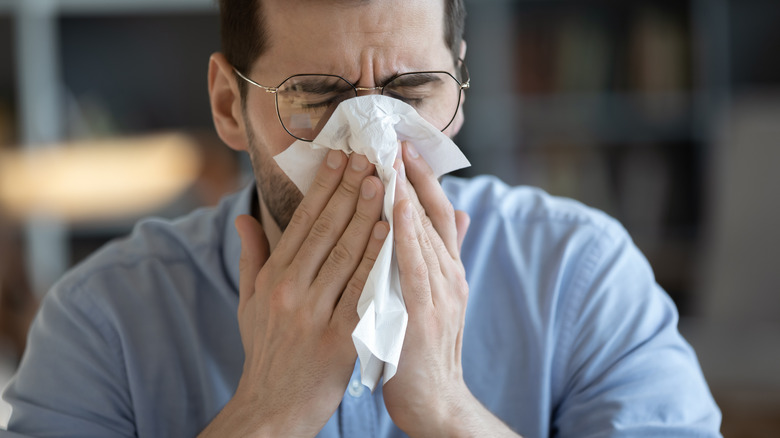
According to the CDC, influenza is one of the most common (and preventable) diseases on cruise ships. Even when it's not flu season in the U.S., other parts of the world, including tropical areas and the Southern Hemisphere, may be dealing with local flu outbreaks. Cruisers coming from or going to these areas can pass strains of influenza A and influenza B around the boat in a matter of days, due to the viruses living on hard surfaces and easily spreading through droplets in the air.
Per a 2015 study published in the Journal of Travel Medicine, "respiratory illness accounts for up to 29% of recorded illnesses on cruise ships, and cruise ship influenza outbreaks have been previously reported worldwide." A major influenza outbreak occurred in 2000 on board a cruise between Sydney and Noumea, New Caledonia. Two out of 1,119 passengers died from the disease, and 310 reported having symptoms of influenza. In a study, researchers found that this bug was likely not hampered by an annual influenza vaccine. Even if you are vaccinated, be sure to follow other precautions to remain healthy, including washing your hands after touching doorknobs, buffet tongs, and elevator buttons. And spend time outside catching a few rays — a 2021 study of the 2009 H1N1 flu epidemic found that vitamin D can protect against respiratory infections.
Be careful of these common life-threatening conditions

Whether it is due to a person's age, preexisting conditions, or forgetting to take medicine on schedule, heart attacks do happen on cruise ships. According to the aforementioned 2020 study, cardiac incidents (89 total) were the second most common cause of death on cruises between 2001 and 2019, behind natural causes (98 total). The CDC reports that 80% of onboard deaths are from cardiovascular events and recommends that travelers who do have medical conditions keep essential medical records and their doctor's information handy in case of an emergency. If a passenger does suffer from a medical emergency, major cruise lines have on-board medical staff, pharmacies, and urgent care-like facilities to stabilize a patient before they can be evacuated off the ship by helicopter if needed.
Norovirus is incredibly common, though rarely fatal on cruise ships, and can quickly wreck the best-laid plans and shore expeditions on squeaky-clean ships. The Holland America Rotterdam, which has earned high scores on its CDC inspections, suffered from a norovirus outbreak in 2025. The ship may be clean, but you can still get sick from something brought on board or another sick passenger or crew member. When packing your medical kit, be sure to include over-the-counter stomach medicines, even if you have a carry-on. If you plan to fly to your departure port, note that the TSA has also updated its rules on toiletries and medicines in carry-on baggage.
Methodology
To craft this article, we relied heavily on reputable medical sources, including the CDC's website, local health department fact sheets, journal articles retrieved from the National Library of Medicine, and websites from world-renowned hospitals (including the Cleveland Clinic and Mayo Clinic) and medical schools (including the University of Chicago, Harvard Health, and Johns Hopkins University). Moreover, we have perused data from the CDC, the cruise industry, and major news outlets to address some of the deadliest common diseases on cruises. This article is not medical advice. If you plan to take a cruise, be sure to consult your doctor to better understand the risks as well as to obtain official medical advice to help you remain healthy and stay safe on board.