

California's Most Popular Wine Region Is Full Of Vineyards And Scenic Views
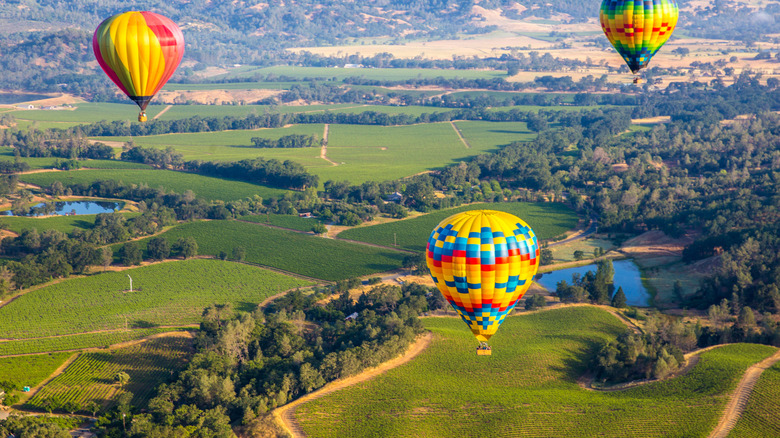
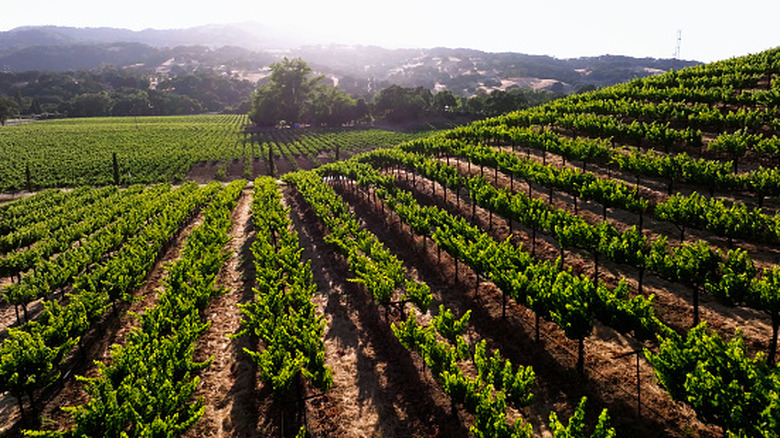
Just north of San Francisco (and only a one-hour drive from California's capital of Sacramento) is one of the world's most famous wine-producing regions: Napa Valley. Most travelers come to visit the 400+ wineries while admiring the region's expansive rolling hills. You'll be welcomed year-round, as the region's climate is mild. However, the peak season is between August and October. It's around this time that the grapes reach full, heavy ripeness across the area's 16 different sub-regions and annual harvest celebrations take place.
Napa Valley is a fertile area that sits between the Mayacamas Mountains in the west and the Vaca Mountain Range in the east. The Napa River gently flows down the middle, creating small sanctuaries and ecosystems for diverse flora and fauna. Cottonwood and willow trees grow alongside these riverbanks, and animals ranging from beavers to great blue herons call it home. Despite being close to major population centers, Napa Valley feels distinctly set apart, in the best way. Vineyard-covered hills, distant mountains, small towns, and agricultural land can be seen for miles around.
Understanding the valley's layout is useful when planning a trip. Towns such as Napa, Yountville, St. Helena, and Calistoga each have distinct atmospheres, dining scenes, and accommodation options. Together they form a corridor of vineyards, restaurants, and tasting rooms that attract millions of visitors each year, making it California's most popular wine region. Driving is the most common way to explore once you arrive, as the valley stretches roughly 30 miles north to south along Highway 29. Public transportation options exist but are limited compared with major urban areas. That said, this region is also a total wonderland for cyclists. The two-lane country road, the Silverado Trail, offers bikers a path from Napa to Calistoga with full immersion into the valley.
Wineries and other must-see Napa Valley attractions
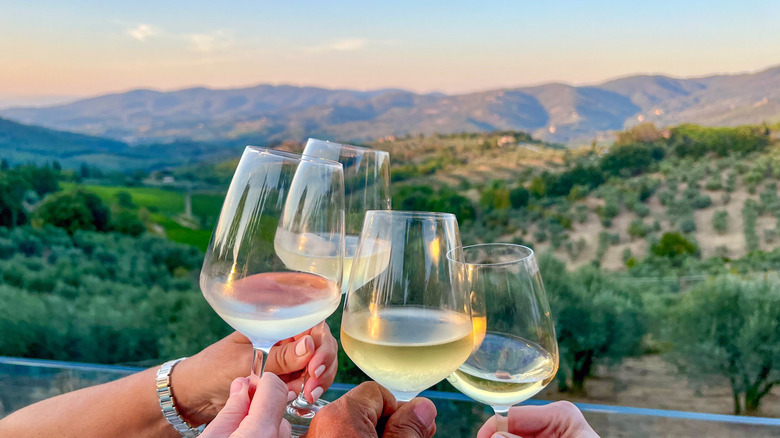
Wine tasting is the central activity in Napa Valley, and many visitors plan their trip around a handful of notable estates. One widely recommended stop mentioned in our list of California's top tourist hot spots is Castello di Amorosa – a full-scale medieval-style castle winery near Calistoga. Built with stone imported from Europe and featuring towers, courtyards, and underground cellars, it offers guided tours and tastings that combine architecture with winemaking. The winery is typically open daily, though reservations are required for tours and tastings.
Another major attraction is the Napa Valley Wine Train, which departs from downtown Napa. The restored vintage train travels through vineyard landscapes while serving multi-course meals paired with local wines. Trips usually last between two and three hours, with options ranging from brunch excursions to upscale dinner service. The train provides a convenient alternative for travelers who prefer not to drive between wineries.
Beyond wine, the region offers outdoor experiences that highlight the fairytale atmosphere. Hot-air balloon rides provide an unparalleled perspective on the valley. Flights typically depart shortly after sunrise, when winds are calmest, and drift over vineyards and rolling hills before landing for a post-flight breakfast. Because launches occur early in the morning and are weather-dependent, travelers should allow flexibility in their schedule. There are also abundant trails nearby for those seeking to go further into nature. For example, Bothe-Napa Valley State Park features hiking trails through redwood groves, creeks, and picnic areas.
Accommodations and best times to visit Napa Valley
Napa Valley offers a wide range of lodging, from luxury resorts to smaller inns and boutique vacation rentals. High-end properties such as spa resorts and vineyard estates often charge thousands of dollars per night. Some boutique hotels and bed-and-breakfasts may cost less, but keep in mind that this is generally a luxury destination. If you're on a budget, a day trip from San Francisco, one of the most beautiful cities in the U.S., is totally doable.
The most popular time to visit is late summer through early fall. During this period, vineyards are active, tasting rooms are busy, and the landscape is filled with ripening grapes. However, this is also the most expensive and crowded time, with accommodation prices at their highest. Spring offers milder weather, blooming mustard flowers between vine rows, and somewhat lower rates, making it a favorite among repeat visitors. Surprisingly, Napa Valley is also one of the best winter destinations in California for a weekend getaway. It tends to be quieter, with fewer crowds.
Packing appropriately can significantly improve the experience. Even in summer, mornings and evenings can be cool due to the valley's proximity to the coast. Layered clothing is super useful. Comfortable shoes are important for winery tours and walking through vineyards, while sunscreen, sunglasses, and hats help protect against intense midday sun. Many visitors spend their days moving between tastings, meals, and viewpoints. Because distances between towns are short, it is possible to experience multiple parts of the valley within a single weekend, though a longer stay allows for a more relaxed pace and deeper exploration of the region's food and wine culture.