

Rick Steves Says To Avoid Europe's Biggest Tourist Traps (And Where To Go Instead)
Travel guru Rick Steves has a whole lot of tips on what to see, what to eat, where to stay, and what to do while in Europe — whether that be when to visit to make the most of your trip or tips for eating like a local in Europe. As you'd expect from a bona fide Europe travel expert, Steves also has a variety of recommendations on the opposite — as in, what not to do and where not to go. As he notes on his website, RickSteves.com, "It's my job to sort through all the travel-industry superlatives and 'top ten' lists. Readers naturally want to know the Best, but it's just as important to know the Worst."
In this list, we'll cover 12 destinations the travel guru recommends you should skip, whether they suffer from overtourism or simply aren't worth your money, and where you should go instead — as recommended by Steves, other travel experts, or from our own experience. However, you do you, and form your own opinions about the destinations you visit. Perhaps Steves himself says it best: "Go ahead and disagree. Don't let any travel writer limit your freedom to find your own ultimates."
Instead of the Ring of Kerry, visit the Dingle Peninsula (Ireland)
Killarney and the great Ring of Kerry are some of Ireland's most famous sights — but unfortunately, some consider them a little too famous nowadays. Rick Steves is not fond of Killarney, in particular, and considers it one of the worst tourist traps in all of Europe, noting that "The town is a sprawling line of green Holiday Inns and outlet malls littered with pushy shoppers looking for plastic shamrocks" (via RickSteves.com). Still, one local on Tripadvisor notes that while Killarney's "town centre is a bit brash ... for scenery and tours it's perfect, especially without a car."
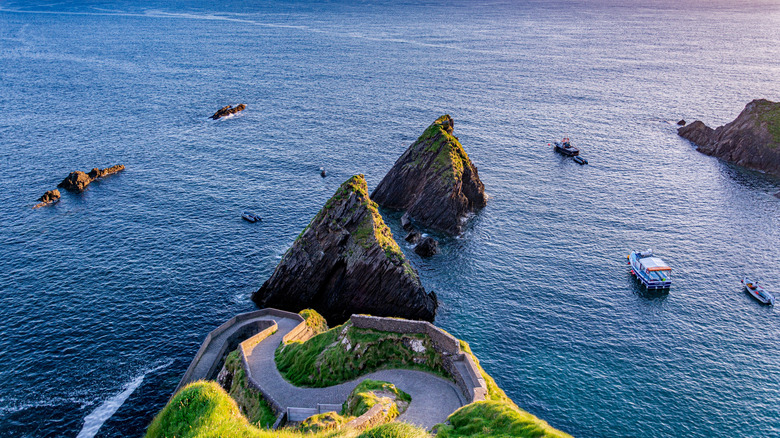
However, the famously scenic Ring of Kerry, from which Killarney is the jumping-off point, also suffers from an excess of tourists (and tour buses). Luckily, there are charming towns and gorgeous drives all along Ireland's western coast, including the craggy coastal drive around the Dingle Peninsula. The fishing town of Dingle, while no longer as off the beaten path as it once was, is still the delightful Irish seaside village of your dreams, complete with live-music pubs and ancient ruins.
Instead of Land's End, visit John o' Groats (United Kingdom)
England's Land's End, the (supposed) last point in Britain before America, is not worth your time. As Rick Steves says on his website, what "should seem like a desolate, rugged place" is actually a "tacky tourist trap where greedy businesses have chewed up whatever small bit of charm or authenticity this place might once have had. ... Come here only if you want to be able to say you've been to Land's End. (Consider lying.)" Locals agree, with one noting on the Reddit thread r/AskEurope, "Land's End has a very dilapidated funfair vibe."
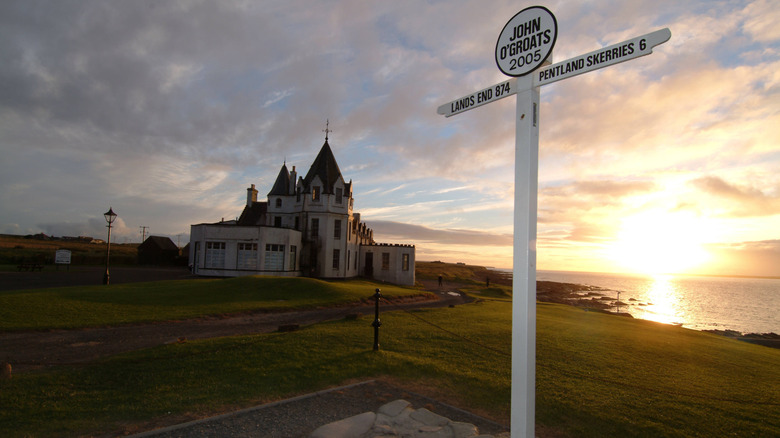
Still, if you're craving an epic destination like this where you can feel as if you're on the edge of the Earth while still in the British Isles, consider visiting Scotland's John o' Groats, Britain's most northeasterly point (on the mainland). While also touristy, it's home to some of Scotland's most incredible scenery, and getting there will take you through the famous Scottish Highlands and their many rugged charms.
Instead of the Black Forest, visit Bavaria (Germany)
Germany's Black Forest is legendary, but the misty, dark forests of lore are hard to come by these days. It's especially disappointing to many Americans, to whom it seems like an average forest — and hey, they've seen bigger. According to Rick Steves, "Germany's famous Black Forest disappoints more people than it excites. If it were all Germany offered, it would be worth seeing." In other words, Germany is a powerhouse, so save your limited time for some of the other amazing attractions.
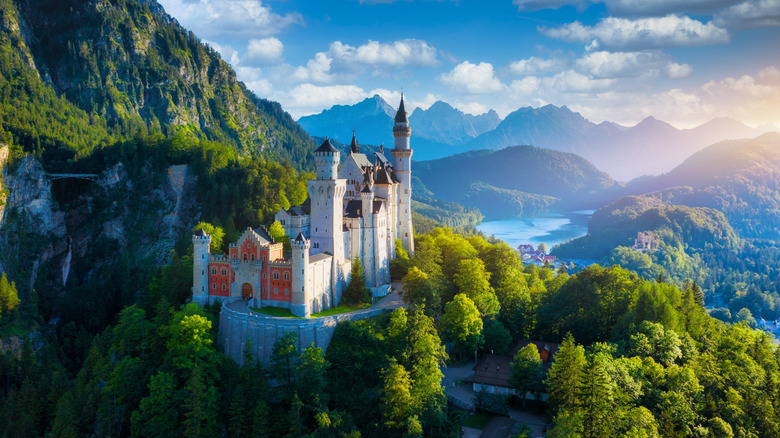
So, where to go instead, especially if you're on the hunt for fairy-tale forests? Try Bavaria. While Germany's Bavaria is certainly a favorite for tourists, it still manages to retain an authentic feel (plus, it's straight-up gorgeous). Bavaria is also home to the lovely Rothenburg ob der Tauber, a well-preserved medieval town that's an unexpected tourist trap Rick Steves absolutely loves. Outside of Rothenburg, there are dozens of castles and villages, endless Bavarian charm, and plenty of off-the-beaten-path destinations for those hankering to explore, including the famous Neuschwanstein Castle, creation of the Mad King Ludwig. Although this is also a tourist favorite, many still agree it's worth visiting, including one traveler on r/AskEurope: "Neuschwanstein from the Marienbrücke is unbeatable ... It probably has the most impressive setting of any castle in Europe."
Instead of San Gimignano, visit Certaldo (Italy)
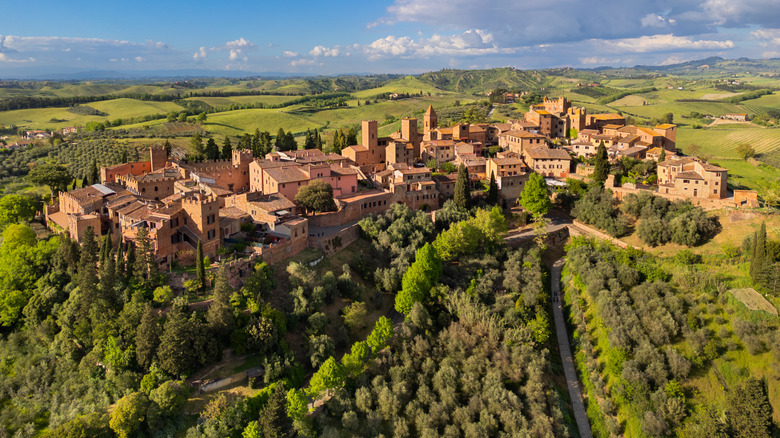
The region of Tuscany is certainly one of Italy's top attractions for tourists, and as a result, it can get crowded. This is especially true in the lovely towered city of San Gimignano, one of Tuscany's most famous towns. In addition, much of the town is what Rick Steves calls "faux medieval," as it was reconstructed in the 19th century. He continues, saying, "Locals seem fixated on tourist dollars," and that tour buses are a common sight, leaving it with a distinct "tourist-trap feel." It's worth noting, however, that Steves doesn't necessarily think you should skip San Gimignano, but that it's more worth a stop if you're staying the night to enjoy the streets after the tourist buses depart. One local on the Reddit thread r/europe agrees: "I came to tell people to avoid San Gimignano. ... it is such a tourist trap compared to the other small towns in Tuscany which actually function for the locals and have good food at normal prices (with less towers)."
For a more authentic medieval hilltop village, consider Certaldo, another Tuscan gem with just as many charms and fewer crowds. Like San Gimignano, Certaldo is well situated between the bigger hubs of Florence and Siena, but its medieval core dates back to the 12th century.
Instead of Costa del Sol, visit Costa Brava (Spain)
Spain has a lot of must-see tourist attractions for first-time visitors, but unfortunately, the Costa del Sol is not one of them. The Costa del Sol tends to be pricey and charmless, full of "concrete, pollution, ridiculous prices, and traffic jams," and "anything resembling a quaint fishing village has been bikini-strangled and Nivea-creamed," according to Rick Steves. There are the occasional hidden gems, like Almuñécar near Granada, but they are reportedly few and far between.
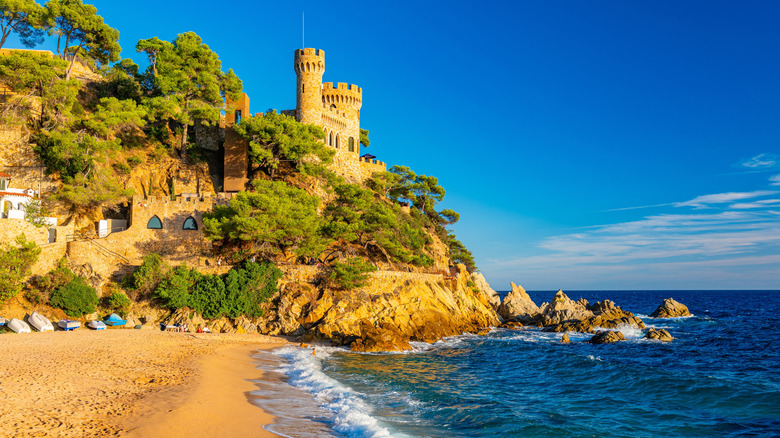
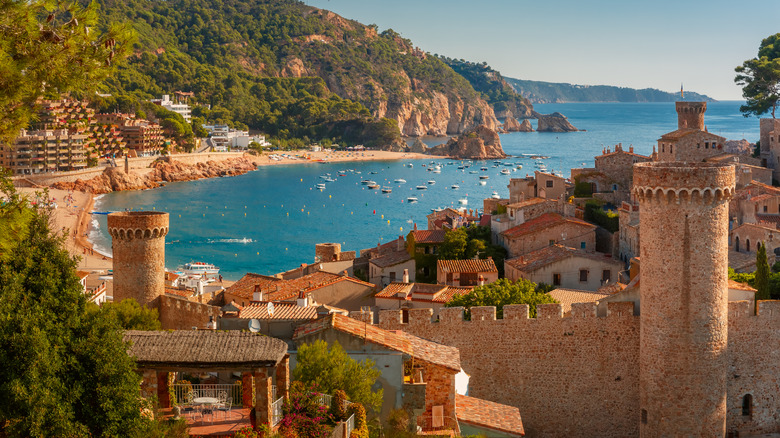
No worries if you're still hoping to get a dose of some of that incredible Spanish sun. Instead of the Costa del Sol, head north to the lesser-visited region of Costa Brava. Classically Spanish villages, many with a castle or two, line the picture-perfect water, all along the coast from north of Barcelona to France. Consider towns like Tossa de Mar, known for its beautiful old town, long beaches, and stunning fortress, or the former Salvador Dalí retreat of Cadaqués.
Instead of a torture museum, visit a cemetery
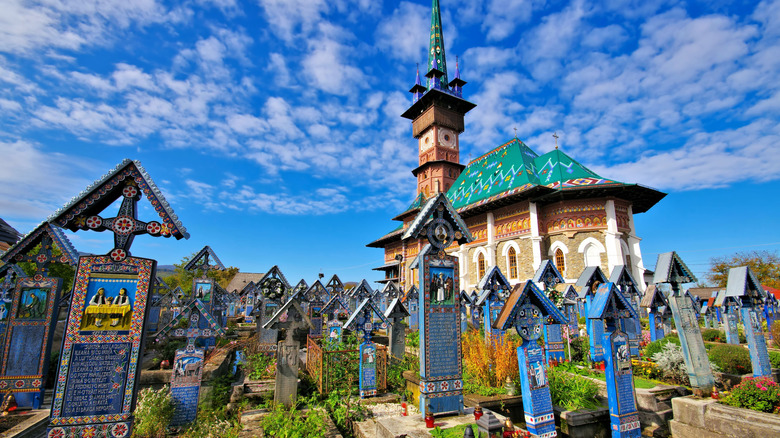
Torture museums are becoming bread-and-butter for many a European town with a medieval center — but rarely are they worth the price of admission, with Rick Steves noting that most torture museums are "hokey rip-offs" without authentic artifacts. Rather, if you're looking for spooky vibes, visit a cemetery instead. Many cemeteries throughout Europe are gorgeous parks full of impressive history, in addition to being a resting place for the dead. Steves considers visiting a cemetery one of the most unique ways to add some history and flair to your trip.
Europe's cemeteries also provide the full scope of experience, with underground catacombs (such as in Rome and Paris) to crammed Jewish cemeteries to grand mausoleums in cathedrals. There are churches made of bones in an artistic (and undoubtedly macabre) tribute to the dead, haunted castles, buildings full of ornately painted skulls, and abandoned graveyards near crumbling churches. Cemeteries and burial grounds in Europe provide an authentic experience, a peek into both the present and past, without the overpriced cost of admission into a museum that's somehow the same wherever you go.
Instead of Geneva, visit Lucerne (Switzerland)
Geneva, Switzerland, is well known throughout the world, and it's a major thoroughfare for visitors to the country. However, outside of the lake, your time is better spent elsewhere in this country. As Rick Steves notes on his website, "Geneva, one of Switzerland's largest and most sterile cities, gets the 'nice place to live but I wouldn't want to visit' award."
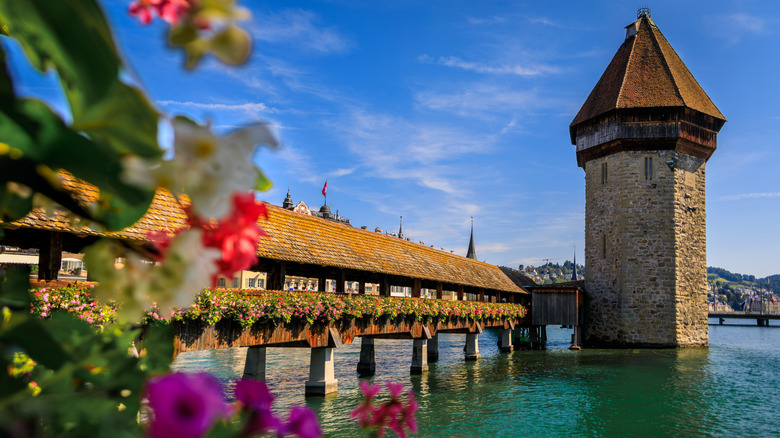
If you're still hankering for a lakeside city in Switzerland, head to Lucerne (also spelled "Luzern"), which has lakes, a river, and the nearby mountains, along with charming bridges and cobbled streets. A true underrated town in Europe in which to avoid crowds, Lucerne is a famous tourist destination, it's true, but makes up for it with its access to the Alps and somehow still-undiscovered feel. According to Steves, with "its dramatic scenery and quaint wooden bridges to its modern, urban efficiency, Luzern is one of Switzerland's gems. Among Switzerland's engaging cities, Luzern sparkles as perhaps the brightest of all."
Instead of Dubrovnik (Croatia), visit Piran (Slovenia)
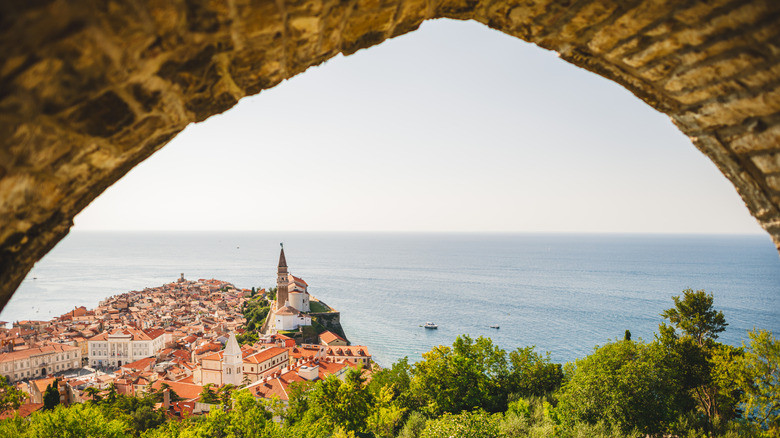
Dubrovnik is firmly on the tourist map, and along with that comes the crowds and high prices, with Rick Steves saying that "Dubrovnik's biggest downside is now its popularity," and that, due to inflated prices, the old town area feels more like a theme park than a real, livable neighborhood. He recommends you stay longer than a day to truly dig into the soul of the "Pearl of the Adriatic."
However, his protege Cameron Hewitt has another solution, which he shared on the Rick Steves' Europe website: "In Croatia, everyone flocks to Dubrovnik and Split. Why not check out Slovenia's Piran, just up the coast?" Slovenia is considered by Steves to be underrated and unexpectedly charming, and this is undoubtedly true on the country's short but picturesque coastline. The main town, Piran, is a gorgeous peninsula city with plenty of seafood, beaches, and vibes. Its red-tiled roofs, relaxed squares, and views of the Med are similar to Dubrovnik but with a distinctly undiscovered feel (happily reflected in fewer crowds and lower prices).
Instead of the Cliffs of Dover, visit the Seven Sisters (England)
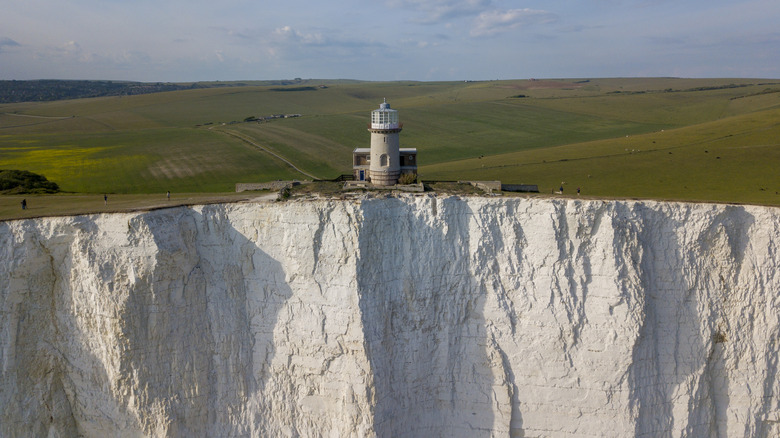
The White Cliffs of Dover are known the world over, but the town itself leaves much to be desired. Rick Steves calls Dover "a godforsaken little town" and says he stays there simply for its rugged and humble vibes. Yet the Cliffs of Dover are famous for a reason, with the sheer white, chalky faces jutting straight out of the turbulent English Channel.
However, there's another option. As Steves told Travel + Leisure, looking outside the box can be beneficial while traveling, noting that "There might be a place that's just as good, maybe 90 percent as good, but with no crowds at all just down the street." And this is true of even the Cliffs of Dover.
If you're looking for a less-touristed alternative nearby, Cameron Hewitt has a recommendation. In his Rick Steves' Europe blog post, he calls Beachy Head and the Seven Sisters, down the channel near East Sussex, "a less famous but drastically more pleasurable stretch of white cliffs than Dover's." The Seven Sisters, just like the White Cliffs of Dover, are dramatic and blindingly white, often towering above water that looks like it should belong in the Caribbean, not off the coast of England. The Seven Sisters can be reached from some charming, less-visited spots along England's coast, like the resort town of Brighton or the quiet haven of East Dean.
Instead of Mykonos, visit Hydra (Greece)
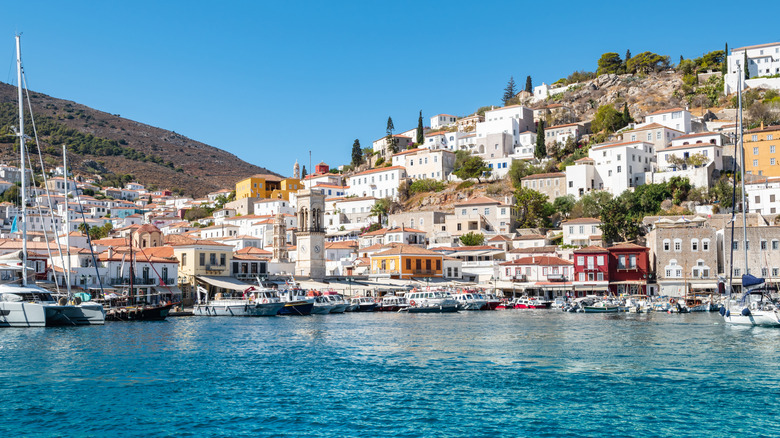
The Greek Isles are undoubtedly some of the country's best tourist attractions, as well as the most famous. One of the most well known is the island of Mykonos, a picturesque favorite among the international jet set. It's hard to disparage any of the Greek islands, and Rick Steves notes on his website that "Mykonos boasts an adorable, windmill-topped fishing village slathered in white and thronged by a hard-partying international crowd, enjoying its many beaches." One visitor on r/AskEurope says that if you must see Mykonos, visit in October, as when they visited, "it was basically empty and it felt like we had the whole island to ourselves ... it felt super relaxed and the weather was perfect. And we could still get gyros for 5 euros."
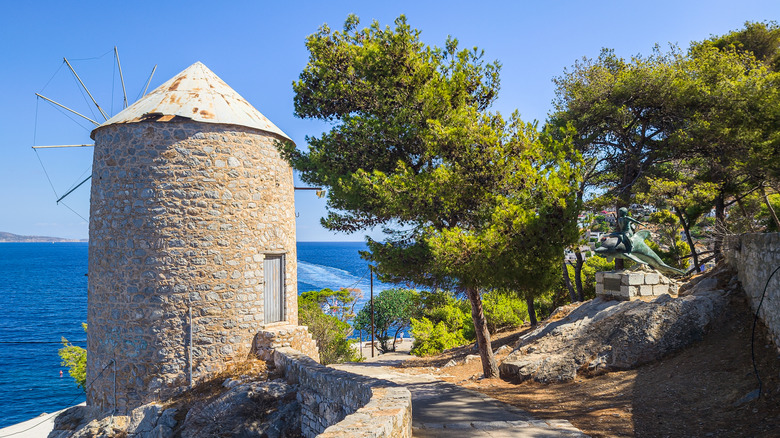
Still worth a visit, maybe, but for lower prices, fewer crowds, and easier access from the Greek mainland, consider the island of Hydra instead, which just happens to be Mr. Steves' favorite Greek island. According to an article on the travel expert's website, Hydra is within just two hours of Athens by ferry, yet it feels vastly different from the capital city. "Hydra is one of the prettiest towns in Greece," Steves writes. This island destination is car-free, therefore preserving a bygone Greece, and despite its easy access from Athens, it remains a relatively undiscovered gem. Wander the cobblestones, ride a donkey, lounge on the beaches, or take a sailboat — this is Greek island life at its best (and cutest).
Instead of gimmicky attractions, visit offbeat museums

Rick Steves writes on his website, "I've noticed more commercial ventures that advertise aggressively and are on sale all over town with various discounts and promotions," including sites like Time Travel Vienna, the London Dungeon, and Rome's Time Elevator — all of which he calls "gimmicky, overpriced, and a terrible value." In short, these are tourist traps to watch out for. Make sure to avoid any attractions that boast about virtual reality or wax figures (unless those are really your jam).
Instead, head to quirky, locally owned museums to get a taste of a different side of the city/country/Europe in general. Steves notes that Europe's offbeat museums are often some of the most worthwhile spots to spend an hour or two. Some of the continent's most intriguing museums include the Museum of Broken Relationships in Zagreb, Croatia; Warsaw's Neon Museum, which preserves glowing signs from the Cold War era; and Belgium's Frietmuseum (French fry museum) in Bruges.
Instead of the Rhine River, visit the Mosel River (Germany)
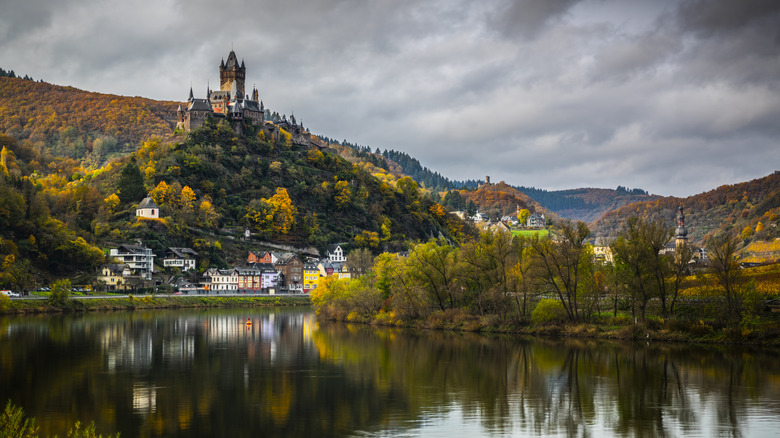
The Rhine River is Germany's longest and arguably most iconic river, so it's no surprise that it draws attention from tourists. That said, according to Rick Steves, there's another waterway that may be more worth your time: the Mosel River. "The Mosel is what some visitors hope the Rhine will be — peaceful, sleepy, romantic villages slipped between impossibly steep vineyards and the river, fine wine, a sprinkling of castles," Steves writes. In a separate blog post, he calls the Mosel Valley "dreamy" and the place he heads to when he needs "a dose of quaint cobbled towns and storybook castles."
Compared to the Rhine, the Mosel gets much less boat traffic, and yet has many of the same charms. If you're not on a boat tour, consider basing yourself in Trier, a former Roman city with plenty of tourist attractions worth visiting. Other towns worth a visit along the Mosel include the impossibly picturesque Cochem, crowned by a high hilltop castle, or Beilstein, which Steves calls "the quaintest of all Mosel towns."
Methodology
For this article, we used information and opinions gleaned from Rick Steves and his protege, Cameron Hewitt — both featured on the official Rick Steves website. We also utilized several other interviews Rick Steves has given prominent travel publications. In addition, we used Reddit, Tripadvisor, and personal experience to add insight on specific destinations. And finally, we also sourced information from other travel experts and travel bloggers regarding which tourist traps to avoid and where to go instead. When applicable, we refer to official tourism boards or destination websites to provide up-to-date details.