

The Disturbing Reason Why You Should Avoid Leaving Your Luggage On Hotel Room Floors
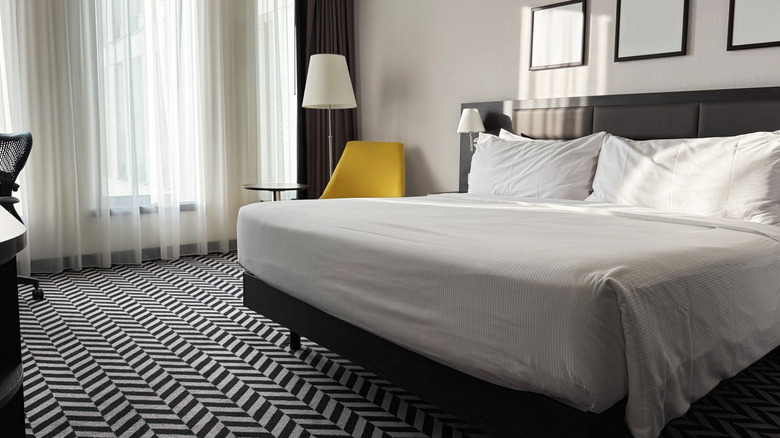
After a long day of travel, it's hard to put into words the feeling of relief that comes from walking into a fresh, clean hotel room. While you've likely got a nap or a hot shower on your mind, take an extra moment to conduct a thorough room check before taking off your shoes and socks. Why, you might ask? Despite appearing clean at first glance, your room — and especially the carpet — is likely filthy.
Believe it or not, you may have some unwelcome guests in your room and they could be right beneath your feet. Dust mites, mold, and fungi can linger well past checkout time in hotel carpets, lurking for days at a time between deep cleanings. While dust mites are largely a nuisance, mold infestations are hazardous to your health and can spread quickly in humid environments. Bedbugs are also a concern, especially in larger cities. For example, Chicago, despite being named the most beautiful city in the world, is the most bed bug infested in the United States.
From roadside inns to upscale hotels, every room can have dirt, mites, mold, and even bedbugs embedded in the carpet. Cleaning staff are usually successful at neutralizing these threats on tile surfaces like bathroom floors, but a quick vacuum may not be enough to remove contaminants from carpeting. To minimize the chances of your luggage coming into contact with germs and pests, travel experts recommend leaving it on the bathroom floor or in your room's bathtub if available. The bathroom floor is usually cleaner, which could prevent bedbugs from hitching a ride home with you. For this same reason, tourists should also avoid using hotel luggage racks.
The truth about hotel floors and how to stay safe
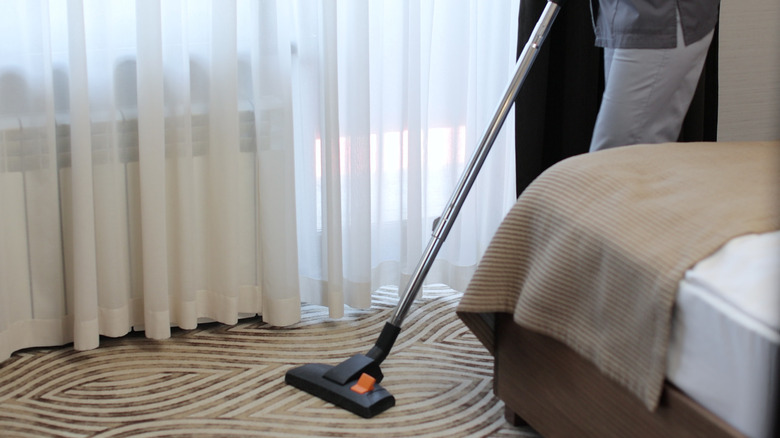
Hotels, especially more expensive hotels, often take pride in their cleanliness. However, rooms that appear clean on the surface may hide dirty secrets. Per Dallas Janitorial Services, housekeeping staff clean approximately 10 to 20 rooms a day, leaving 24 to 48 minutes per room on average during an eight-hour shift. In recent years, hotels have largely cut back on daily cleaning services for various reasons such as cost and staffing shortages, said Bjorn Hansen, professor at the New York University Tisch School of Hospitality, to the New York Times. To keep rooms presentable, many hotels are removing carpets and adding vinyl flooring, which is not nearly as cozy but is more practical and easier to clean.
Since a lack of cleanliness can have health consequences, you should always inspect your room upon check-in. You are a paying guest, after all. Clean the air conditioner filters, wipe down high-touch surfaces such as handles and faucets, check for water leaks, inspect the mattress and furniture for bedbugs, and leave your shoes near the door to avoid tracking in additional bacteria. If you've found something unsanitary, or worse, unsafe, be sure to notify hotel staff right away. If they refuse to assist or accommodate you, feel free to remind them that unsanitary hotel conditions are against the law.