

Alaska's Sprawling National Park Is The Biggest In The US
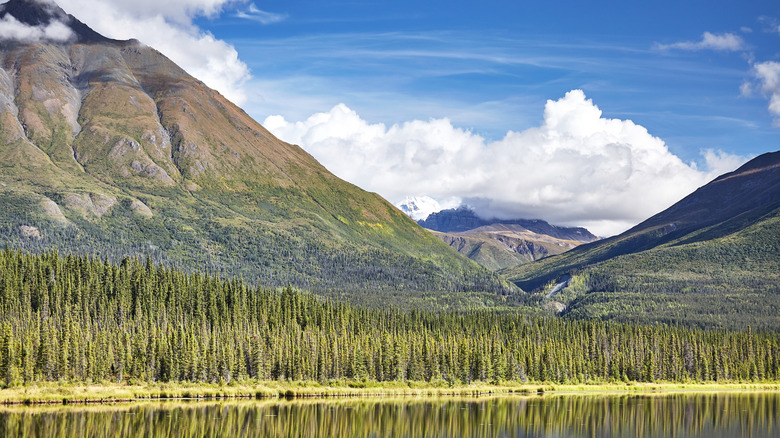
Alaska's breathtaking national parks encompass some of the most beautiful natural terrain in the United States. The largest of these, Wrangell-St. Elias National Park and Preserve, sprawls over 13 million acres, larger than New Hampshire and Vermont combined. Despite being the biggest park in the country, Wrangell-St. Elias only welcomes roughly 65,000 visitors per year on average, rewarding those who make the trip with endless personal space and solitude in nature.
The park was created in 1980 to protect and preserve some of the most jaw-dropping landscapes in the United States, including rugged sea coasts and towering peaks crowned by the world's largest concentration of glaciers outside of Antarctica. Within this special piece of Alaska, visitors will find an incredible range of activities, from hiking and fishing to backcountry camping and ranger-led educational programs. The park is open year-round, though about 85% of visitors come during summer months when days are endless and the snow has largely melted at lower elevations.
After flying into Anchorage, you'll have to choose your route through the rugged Alaska wilderness to reach the national park. The most common way is a long drive– upwards of six hours – to Chitina, followed by the 60-mile McCarthy Road, a gravel road that eventually leads to the community of McCarthy near the park's entrance. A more adventurous option is to drive roughly 260 miles from Ancorage to Slana, then take Nabesna Road into the park's more remote region with campgrounds and hiking trails. Be sure to double-check your rental car agreement for off-pavement driving. If you'd rather skip the drive, Copper Valley Air Service and Wrangell Mountain Air offer charter flights to the McCarthy airstrip from Chitina, Anchorage, Fairbanks, Valdez, and even Denali.
The sprawling beauty of Wrangell-St. Elias National Park
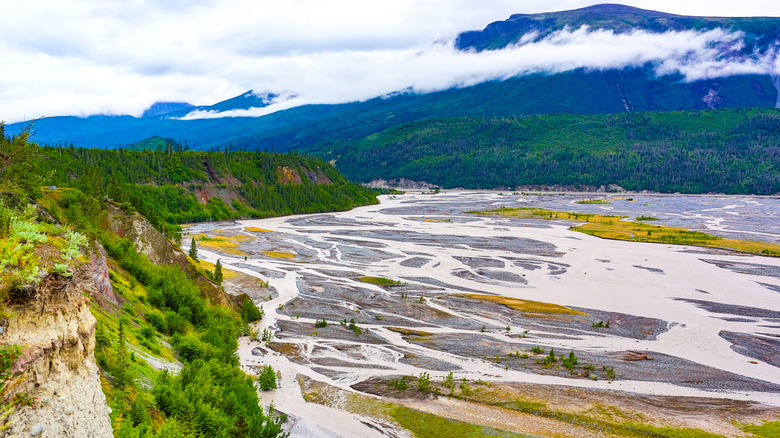
Like Alaska's underrated Kenai Fjords National Park, Wrangell-St. Elias National Park is known for its diverse geology and habitats. Though nearly one-third is covered in ice, it is also home to boreal forest, towering volcanoes, a temperate rainforest, and a sub-arctic desert. The park also has various attractions, from a wilderness ghost town with tours to the Yakutat and Coastal Area, an isolated area only reachable by plane from within the park. Yakutat, a remote fishing community that is unreachable by road, is the jumping-off point for exploring the Hubbard Glacier, Russell Fjord, and Disenchantment Bay.
Within Wrangell-St. Elias, you'll find four visitor services areas spread through the park, each with maps and information about local sites. Visitors driving in won't miss the park's Headquarters Visitors Center Complex just off the Richardson Highway. Here, you can stop and stretch your legs on a hiking trail, or take your eyes off the road and learn about Alaska Native culture and history at the Ahtna Cultural Center.
While you can explore the national park on land, you'll cover ground much quicker by air or on the water. Adventurous travelers will enjoy the thrill of seeing the park's majesty from the skies, followed by an epic backcountry landing. Truly intrepid travelers may opt to float back to civilization by packraft through the heart of bear and moose country and some of the national park's most dramatic landscapes.
What to know before visiting Wrangell-St. Elias National Park
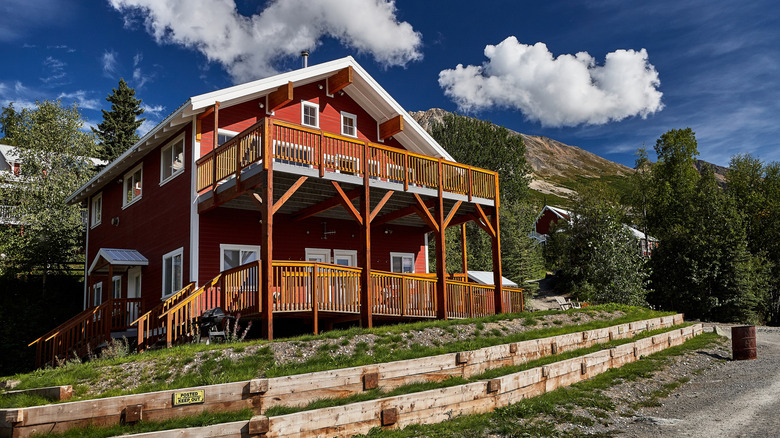
The small village of McCarthy is the last sign of civilization before you enter the park. Despite having just over 100 residents, you'll find a grocery store, an artisan bakery, and cafe at the McCarthy Center Lodge Resort, along with several restaurants, bars, and a hotel in town. Keep in mind that cell service is very limited. Only Verizon and Copper Valley Telecom provide service in this part of the state. At the very least, be sure to download maps, or better yet, bring a satellite phone if you plan to go into the backcountry.
Your adventure can be as large as the park itself, and so can the dangers of exploring the backcountry. Hikers going into the park should note that, due to the park's vast size, not all hiking trails can be maintained. The National Park Service notes that most trails are maintained for the first few miles only. Rafters may face hidden log jams in isolated areas, and the glacial waters are very cold. Traveling with a guide, or at the very least a detailed map and backcountry first aid, can be life-saving, as can packing the right equipment for your trip. Visitors looking for a guided expedition will find a list of authorized guides and travel providers on the park's website. For a more accessible yet remote Alaska gem, don't miss Kodiak Island, the second-largest island in the United States full of scenic wildlife.