

How To Decide Between Booking A Red-Eye Flight Vs A Long Layover
Before you grab what looks like a great deal on a flight, piece together a multi-city booking, or snag an affordable, all-you-can-fly budget airline travel pass, it's always a good idea to double-check the departure times and layover times. There's a good chance that this great deal comes with a catch. It could be a red-eye flight – leaving after dark and arriving early in the morning – or it could come packed with a long layover and plenty of airport (or intermediary) appreciation time.
At first glance, both red-eyes and long layovers will help you maximize your time on the ground. However, depending on how you travel and how much (or how little) you prepare, they can also wreck your trip. If you aren't sure whether to decide on a red-eye, a long layover, or a costlier midday non-stop flight, we'll help you to decide the best option for you.
No matter what time of day you fly, you'll always have to deal with uncontrollable weather, TSA lines, and operational changes made by the airline. However, dealing with them late at night or in an unfamiliar environment, especially after little sleep, can make travel even more exhausting and stressful. Preparing in advance for a red-eye or a long layover is key to a stress-free trip. Start by being proactive so you don't drastically change your daily routines, and research your departure airport, arrival airport, and the in-flight amenities. For example, if limited food is available at the airport and in flight, fill your water bottle before boarding and bring along a TSA-friendly snack (such as a mini charcuterie board) so you have something to eat before takeoff. Moreover, check whether your arrival airport has amenities to store luggage or freshen up on arrival.
When to choose a red-eye flight
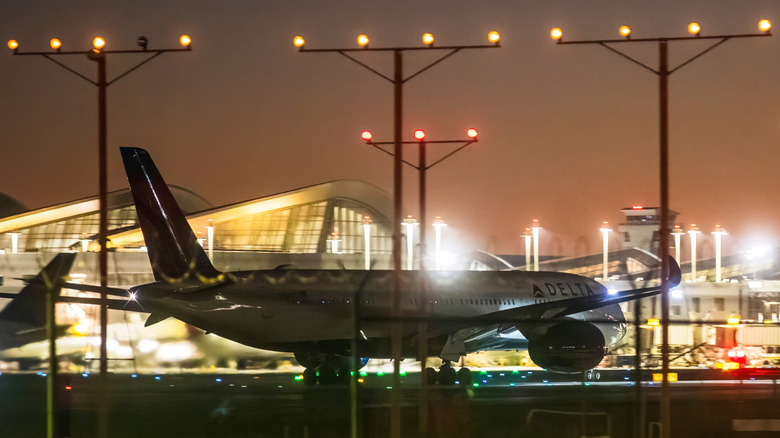
Travelers heading from west to east across the United States or the Atlantic will likely find a large selection of red-eye flights connecting in major hub airports. While these flights were normally serviced by Delta, American, Alaska, and United, Southwest joined the party in 2024, providing travelers with nocturnal, non-stop flights with bigger seats. Since red-eye flights leave at unreasonable hours (for most travelers) and arrive at their destination early in the morning, they may be preferred by both high-paying business travelers who can't miss work or have a morning meeting, or budget travelers saving on a hotel. You may also see point-to-point red-eye flights taking off to or from vacation destinations, aimed toward travelers who want to maximize their vacation days.
Per Skyscanner, airline ticket prices typically fluctuate based on customer demand and the timing of the routes. Since red-eye flights are generally less popular, tickets are normally cheaper on the surface. However, don't forget to factor in the costs to your sleep schedule, as well as dealing with brain fog and jet lag.
For travelers who have decided on red-eyes, packing well, including an eye mask and noise-cancelling earbuds or earplugs, can make the flight tremendously more comfortable, as can splurging on a premium economy seat with extra leg room or a seat in the back. No matter where you'll sit on the plane, travel guru Rick Steves notes that you should prepare your body, watch, and mind for the destination to speed your transition and minimize jet lag.
When to choose a longer layover

Longer layovers, on the other hand, are geared toward travelers who have plenty of time to spare or are interested in getting a taste of another city. Though most domestic flights in the U.S. have short connections, long layovers are common on connecting international flights, and often provide enough time to explore the gateway city. The only time I've been to New York City was on a long, 10-hour layover, between flights from the U.S. and Asia, and I had just enough time to visit two of the top 12 places to visit for first timers: Times Square and Ground Zero.
Travelers taking a trip across the world can often add a longer layover or a free stopover at their intermediary destination at little to no extra cost. Many airlines based in Europe, the Middle East, and Asia provide free stopover programs for travelers to rest or stretch their legs and get a taste of a city for a few hours.
While a long layover or a longer stopover is a great way to sample a city (or grab lunch with a buddy), factor in that things out of your hands could go wrong. If the weather turns sour, or your bag gets left behind, connecting to visit one of these luxurious airport lounges won't be worth the stress and time spent untangling a self-inflicted mess. Be proactive and research your transit point, including the airport map, airline's policies, ground transportation, visa entry requirements, and weather. And pack extra snacks, toiletries, and a jacket — especially in winter. If you do take a side trip, plan for it as you would for your primary destination.