

Controversial Things Hotels Do That Are Actually Against The Law
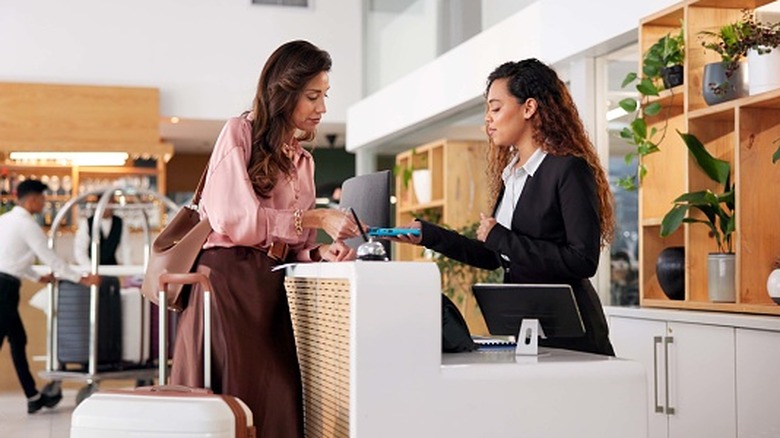
Whether you're looking to book one of the best adults-only, all-inclusive resorts in Europe for a romantic getaway or are planning to visit Banff National Park's romantic hotel, Fairmont Banff Springs, one thing you'll want to avoid is unnecessary drama at your accommodation. Like any professional business around the world, hotels are expected to abide by laws to ensure they are conducting safe and secure practices for their guests. However, some actions are sure to raise a few eyebrows when it comes to professionalism, and there are some controversial things that hotels do that are actually against the law.
Even top hotels may unintentionally break some laws, from invading guests' privacy to charging hidden fees — yikes. Regardless of whether you're in another country or just on an overnight business trip in a neighboring state, knowing your rights as a hotel guest is crucial knowledge to have tucked up your sleeve, so you'll be well prepared to tackle situations gracefully and avoid additional stress, which nobody needs while on vacation.
Unsanitary hotel conditions

Imagine this: You check into your hotel room, fling open the door, and are anticipating taking a much-needed nap on a cozy bed. As you take a closer look around the room, you notice a leaky faucet, a stained bedsheet, and a pungent smell coming from somewhere in the room. There isn't anything worse after a long day of traveling than checking into your hotel room only to find it looking, and perhaps smelling, less than perfect — and not adhering to sanitary standards can be treading unlawful territory. In the state of Florida, for instance, Chapter 509 (Section 221) states that public lodging must "provide adequate sanitary facilities for the accommodation of its employees and guests."
So, what should you do if you find bed bugs hiding on the luggage rack or your room is in dire need of a clean-up? First, you'll want to take photos and document each unsanitary finding in your room and report it to hotel management immediately. To avoid any health and safety violations, hotels will need to address the issues straight away to avoid any discrepancies with state health agencies.
Guests in hotels have the right to sanitary conditions free from bugs, grime, or things like black mold, which could cause major health issues, and that's just scratching the surface. In the United States, health and safety laws surrounding sanitary conditions for hotel guests are determined by health departments in individual states, and according to the American Hotel & Lodging Association (AHLA), there should be an extra amount of attention given to cleanliness when cleaning places like faucets, door handles, and other high-touch surfaces to prevent the spread of germs.
Any form of discrimination

Any decent person knows that discriminating against an individual or specific group isn't acceptable, and according to the U.S. Department of Justice's Civil Rights Division, a hotel can face lawsuits and hefty fines if found guilty of discriminating against a guest based on their race, sex, gender, religion, age, nationality, or disabilities.
Since a hotel is considered a "public accommodation," every guest has the individual right to be allowed to stay on the property, as well as be legally permitted to have full access to the property's amenities, without discrimination and segregation. Discriminatory behavior by any public establishment is illegal, and if you do notice that another hotel guest is getting treated discriminately, speak up. Whether you're defending other people's rights or standing up for your own, you can file an official report of the discrimination online.
Once you've filed the report, it's important to keep all your documentation up to date to provide a stronger case, should you decide to seek further legal counsel after the fact. Information such as dates, times, names, and the specifics of what you experienced or witnessed can provide a clearer picture to a lawyer to help fight and win a case.
Lack of pricing transparency and hidden fees

Have you ever booked a hotel online and thought, "Wow, this is such a great deal," only to be slapped with some hidden fees when you clicked confirm? A few dollars for a cleaning fee, a few dollars for a tourist tax, and maybe a few dollars for the hotel gym that you won't even use can quickly turn your steal of a deal into an overcharged nightmare.
Well, there's good news: You can say goodbye to sneaky hidden fees, deceptive pricing, and additional surprise costs because, thanks to the response from the United States' Federal Trade Commission (FTC), it is now the law to charge consumers exactly what they are shown with no strings attached. If you notice you've been charged more than what was advertised at the time of booking your hotel, make sure to keep those receipts and file a report online because these dubious sales and marketing tactics are now illegal.
In Canada, a similar law came into effect in May 2024 under the Competition Bureau of Canada's Competition Act (Bill C-59), which states that any business taking part in what's dubbed as "drip pricing" – using lower pricing to entice and lure customers before slapping on additional hidden costs — is now against the law. These laws are meant to protect consumers and ensure that what they are paying is exactly what is advertised to them.
Entering your hotel room without cause
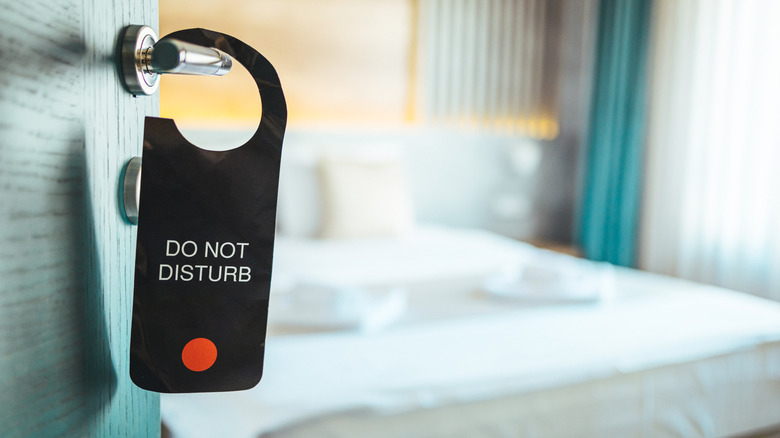
Imagine that you're relaxing in your room after a long day exploring when, without warning or even a knock, your hotel room door flings open. Next thing you know, you and a hotel staff member are engaging in an awkward stare-down. The scenario we've just played out is technically illegal, since it violates a hotel guest's privacy rights, according to James L. Arrasmith, a lawyer from California, via the website Justia. If the hotel believes that something fishy or suspicious is taking place in your room, staff or police may be permitted to enter your room — but if you've been a law-abiding citizen, employees are expected not to enter your room without your consent.
Even if your room requires non-urgent maintenance, such as an air conditioner unit not functioning properly, to avoid invading the privacy of hotel guests while still maintaining good customer service, the property's maintenance crew should provide fair warning before entering. The hotel should also communicate clearly to their guests, either within a policy statement or listed somewhere in the guest's room, when room entry is permitted, regardless of guest consent. During a recent stay at an accommodation, the property's host let me know in writing well in advance that a scheduled cleaner arrives every Tuesday between a specific time, which provided me with ample warning of their arrival, avoiding the risk of disturbing my privacy.