

This Underrated National Park In Colorado Offers Otherworldly Fun & Scenic Stargazing
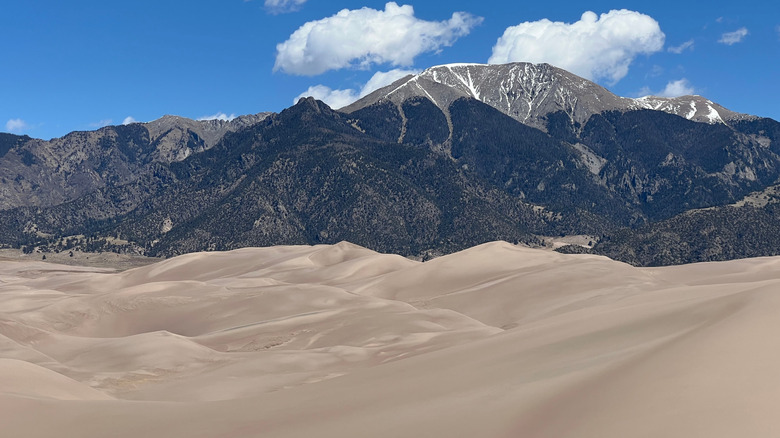
If you're weighing your next national park trip and want a total retreat into nature with an otherworldly mix of adventures, Great Sand Dunes National Park and Preserve, located in southern Colorado, deserves serious consideration. Sitting quietly in the San Luis Valley, the park's story begins in the 1920s, when a local chapter of the women's P.E.O. (Philanthropic Educational Organization) Club launched a campaign to save the dunes from being stripped down for cement and glass. Their persistence paid off in 1932 when President Herbert Hoover designated it a national monument. After decades of boundary expansions and careful land acquisitions, it became a full national park and preserve in 2004.
That protection now spans wetlands, grasslands, alpine lakes, tundra, and forests, but nothing prepares you for its crown jewel: the tallest sand dunes in North America, rising up to 750 feet, with the snow-capped Sangre de Cristo Mountains towering behind them in surreal contrast.
Great Sand Dunes sees just over 500,000 visitors a year, and while that number might sound like a lot, it's a fraction of the 4.5 million who head to Rocky Mountain National Park, Colorado's tourism spotlight. That difference shows how underrated the Great Sand Dunes are, yet those who make the trip are rewarded with hiking, sandboarding, sledding, skiing, wildlife spotting, and a night sky packed with stars, untouched by light pollution.
An otherworldly experience around the dunes — and more
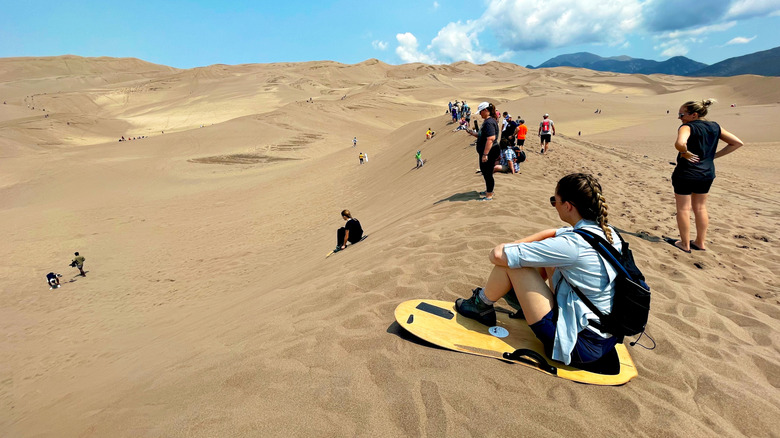
Great Sand Dunes might not be considered among the best U.S. national parks for hiking, but everyone who makes the journey is rewarded. The 30-square-mile dunefield has no official trails, giving you the freedom to wander in any direction. Younger kids can roll and play in the sand, while teens and adults can take part in sandboarding and sand sledding, the most popular activities in the park. Since rentals aren't available inside the park, visitors can sort out their gear at one of the many rental shops in the area.
The High Dune is the park's most popular attraction and a must-do. With an elevation gain of 597 feet and a 4.8-star rating from over 3,000 reviews on AllTrails, standing at its summit with the entire dunefield spread out below is the kind of view you'll spend years talking about. For a break from the sand, the Montville Nature Trail is a shaded forested loop finishing with sweeping views of the Sangre de Cristo Mountains, while the Mosca Pass Trail takes you through aspen and evergreen forest where deer, elk, and bighorn sheep are commonly seen along the route.
No visit is complete without stopping at Medano Creek. Flowing down from the Sangre de Cristo Mountains, the creek winds its way to the base of the dunes. During late May through early June, which is also the best time to visit, the creek experiences what's known as surge flow, where water surges over ripples in the sand, creating a wave-like effect that makes wading, floating, and splashing especially fun.
Stargazing opportunities and key things to note before your trip
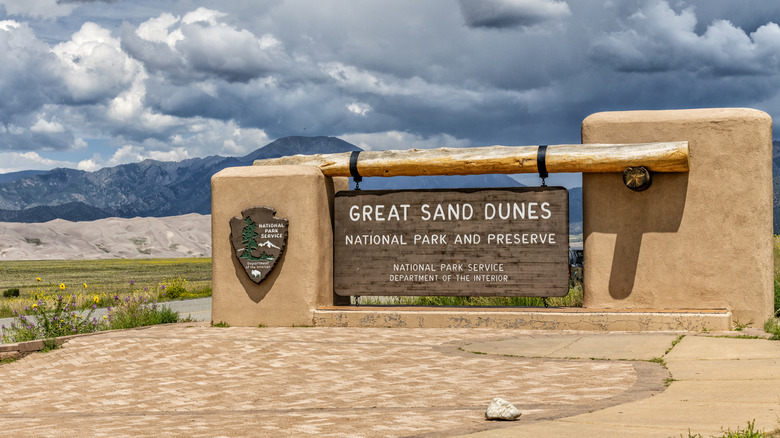
While Great Basin National Park offers the best stargazing experience in the U.S., Great Sand Dunes National Park and Preserve is certified as an International Dark Sky Park by Dark Sky International, offers one of the most breathtaking stargazing sights you'll find anywhere. The snow-capped Sangre de Cristo Mountains surrounding the dunes help shield the sky from outside light. While watching the sunset over the dunes feels otherworldly, spending a night here is a different experience entirely. Visitors can reserve an individual campsite at Piñon Flats Campground at $20 per night for up to eight people, and group campsites are available for larger parties. Those willing to brave the darkest night on their own can book a backcountry permit online for $6 to camp at designated sites within the park. August through September is the best time to visit for stargazing, as that's when the Milky Way and constellations are at their brightest.
For travelers flying in from outside Colorado, Denver International Airport is the best option, though the drive is nearly four hours. There are regional airports closer, though; you can connect from Denver directly to San Luis Valley Regional Airport, about a 40-minute drive to the park. Less than three hours away is Colorado Springs Airport. A car is necessary to reach the park, but there's no timed entry, so visitors can arrive at any hour. If you're walking in or cycling, the entrance fee is $15, while vehicles are charged $25, and entry is free for children below 16 years old. Those visiting more than once can grab the park's annual pass for $45. For more incredible adventures in Colorado, 199 miles away is Mesa Verde, a unique national park boasting scenic and well-preserved historic sights.