

Rick Steves' Best Tips For Eating Like A Local In Europe
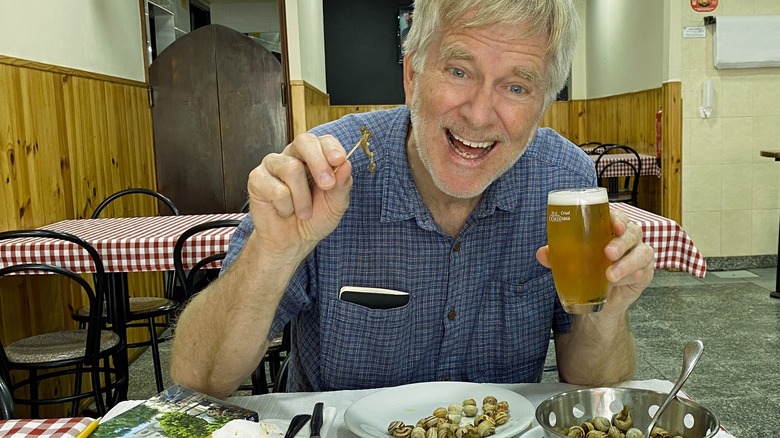
Even before his PBS show debuted in 1991, Rick Steves had built a career around helping Americans travel smarter and more authentically throughout Europe. While his advice covers everything from saving money on foreign train travel to strategies for visiting some of the world's best museums, dining is one of his most consistent themes.
For Steves, eating well in Europe isn't about finding the so-called "best" restaurant in a given destination — it's about understanding how locals eat, where they dine, and the role food plays in everyday life in other cultures. In fact, Steves frequently advises that travelers will save money, avoid tourist traps, and have a more authentic overall experience if they approach dining like local residents.
Dining, in the minds of Steves and his loyalists, is at the crux of the overall European travel experience. From neighborhood cafés to the budget-friendly option of picnicking, he encourages visitors to seek out authenticity rather than convenience. In this guide, we'll break down 10 of Rick Steves' best tips for eating like a local in Europe, drawing guidance from the travel guru's guidebooks, website, interviews, and overarching travel philosophy.
Avoid restaurants with tourist menus
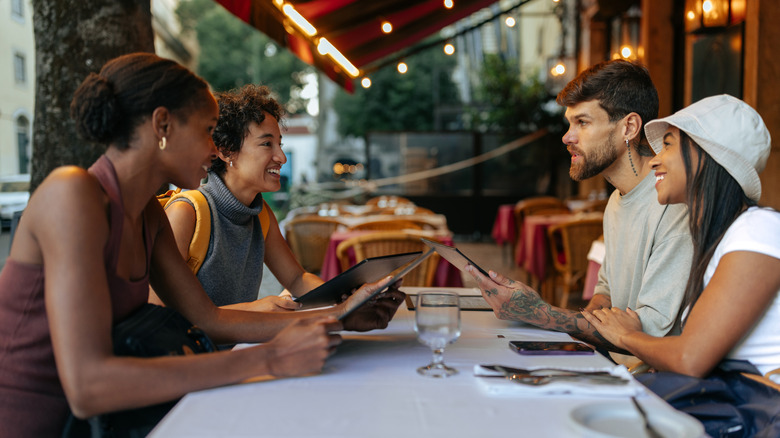
One of Steves' most repeated food tips for travelers in Europe is to avoid restaurants that display "tourist menus" in multiple languages, or that have aggressive hosts standing outside to draw in customers. These menus, often printed in English, German, Spanish, and more, may seem convenient at first glance, but they are an immediate sign that an establishment caters more to tourists than to locals. As a matter of fact, Steves points out that restaurants in this category frequently offer "tourist specials" that have wide appeal, rather than focusing on fresh, seasonal ingredients. Another notable red flag? Anywhere that has an English sign saying, "No Frozen Food." In a video on the subject, he says that you can expect "a crowd of tourists" inside, since local residents don't rely on signage to know where they can get great meals.
To avoid getting duped, Steves recommends looking out for a few important green flags when it comes to selecting a restaurant in Europe. Places that have short, handwritten menus are a great starting point, as this typically means they serve rotating seasonal fare. It's also worth checking out restaurants with "chalkboard specials." Often, in nations like Spain, these spots are where the locals congregate at the end of the day to relax and hang out.
The tip to avoid tourist menus is especially useful in popular destinations where it's all too easy to be sucked in by great marketing and flashy signage. However, eschewing places off the traditional tourist trail can lead travelers to authentic Italian trattorias, hole-in-the-wall French bistros, or Spanish tapas bars that stay open 'til late. These types of restaurants are almost always guaranteed to serve up the types of memorable experiences that Steves wants travelers to have.
Embrace the daily menu
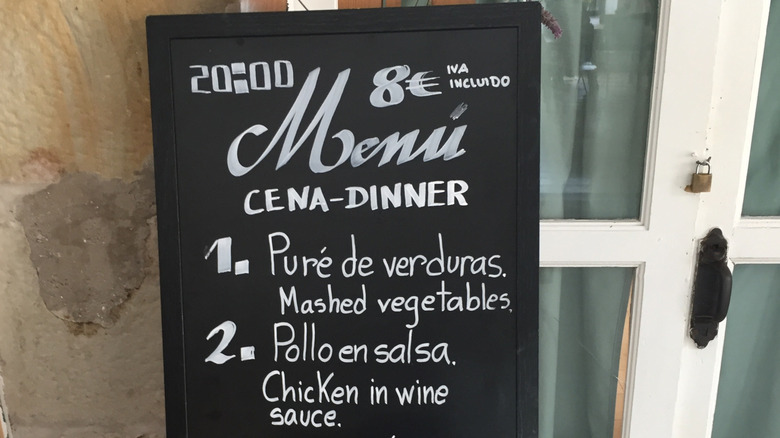
Rick Steves offers all sorts of fantastic tips to make the most of your next trip abroad, but one of his very best dining tips for European travelers is to order from the fixed-price (prix fixe) menus commonly offered in Spain (menu del día), France (la formule), and more. These daily specials, Steves notes, typically offer a curated selection of dishes. As a bonus, they're often priced lower than they would be individually, which makes them an excellent value when compared to à la carte ordering.
In general, the daily menu includes three courses: an appetizer, an entrée, and a dessert. One quirk that travelers should note is that, although cheese and charcuterie are typically served as appetizers in the United States, don't be surprised if they arrive with dessert at European tables. With this in mind, it's also important to note that the "formule" and "menu del día" are not typically crafted with tourists in mind. This type of meal is quite popular among locals, some of whom enjoy a restaurant meal daily.
Another perk of ordering the daily menu is that it's great for those traveling on a budget. By sharing courses, travelers can save money while also enjoying some of their destination's freshest regional cuisine. A sample selection you might come across includes dishes like a salmon salad with nuts, a red tuna ceviche, a Thai salad, or an Andalusian gazpacho for the appetizer; a seafood fideua, a pork tenderloin in mushroom sauce, a sea bream with mushrooms and vegetables, or baked chicken with roasted potatoes for the entree; and a dessert. For European sightseers interested in the perfect mix of authenticity and value, ordering the daily special is one of Steves' simplest, yet most effective, travel strategies for a great dining experience.
Eat regionally, not generically
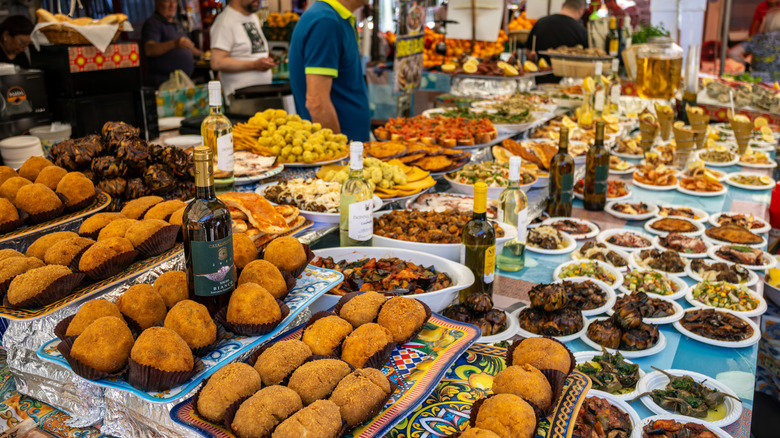
Although certain cities worldwide are known for excelling at specific international cuisines (Indian food in London immediately comes to mind), it's generally more rewarding to order dishes that are native to one's destination. With that in mind, Steves often advises travelers to skip mainstream, out-of-place comfort foods — say, Pizza Hut in Paris or McDonald's in Prague — in favor of local favorites.
Per Steves' travel wisdom, regional specialties are not only the freshest menu items, but they also have the most cultural clout. Ordering these types of dishes is an excellent way for travelers to discover a city's identity via its food. This is largely due to the fact that food is often a huge part of a place's overall cultural expression. For example, a dish like Turkish baklava has evolved over centuries to become part of a nation's ingrained heritage.
Steves also recommends trying kebabs no matter where one finds oneself in Europe. This humble dish is easy to customize with local ingredients and is often sold in street stalls, rendering it an affordable option for those who want to savor local flavors without spending an arm and a leg. Ultimately, choosing regional dishes not only encourages travelers to explore neighborhoods and restaurants they might not have otherwise discovered, but also allows foreign visitors to learn how locals actually eat on a daily basis.
Don't rush through meals
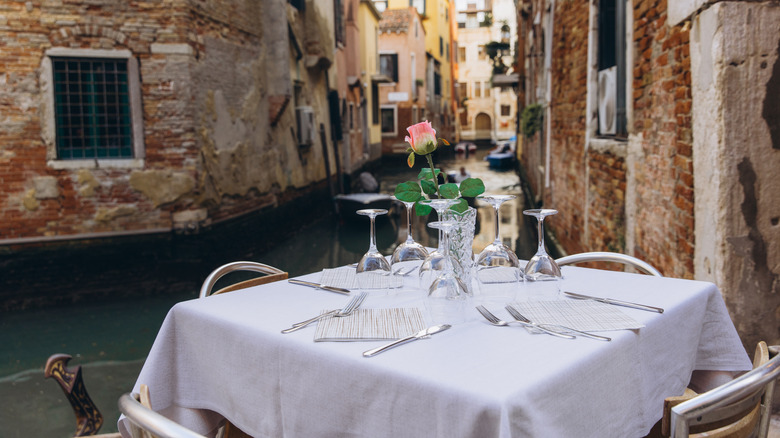
One of Rick Steves' most essential pieces of advice about dining in Europe is that each meal is an experience, not a mere transaction. In many European cultures, meals are intended to be savored, and you typically won't find people rushing through fast-food drive-thrus on their lunch hour, like you might in American suburbs. Instead, the notion of the "four-hour lunch" abounds, and diners take their time to enjoy good food, stimulating conversation, and wonderful company. Additionally, it may surprise U.S. travelers to discover that, unlike in stateside dining establishments, European restaurants don't usually turn over their tables quickly simply to accommodate more parties per day. Rather, waitstaff expect patrons to take their time.
Rushing through mealtimes can actually lead to a more stressful experience for travelers, and may cause people to miss out on some of the things that make European lunches and dinners so memorable: the long conversations and delicious multiple courses. When one thinks of food as more than fuel, but as part of the overall ambiance of a trip, the mindset shift is immediate.
Another way to savor any meal is to choose a beautiful setting, even if the restaurant itself isn't expensive. Steves notes that vacationers don't have to spend a great deal of money for a once-in-a-lifetime view. Department store food courts, for example, often offer rooftop seating. At Paris's world-famous Galeries Lafayette, shoppers and diners are invited to take in the Eiffel Tower and other landmarks from the eighth-floor terrace for as long as they choose. And, at Harrods, The Grill on Fifth offers rooftop dining in Knightsbridge, one of London's chicest districts.
Skip hotel breakfasts when possible
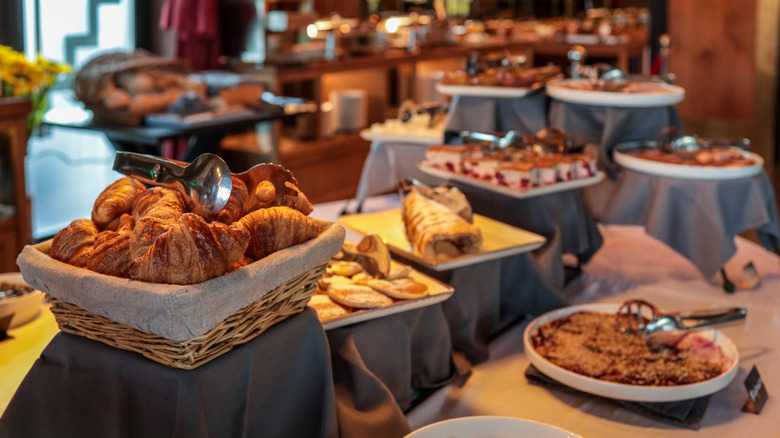
While on-site hotel breakfasts are undeniably convenient, Steves often encourages travelers to begin their days elsewhere. Local neighborhood cafés and bakeries, for example, tend to offer a more authentic experience. Furthermore, Steves points out, hotel breakfasts are typically meant to cater to those who are away from home, whether they are business travelers or leisure tourists. Thus, the prices tend to be higher because people may believe they have no other options.
That said, choosing a nearby café or market instead allows travelers to enjoy a much better quality meal for an affordable cost — all while simultaneously pulling back the curtain on the city's day-to-day lifestyle. Speaking from experience, there is nothing like walking through a European capital like Rome or Dublin at daybreak in search of the perfect morning meal.
Seasoned travelers who post on Steves' online forum also share that eating locally offers a significantly more immersive experience than dining in a hotel. Imagine missing out on fresh pastries from somewhere like Du Pain et des Idées in Paris, or skipping the iconic early-morning café culture in Vienna, which Steves firmly believes is Europe's most elegant city. These wildly authentic everyday experiences often comprise the core memories of trips long after travelers return home. Choosing to eat breakfast away from your hotel is a seemingly minor routine shift that can make a world of difference in the long run.
Visit local markets and food stalls
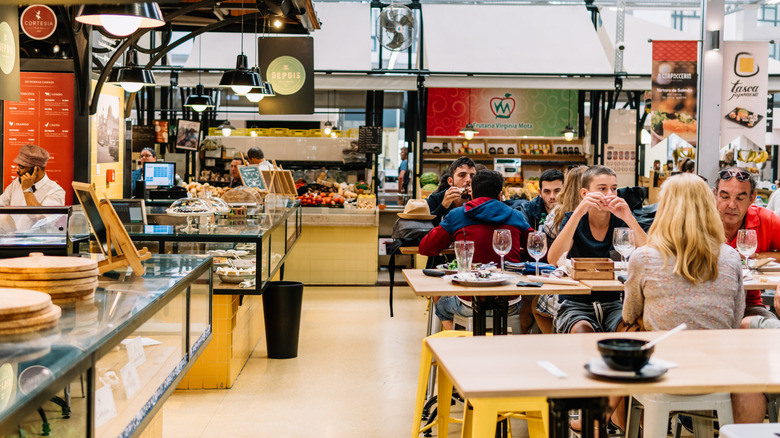
European markets and street food stalls are typically among the best ways to eat well on a budget in Europe. As Steves says, open-air markets offer locally sourced foods that, in some cases, are even better than restaurants. On Facebook, he shared a situation in Spain in which he paid less for high-end Iberian ham at a market than he did for a lesser cut at a table-service establishment.
Throughout Europe, locals often grab snacks, lunch, and groceries at markets and from street vendors, so taking part in this cultural tradition is also a great way to experience life as a resident — no matter where you are. While Europe is home to a number of the world's best markets, some of Steves' favorites include the Mercato Centrale in Tuscany's jewel, Florence, and the Mercado de Campo de Ourique in Lisbon.
Steves is also fond of reminding travelers that European markets are more than a place to purchase food and other goods. These are great places to meet locals, discover incredible stories, and take home authentic ingredients and non-food souvenirs that you might not be able to find anywhere else. Among my personal favorite travel souvenirs are a set of Turkish pillows crafted from century-old rugs we discovered at a street stall in Istanbul! Be aware, however, that markets sometimes alter their standard hours based on national holidays and other events. They also sometimes close in the early afternoon after that day's fresh produce, meats, and dairy products are picked over, so make sure to double-check that day's hours before visiting. Besides the fact that markets and food stalls are an affordable way to eat well in Europe, they are also a great way to enjoy the best type of fully immersive travel experience that Rick Steves recommends.
Memorize a few key food phrases
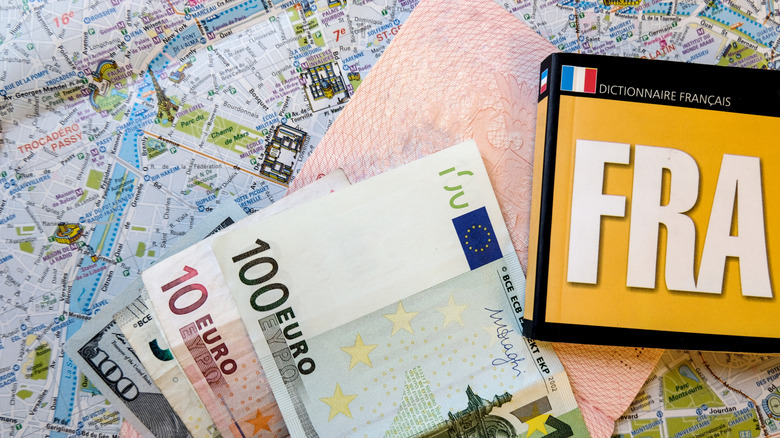
It's a great idea to learn basic menu vocabulary before you find yourself seated at a dining table in a new country. Travel expert Rick Steves agrees, and encourages travelers to learn a few key food-related words and phrases before departure. Or, at the very least, to carry a small phrasebook should the need for it arise.
According to Steves and his online travel community, understanding common terms (like "beef," "baked," "grilled," "vegetables," "dessert," etc.) helps travelers navigate a wide range of dining situations more confidently, while also making it easier to connect with restaurant staff and food vendors about their favorite menu selections. Some travelers on Steves' forums even share that they have been traveling with the same phrasebooks for decades, and still find them to be extremely useful.
In my own world travel experience, knowing general food terminology is especially worthwhile outside of major metro areas where English may not be as common. The goal here, remember, is not to become instantly fluent. It's simply to learn a few terms that will aid in avoiding mishaps and clarifying dietary preferences or food allergies. If you or someone in your travel party suffers from severe food allergies or intolerances, it is also wise to conduct research ahead of time. You may, for example, need to select restaurants that specifically cater to your party's needs (e.g. not cooking with peanuts or peanut oil if you are traveling with a person who has a serious peanut allergy).
Adhere to local happy hour customs
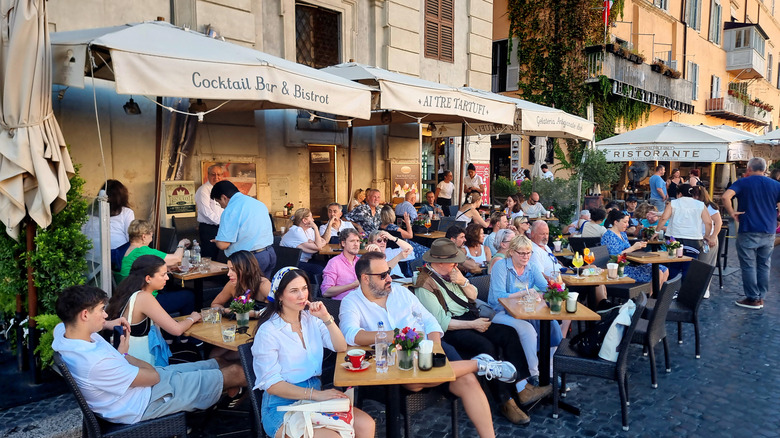
Steves believes that experiencing various European countries' happy hours is an important part of traveling the globe. Not only does he assert that this is an excellent way to save money, but it's one of the best ways to get to know locals in a convivial setting. Budget-wise, Steves points out that happy hours often include specially-priced drinks accompanied by small bites often included at no extra charge. Such is the case with aperitivo, one of Italy's most beloved cultural traditions. However, there are certain etiquette tips tourists should know before their first aperitvo experience. For example, visitors shouldn't fill up on snacks. Instead, this occasion is designed to prepare the stomach for dinner.
Spain and France also have aperitivo (or apéritif in French) traditions of their own. In Spanish communities, happy hour traditionally occurs before lunch, since it's the largest meal of the day, followed by the world-famous siesta. Travelers throughout Spain will find that red vermouth is the drink of choice among locals. In France, a kir or a RinQuinQuin is an appropriate apéritif cocktail.
That said, it's also worth dispelling a common misconception: that dinner in Europe always happens very late. While Spain does tend toward dinners after 8 p.m., families in the United Kingdom often dine between 5 and 6 p.m, while restaurants in Italy frequently stop offering dinner service around 9 in the evening. This means that travelers can easily follow Steves' advice to enjoy happy hour without waiting until late at night to eat their final meal.
Be adventurous (within reason)
While there's obviously something to be said for traveling to see the world's most amazing landmarks, Steves believes that there's far more to traversing the globe than sightseeing alone. He holds that it's about expanding one's perspective and embracing the slight discomfort that comes with culturally unfamiliar experiences. Per Steves' travel philosophy, people ought to lean into customs and traditions that push them outside of their comfort zones, as this is where the best experiences often lie.
With this in mind, trying new foods is among the most approachable ways to accomplish this goal. Tasting even one or two bites of an unfamiliar dish can be a small adventure in and of itself. For newer international travelers in particular, sampling local culinary specialties is an easy way to dip a toe into the concept of cultural immersion.
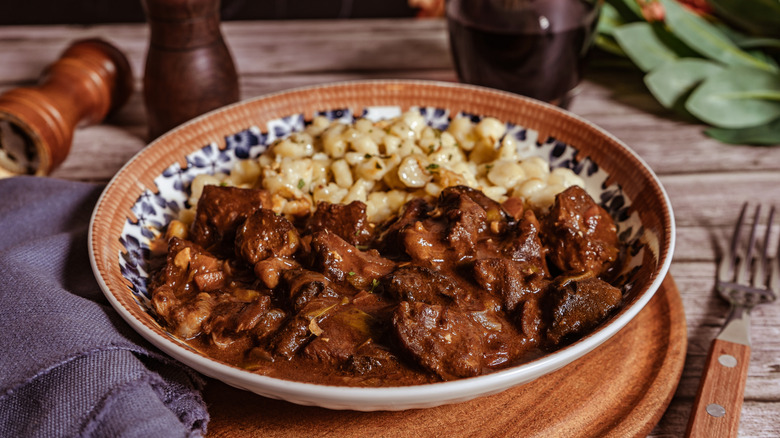
That said, nobody is suggesting that you need to eat grubs like Timon and Pumbaa, but even slightly new flavors can expand your palate — and your perspective — in an exciting fashion. Tasting regional cheeses throughout France, ordering German street food like currywurst in Berlin, or trying an authentic Hungarian goulash stew are all simple ways to open yourself to new cultural experiences that can make a major impact. Steves believes that every new culture a person discovers becomes a small, beautiful part of who they are. Thus, even if a dish doesn't become a new favorite, the act of trying it is still a crucial part of transforming oneself into a truly global citizen.
Understand the tipping culture
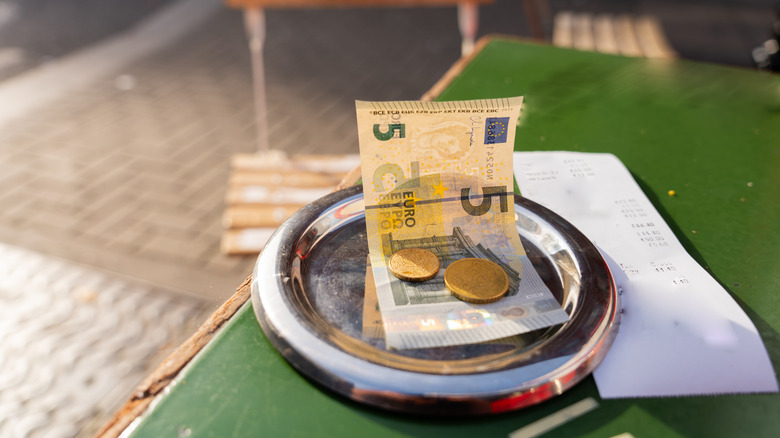
Tipping practices in Europe are notably different from what is traditional stateside. One of the most common mistakes Americans make while traveling abroad, Rick Steves notes, is presuming that a 20% tip is expected at restaurants. In many European countries, service is already included in the final bill — either as part of menu pricing or a separate, but obligatory, service charge. In Italy, for example, seeing "servizio" on the check indicates that no tip is necessary. The same goes for seeing the words ""service compris" on restaurant bills in France. In Austria, Germany, and Poland, meanwhile, a 5 to 10% tip (often equating to one or two Euros) is customary. Be careful, though, as overtipping can actually be awkward since waitstaff in Europe do not typically rely on tips and gratuities like U.S. servers tend to.
Steves wants travelers to think of tipping in Europe as a form of appreciation for exceptional service, not an obligation. Paying attention to tipping culture ultimately prevents unnecessary spending, and it shows that travelers are respectful of local norms. Ahead of any European trip, it's wise to review the tipping etiquette in your destination country to avoid any uncomfortable snafus. Per Rick Steves, understanding how to properly tip is a small, yet meaningful, way to travel more thoughtfully, no matter where in the world your journey takes you.
Methodology
Since this guide draws from Rick Steves' advice, we primarily relied on his website and blog to shape our research. Specifically, Steves' blog, educational seminars, community forums, and videos provided the bulk of the information. From there, we relied on other high-authority sources like Medium, Afar, local travel authorities, and other well-known publications that regularly post food-related travel content to compile additional details and context. This helped us expand upon his core recommendations and advice to compile a definitive list of Steves' top tips for dining like a local while traveling through Europe.