

Why Campers Should Never Eat Snow, According To Doctors And Survivalists
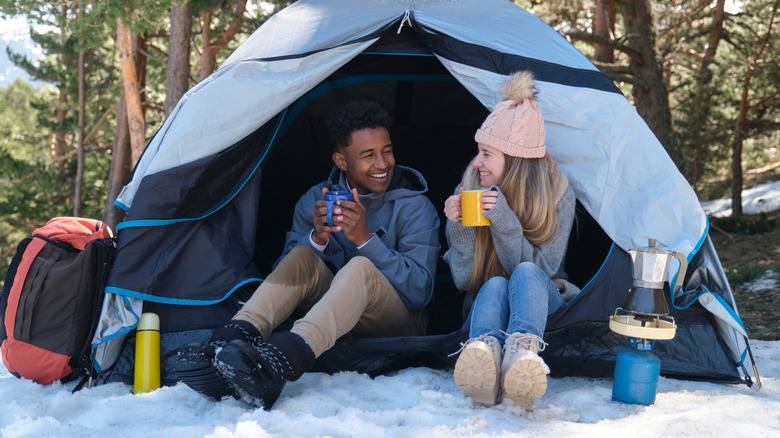
Preparing for a camping trip is just as important as enjoying the experience itself. This, of course, means packing everything you need to take with you ahead of time — including essentials such as the best sleeping bag to keep you warm. It's equally important for campers to bring enough food and water with them to survive. However, in the wintertime, can't campers save some strain on their backs and simply eat freshly fallen snow to stay hydrated? As it turns out, doctors and survivalists don't recommend it.
The reason? Even freshly-fallen snow can be full of substances that humans shouldn't ingest. For one, pollutants can hide within that white powder, even at the most remote campsites. As snow falls, it can collect dust particles, pollens, or other debris that floats unseen through the atmosphere. Once trapped, those unhealthy particles are combined with the snow and can be ingested along with the frozen water in your hand.
Once it hits the ground, snow can pull bacteria from the soil — meaning campers who eat snow for survival may be introducing harmful microorganisms into their bodies, forcing the immune system to work overtime to combat them. Ultimately, the best thing to do to stay hydrated when camping, no matter the time of year, is to bring your own supply of fresh water. A good general rule is to plan on two gallons of water per day per person for drinking, cooking, and personal hygiene.
Eating snow can actually dehydrate you
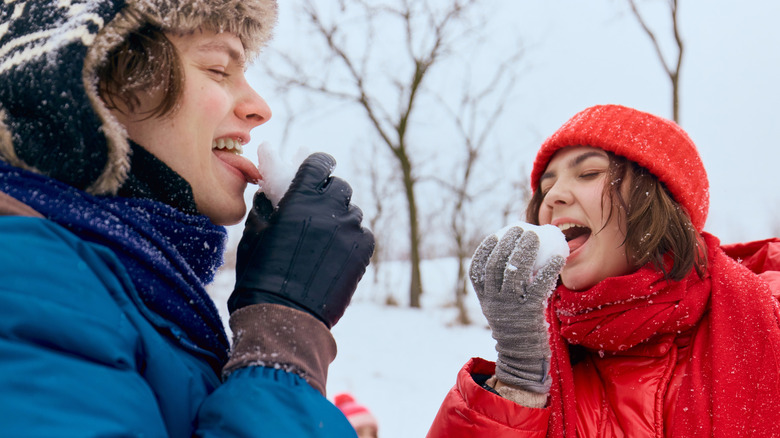
Any child who has experienced a snowfall has likely tasted the powdery white flakes at least once. Fortunately, ingesting small quantities of snow is rarely harmful — especially if it's undisturbed and not discolored. But when snow is used for hydration in an emergency, it can actually have the opposite effect and hurt your chances of survival in the winter wilderness.
According to Cleveland Clinic, the act of consuming snow can lead to dehydration because the amount of energy your body uses to melt the snow is greater than the hydration benefit of consuming it. In other words, while the warmth of your mouth melts the snow back into liquid form, you've already burned more fuel than the melted snow will replenish. Instead, it's best to consume the drinking water you brought with you.
Better yet, drinking water can also keep you warmer, since experts say that consuming snow can actually prevent your body from maintaining a healthy temperature. Besides, the cool snow won't seem so refreshing in a frigid climate — especially if you are camping somewhere remote, like near the breathtaking towns in California's Sierra Nevada Mountains. By taking a bite of the snow, you're essentially decreasing your body's temperature. And if your temperature drops too much, you could experience hypothermia — and that's no way to end a camping excursion during the winter.