

The Ancient Italian Hill Town Near Rome That Rick Steves Loves For A Quiet Retreat
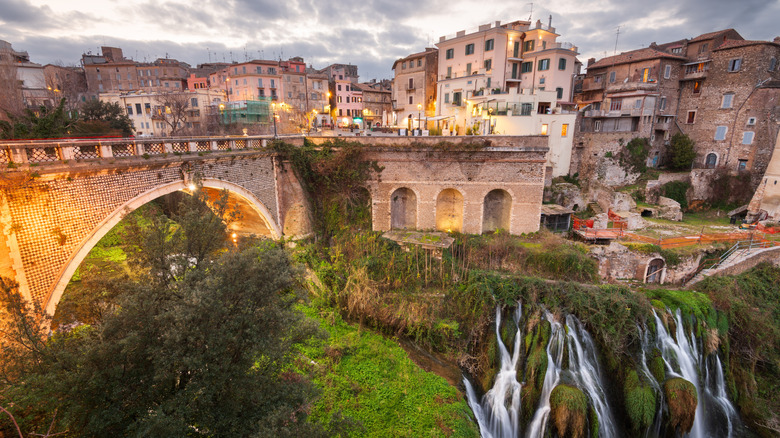
With over 2,000 years of history, Rome's most iconic tourist attractions can take you through ancient, Renaissance, Baroque, and 20th-century sites. Everywhere you look, there seems to be a landmark worth checking out — but all of this can certainly be overwhelming. So, to balance out a jaunt through the Lazio region of Italy, head to Tivoli, situated in the Sabine Hills. Located roughly one hour outside of Rome via train or bus, Tivoli has long been a quiet escape from big-city life. And some of its residents over the centuries were rather high-profile, too.
Always in search of an immersive experience while traveling, expert Rick Steves has given Tivoli's vibrant, yet peaceful, atmosphere his seal of approval. "Escaping the hubbub in Rome, I get chummy with the winds of the past — and connect with the pleasures of the moment," Steves explains on his website. He also points out two must-see UNESCO World Heritage sites in Tivoli: ancient Hadrian's Villa and the Renaissance Villa d'Este. Add these to Tivoli's nearby nature and it's easy to see why you can relax here while still being surrounded by all the grandeur of Italy.
Explore Tivoli's two famous villas
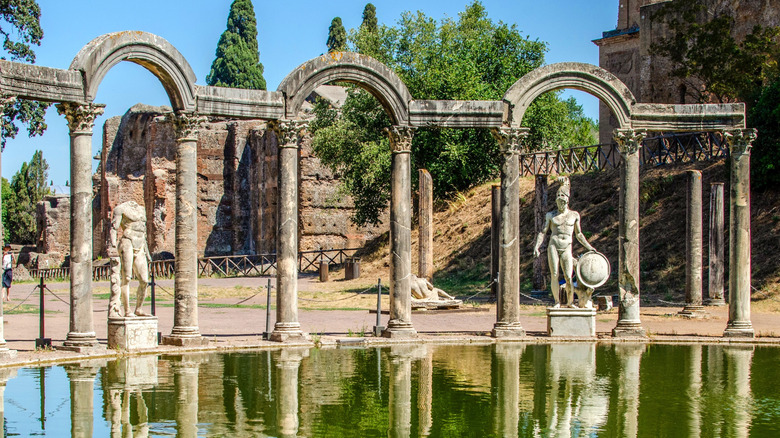
Emperor Hadrian took power of the Roman Empire in 117 A.D., right after it reached its greatest extent. His quiet estate in Tivoli is now known as Hadrian's Villa (Villa Adriana). The villa's buildings, gardens, temples, and baths reflected the regions which Rome had grown to encompass. Today, it is still clear that the ruler who lived at Hadrian's Villa was someone who embodied the ostentatious displays of power for which Roman emperors are known. The stillness which Hadrian loved about it remains as well. On a visit to Hadrian's Villa, you can check out archways, ponds, unique statues, and libraries that have all stood for two centuries.
In the mid-1500s, Cardinal Ippolito d'Este built an elaborate Renaissance estate now called Villa d'Este. The palace-like home features works from Bernini, the famed 17th-century artist with pieces in Rome and Florence (which has the best Renaissance art in Europe). However, "the main attraction is the spectacular garden," says Rick Steves. "A hallmark of Italian design, it clings to a steep hill cascading with pools, streams, waterfalls, and thundering fountains." The greenery weaves seamlessly into the villa's layout, as if it is almost reclaimed by nature. This makes wandering through the many components of Villa d'Este all the more peaceful and relaxing.
The beautiful Italian countryside is just minutes away in Tivoli
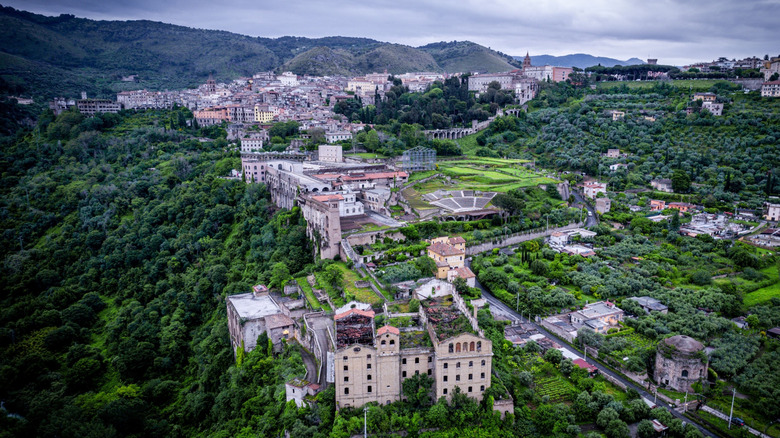
Let the relaxation continue as you walk through the ancient streets of Tivoli dotted with more points of interest. Next to Villa d'Este is the Chiesa di Santa Maria Maggiore church, with frescoes from as early as the 12th and 13th centuries. Rocca Pia, the town's huge medieval fortress, is only a few minutes from the church. Even if you don't go inside to access Rocca Pia's lookout point on the top floor, this fairytale-like structure is worth a stop.
Another reason why Tivoli feels so peaceful is the closeness of nature. A less than 15-minute walk from Villa d'Este is Grande Cascata di Tivoli, a waterfall along the Aniene River. Not only do the sounds of the waterfall create a lovely ambiance, but you can also get a wide view of Tivoli by the neighboring and historic Arco di Quintilio Varo Tivoli. To feel more immersed in Tivoli's surrounding nature, go across the street from the waterfall to Monte Catillo. This nature reserve has a hiking trail leading up to a summit with 360-degree views. Along the way, you'll see multiple types of trees, and if you time it right, you can enjoy the sunset over the town below.