

What Travelers Need To Know About TSA Before Flying With Cash
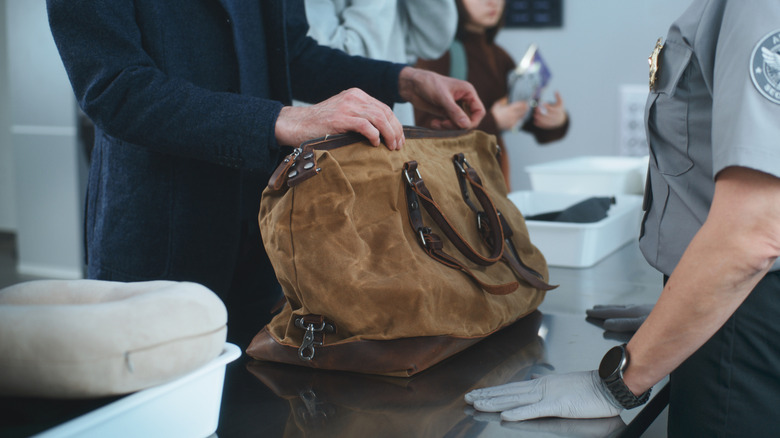
It could be your casino winnings or enough cash to pay for a last-minute romantic getaway. However, to a Transportation Security Administration (TSA) screening officer, a bag full of money may also hold a mystery that they feel needs to be investigated to protect travelers. While the TSA was created to protect critical transportation infrastructure, enable travelers and their belongings to move freely across the United States, and detect dangerous articles, the agency has also targeted another item moving through airports: seemingly illicit cash.
Even though TSA officers are not law enforcement officers, nor do they explicitly have the authority to investigate the origin of "large amounts of cash," individual TSA officers and airline employees have been used as paid sources in the past by the Drug Enforcement Administration (DEA) to identify potential cash couriers and stop the flow of cash from criminal activities. Although the program, called Operation Jetway, was suspended by the U.S. Department of Justice in 2024 following findings of systemic abuse and civil rights violations, various DHS agencies and the DEA seized billions of dollars through civil forfeiture, including large amounts taken from travelers at U.S. airports.
During this period, travelers were largely targeted based on their routing or racial profiling, even if they were flying domestically and not breaking any laws. Despite having earned or obtained the funds legally, many travelers across the country had their life savings taken after being unable to immediately produce proof of a legitimate source of the funds. Moreover, these travelers were never charged with a crime. Amounts taken by the government range from a few hundred dollars to tens of thousands. In turn, victims have filed a class action lawsuit against the TSA and the DEA that is currently playing out in court.
Protect your money while traveling
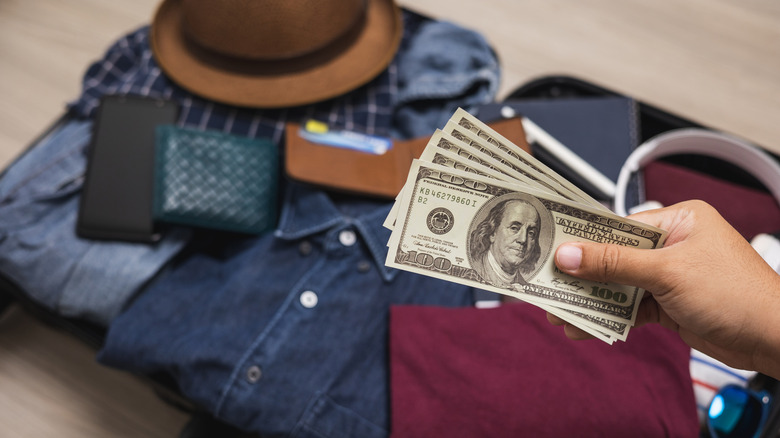
According to a Gallup poll, 13% of American adults normally use cash while shopping, with the largest percentage of cash-only users being in lower income brackets. While cash is not as common as it was in the past, there can still be legitimate reasons to carry money — for example, preparing for an emergency or paying school tuition. However, travelers who still use cash to buy things like plane tickets can trigger these four letters on their boarding pass, which can lead to the TSA conducting a physical search.
According to the ongoing lawsuit, travelers who had "large," "excessive," or "suspicious" amounts of cash had their funds seized. This is because, according to TSA and law enforcement, large amounts of unexplained cash signal possible criminal activity. As a result, officials' alarm bells will likely go off if they spot a large amount of cash being moved, or if you happen to exhibit an involuntary reflex that could get you flagged. Other signs they may look for include large amounts of smaller bills split up across your luggage, money in rubber bands, or a wad of money in an envelope with no official documentation.
Ultimately, if you are traveling with a chunk of change, keep it together, write the value, and have receipts handy or opt for a cashier's check with your name on it. Multi-currency travel debit cards are another practical option, especially for multi-country trips. Whatever you do, though, don't leave your cash or other valuables in your checked baggage. If you are flying internationally to or from the United States with over $10,000, federal law requires travelers to declare the funds and file a FinCEN Form 105. Not completing the form can give CBP authority to seize the funds, or potentially provide a basis for prosecution. Moreover, you'll have to meander the byzantine process of having the funds returned.