

The Red Flag Rick Steves Warns Tourists To Look Out For At European Markets

One of the best things about traveling in Europe is the vast amount of markets dotted throughout the cities, towns, and villages. Whether it be a fresh fruit market featuring locally grown figs, a small shop selling kitschy souvenirs, or a roadside market stall run by a local that proudly pours samples of their precious homemade liqueurs, you'll want to be on the ball when looking for pricing. And according to travel expert Rick Steves, one of the standout red flags that he warns tourists to look out for at European markets is the lack of advertised pricing.
Not only has Rick Steves provided great advice on how to save money on European souvenirs while shopping, he also has a savvy tip when it comes to not getting fleeced during your next market haul. In a blog post, Steves cautions travelers to be wary of unpriced items that will likely carry exorbitant costs if you're not careful. "Travelers are routinely ripped off by market merchants in tourist centers. Find places that print the prices." He goes on to mention, "Assume any market with no printed prices has a double price standard: one for locals and a more expensive one for tourists."
It's no secret that Steves loves shopping at markets. He proclaimed his love for them in another blog post, stating, "I love the marketplaces of Europe. To me they're as important as the museums." So the next time you want to hit up the open-air markets in Europe, grab a few items, and have lunch-on-the-go, keep a few tips, tricks, and hacks in mind that could save you a ton of cash while exploring Europe.
If the price isn't listed, the price may not be right
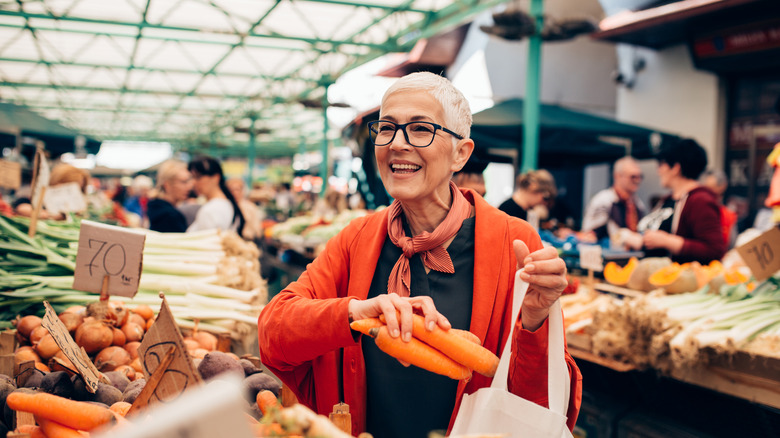
As travelers, we all typically want to steer clear of unexpected tourist traps — and yes, that includes shopping in European markets. Steves recalls the moment one of his friends was scammed by a market merchant in London for some bananas, writing: "I'll never forget a friend of mine who bought two bananas for our London picnic. He grabbed the fruit, held out a handful of change, and said, 'How much?' The merchant took the equivalent of about $4. My friend turned to me and said, 'Wow, London really is expensive.'"
Additionally, although many travelers tend to quickly tap their debit or credit cards out of convenience these days, cash is still considered king when paying for items in Europe, especially at local markets. In fact, Steves recommends using mostly cash while shopping in Europe, especially for smaller, everyday items, such as coffees, snacks, and pay-to-use toilets. Just don't make the same mistake that Steves' friend did by holding out your hand with a bunch of Euro coins hoping that the merchant will be honest and take only what's required.
Finally, knowing the measurements used while shopping at markets in Europe is another crucial skill to have while traveling that will help you avoid overpaying. Typically, items are sold by the kilogram — which equates to about 2.2 pounds — or by the gram (there are 1,000 grams per kilo) for foods such as cheese, meats, and deli style salads. Don't know the conversion? Steves suggests you "just point to the food you want and write the amount on a scrap of paper or type it into your phone's notepad or translation app."