

10 Behaviors TSA Watches Passengers For With Eagle Eyes
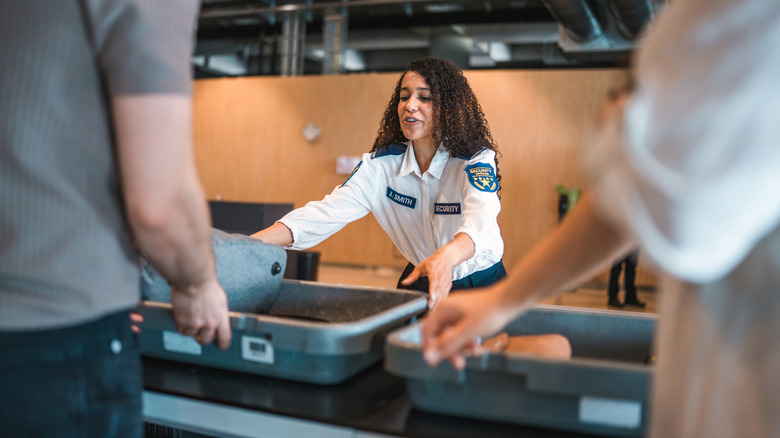
It's not uncommon for airport security to feel like the most stressful part of a trip, especially if you aren't frequent flyers, or don't fully know what to expect from the Transportation Security Administration (TSA). Just the thought of those long lines, unfamiliar procedures, and the fear of missing your flight can lead to an anxious situation. That said, while the process may seem unpredictable to passengers, TSA officers actually follow structured protocols intended to keep airport security checkpoints efficient and safe.
In fact, agents are trained to observe passenger behavior and identify risks, including flagging certain situations for secondary screening. However, it's also important to understand that being flagged does not automatically indicate that you've done something wrong. Instead, secondary screening — even if it's because you've exhibited an involuntary reflex that caught their eye — helps officers determine who may be involved in something nefarious, even if that individual ultimately ends up being cleared to board.
Nonetheless, the majority of airline passengers typically get through security without issue, especially when they follow all standard procedures and comply with TSA agent requests. And understanding these practices can make the experience far less scary for anyone worried about flying. After all, when travelers know which behaviors may draw scrutiny, they can feel more confident and prepared before departure. In this guide, we'll look at 10 behaviors the TSA watches passengers for with eagle eyes, taking official security policies, general screening principles, and frequent travelers' experiences into account.
Refusing to follow basic screening instructions
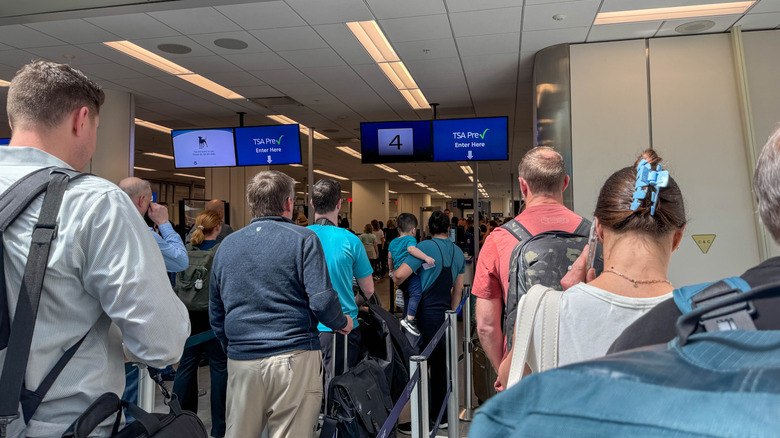
In airport security lines, TSA officers rely on clear, consistent protocols to keep all passengers moving as efficiently and safely as possible. One of the most basic expectations of airline travel is that people comply with routine screening instructions — like the 3-1-1 rule for liquids and removing laptops or other large electronics from bags when asked. As such, passengers who ignore or refuse to follow standard instructions, whether it's borne of confusion, frustration, or misunderstanding, may draw closer attention from TSA personnel. This isn't because agents are trying to unfairly single people out; it's just how the system works.
Screening officers use compliance with basic procedures as a baseline to assess whether further explanation or inspection is needed. When passengers follow written or verbal TSA instructions, it helps the airport security line move more smoothly, lowering the odds that officers will have to interrupt the flow to address a noncompliance issue. This, in turn, minimizes the wait time for all travelers.
The best way to keep things efficient and safe during your next TSA security screening is to listen carefully to directions, politely ask for clarification if you become confused, avoid distractions by staying off your phone, and cooperate with the routine requirements that all passengers are subject to. Remember, cooperation with general procedures is the standard to which all airline travelers are held at security checkpoints.
Carrying tampered with or inconsistent identification
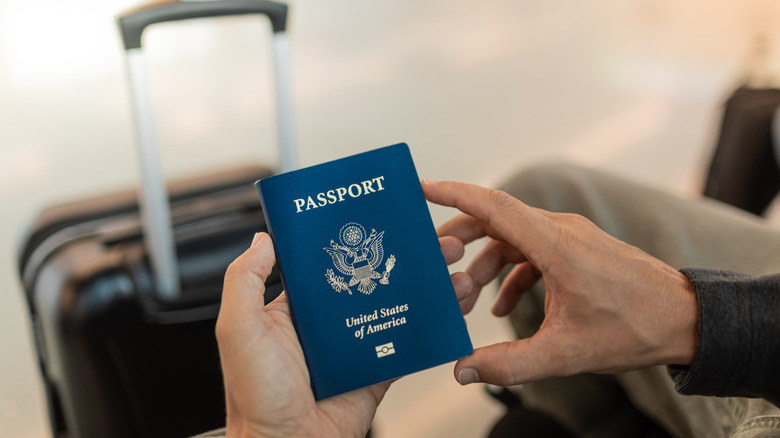
One of the first things TSA officers check at any airport security checkpoint is whether the details on your identification match your boarding pass. When IDs don't align with travel documents, officers may pull a passenger aside for additional questions or verification. Discrepancies may include significant differences in name spelling, birth date, or gender markers. Additionally, any indication that an ID has been tampered with, or is not in its original form, is also likely to raise alarms for agents — much as it would for bartenders trained to flag fake IDs. Keeping an eye out for potentially falsified identification helps TSA agents ensure that the person presenting a boarding pass is who they claim to be.
Another piece of the identification puzzle is the Real ID program. As of May 2025, U.S. travelers must present a Real ID-compliant driver's license or an alternate accepted form of identification, like a passport, to get through TSA checkpoints. Noncompliant documents, even if they are legitimate, can trigger secondary questioning or, in some cases, prevent travelers from passing through the checkpoint.
For those unable to obtain a Real ID, the recent TSA ConfirmID program is a good option. For $45, the TSA will attempt to verify the identity of passengers without compliant identification for a limited 10-day travel window. However, the agency does not guarantee success. Additionally, note that ID discrepancies don't automatically mean a person won't be able to board, but they do mean that TSA may take extra time to confirm who the individual is. Having unaltered, up-to-date documents and a Real ID is the easiest way to avoid problems. For those with TSA PreCheck, there are even more convenient screening methods available.
Leaving bags unattended
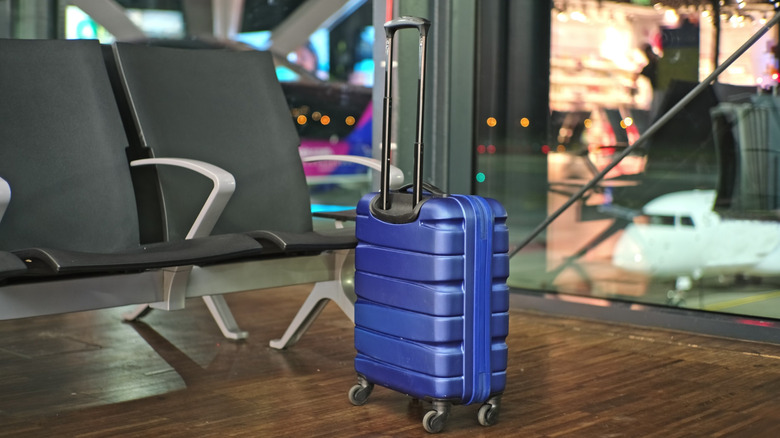
Anyone who has ever been in an airport has undoubtedly heard the ubiquitous "unattended baggage" announcement. Walking away from your baggage is a behavior that will absolutely draw additional attention from TSA officers, and for good reason. Unattended luggage is considered a potential security concern because it could contain prohibited items or, in the worst circumstances, explosive devices.
As a result, the TSA often treats neglected bags as a risk — even if they end up being harmless. This was the case in San Antonio in December 2025, where a bomb squad inspected an unattended suitcase that was ultimately found to be filled with music gear. Inspecting seemingly abandoned baggage isn't meant to cast suspicion on an individual traveler, but to maintain a safe and orderly environment for everyone.
The TSA's focus on unattended items is similar to security protocols in many public places. As a matter of fact, the Department of Homeland Security (DHS) has sponsored major public-awareness campaigns encouraging travelers to report unattended items. The visual cue of a bag or package with no nearby owner is a red flag for any government employee involved in airline or transportation safety. The easiest way to avoid a problem with your luggage is elementary: keep your belongings with you at all times in the airport. And, remember, if you ever feel uncomfortable about a situation involving another passenger's baggage, alert your nearest TSA agent immediately. Even if the situation ends up being benign, this is the right thing to do.
Attempting to speed through security lines
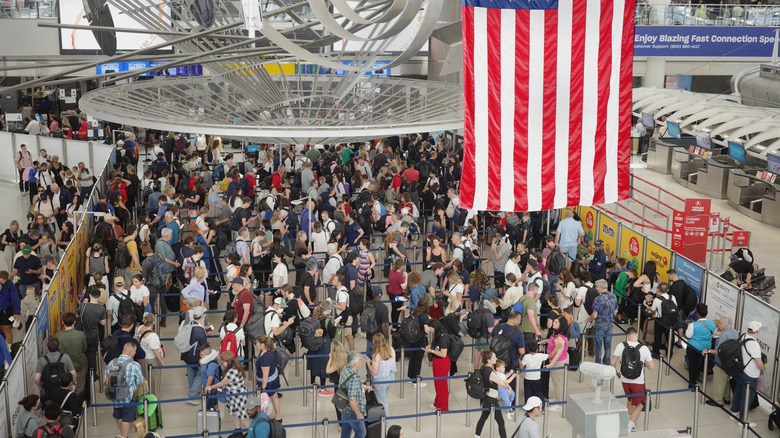
Even when you are racing against the clock to make a flight, weaving in and out of security lines or trying to "beat the system" by jumping from lane to lane can garner unwanted attention from TSA officers. To the passenger, repeatedly switching lines can seem like an innocent way to save time, but to TSA agents, it may seem as if the individual is attempting to avoid something or rush through the checkpoint to get away from security officers. Thus, agents may pull the person aside to uncover if there's a legitimate reason for the behavior. Which means that, ironically, trying to rush could eventually delay travelers in the long run.
Between March 2023 and April 2024, over 300 airline passengers attempted to circumvent at least some part of the security process in U.S. airports, often unintentionally while rushing. One TSA agent on Reddit cautioned, "Nothing will make my search more precise than someone saying they are in a hurry."
The TSA is not trying to penalize nervous or crunched-for-time travelers, though. At the end of the day, however, it's the agency's job to ensure that no potential threats are inadvertently missed during the screening process. To avoid scrutiny, especially during peak travel times like holidays and Spring Break season, arrive at the airport about two hours before domestic departures. This gives you plenty of time to traverse the TSA security line, reducing the temptation to jump lines or hurry through other parts of the checkpoint. When all passengers move at an efficient, even pace, everyone gets through the line quickly, and TSA agents can focus on keeping everyone safe rather than on screening hurried travelers.
Unusually nervous behavior
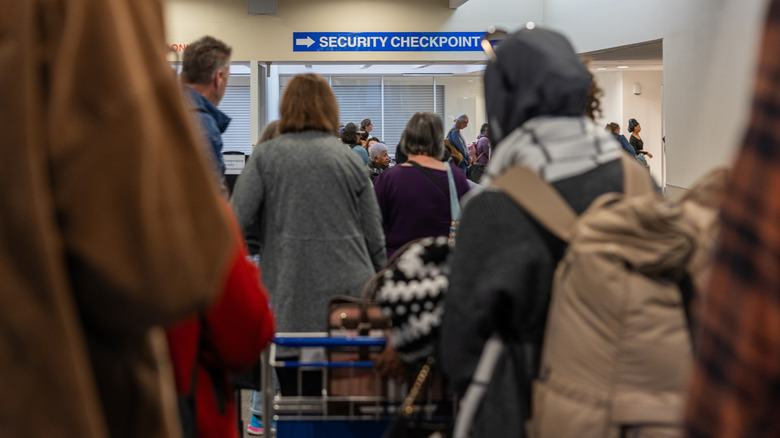
There's absolutely nothing abnormal about getting a little flustered in an airport security line. In fact, about 69% of Gen Z travelers alone experience travel anxiety! However, certain nervous behaviors may catch TSA agents' eyes. This includes nonstop talking, frequent throat clearing, or visibly profuse sweating. Officers are also trained to be hyper-aware of travelers who refuse to make eye contact or who have "shifty eyes" that are constantly darting around the security area. These are all typically signs that someone may have something they're trying to hide, or that they may be planning to engage in nefarious activity either in the airport or at their destination. If a traveler is exhibiting excessively anxious behavior, the TSA may pull that person aside for secondary screening.
Travel anxiety alone is not cause for alarm, though, and TSA agents understand that many passengers suffer from nerves, especially if they are running late or don't fly often. However, a person is more likely to get flagged when nervous actions are extreme — think a full-fledged panic attack — or if they occur alongside other red flags, like line jumping or refusing to follow standard protocols. This isn't meant to be a snap judgment of the traveler's character, but simply a behavioral assessment that aligns with overarching TSA training.
Travelers who know they get nervous at the airport security gate should take slow breaths, focus on following standard procedures, and make eye contact with TSA agents. Performing these grounding rituals can also calm your mental state, even if you're not on your way to a wellness-centered destination.
Answering questions inconsistently
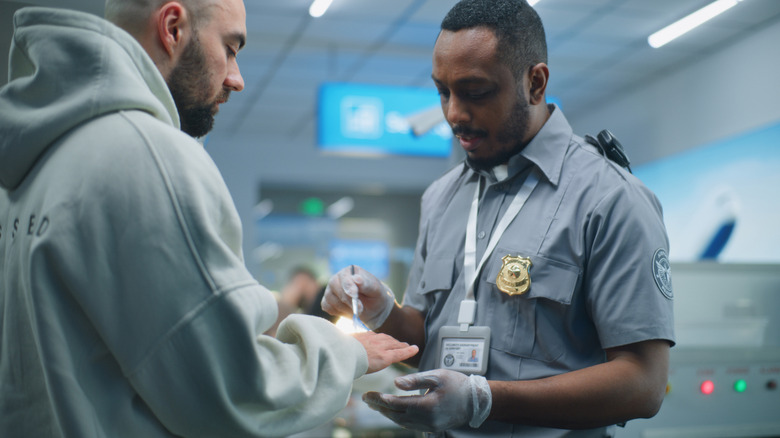
Airport security screening sometimes includes brief, routine questions about a passenger's travel plans, destination, and ID documents. Most travelers, from both the U.S. and abroad, typically answer without issue, which means the security process continues efficiently. However, when a person's responses are inconsistent or contradictory, TSA officers — and Customs and Border Protection, upon entering or leaving the country — may refer the individual for further questioning.
This situation can occur in a few scenarios. If, for example, a traveler changes their story regarding travel dates, lodging, or the purpose of the trip, it can be a warning sign merely because these basic details should be straightforward. It could also be a red flag if a traveler couldn't answer basic identifying information about themselves, such as their date of birth or marital status.
Groups and couples traveling together should also be aware that their answers may be assessed in aggregate. Answering the same questions differently during separate interviews may lead officers to follow up at customs or TSA checkpoints. Consistent responses to questions reassure authorities that everyone has the same agenda and intentions for the trip. While this particularly applies during international customs screenings, which often involve more in-depth questioning than standard TSA security lines, the principle applies to domestic travel as well. Providing consistent answers to any questions the TSA will help travelers pass through security as quickly and easily as possible.
Trying to conceal or hide prohibited items
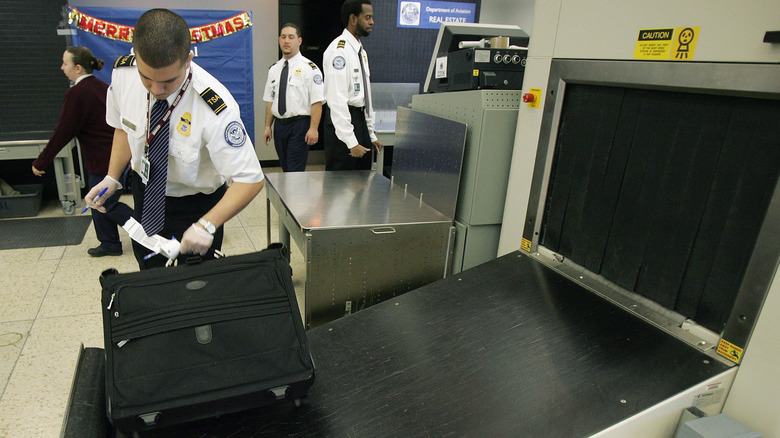
Even if a traveler didn't mean to pack prohibited items in their carry-on baggage, this behavior is almost certain to trigger a secondary inspection. TSA guidelines clearly spell out what is allowed in carry-ons and checked bags, and even the smallest problem — like a bottle of shampoo that is one-ounce over the size limit — can prompt an officer to pull your bag for a closer look.
When this happens, TSA agents are merely performing their most basic job function: ensuring that only approved items pass through the conveyor belt. Even everyday items, including some baby toys, salt (white powder is almost always suspicious), and souvenirs (like fake pirate swords from the Bahamas or lightsaber hilts from Disney Parks) can show up on X-rays in ways that require further clarification. On the other end of the spectrum, though, some luxury appetizers, like charcuterie, generally won't phase the TSA whatsoever.
With that in mind, the most obvious way to avoid additional baggage screening in the security line is to double-check your items with an updated TSA checklist before you leave home. Pay careful attention to rules about sharp objects, electronics, hair styling tools, and sports equipment. It's also smart to keep your bag organized so officers can quickly complete their assessment and get you on your way if your suitcase does happen to get flagged. Fortunately, in situations involving prohibited items, a fast repack or simple explanation resolves the initial problem.
Aggressive or disruptive conduct
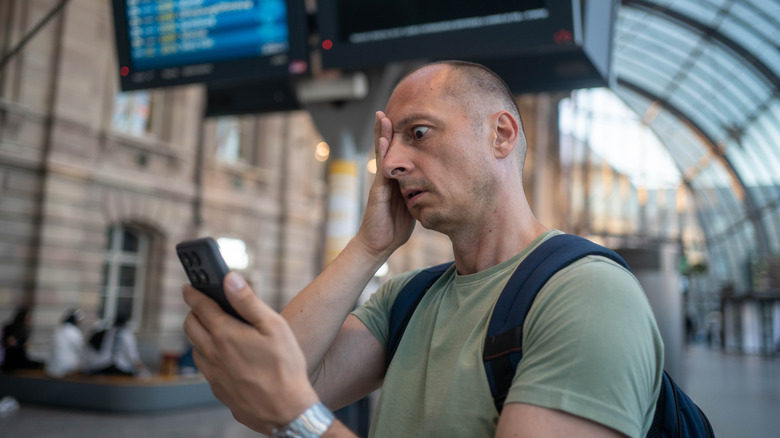
Not engaging in this type of behavior at the airport (or any public place) might feel obvious, but it's worth laying out clearly. The TSA will generally take a second look at passengers who use aggressive verbal language, confrontational body language, or act in a generally hostile fashion at a security checkpoint. The agency takes this so seriously, in fact, that an official X post during the 2025 holiday season read: "Reminder: Passengers who engage in unruly behavior at the checkpoint or inflight may face substantial penalties and possible prosecution on criminal charges." The TSA has also previously noted that assaulting an officer could result in criminal charges and/or paying a fine as high as $17,062. Thankfully, most travelers never display aggressive conduct, but stress, flight delays, or frustration can sometimes cause sharp reactions that draw attention.
As noted, the TSA regularly reminds the public that threatening speech, physically attacking officers, or becoming otherwise agitated are not behaviors that will be tolerated at checkpoints. The calmer and more courteous travelers are, the easier and smoother the airport security process is for everyone. Even during unfortunate circumstances in which delays or misunderstandings happen, staying respectful and patient can go a long way toward resolving the issue, whatever it is.
If you do find yourself feeling angry during an interaction with a TSA agent or another member of airport personnel, practice a moment of mindfulness, try some calming airport-friendly yoga poses, or even find an intentionally zen place to relax within your local airport complex. Before you know it, you'll be on your way to your destination — whether it's visiting your hometown or checking out one of the most iconic tourist attractions in the world.
Suspicious travel activity
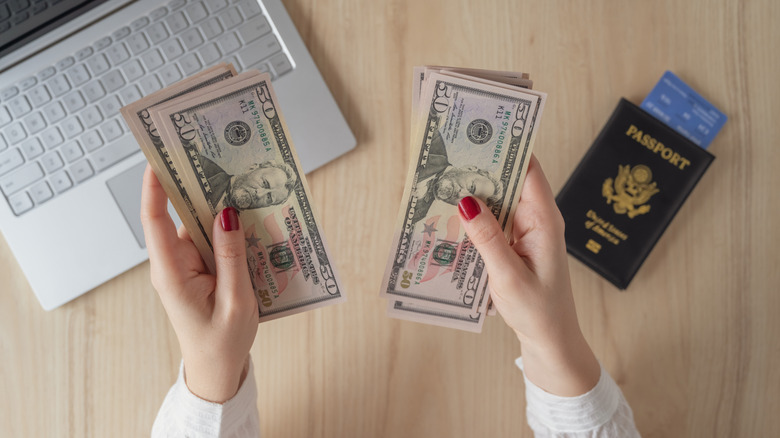
Some traveler behaviors draw attention from TSA officials because they are atypical in the context of everyday business and leisure trips. For instance, buying a one-way international ticket with cash, can be a red flag for airport authorities. On its own, paying cash for a last-minute plane ticket certainly isn't illegal, but it could certainly prompt additional questioning, especially alongside other factors like nervous behavior. Another thing that might raise TSA agents' hackles is trying to pass through security with an unusually large number of expensive electronics. A bag full of iPads or multiple laptops can attract attention because it may remind officers of scenarios involving theft or smuggling. Furthermore, airline passengers should be wary of traveling with large sums of cash if they want to avoid potentially being flagged.
While these sorts of actions do not always signal legitimate wrongdoing, TSA officers keep their eyes peeled for out-of-the-norm items or actions that may warrant additional screening. It's also worth noting that carrying items like cash and electronics is not inherently a red flag. People travel with these things frequently for legitimate reasons. However, since airport screening is, by its very design, engineered to eke out anomalies, traveler behaviors that seem abnormal in the context of day-to-day travel may seem suspicious. TSA protocols are required to follow all American civil rights and anti-discrimination laws, so travelers shouldn't panic if they are flagged for potentially suspicious travel activity. As long as one has logical reasons for one's actions, there probably won't be further problems.
Attempting to distract officers
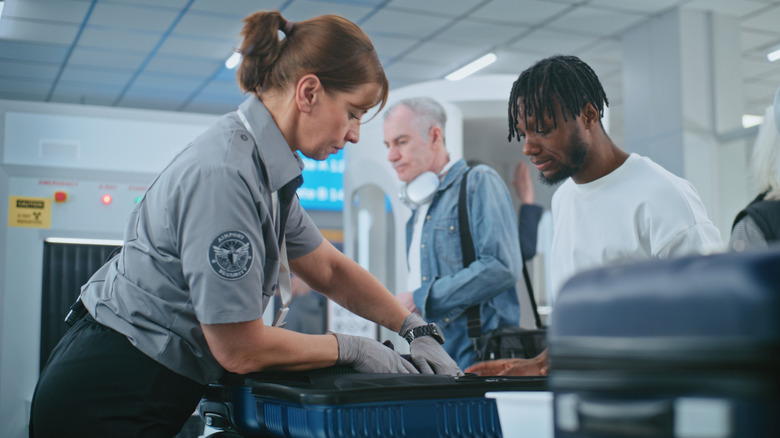
If it appears that a traveler is deliberately trying to divert a TSA officer's attention — such as by causing a commotion, starting a strangely timed conversation, or actively pulling focus away from a piece of luggage — the behavior is likely to arouse suspicion. Bear in mind, however, that ordinary conversation or asking for clarification regarding instructions is not a red flag. TSA officers know that travelers may have questions, particularly if flying is new to them. When agents request secondary screening, it's typically because a passenger's behavior appears coordinated to interfere with the security process.
It's also important to be aware that interfering with or disrupting airport screening personnel is actually against federal regulations and could result in civil penalties under federal aviation security regulations. For most travelers, this will never be an issue. As long as passengers calmly proceed through security and allow officers to complete their tasks without interference, there should be no problems whatsoever.
Methodology
To compile this guide, a variety of sources were used to gather a complete picture of how the TSA approaches additional screening. The r/tsa subreddit was a huge help, as current or retired TSA agents answer questions and provide insights about a variety of topics, including security. Additionally, the official TSA website, other government sites, and news organizations like ABC News were used to verify real-world incidents and security responses. Finally, high-authority travel websites like Daily Passport, Travel Pulse, Frommers, and Backroad Planet also assisted. In some cases, legal websites, including Meltzer & Bell and Manifest Law, provided information regarding things like passenger rights and civil penalties associated with security violations.