

Michigan's Scenic National Lakeshore Has An Infamous Hike That Could Cost You $3000
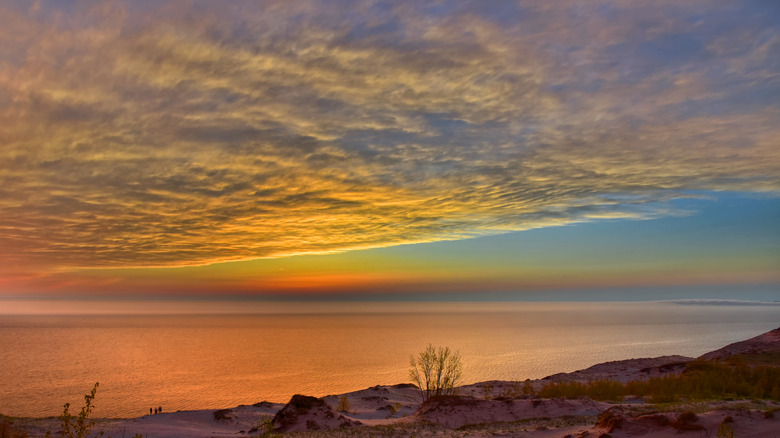
With the highest point in the state being less than 2,000 feet, Michigan doesn't seem like a place with killer hikes. However, on the northwestern corner of the state's Lower Peninsula, you'll find a hike that's as painful on your legs as it is on your wallet (and maybe your pride) if you can't finish it — $3,000 hard. Alongside the picturesque sandy shores of Sleeping Bear Dunes National Lakeshore lies one of the most notorious hikes in the country, descending 450 feet from the overlook at Stop #9 along the Pierce Stocking Scenic Drive. A nearly vertical wall of sand stands atop incredibly scenic views of the lake; however if you're daring, it's the starting point of a tremendous story, no matter how it ends.
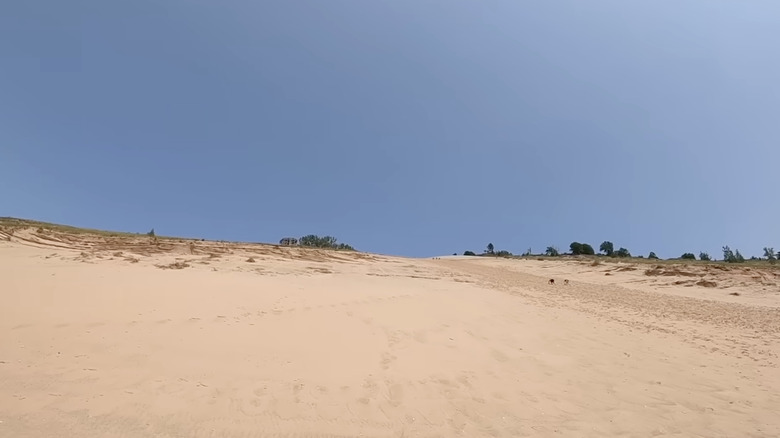
While it may take just a few moments to scale down the dune, or run to the bottom – though it is not recommended — climbing back up is another event in itself. Even though it is less than one-tenth of a mile, it will be a slog. The sand can reach temperatures of 150 degrees Fahrenheit in the summers, and you'll have no shade from the scorching sun. And if you can't make it on your own, you'll have to pay for your own search-and-rescue mission, which will start at $675, according to News Channel 3.
Changes have been made to the overlook in recent years. For one, the scenic viewing platform has been taken out, and a sign warning of $3,000 rescues has been replaced, as such costs are only reserved for rare situations requiring a pulley system. Still, if you decide to scale down the 45-degree, 450-foot dune, be well prepared physically and mentally for a real challenge on your way back up, and if you're unsure, talk to the park's rangers or Preventive Search and Rescue Teams.
Exploring the sand dunes at Sleeping Bear Dunes
Even though Sleeping Bear Dunes' hike takes most of the spotlight on social media, the park has more than just one 450-foot dune. The park has 200 miles of beautiful sand dunes and lakeshore to play on and was once voted as the "Most Beautiful Place in America" by viewers of ABC's "Good Morning America," beating out Sedona in Arizona and Grand Teton National Park. While the crystal-clear waters and sandy beaches are perfect for a day on the water, the park has several campsites if you'd rather spend the night mapping starry skies after watching a stunning sunset. The park's main campsite, the Platte River Campground, is just minutes from several inland lakes in the park and Lake Michigan and has comfy amenities, including hot showers, though be sure to book early if visiting during the summer.
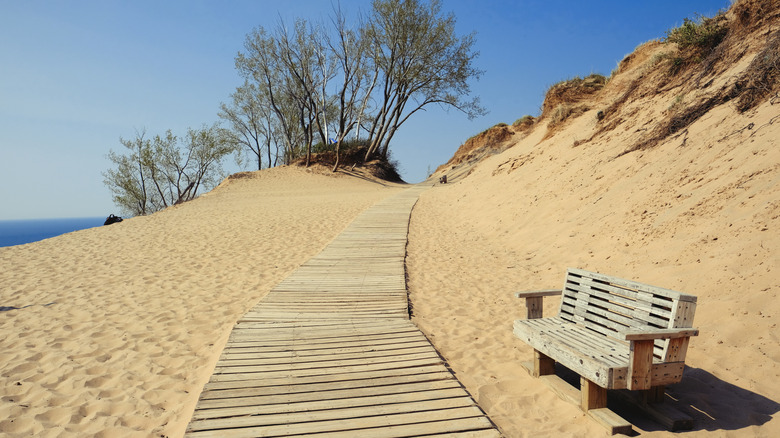
Being home to the world's largest collection of freshwater sand dunes, Sleeping Bear Dunes has dune climbs and trails for the whole family, including one stretch — known simply as the Dune Climb — where you won't need to call for a rescue in case your legs give out. Fuel up with a picnic lunch below the hill, then scale to the top for views of Glen Lake. This climb isn't nearly as strenuous, and if you get tired halfway, you can run down. Make sure to bring plenty of water and snacks, slap on sunscreen, and take your time. In addition to water, be sure to bring electrolytes to minimize dehydration. It's not hiking in Arizona's picturesque Grand Canyon, but having nothing but sand to tread makes for a real challenge.
Planning your trip to Sleeping Bear Dunes National Lakeshore
Sleeping Bear Dunes is one of Michigan's top hot spots that belong on your bucket list. If you're flying in, Grand Rapids' Gerald R. Ford International and Detroit Metro are the closest major airports, though they're both several hours away by car across the state. A closer option is Traverse City Airport, which offers flights to 19 cities across the Midwest and East Coast, including the three airports with the most nonstop flights in the country (Dallas, Atlanta, and Chicago).
If you're looking for civilization, the small towns of Glen Arbor and Empire have exactly what you miss, whether it's a cold beer and burger or a glass of local wine to wind down your day. In both cities, you'll also find historic and charming bed-and-breakfasts and affordable family resorts that start under $100 a night. Once you arrive, swap out your car for a bicycle or e-bike and explore the 22-mile-long Sleeping Bear Heritage Trail that runs through the park and connects both cities.
While most visitors come during the summer, winter is a prime time to try cross-country skiing, snowshoeing, or fat-biking. And yes, you can fly down the dunes on a sled, too, though you'll have to climb (and be careful of thin shelf ice along the shore). No matter what time of year you visit, entry into the park is $25 per vehicle or per person aged 16 and older (pedestrians or cyclists). No matter what time of year you visit, you'll have sweeping views that will take your breath away. Just don't let them distract you on your way up the 45-degree dune!