

16 Essential Items To Pack For Your First Trip To Ireland
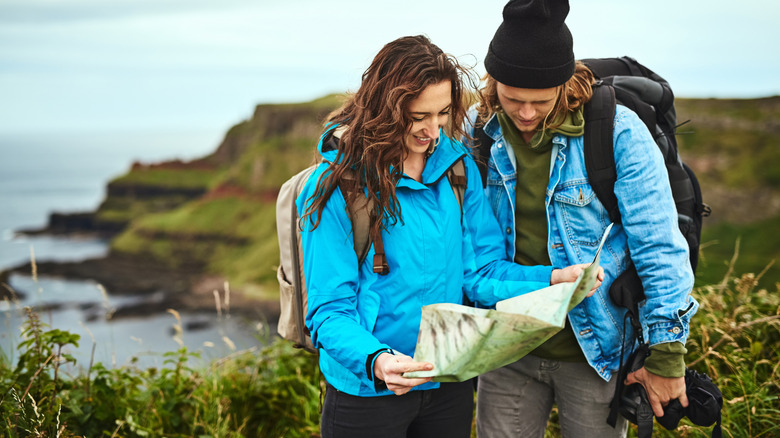
The Emerald Isle is known for its beauty, friendly people, charming villages, lovely cities, and craic (a good time). While these standards seem impossible to live up to, Ireland really is all these things, and more. Better yet, it's also easy to navigate and explore, making it an approachable destination — even for first-time visitors. When it comes to packing for Ireland, even the most seasoned travelers can make mistakes. Thankfully, with a little careful planning, packing for Ireland can be as easy and breezy as a stroll through the countryside.
To make your first travel experience in Ireland as smooth as can be, we've compiled a list of 16 essential items you should bring along on your first trip. Based on the writer's personal experience, advice from travel experts, opinions on Reddit, and tips from locals, this list is a comprehensive packing guide that will help save you from overpacking or getting caught unprepared while exploring the island.
Layers, layers, layers
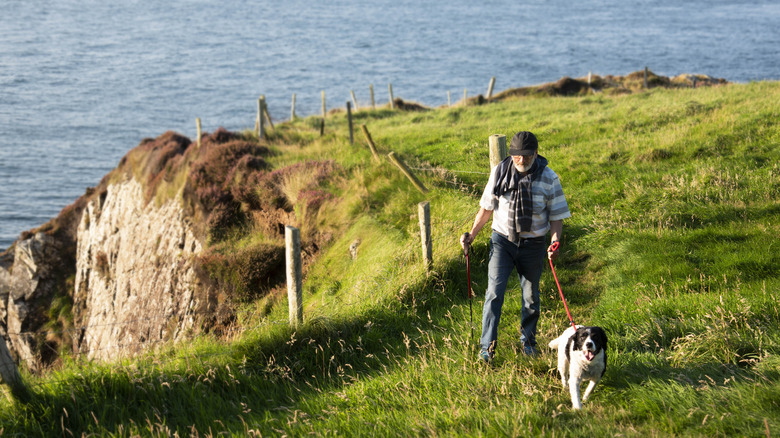
The weather in Ireland is notoriously changeable, no matter the season. So much so that locals say you can experience four seasons in a single day — a cliché that's often proven true. And yet, some of Ireland's best sights and activities involve being outside. As such, the key to preparing for any weather while traveling around Ireland is layers, layers, layers.
Ireland gets its famous green hue from rainy mist, humid weather, storms, and sun interspersed with showers and rainbows. To stay comfortable throughout the day, you'll want to bring lightweight clothing you can easily remove (or put back on), including a waterproof outer layer. As one local on r/irishtourism recommends: "Leave it as late as possible to pack and check the weather," as "it could be shorts, T-shirts and suncream weather, or jackets and waterproof shoes."
Flannel, wool, lightweight cotton, and other breathable fabrics are all good choices that can be worn together or separately. Just don't bring too many, and avoid any unnecessarily bulky pieces. That's what the layering is for, after all! Another tip to avoid overpacking? Choose versatile items that can be mixed and matched for optimal use.
Headphones (with audio jack)

We know you're probably thinking, "Do they even make headphones with wires anymore?" Yes, yes they do — and you're going to want to bring a pair to Ireland. Audio tours are common throughout the country, even in tiny museums and rural towns, and they typically offer a wealth of information.
That said, if you don't want to spend money buying a pair of headphones with an audio jack, which is often required for connecting, having your own is a smart move. Better yet, you can potentially snag a pair for free on your flight over or pick some up at the airport.
You may also want to consider a pair of noise-cancelling wireless headphones for those long plane rides and scenic bus trips. After all, you never know when you'll need earplugs — and this way, you can listen to your soothing nighttime meditation without overhearing your loud neighbors or getting tangled up in a cord.
Sweaters (even in the summer)
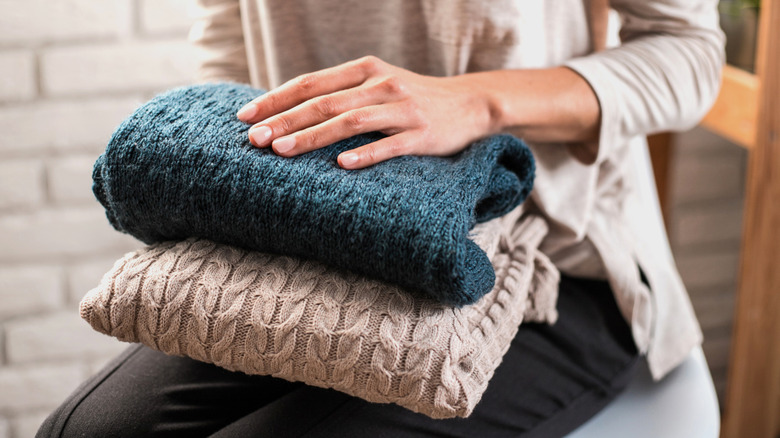
Ireland's potentially unpredictable weather means that even in the height of summer, the chance of you needing a sweater is, well... high. The humidity and wind make it feel colder than it is, and you'll be very grateful for packing that sweater — especially in the cooler evenings.
As for which materials to reach for, wool is an Irish staple for a reason. For starters, it's water-repellent, which is one of the reasons the "Irish fisherman sweater" became so ubiquitous. Additionally, wool is incredibly breathable and retains heat even when damp. That said, the material can be itchy, so a lightweight tee underneath is a must.
Although you can bring your own, an authentic Irish wool sweater is also a great souvenir to pick up. Just make sure to shell out the extra cash for one that's actually made of wool and, even better, by Irish artisans.
Reusable water bottle (with filter)
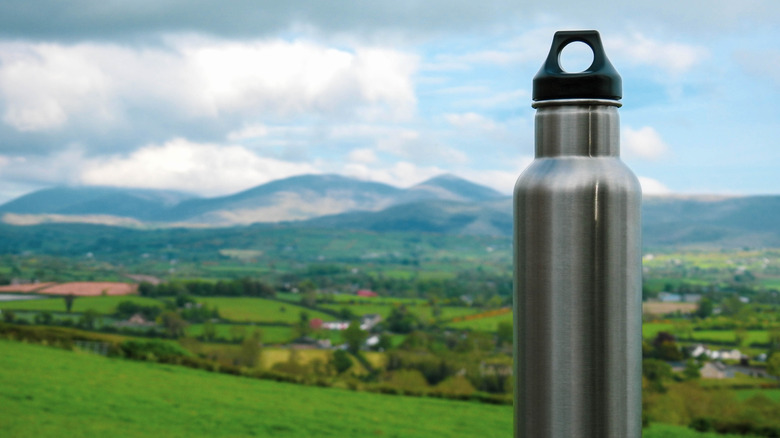
Irish tap water is safe to drink in all major cities and towns, meeting strict national and EU water quality standards (via EPA Ireland). Water refill stations are also common throughout the country, particularly in Dublin, thanks to a local initiative designed to cut down single-use plastic, so bringing a reusable water bottle is a no-brainer.
However, some reports suggest that it may not be the best-tasting, and that it can have a noticeable chlorine aftertaste. In fact, one local on r/irishtourism argues that water in west Cork "is like drinking water from an indoor swimming pool." That said, you can help improve the taste with a water filter, which some water bottles conveniently come with. And voilà! Better for your wallet, better for your taste buds, and a great way to reduce your environmental impact while traveling.
Waterproof jacket with a hood
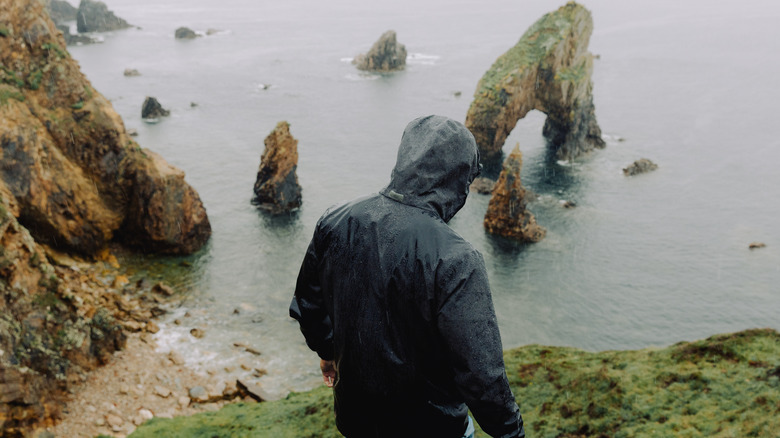
Just like you'll need a sweater year-round in Ireland, you will definitely need a lightweight waterproof jacket with a hood — ideally one that's roomy enough for layers. Even if you're planning on spending most of your time inside Ireland's famous pubs — the "cornerstones of the Irish social scene," according to Rick Steves — you will likely still need a rain jacket. In the winter, a heavier waterproof jacket is helpful, and if not, remember — layers!
A windproof, waterproof combination jacket is even better, especially in darker colors, which tend to be more common in Ireland. A packable one is also handy if you're hoping to save space. And although you may be considering packing an umbrella after all this heavy rain talk, it's best to forgo one. As one local on r/irishtourism helpfully notes: "Rain in Ireland travels parallel to the ground, floats mistily in the air, [and] bounces up off the ground... some falls down directly, but that's only part of it." Another local agrees, writing: "No to umbrellas unless you want them to break."
Trenchcoat
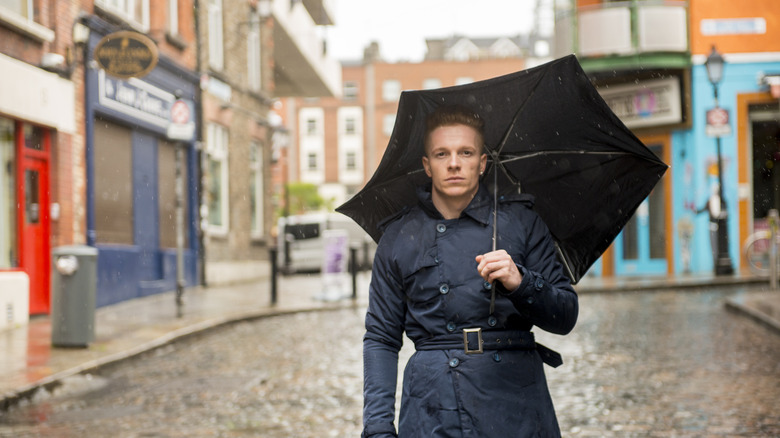
Even with a raincoat, having a slightly nicer option, especially if you're visiting a city, is always a plus. This is especially true considering that wearing casual outerwear can make you look like a tourist in Europe. That said, you can't go wrong with a classic trench coat. Color-wise, black, navy, or tan are always a good bet — although feel free to choose a brighter hue or print if that's more your style. Oh, and make sure to get one that's at least knee-length for even more rain protection.
Ireland is a fairly casual country, and you'll be able to get by throughout the country in just jeans and sweaters — although larger cities are slightly more chic and experimental, especially Dublin. Still, an extra dose of fashion and versatility never hurts, and trench coats are great for those quintessential Irish days where it's misting but not quite raining. Not to mention that they're ideal for the notoriously hard-to-pack-for shoulder seasons.
Universal adaptor
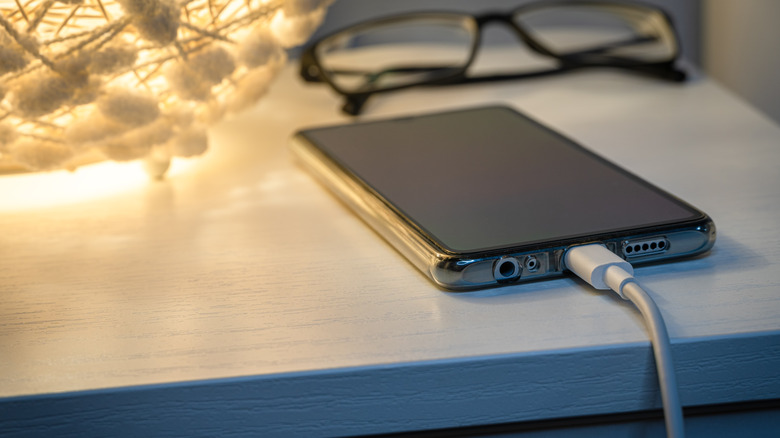
Ireland does not have the same type of plug as the rest of Europe, much less the United States. Instead, the country uses a three-pronged Type G plug with an electricity supply of 230V/50Hz — the same as the United Kingdom, for reference. In other words, you'll want to make sure you bring an adapter to charge your gear. And no, it's not just a common trope in movies and TV shows where the plucky heroine accidentally cuts the power to her entire hotel when she tries to plug in the wrong thing.
Instead of an Ireland-specific plug, however, consider bringing a universal adapter. That way, you'll be able to use it in Ireland, the UK, the rest of Europe, and beyond. That said, make sure to do your research to avoid any damage to your devices or potential electric shocks, and always ensure your adapter includes surge protection. Other tech you may want to consider bringing with you to Ireland? A power bank for extra charging juice and an e-Reader, which will save your back from lugging too many books around.
Guidebook
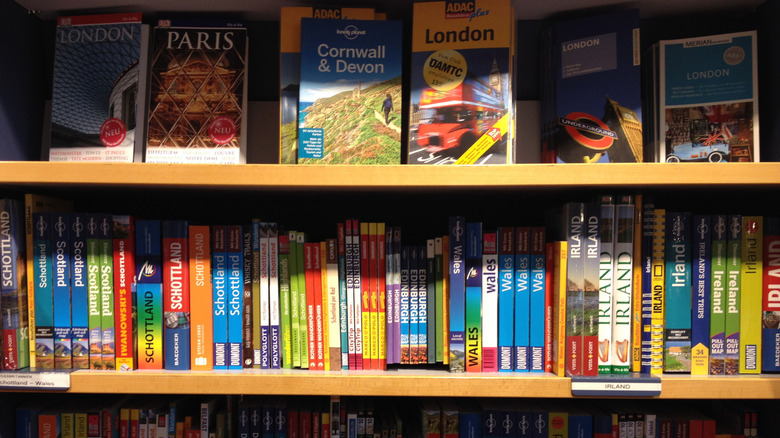
Although it's usually best to leave the heavy books at home and bring an e-Reader, there's one book you should consider bringing along for your trip: an Ireland guidebook. In short, guidebooks are invaluable not just for insights into popular attractions, accommodations, food, and transport, but they also provide cultural context about the country's history and local customs. Even more importantly, there are parts of Ireland that are still remote enough that you may not have reliable cell service, so it's good to have a few analog options.
Although there are dozens of Ireland guidebooks available, several experienced travelers on r/irishtourism recommend Rick Steves, especially for first-time visitors. Meanwhile, some locals also recommend that along with a guidebook, travelers use an old-fashioned paper map in cities like Dublin, since that's the best way to visualize the different quarters in the city. Plus, there's nothing quite like a paper map for helping you get oriented in a new place, no matter how hard your phone map tries.
Journal and pen
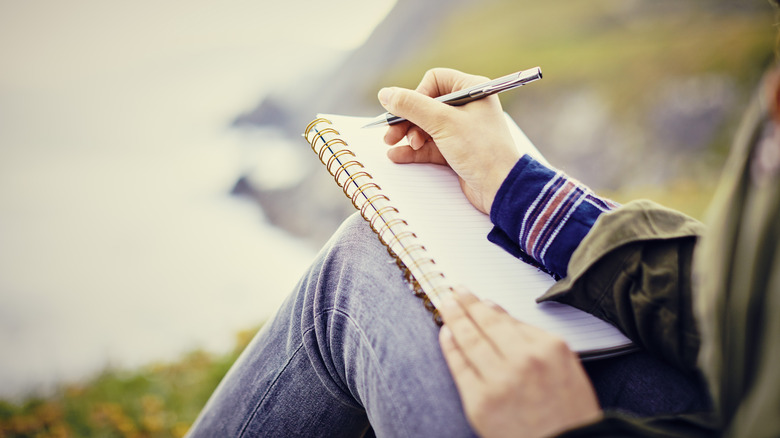
Speaking of paper maps, analog vacations are taking off as digital burnout becomes more common and people realize that unplugging occasionally is important to prevent it. One way to help you stay off your phone in Ireland or on any trip? Bring a journal! Even if you aren't one of those people who obsessively document their travels, a journal and accompanying pen or pencil are handy for writing things down: what you saw on what day, local place names you're destined to forget, scenery or wildlife descriptions, the phone number of that friendly local you met while your phone was dead... the list goes on.
Plus, even if you have the internet at your disposal 24/7 in Ireland, journals are useful. Just make sure to bring a smaller one to cut down on weight and space, or buy a beautiful Irish-themed one to bring home as a souvenir and use along the way.
Comfortable footwear
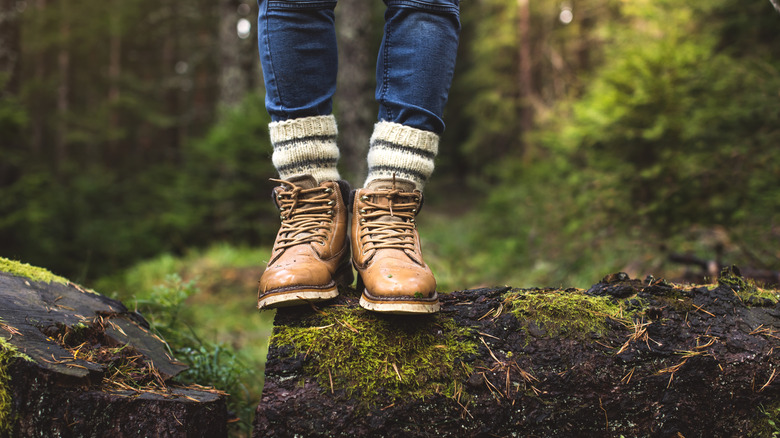
When it comes to figuring out the must-see tourist attractions you can't miss on your first trip to Ireland, every traveler's list will be unique. However, one thing's for sure: Ireland is made for wandering — whether it be through grassy fields, on cobblestoned streets, along dramatic cliffs, or around ancient castles. All of these wandering opportunities have one thing in common: uneven terrain. Therefore, comfortable, durable shoes that you can walk in are essential. After all, those Irish vistas are irresistible, and you don't want to be held back by your shoes.
It's also important to bring shoes that can withstand the rain. While these could be the same as your walking shoes — all that truly matters is comfort — if you have the space, you might want to consider packing a classic pair of Wellington-style rain boots or Chelsea boots, which provide style and protection. Ideally, it will be a pair that's been broken in, too.
Even when it's not raining in Ireland, there's still a lot of dampness to be found. Since you don't want to mess around with wet, uncomfortable feet, a key component of staying dry is socks. Specifically, merino wool is always a winner for warm socks that are both moisture-wicking and don't get too toasty. Beyond that, it's naturally lightweight and smell-proof — so, really, it's a no-brainer. Depending on the length of your visit, make sure to pack at least three pairs of socks for your trip. That way, you'll always have an extra pair handy.
Scarf & hat
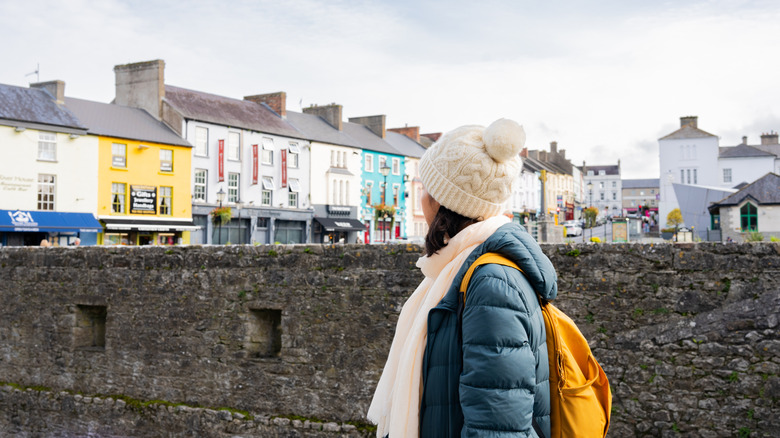
Even in the summer, it's handy to have a scarf or scarf-like accessory in Ireland. Opt for a large yet lightweight scarf that will provide an extra layer for warmth, and that can double as a blanket for long plane or bus rides, a way to mix up your outfits, a stylish addition to any look, or, in a pinch, a towel. In the winter, bring a wool scarf for extra warmth.
Hats are also a plus. A baseball cap is foolproof for adding extra protection from both the sun and the rain, and they even come in warmer versions. Meanwhile, if you're visiting in the winter, a beanie or ear warmers will make your outdoor time much more enjoyable. And, yes, just like everything else made of wool, you can snag a wool hat in Ireland, too. Bonus points if you purchase a traditional Irish tweed cap!
Camera & binoculars

Nowadays, your phone camera can take pretty incredible photos. Still, Ireland is so gorgeous and the light is pure magic that, as you explore all of the amazing must-see Irish tourist attractions, you may want something with a little more powerful to capture it all. A mirrorless camera is a good, lightweight option that still adds some extra oomph. That said, Ireland can have low, tricky, or changeable light. As videographer Andrés Brenner notes, "With a phone, you might never match a camera in low-light photography" (via World Nomads). Additionally, if you're planning on doing any wildlife watching, cameras tend to have much better zoom.
Speaking of wildlife watching, Ireland has a lot of it — especially along the coast. That said, consider bringing binoculars along with you, which will make it easier to spot the ever-adorable puffins or the occasional whale or dolphin. Nowadays, there are plenty of lightweight options you can bring along without weighing your bag down.
Sunscreen
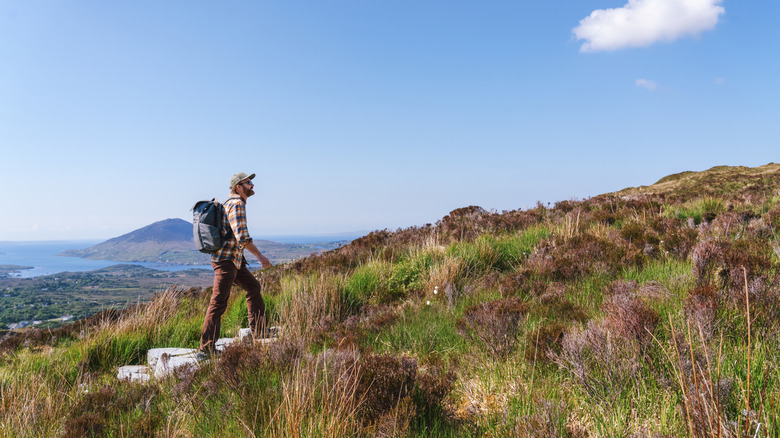
Despite all this talk of rainy and cold weather, the sun does shine in Ireland. Rain doesn't cancel out sunshine, and many travelers are often surprised by just how bright things can be. However, Ireland's weather is nothing if not unpredictable — which means sunshine can appear and disappear quickly. That unpredictability is exactly why the Irish sun can be sneaky, so make sure to bring that sunscreen (or suncream, as the locals say), with a rating of at least SPF 30.
In addition to sunscreen, sunglasses and a sun hat are also essential — even in the winter, when the sun can be bright and deceiving, impairing your vision, and even leaving behind a sunburn in its wake. While Irish summers are mild and not guaranteed to be warm, the country's northern latitude means that the summer days are long, with the sun rising as early as 4 a.m. and setting after 10 p.m. between June and July.
Swimsuit
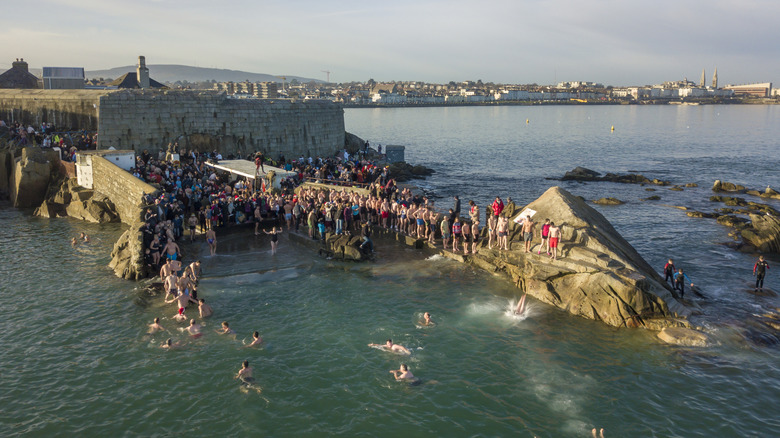
Just like there is sunshine in Ireland, there's also the occasional opportunity for swimming — and not just in pools, although there are plenty of those on the Emerald Isle, but also in the wild, in ponds, lakes, and along rivers and beaches. Better yet, they're all typically crowd-free and serene, even on sunny days.
However, as you can imagine, wild swimming in Ireland is the epitome of cold-water swimming, so be prepared for the cold; they say the adrenaline rush afterwards is worth it. A one-piece or insulated swimsuit can help mitigate the chill, but the best way to get through it is to grin and bear it. Also, consider bringing a small towel or even a Dryrobe if you are hoping to embrace wild swimming during your visit. That way, you won't have to worry about being too cold afterward.
eSIM

For travelers who started exploring at the cusp of the digital age, traveling without a phone was basically a rite of passage where hunting for internet cafés was an integral part of any trip. Once smartphones became more common, it turned into hunting for Wi-Fi signals. Although that's mostly changed, it's still much more efficient (and affordable) to purchase a SIM card — or, better yet, an eSIM — rather than accumulating those dreaded roaming fees.
Plus, once you have an eSIM and can tap into the local network, you'll never really go off-grid, and staying in touch will be effortless. As a bonus, if you're planning an Irish road trip, an eSIM will also let you use your phone as a GPS, which is helpful while exploring those winding roads.
Sturdy luggage and day bag
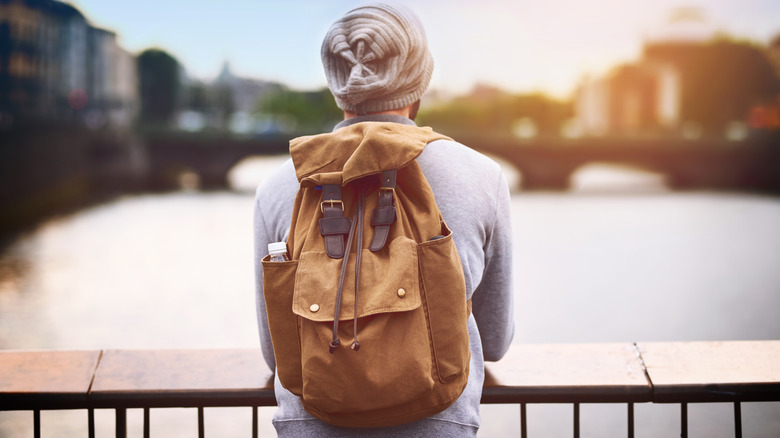
When packing for your trip to Ireland, you'll want to consider a backpack or day bag (waterproof won't hurt) to carry all your essentials. However, bringing a fancy designer bag is a common clothing mistake to avoid, as it can make you a target for pickpockets or get damaged during your trip. Also, although Ireland is considered one of the safest countries to visit in 2026, it's never a bad idea to have a little lock on your backpack — or your suitcase!
Choosing the best luggage for international trips can seem like a minefield, but considering Ireland's notoriously uneven terrain, avoid bringing a suitcase with wheels if possible. Packing light is always the best choice, too, and it will help you navigate everything from cobblestones to rocky paths with more ease. Finally, a reusable tote bag is always handy to have on a trip, as is a foldable duffel, in case you go a little overboard buying Irish handicrafts to bring home (no judgment).
Methodology

For this article, we consulted travel experts and scoured Ireland travel forums on websites like Reddit and TripAdvisor for tips from people who've visited — and, better yet, from locals themselves. We also consulted government websites and tourism boards for information regarding weather, safety, and specific destination data, ensuring up-to-date, useful tips. Finally, the writer included a hefty dose of personal experience (ask her how she knows an umbrella in Ireland isn't a smart idea).
Besides the aforementioned list, it's also a good idea to bring other essential items, including your passport, any necessary medications (especially prescriptions), cosmetics, important documents (such as a copy of your passport and travel insurance), and toiletries. Other must-haves to consider? A power bank, gloves, cash (in multiple currencies), and earplugs.
Finally, you should also never take a trip without checking your travel documents, making a few key reservations, and alerting your bank that you'll be on the road — otherwise, you might be in for an unpleasant surprise.