

America's Most-Visited National Park Is A Glorious Haven For Nature Lovers
Americans and visitors to the United States love the great outdoors. In 2024, the country's national parks saw their biggest influx of visitors on record, with nearly 332 million recreational visitors, according to the National Park Service. And why not? The United States has 63 national parks, after all, and a variety of landscapes and ecosystems to explore.
But sitting at the top of the most-visited list is the Great Smoky Mountains National Park, which stretches across the states of Tennessee and North Carolina. In 2024, more than 13 million people headed to the park, which is especially suited for lovers of nature. In fact, Great Smoky Mountains National Park is often considered the most biodiverse park in the national park system, with 19,000 documented species of plants and animals living there. That said, scientists and environmentalists expect there are even more species to be discovered within the 800 square miles that the park covers along the Appalachian Mountains.
This biodiversity is fueled by the unique climate of this mountainous terrain, as well as the fact that it is believed those mountains are ancient; estimates suggest that the Appalachian Mountains formed over hundreds of millions of years, making them among the world's oldest. This, combined with an extensive trail system, places Great Smoky Mountains National Park near the top of the list of the best U.S. Parks for hiking.
Explore nature at Great Smoky Mountains National Park
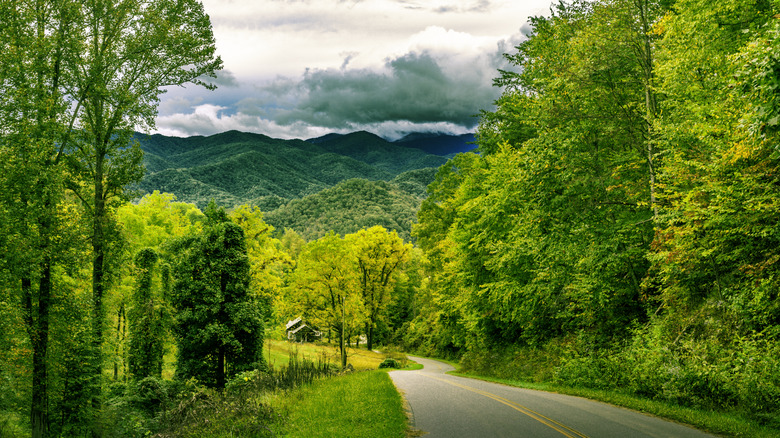
From high-peaked mountains to gushing riverbeds, Great Smoky Mountains National Park provides nature lovers with plenty to explore and enjoy across its 522,427 acres. The park also offers access to the natural wonders contained within 800-plus miles of hiking trails. Since the park and its trails are open year-round — with some seasonal closures due to weather — every season brings different views for those seeking to reconnect with nature.
Summers are when foliage is at its fullest in Great Smoky Mountains National Park, and the cooler fall air brings an explosion of color rivaling even the most picturesque fall foliage of the national parks of Canada. Winters can be very cold in the park and on the trails, but bare trees make spotting wildlife easier. Spring, of course, fills the park with budding trees and wildflowers as the thriving life of the park returns to the surface.
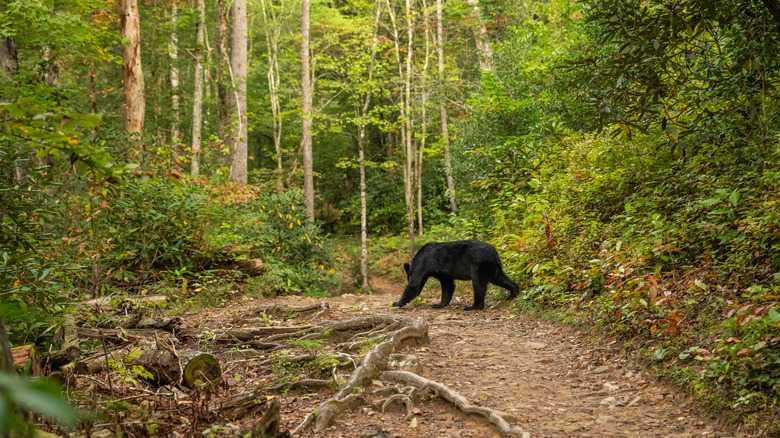
Keep in mind that park authorities are quick to point out that hiking in Great Smoky Mountains National Park can be challenging. As a result, nature lovers looking to hike through its wilderness should be aware of their own fitness level and carry the appropriate supplies. Not only can the terrain be challenging, but there's a good chance explorers could encounter wildlife — and not all of it is always friendly. Specifically, the park is deep within "bear country," meaning black bears are likely always nearby, with increased activity from May through August.
Nature, history, and recreation collide within the park
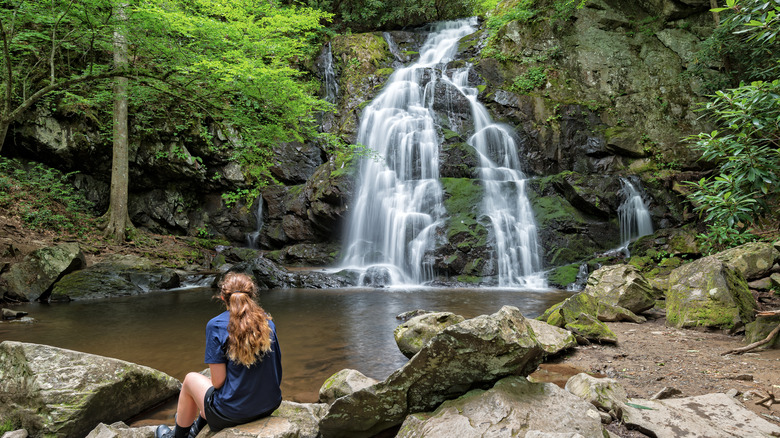
Not only is Great Smoky Mountains National Park a treasure trove of nature's bounty, it's also full of history and opportunities for recreation. Trails allow for hiking, bicycling, and horseback riding, and a dozen picnic areas provide ample opportunities to refuel while taking in the sights. In addition, historic communities with more than 90 historic buildings are found throughout the massive park. Along the way, visitors will likely encounter at least one of the park's many waterfalls. Alternatively, the more daring hikers can head out to explore Ramsey Cascades, the tallest waterfall in the park that requires an 8-mile roundtrip hike.
Fortunately, there is no entry fee to Great Smoky Mountains National Park, as of this writing. This means that the new ID rule impacting visitors to the national park system in 2026 shouldn't affect anyone's visit. Parking tags are required, however, for those exploring by car. As for access, there are three main entrances to the park, allowing guests to pick the one that suits them: Gatlinburg and Townsend in Tennessee, and Cherokee in North Carolina.
Three airports provide relatively easy access to Great Smoky Mountains National Park. At just 40 miles away from the park's Gatlinburg entrance is McGhee Tyson Airport in Knoxville, Tennessee. Meanwhile, Asheville Regional Airport is located just 60 miles from the Cherokee park entrance. Finally, Greenville-Spartanburg International Airport in South Carolina is about 120 miles away from the park's Cherokee entrance.