

Weird Reasons TSA Might Decide On Additional Security Screening
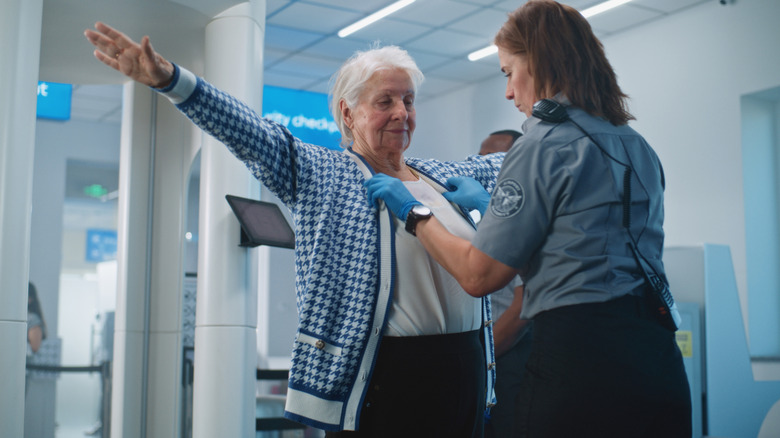
Let's be real, apart from having to say goodbye to our loved ones and always double-checking our bags, doing the funky traveler TSA dance routine of removing shoes, jackets, and toiletries is one of the most hated parts of travel. Whether you're a seasoned pro or a first-time flyer, there's still a chance you might not get the moves right — meaning you won't just have to do it again, but also that you might have to go through a second layer of screening that can take up precious time. While most conscientious travelers go to great lengths to avoid packing prohibited items or taking part in a major security trend that slows screening lines, they can still unintentionally cause delays.
Despite having thousands of people needing to be in the skies, the TSA has been designated by the U.S. government to protect passengers and transportation infrastructure, including at airports. This means that the agency is required by law to screen and vet every person and article passing through security checkpoints until they have been deemed safe. Since the individual TSA officers conducting the screening make the call on what and who passes through security, they may decide to further investigate passengers who are deemed a security threat.
That said, not every additional screening is the result of a serious threat. For innocent passengers, this can simply mean a pat-down, turning on all electronic devices, and a brief chat with TSA before being cleared to fly. Whatever the case, here are some of the top reasons why TSA may take a second look at you before you're allowed through the security checkpoint.
You name is on TSA's naughty list
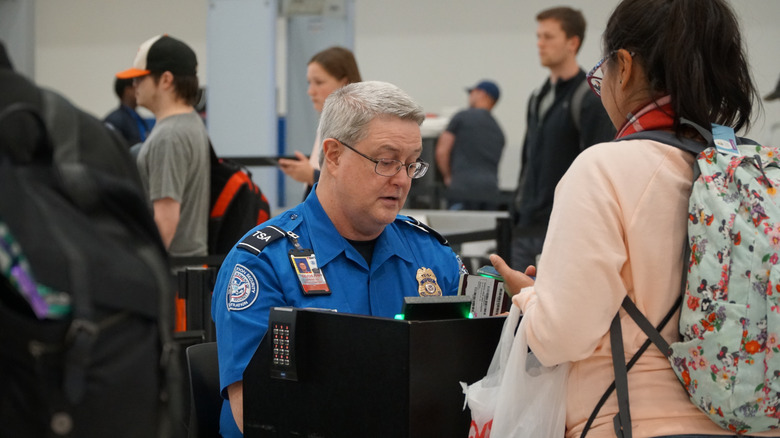
The TSA shares information with federal law enforcement agencies and screens every passenger before they fly. If you have a case of sheer bad luck and share the same name as a traveler that TSA needs to keep an eye on, you'll likely spend more time at the security checkpoint so they can verify you are fit to fly.
Every traveler's name, date of birth, and sex is scrutinized under the Secure Flight program to match federal government watchlists, including the No-Fly List. If TSA spots your name on the "naughty list," officers may decide to pull you aside for additional screening — or they may not even let you fly at all. One common sign you might be slowed down once you get to the airport is not being able to check in online.
For travelers who are frequently held up at security or not allowed to board a flight due to a false positive identity issue, the TSA offers the DHS Traveler Redress Inquiry Program. This seven-digit number provides travelers who have been misidentified with a unique identifier in the system, rather than their name, making it quicker and easier for TSA to verify they're not a threat. Once your application has been submitted, TSA may take more than a month to process it. Although a redress number won't guarantee smooth sailing through TSA, it will make the screening process quicker and easier.
Irregular travel movements
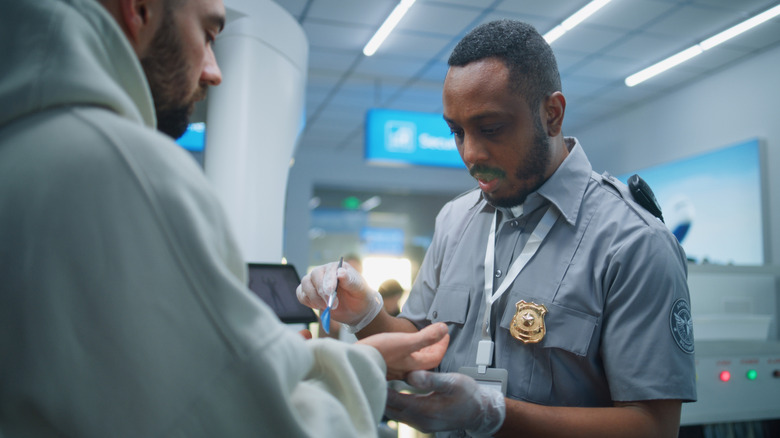
One way to tell you've likely got a date with the TSA is to check your boarding pass — or lack thereof. Travelers who are unable to check in online may have the dreaded "quad" (SSSS) printed across the boarding pass, signaling to agents that you'll spend a few more minutes in line at best — and, at worst, may have to empty your entire suitcase. While the TSA does not specifically state what signals an SSSS being printed on a boarding pass — and there are more than 22 criteria — the designation is normally random, according to a 2023 report by the United States Senate Committee. Some commonly cited behaviors include abnormal travel patterns, such as paying cash for your fare, purchasing a one-way ticket to a high-risk country or city, or flying last-minute.
From my experience, the entire additional screening process — having my hands swabbed, my bag checked, a chat about my trip, and a pat-down — didn't take more than a few extra minutes. Nonetheless, what can slow down the process is being routed through the standard security line. If you do happen to have an SSSS printed on your boarding pass, be prepared to take out and power on all of your electronics while the TSA conducts a thorough search of your hand luggage. Fortunately, if you do travel adventurously, or if the system has it out for you one day, you likely won't be marked for life, and you won't lose TSA PreCheck or Global Entry, either.
Standing out in a bad way
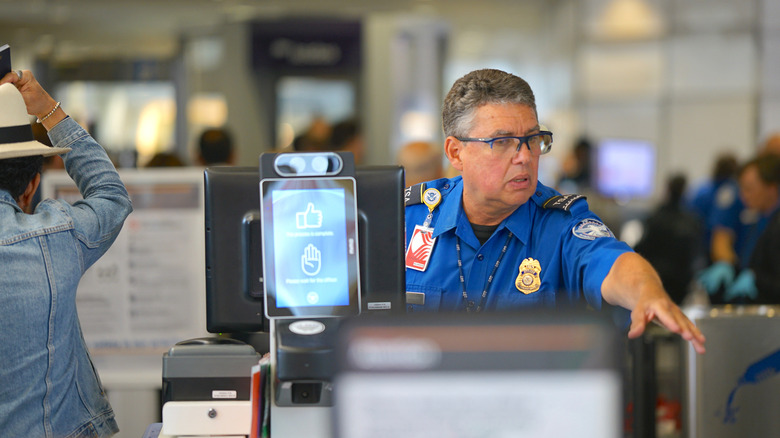
To TSA, security is not a laughing matter, and officers are consistently on watch. Making or cracking inappropriate jokes, putting up a fuss, or exhibiting certain involuntary body reflexes can get you a ticket directly to secondary screening if the agency's Behavior Detection Analysis (BDA) unit spots something unusual. Along the same lines, while there is no dress code for flying, wearing offensive clothing is another red flag that can raise eyebrows from other passengers as well as TSA officers keeping watch. Rather than complaining about the checkpoint, taking a few moments to be better prepared — that means checking your pockets and emptying your water bottle — and passing through with a smile can help boost morale, make their highly repetitive jobs easier, and keep you safer.
For travelers who want to take the opposite route, the agency can levy fines. According to the Code of Federal Regulations (49 CFR, Part 1503.301), the TSA has the power to issue formal warnings and fines to travelers for severe breaches of security. A bad joke or a bad attitude that stops screening can cost over $2,500, while serious violations can cost you upwards of $17,062 and tack on criminal charges. While TSA does not have the power to enforce criminal laws, officers can still contact airport police or federal law enforcement to conduct an investigation if a threat is identified. On that note, TSA can also contact federal law enforcement to question passengers who are suspected of breaking federal laws based on irregular travel patterns.
Carrying or using medical devices
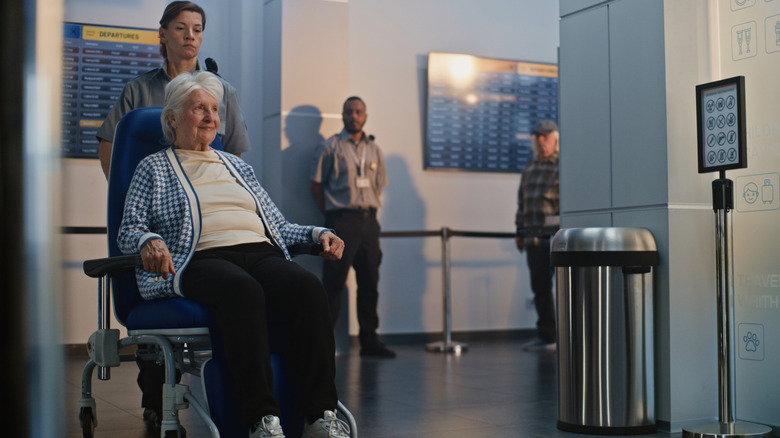
We've all heard stories of TSA giving disabled passengers or travelers using medical devices a second look while passing through security. However important a service animal or a medical device may be to a passenger, the TSA will still need to conduct additional screening to ensure neither poses a threat. In terms of screening procedures, the TSA recommends that travelers inform officers about any medical conditions or equipment they are carrying before going through security. If you know in advance that you'll need more time, make sure you contact them prior to arriving at the airport. You can do this by filling out an electronic request form or calling the TSA Cares hotline to request a Passenger Support Specialist. Once approved, they will stand by to guide you through the process while helping you maintain your dignity and personal privacy during screening.
It's also worth noting that, as a passenger, you do have rights. If you have any internal medical devices, or if you feel uncomfortable passing through a scanner, you can opt for a physical pat-down screening. This can take place in a private room away from the general public without penalty, and a trusted travel companion can be present with you.