

Tourists Love Visiting This Spectacular North American Attraction Year-Round
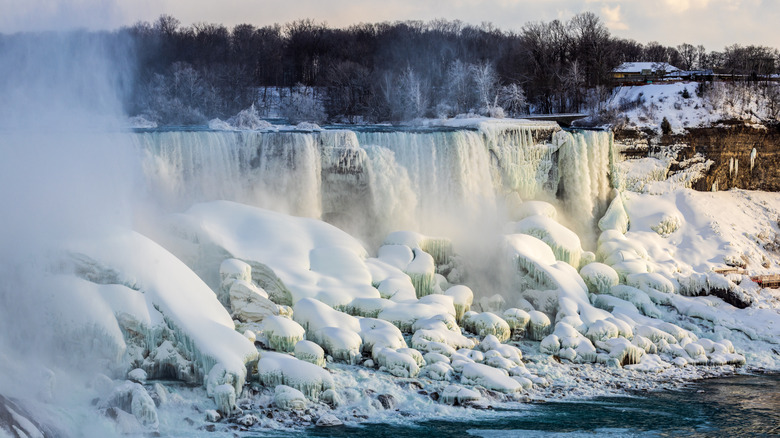
While the recent, severely cold weather has sent many scurrying inside to their furnaces and fireplaces, visitors to the northeast of the United States are bundling up and heading outside. That's because the famous Niagara Falls offer an entirely different experience when the temperatures drop. Instead of greeting visitors with rushing, rumbling, and thunderous water, the natural wonder presents a quieter, frozen-like winter landscape.
According to Niagara Parks Commission CEO David Adames, winter 2026 has produced "the best ice conditions in at least 10 years" (via CTV News). This phenomenon is likely the result of the polar vortex that dipped into Canada and the United States, bringing along sub-zero temperatures to Niagara Falls. This temperature drop, mixed with a lighter flow of water through the falls in the winter months — about 75% of the water is redirected elsewhere to provide hydroelectric power to the region — is what makes the frozen wonderland possible.
But make no mistake: the water is still moving, and the falls haven't stopped flowing since March 1848. That's because, even with the reduced flow, more than 85 million liters of water pour down the falls every minute in the winter. As such, the falls appearing frozen are merely an illusion created by the mist rising from the base of the falls — which, in turn, creates sheets of ice over the rushing water. It's a phenomenon that brings out the heartiest of an estimated 12 million visitors to Niagara Falls State Park every year, making it among the most iconic landmarks to visit in the United States.
Finding the right viewpoint to see the icy Niagara Falls
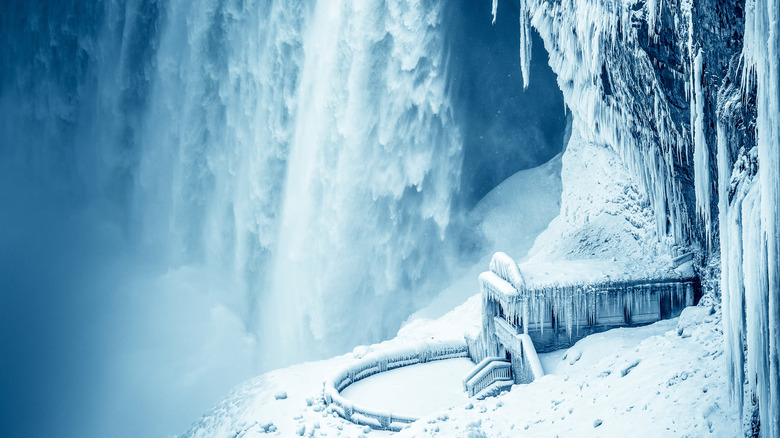
As one of the most iconic attractions in the U.S. worth visiting at least once, Niagara Falls is a spectacular natural phenomenon the country shares with its neighbor to the north. While visiting its Ontario shores is easily among Canada's top 10 things to do for tourists, seeing the frozen falls from the U.S. side offers a much better experience. That's because there is a larger volume of water flowing on the Canadian side during the winter months, which hampers the falls' ability to freeze.
Specifically, they're best witnessed from Prospect Point, which provides unobstructed, panoramic views of all three falls that make up Niagara Falls. To get an even closer look, the Cave of the Winds puts spectators directly within the mist that rises from the massive waterfalls. But getting that close comes with a price! Visitors exploring the Cave of the Winds should expect to get wet — and in the cold temperatures, it's even colder than you might expect. That's why it's especially recommended that visitors dress appropriately.
One of the most majestic formations to occur at Niagara Falls during the winter months is the Ice Bridge. This naturally-forming bridge appears when the ice that flows over the falls is pushed against the opposing banks, essentially creating a bridge between the Canadian side and the U.S. side. The bridge is just for viewing, however, since it's often unstable, and walking on it or on any frozen part of the river is strictly prohibited.