

Europe's 11 Destinations To Visit With The Least Tourist Crowds
Europe is the most popular continent for tourists to visit, but you didn't need us to tell you that. Just look at the lines and crowds in the European cities that travelers flock to the most, like Paris, London, Rome, and Barcelona. To visit these destinations, be ready to reserve your tickets in advance, pay a pretty euro (or pound) for a hotel room or Airbnb, and have plenty of patience to spare. Although these cities are worth a spot on any traveler's bucket list, there are plenty of other European spots, too, that are worthy of a visit.
In these cities, you can see amazing sites and have a trip worth writing home about, all without needing to tackle too many crowds. To determine which cities with the least tourist crowds that are worth visiting, we evaluated which destinations are the most underrated, have been considered hidden gems by travel media and bloggers, and have the best and most unique things to do. The spots on this list range from one of the world's first book towns to what's nicknamed the "Hamptons of Portugal."
Arezzo, Italy
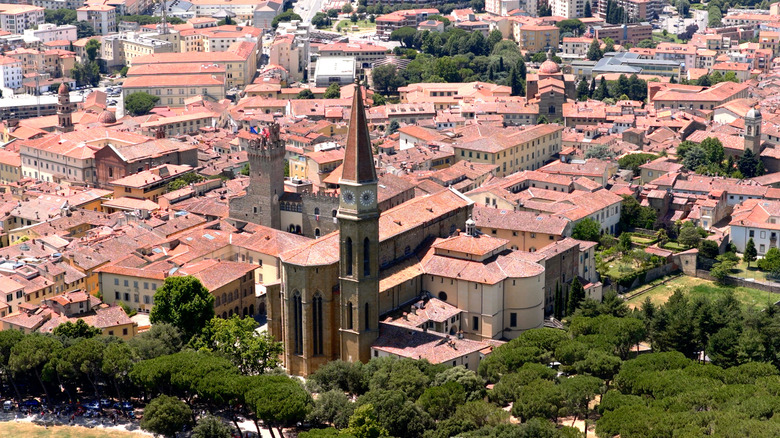
The Tuscan region of Italy is often a tourist's first stop when visiting The Boot, as they trek to top spots like Florence, Pisa, and San Gimignano. However, visitors can appreciate Tuscany's medieval and art history without feeling claustrophobic in the hidden gem of a city, Arezzo. Even Rick Steves' protégé agrees it's an underrated town to avoid huge crowds in Europe.
Celebrated artist Piero della Francesca was born in Arezzo, and his frescoes adorn the city, especially in the Basilica of San Francesco, where they have withstood both manmade and natural disasters. Another one of his famed frescos – that of St. Mary Magdalene, which dates back to 1460 — is in the Duomo dei Santi Donato e Pietro. Arezzo is also known for Giorgio Vasari, an artist who was born in the city. Visitors can check out his former home, now the Museo di Casa Vasari, which is filled with works by him and his students. Or, see works by Vasari as well as other prominent 13th to 16th century artists at the Museum of Medieval and Modern Art inside the Palazzo Bruni-Ciocchi.
To take a piece of Arezzo's home, tourists shouldn't miss a visit to the twice-monthly antiques market, which is the biggest and oldest antiques market in the country. On the last Saturday and first Sunday of each month, the market fills Piazza San Francesco, Piazza Grande, and the Loggio Vasari with items such as Roman coins, china, and vintage telephones.
Berchtesgaden, Germany
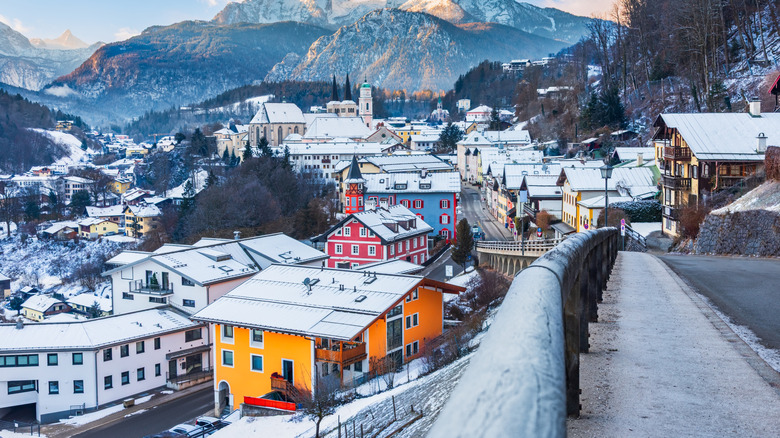
Berchtesgaden is another town in a tourist-rich region that's often forgotten. It's in Bavaria, Germany, where places including Munich, Nuremberg, and Neuschwanstein Castle attract the most tourists. But Berchtesgaden has World War II history, natural beauty, and historic attractions worth visiting. One of its most notorious sites is the Eagle's Nest, open seasonally, which offers visitors a chance to see Hitler's mountain getaway. The Nazi history museum, Obersalzberg Documentation Center, is also here.
Visitors will be able to see the area's natural beauty from atop the Eagle's Nest as well as from other local sites like Jenner Mountain and Lake Königssee. More than a half-dozen trails are available for trekking at the mountain, some of which offer views of the lake. The mountain stretches nearly 6,150 feet high. From here, you'll be wowed by the super-clean lake, which maintains its pristine state by preventing pollution — only electric boats have been able to traverse it for more than a century.
The lake is the gateway to Berchtesgaden Alpine National Park, another must-visit for nature-loving tourists. As the sole German national park in the Alps, as well as one of the most storied conservation areas in the region, this park is filled with waterfalls, gorges, mountains, and animals like golden eagles and ibex. Berchtesgaden has modern fun, too. Its cobblestone streets are lined with shops and authentic German restaurants, such as Gasthof Neuhaus, an inn and Bavarian restaurant with a beer garden.
Bratislava, Slovakia
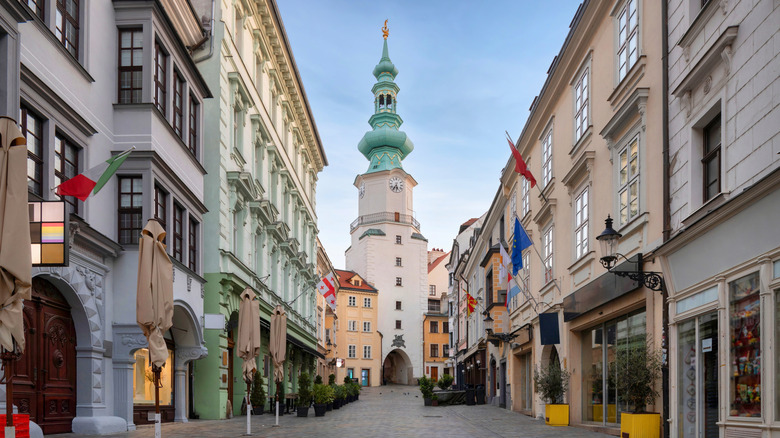
Slovakia's capital of Bratislava is home to stunning buildings, quirky landmarks, and plenty of beer, however it — and the country of Slovakia as a whole — rarely makes it onto itineraries. One of the most must-see spots, for both views and history, is Bratislava Castle, which overlooks Old Town thanks to its position more than 250 feet above the Danube River. Dating back to the 1200s, it's now home to a Slovakian history museum that includes archaeological objects and art, all housed within the historic castle interior. Another gorgeous building not to miss in Bratislava is the classicist-style Primatial Palace, which displays historic furniture and art and is also where the city council meets. Bratislava is uniquely home to lots of quirky public artwork, too, including a bronze statue dubbed Cumilof a worker leaning out of a sewer.
Don't leave Bratislava without trying some of the city's iconic beer and wine. Craft brewery Bratislavsky Mestiansky Pivovar has been making beer for nearly three centuries. The hills of Slovakia are also known for their wine production, which you can sample at the Slovak National Collection of Wine. This Old Town destination offers the top 100 wines of the country of a given year.
Comporta, Portugal
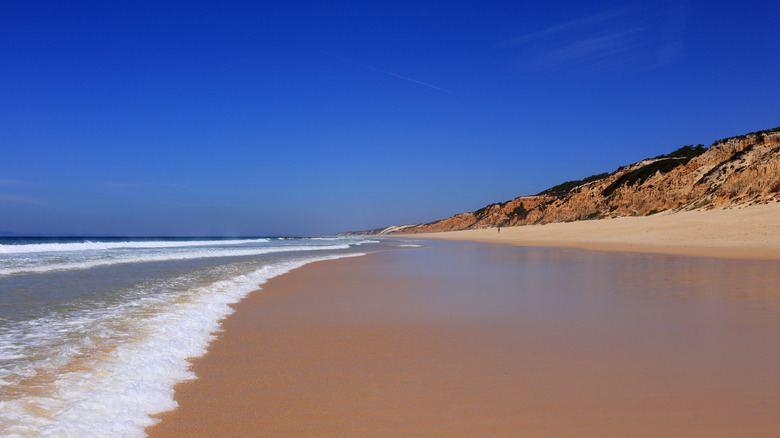
Every first-time Portugal visitor has Lisbon at the top of their itinerary. But to travel as the Lisbon locals do, head to the former fishing village of Comporta, which is an hour-and-a-half away from Lisbon by car on the Alentejo coast. Despite its beauty and laid-back yet upscale attitude — it's even been dubbed the "Hamptons of Portugal" — Comporta is still relatively undiscovered to the masses. That's especially true in the late spring and early fall, when the beaches are even emptier, yet you can still sport a swimsuit.
One of the best things to do here is to visit Praia da Comporta, which is one of the best beaches in the country. Restaurants of all styles and price points line the beach, such as Comporta Café Beach Club, which offers traditional grilled Portuguese seafood and other classic dishes. For a more high-end meal with beach vibes, make a reservation at Cavalariça Comporta, a Michelin-recommended restaurant that serves modern dishes with local ingredients in a former horse stable.
Other stunning local beaches include Praia do Carvalhal, which is home to an upscale beach club, as well as the undisturbed Praia do Pego. To see sea life in a more natural ambiance, head to the 30-acre Sado Estuary Natural Reserve, which is home to 250 types of birds — including flamingos — as well as dolphins and other animals. It can be explored on horseback or on foot via the reserve's many hikes.
Fjærland, Norway
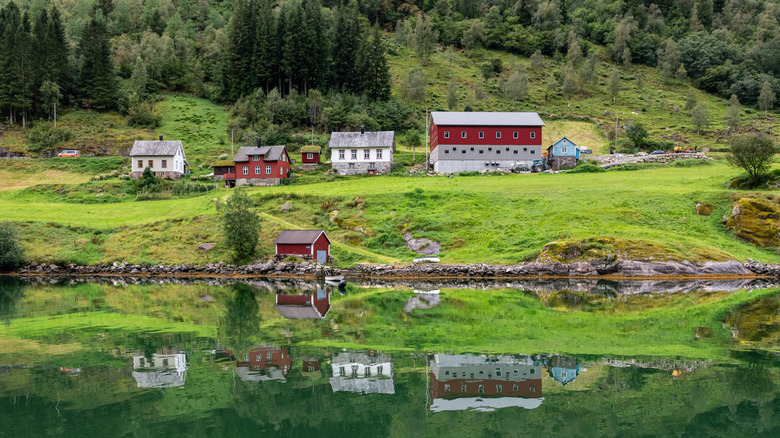
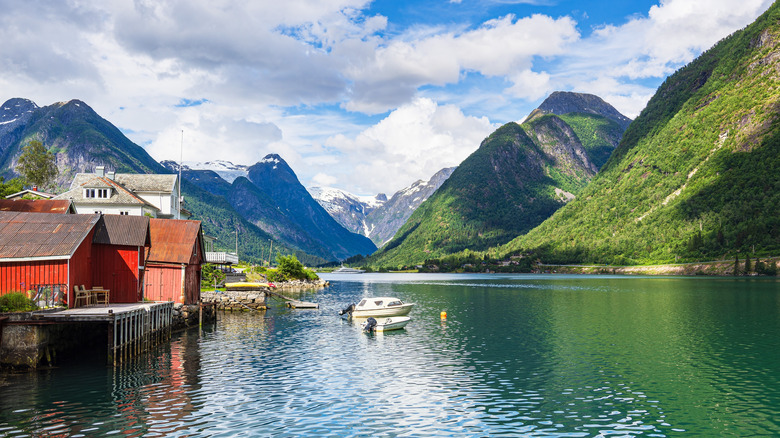
Decades ago, the only way to reach Fjærland, Norway, was via boat on the Fjærland Fjord. These days, a road and ferries make it easier to reach Fjaerland, but the town remains relatively undisturbed with fewer than 300 residents. However, that doesn't mean it's not worth checking out — especially if a book is what you're interested in checking out. Fjaerland is one of the first "book towns" on the planet due to its many used books, all in various languages, available for purchase in everything from banks to bus stops. Nearly 2.5 miles of books fill the small village at 10 venues that go far beyond a typical bookstore.
Fjaerland has also been called the most beautiful glacier village on earth, with some of its glaciers being part of Jostedalsbreen National Park, so it's only fitting that it's also home to the Norwegian Glacier Museum. As the premier spot for learning about glaciers in the country, the interactive museum includes 1,000-year-old ice from a nearby glacier, a climate exhibit, and a film about Jostedalsbreen National Park. You can also hike the nearby Jostedalsbreen glacier, which is the biggest ice cap on the continent. After hiking the glacier, do as the Norwegians do and indulge in a trip to a floating sauna that rests atop the Sognefjord, which is the longest and deepest fjord in the country. After some time in the sauna, visitors can hop in the fjord — no matter the season.
Groningen, Netherlands
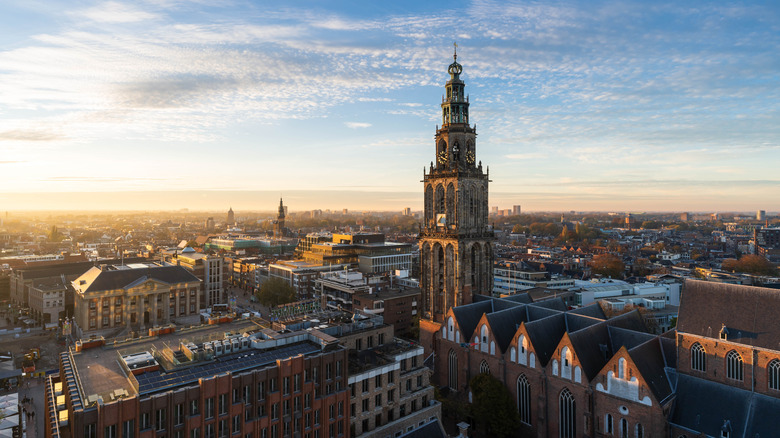
Ask any American tourist to name a Netherlands city, and Amsterdam is likely to top the list. But about two hours by car from Amsterdam is Groningen, which has the authentic Dutch vibes that Amsterdam is known for, without the crowds. It's even one of the 10 Netherlands tourist attractions worth visiting on your first trip. One of the best ways to get acquainted with this city is to head to the Groninger Museum, which presents both the history of the city and modern art. With red, yellow, and purple shapes that make up the museum's façade, the museum showcases the city's devotion to both culture and innovation in one unique building.
Groningen knows how to honor its past, too. Its 318-foot-tall, Gothic-style Martini Tower has withstood the test of time, having survived World War II (with a few battle scars) and other periods of struggle since it was built in 1482. After climbing the tower's 250 steps, you'll be able to see both the cutting-edge and age-old buildings that fill the city.
No matter where you're heading in Groningen, you'll be able to get there by bike. With more than three times as many bikes as cars, this green city is one of the most bike-friendly in the world. That commitment to sustainability extends into Groningen's many parks, including the 345-acre Stadspark that has been a staple of the city for more than a century. Many public courtyards, some with secret garden vibes, also fill Groningen.
León, Spain
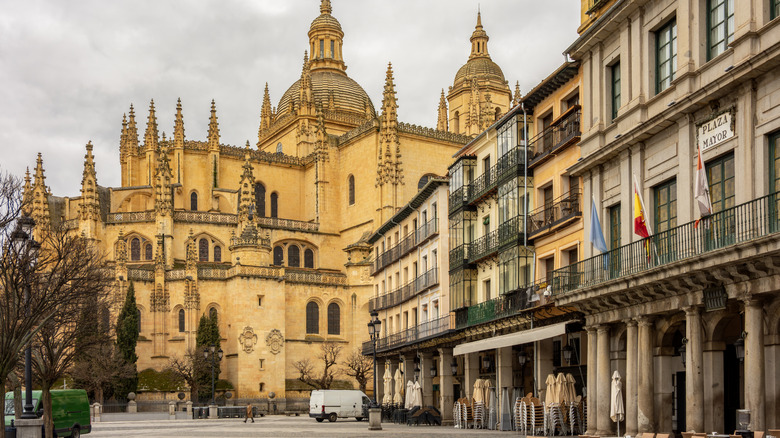
The most tourist-ridden cities in Spain are known for their art that has withstood the test of time and stunning churches. Despite León's little-known reputation, it offers those elements that prospective visitors search for, too. Religious sites take center stage here, which is why León is on the Pilgrim's Road to Santiago de Compostela. One of the most must-see spots is the Convento de San Marcos, which is considered to be the most significant Spanish Renaissance structure in Spain. It includes an archaeological museum, a church that's nearly half-a-millennium old, and the former convent that people can stay overnight in, making for one of the most unique historic hotels in Europe.
Another wow-worthy religious site is the French-style Gothic León Cathedral and Museum, which is known for its stained glass windows and items, including one of the best collections of medieval sculptures in the country and a 10th-century edition of the Bible. One of the most important Romanesque-style buildings in Spain can also be found in León in the San Isidoro Royal Collegiate Church, which was built on the site of a church that was destroyed in 988.
León has a calls to Epicureans, too. Its Old Town is dubbed "Barrio Húmedo," which translates to "wet district." That's because here, you can find a never-ending supply of tapas bars, which practically invite you to hop from spot to spot, trying local delicacies accompanied by a drink.
Piran, Slovenia
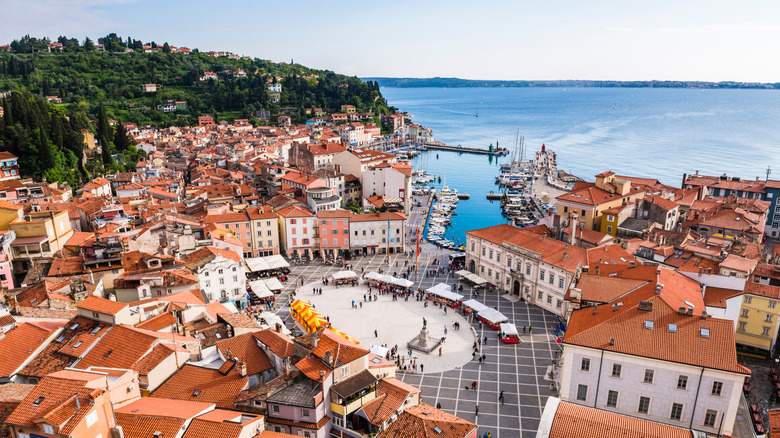
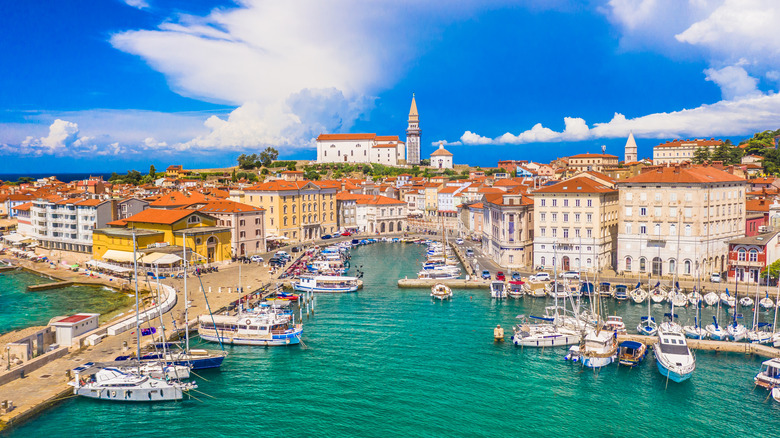
Restaurants, buildings, and people can all be fusions of culture. But cities — not often so much, that is, unless you're talking about the anomaly that is Piran, Slovenia. This Adriatic coastal town of just 4,000 people on the cusp of Italy is culturally both Slovenian and Italian, and it's even officially bilingual. That's partly because for most of its existence, it was controlled by Venice. However, Piran lacks the crowds of Venice — but with all of the appeal, including in the Baroque-style structures in Tartini Square. This square is the main hub of the small town, marked by a statue of composer Giuseppe Tartini (the square's namesake) and white Istrian stone paving.
To see all of gorgeous Piran from above, head to St. George's Parish Church, which is named after St. George, the patron saint of Piran. With an opulent interior adorned with seven altars as well as a bell tower that, from the top, offers views of three countries, this church is stunning both inside and out. Visitors can see more of the city by strolling the medieval walls of Piran, which date back to the seventh century and offer different vantage points in every spot.
Symi, Greece
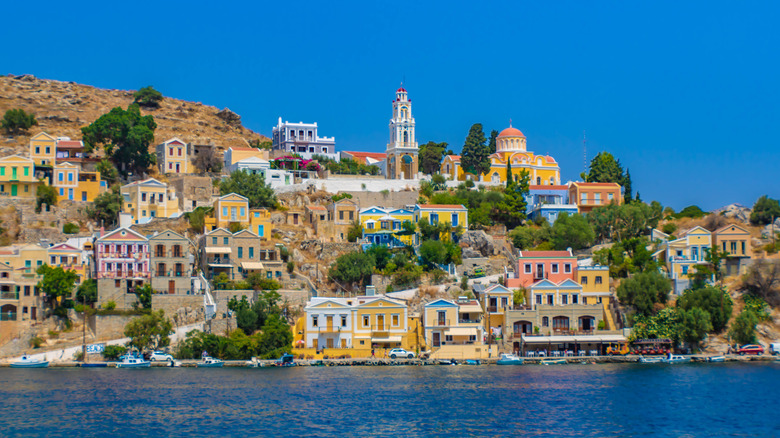
It's no wonder that Symi, a small, 23-square-mile Greek island with just two towns lined with pastel-colored buildings, has so few crowds. With no airport, the island near Turkey is only accessible via ferry. It was even named as the best European spot for people wanting to avoid crowds by Travel Awaits. But those who prioritize convenience over checking out Symi are missing out, as this quiet, relaxing island is known for its beaches with turquoise waters. To add to its remote appeal, some of Symi's beaches are only accessible via boat or on foot. Just a few of the favorites include Nanou Beach and Marathounda Beach. For more breathtaking beaches, visit this gorgeous island that's also one of the best in Greece.
Symi is also chock-full of history. The Monastery of the Archangel Michael at Panormitis has been a fixture of the island since the 1700s. It includes two museums with tons of artwork and interesting adornments. It's also known as a site to pray for health, protection, and fertility. The island is also home to the ruins of Symi Castle that date back to the early 1400s. From here, visitors can see much of Symi and also walk to the stone structures that once supported the island's windmills — some of which are now hotels. If all that walking builds up your appetite, stop by one of Symi's restaurants to try boiled or fried Symian shrimp, a locally-caught delicacy.
Tbilisi, Georgia
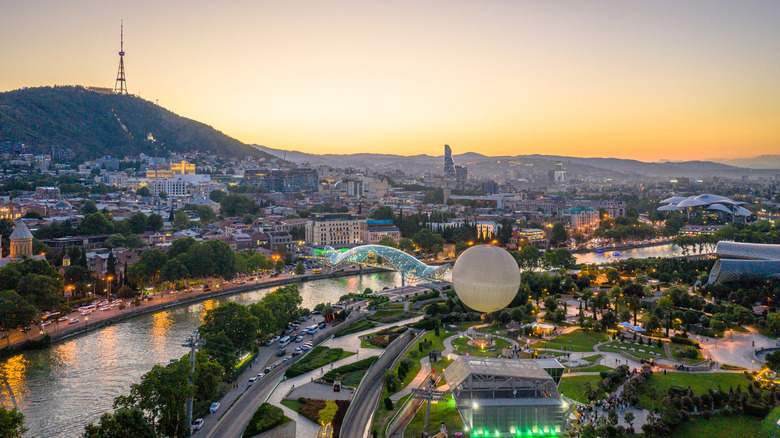
With something to offer travelers of every interest, it's a mystery as to why Tbilisi, which is the capital of Georgia, still doesn't make it onto most itineraries. Being that it's one of the oldest settlements on the planet, dating back to 4,000 B.C.E., it's a history buff's delight. It was also a major spot on the Silk Road and still has ancient thermal baths that were used by merchants traveling the Silk Road. Visitors can learn more about Tbilisi's history at the city's more than a dozen museums, including the Georgian National Museum, the Tbilisi Open Air Museum of Ethnography, and the Tbilisi History Museum.
Those who appreciate a good meal and a strong drink will also love a trip to Tbilisi. Its food is rich, flavorful, and downright gluttonous, with staples being khachapuri, a buttered bread filled with cheese and egg, and churchkhela — grape skins and walnuts rolled into a sausage-like shape. Find more local fare at the Dezerter Bazaar, one of the city's biggest food markets. Dishes should be paired with wine, as Georgia has been a wine epicenter for eight millennia, when people made wine in massive clay pots. With so much delicious wine to go around, a high-quality bottle can cost just three euros. That's just one of the reasons why Tbilisi is one of Europe's 12 most affordable destinations to visit in 2026.
Theth, Albania
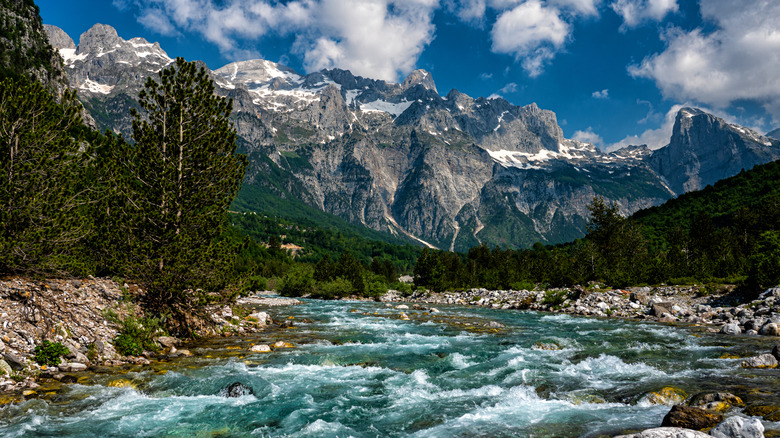
Four centuries ago, six brothers formed the remote Shala mountain town of Theth in Albania. Today, just 17 families reside here, with some offering home stays for tourists. This, as well as the village's position in Theth National Park, has helped it become a hidden gem of a town worth visiting, appearing like a step back in time within the Albanian Alps. One of the structures in town that epitomizes that is the enchanting Theth Church, a stone and wood building surrounded by mountains. Once serving as a school, it's now a famous must-see sight in town.
Theth also has plenty of natural beauty. It's home to the Grunasi Waterfall, which is one of Albania's national monuments and is within the Theth National Park. This 82-foot-high waterfall has a pool at the bottom surrounded by a lush forest, making for a perfect spot for a dip. To see more of what Mother Nature has afforded Theth, hike the Valbona-Theth Trail through the Albanian Alps, which travels more than 5,700 feet above sea level. If you want to extend your trip, Albania is also one of the cheapest European countries to live in.
Methodology
It would be a pity to never see spots like the Sagrada Familia (which is one of Barcelona's top-tier tourist destinations you can't miss), the Colosseum in Rome, and the Eiffel Tower in Paris, but that doesn't mean that these major tourist attractions should be the only places on your European itinerary — especially if you're wanting to avoid long lines. If a stress-free vacation bereft of crowds is what you're after, Europe has plenty of those, too.
To decide which European cities with the least tourist crowds were most worth visiting, we first determined which were considered hidden gems by travel publications, bloggers, and industry experts. Outlets consulted include Conde Nast Traveler, Lonely Planet, Culture Trip, Travel + Leisure, and National Geographic. These cities are raved about as hidden gems, which makes for a more relaxing getaway without having to navigate throngs of tourists. We also considered which have the widest array of interesting and unique sites, ranging from a national glacier museum to a 300-year-old brewery.