

13 Unspoken Etiquette Rules Tourists Should Know Before Visiting France
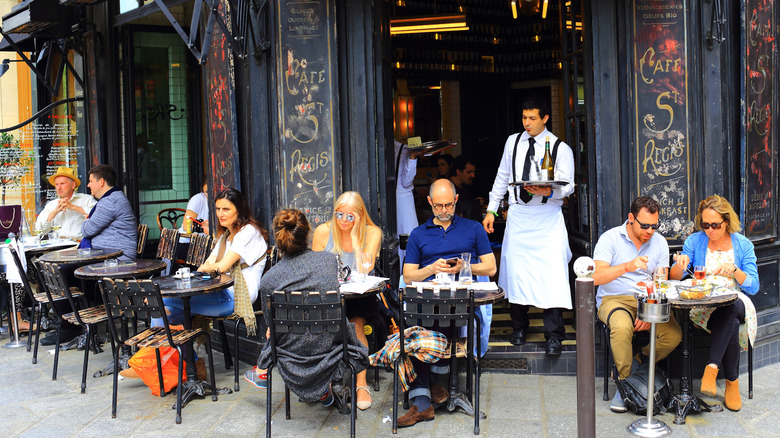
Beneath the famous French cafés, museums, and postcard streets is a dense web of social codes. Many of these norms aren't about strict rules so much as shared expectations around how to engage in social interactions and move through public spaces. They shape how people greet each other, speak in public, dress, dine, and even disagree — and visitors often stumble over them without realizing it. While to outsiders these habits can seem overly formal, contradictory, or downright mysterious, to the French, they're simply part of living together.
The good news is that you don't need to speak perfect French to navigate this. Informing yourself ahead of time and making small adjustments goes a long way — and, best of all, the effort is usually noticed. At the end of the day, understanding a few unspoken etiquette rules can help you avoid awkward moments. But most importantly, it can change how people respond to you, opening the door to smoother interactions and deeper connections throughout your trip.
Formality and politeness are pillars of French culture
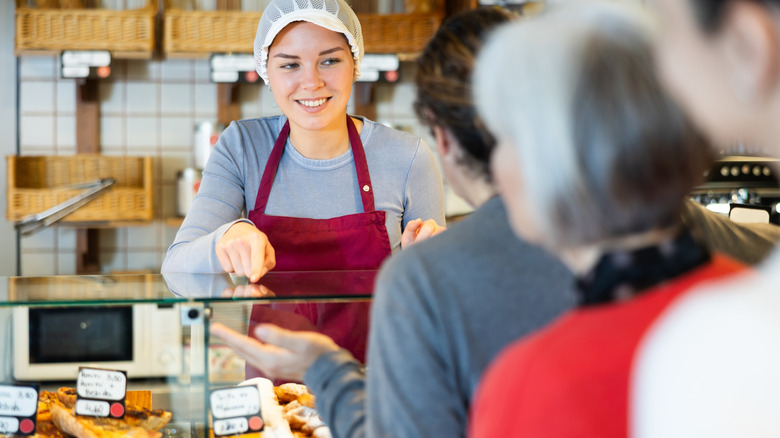
When you walk into any shop in France, the shopkeeper will most likely greet you. Even if they're busy behind the counter with another client, they will take a split second to glance up and say, "Bonjour." It's important to them to acknowledge every customer who walks into their store. As such, it's equally important for you to pay this respect back.
Politeness is a deeply rooted way of life in France. In the 19th century, books on French rules of etiquette flourished, and many of them included sections entirely dedicated to greetings. In one of them, for example, the author writes, "Greetings are of great importance in social relations; they are the touchstone used to distinguish the man of good taste from the uneducated man."
Although many of these rules of etiquette are outdated aristocratic pretenses — especially by post-Revolutionary French standards — it goes to show the extent to which politeness and formality are deeply rooted in French life.
Dressing up (but not too much) will help you blend in
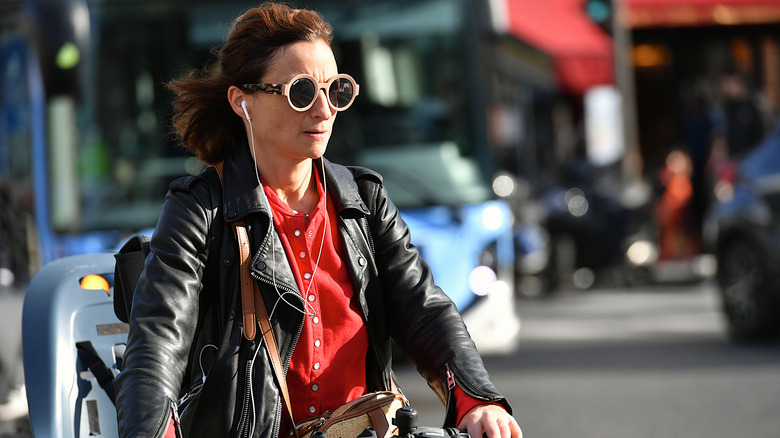
The French emphasis on formality doesn't stop at language — it shows up in clothing, too. In everyday life, people in France tend to look a bit more put together than what many visitors are used to, even for small errands. A quick trip to the grocery store or pharmacy might still involve topcoats, shiny shoes, and otherwise coordinated outfits rather than athleisure or pajamas-in-public energy.
This doesn't mean people are constantly walking around in suits and ties, though. The key is effort and intention, without tipping over into decadence. Clothes are usually well-fitting, neutral, and understated rather than flashy or casual. After all, looking presentable is tied to self-respect and respect for shared public space, and it signals that you take yourself and the people around you seriously.
Travelers in France sometimes stand out not because their clothes are "wrong," but because they look like they didn't try at all — or they went in the opposite direction and overdressed in a way that feels costume-like. Don't worry: you don't need a whole new wardrobe to avoid looking like a tourist. Just think clean lines, simple layers, and comfortable but polished.
Dial down the volume

You know how French people can spot American tourists from miles away? Well, they hear them first. In fact, this goes far beyond France. A recent survey found that roughly 70% of Europeans believe American tourists are too loud, and that loudness is the most significant factor in their overall negative view of them.
By comparison, the French are relatively soft-spoken, a trait that stems again from the Old World rules of etiquette. Popular advice within various 19th-century etiquette books suggests that attracting attention in public is risky. In fact, many of them specifically forbade laughing in public. As such, restraint is key to maintaining the French value of being discreet.
So, whenever you're out and about in France, try to be aware of your volume — especially in public spaces such as metro cars, theaters, or dining rooms. If you're not sure whether you're being too loud, take a moment to notice the volume of others having conversations around you, and use it as a reference.
A little French goes a long way
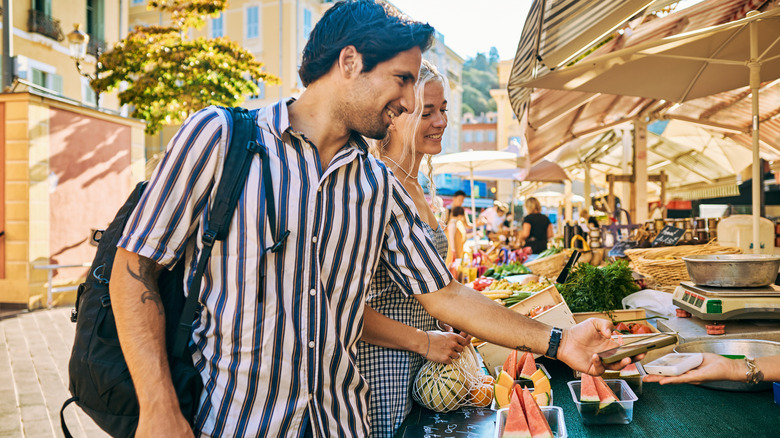
Sure, you can get by in many parts of France using English alone — especially in cities and areas highly frequented by tourists. But making a small effort to learn a few helpful phrases in French can completely transform your interaction for the better. In fact, a simple "bonjour," "s'il vous plaît," or "merci" signals respect before the interaction has even really begun.
This isn't just about practicality — it's also about remaining culturally aware. The French take extra pride in their language, its precision, and its romantic beauty, and starting a conversation in French shows that you recognize that on some level. It also signals that you don't expect others to immediately adjust to you, which helps frame the exchange as mutual rather than one-sided.
The best part is you don't need perfect pronunciation or full sentences. In fact, many people will switch to English once they see you're trying. The point here isn't to impress anyone, it's to acknowledge your place as a guest in their country. Skipping this step and launching straight into English can come across as brusque, even if no offense is intended.
Don't overdo the friendliness

In Paris, as with most metropolises in the world, there is greater anonymity, and most people pass one another in the streets without a second thought. However, in many parts of France, it's common for strangers to nod or even say a simple, "Bonjour." This holds true in some less populated cities and towns, and definitely in rural areas.
In those areas where it is more common, keep in mind that saying hello won't typically come paired with a wide, warm smile as you might expect in some friendly parts of the U.S. (looking at you, southern charmers). In France, smiling — and friendliness in general — is more contextual and less automatic, and French people tend to reserve warmth for people in their inner social circle they already know well.
Even though you might be tempted to strike up a friendly chat with your waiter or the baker at the boulangerie, unless what you have to say is directly relevant to the interaction, chances are your chatter may fall flat — or worse, make the other person feel uncomfortable. And if you do end up having repeated interactions with someone in particular, you can definitely try breaking the ice. A great way to do this is by asking for recommendations to help you make the most of your time during your trip.
The 'customer is always right' mindset doesn't translate well

France's business culture emphasizes local commerce. Farmers' markets are considered a vital part of daily life that everyone should experience, and small, family-owned and independent shops that serve folks who live within a short walking distance are also the norm. That means shopkeepers aren't just there to sell you a product. Instead, they're seen more as masters of their craft, and valued members of the community with years of experience. This upends a common approach shoppers take when entering stores in the U.S. — the idea that the "customer is always right."
While American customers who are demanding and insistent may get their way back home, this strategy will likely have a different outcome in France. "No" in France means ... no. In fact, the more common phrase when someone is politely trying to tell you that you've reached the end of the road is, "Ce n'est pas possible," meaning, "That's not possible." The English translation can seem a bit dramatic, but it's the French way of politely setting a firm boundary directly and to the point. Oh, and don't try sneaky ways to swerve around it — it won't work.
Meals are a sacred activity, don't rush
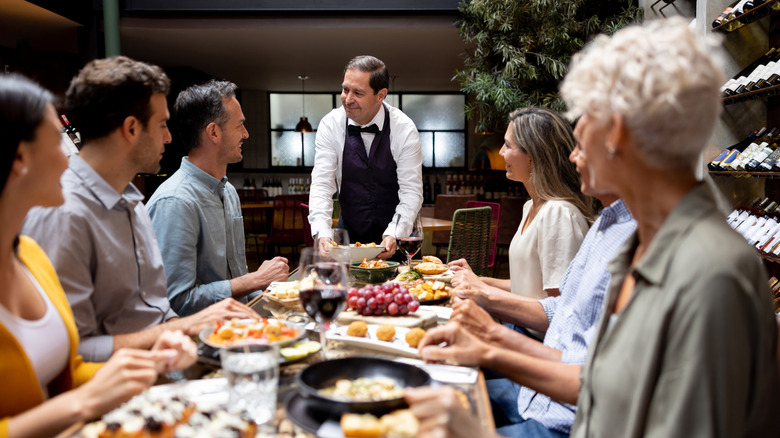
French cuisine is revered around the world for its mastery of ingredients, as well as its capacity to invite the eater to sit back and indulge — and local dining culture seeks to match the excellence of the work in the kitchen. Generally, going out to eat at a restaurant is regarded as a sacred and extraordinary event. Overall, the French eat out less often, and spend more time at the table when they do — a stark contrast to the fast-casual dining culture in the U.S., where efficiency takes precedence.
So, when you go out to eat in France, keep in mind that the way you're served reflects these different values. For example, when booking a reservation for lunch or dinner, set aside a couple of hours. Most meals will involve multiple courses — an appetizer, main course, and dessert — at a minimum. Servers also won't rush you, and asking for the check as soon as you put your fork down isn't seen as polite. Instead, slow down enough to really savor the sensory experience of the meal, allowing yourself to linger in the satisfaction of it with an espresso at the end.
Beyond that, eating out is also considered a deeply social event. The French know that one of the best ways to enhance a meal's flavor is to share it in good company, so go ahead and invite a friend or even a crew out to dine with you.
Don't ask for substitutions for your meal
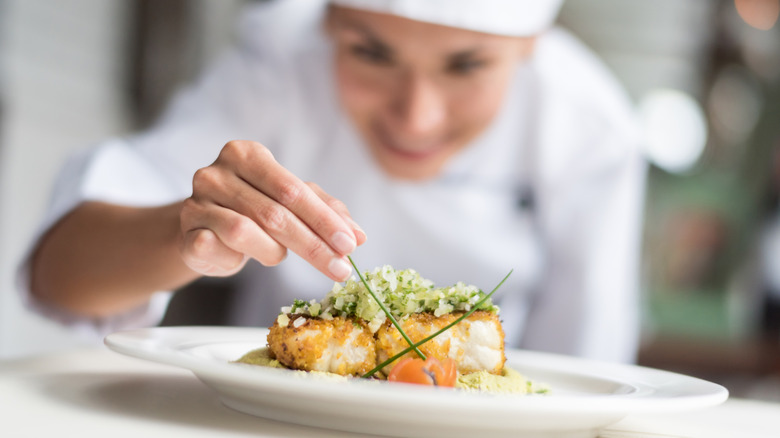
As we've just covered, the French are culinary masterminds. So, what is offered on a restaurant menu has likely gone through a rigorous creative and vetting process. Chefs take their jobs very seriously, and becoming one in France generally requires years of schooling and training. That's why, when a customer asks for substitutions, it is tantamount to questioning the chef's professional judgment.
Of course, this doesn't necessarily apply to fast-food restaurants. However, even then, asking for substitutions is so not part of French culture that you may still get a side-eye from your server. That said, there is an exception for allergies, which you will want to flag as soon as possible so the chef has time to offer an equally rigorous alternative. If possible, it's best to signal this when making the reservation.
Accommodating vegetarianism and veganism, however, can be tricky. Approximately 5% of French people are vegetarian, which is more or less equivalent to the U.S. And while more vegetarian restaurants are popping up in larger urban centers, it can be challenging to find options in other areas. When dining out, your best bet is to call in advance and ask very politely if they can accommodate your needs.
Cocktails are not just for happy hour
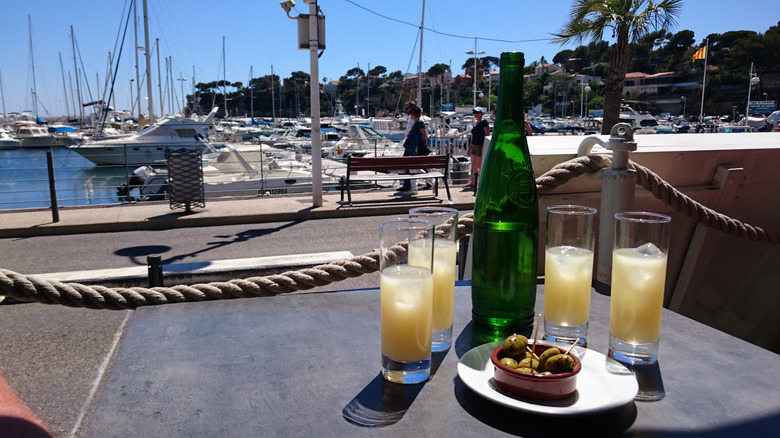
In France, alcoholic drinks such as aperitifs and digestifs aren't optional add-ons; they're built into the structure of the meal itself. The aperitif and digestif date back to the 18th century, when fortified wines and herbal spirits were marketed as tonics meant to stimulate the appetite in different parts of Europe, especially Italy. Over time, the ritual became popular in France.
In short, the aperitif comes before the meal, and it's meant to ease the transition into dining, spark conversation, and help you start working up an appetite. This might be a glass of wine, a vermouth, pastis, or a light cocktail. It's a highly ritualized part of French culture that gives its participants a moment to settle in for the gastronomic journey ahead.
On the other end, a digestif appears after dessert or coffee. A small pour of something stronger — like cognac, armagnac, or herbal liqueur — is believed to aid digestion and signal that the meal is winding down. If you skip these rituals, you're not necessarily breaking a rule, but you are disrupting a sacred rhythm.
Avoid asking for a to-go box
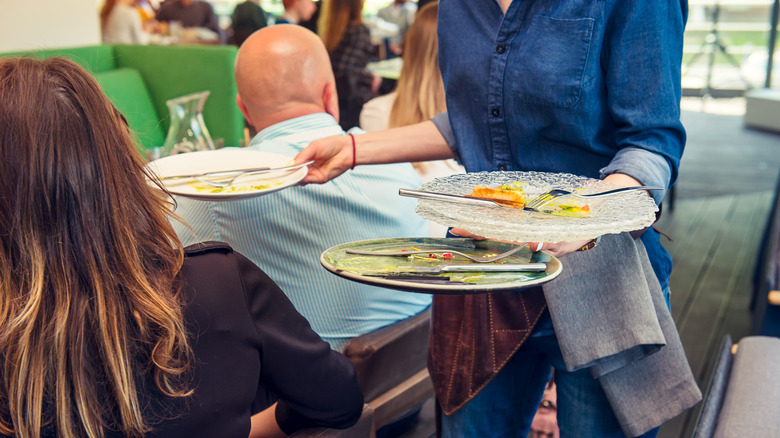
French restaurants fought hard against "doggy bag" requests for many years. So much so that they still use the English term, because the concept of taking leftovers to go is foreign — imported from American culture. Leftovers substantial enough to require the customer to request such a service suggest they may not have enjoyed the meal or that they're in too much of a rush to fully enjoy it — either way, a disgrace by French culinary standards. Not to mention the unfathomable implication of the term's origin, that one would ever consider feeding fine cuisine to a dog.
That said, in 2016, a law was passed in France requiring that restaurants of a certain size offer to-go bags. The focus of the new law was to reduce food waste, but restaurant owners still worry about its other cultural implications — for example, giving the green light to patrons to hurry off before finishing the meal. While to-go bags have become more popular these days, the practice is still looked down on — especially in high-end restaurants.
To avoid looking like a rude tourist, work up a solid appetite before heading out and avoid an embarrassing blunder by finishing as much of your meal as you can. And remember, portions in France tend to be smaller than in the U.S. anyway, which might make it easier to finish up.
Leave the double-pump venti order at home
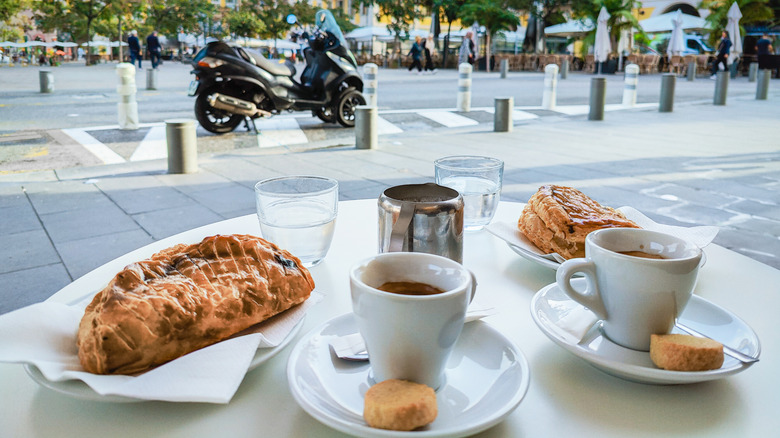
Sitting at a sidewalk café and sipping on a hot drink is a quintessential experience for anyone visiting France. Part of what makes it so special is that French café culture is unique and different from anywhere else. This means it's important you keep in mind a few tips and secrets for ordering at a café in France in order to enjoy the experience as authentically as possible.
First, the espresso is at the heart of French coffee culture, and most drinks on offer will be variations on this simple, bitter delight. The only slightly sugary thing on the menu is usually a hot chocolate. And while you can probably find places selling tourists pumpkin spice lattes, know that this is merely repackaged American culture with a French accent. As such, it's worth setting aside your go-to order and giving the espresso a shot, while also treating yourself to a small pastry or viennoiserie to give the bitter a bit of contrast.
Second, keep in mind that coffee is not just a type of drink, but also a type of French ritual. It's usually had after meals and during work breaks. Just as with meals, the humble coffee break is also a moment meant to strengthen social bonds in French culture. A French café, therefore, is not typically the place you go to plug into free Wi-Fi and set up your personal home office in the corner.
Tipping isn't expected, it's earned
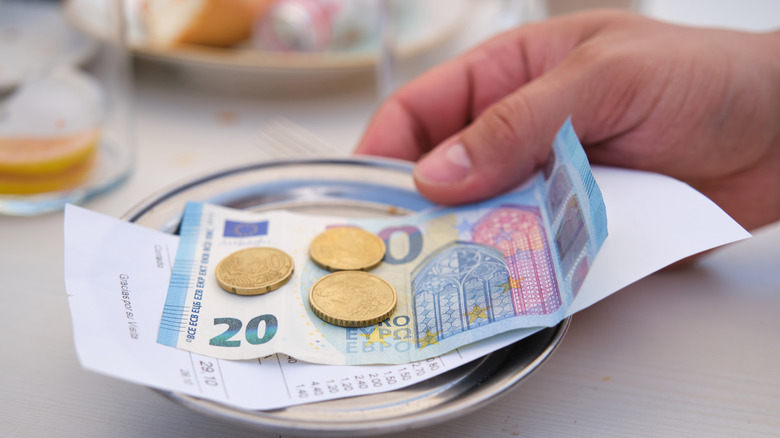
Visitors from countries with strong tipping cultures are often surprised by how differently things work in France. In restaurants, service is already included in the bill by law. This means servers are paid a living wage, rather than relying on gratuities to make up their income. You'll usually see this noted as "service compris" on the menu or receipt.
Because of this, leaving a large tip isn't standard practice. The relationship between staff and customer is structured differently: service is viewed as a professional exchange, not a performance tied to earning extra money. Attentiveness, knowledge of the menu, and efficiency are part of the job description. As such, tipping is merely considered a bonus, not an obligation.
That said, small gestures are appreciated when service truly stands out. Rounding up the bill, leaving a few coins, or adding a modest amount as a thank-you for exceptional care is perfectly fine. The same general approach applies beyond restaurants, including taxis and hotels.
Expect a lively debate at the dinner table

Politeness in public life may define everyday interactions in France, but once people are settled around a dinner table, formality often gives way to spirited debate. Don't be surprised if a pleasant meal with new acquaintances turns into an animated discussion about politics, as this isn't automatically considered an off-limits or awkward topic. Quite the contrary, it's viewed as an essential part of being a well-mannered person.
This difference can catch some visitors off guard, especially those used to cultures where political talk is seen as divisive or impolite. In France, exchanging views — even strong, opposing ones — can be a sign that people take you seriously. Likewise, interrupting and talking over one another in this context don't necessarily signal anger or impoliteness; it can simply reflect enthusiasm.
That said, passion doesn't cancel out respect. Dismissing others and name-calling are well off-limits. Listen, stay respectful, and be ready to explain your perspective or ask questions. If you'd rather not engage, it's perfectly acceptable to say you're still learning about the issue. Just be aware that a lively political debate can be a form of social bonding — even among people who disagree.
Methodology
This article draws on the author's firsthand experience traveling from the United States to visit family in France over many years. Repeated exposure to everyday situations — like shopping, dining, using public transit, and socializing across different regions — provided practical insight into how social norms operate in daily life.
These observations were then cross-checked with French language and culture resources, including educational websites such as the Polyglottist Language Academy, data from recent surveys including Gallup Polls, and academic research. Ultimately, these guidelines reflect both personal perspective rooted in deep experience and broader patterns within contemporary French society.