

The Best 'Little Italy' Destinations In America For A Taste Of Europe
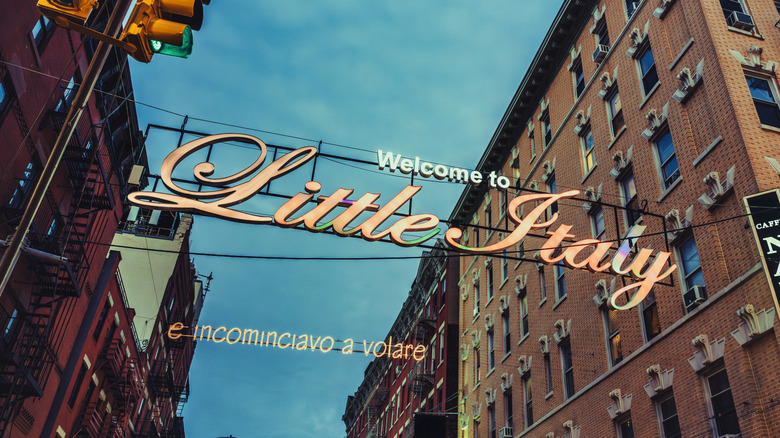
As someone of Italian descent who travels to Italy frequently, I've always been drawn to the Italian American neighborhoods that helped shape life in the United States. This guide is very much a love letter to those places. While Manhattan's Little Italy is the most widely recognized, it represents just one chapter in a much larger book. From the late 19th century through the early decades of the 20th century, millions of Italian immigrants settled throughout the U.S., creating enclaves that celebrate Italian food and culture to this day. Catholicism has also shaped many Italian communities throughout the U.S. Italy is a predominantly Roman Catholic country, and immigrants have passed their faith traditions down through the generations.
In this guide, I'll take readers to 10 of the best "Little Italy" destinations in America for a taste of Europe. These are places where authentic Italian heritage is still lived every day, through festivals, religious traditions, and even espresso bars and Old World bakeries. Many of the small businesses in these neighborhoods have been serving Italian American families for generations. Together, they tell the story of how Italian American identity flourished across the United States and where it still thrives today. And, if reading this guide gets you in the mood to travel to Italy for real, don't miss these five must-see destinations!
Little Italy — Manhattan, New York City
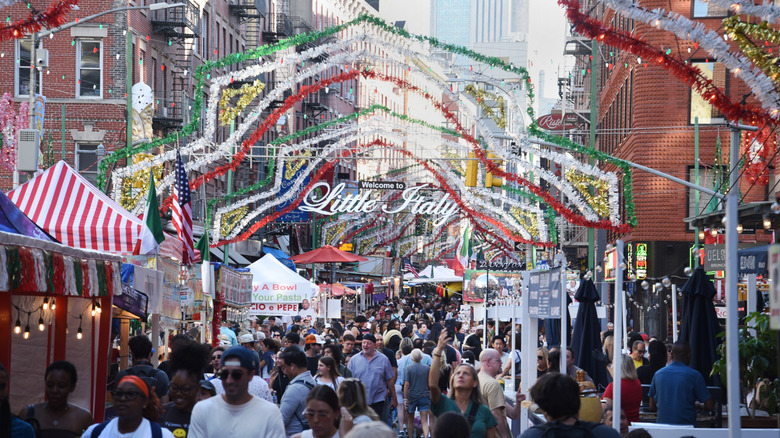
America's most iconic Little Italy leads this list, even though it is now considered one of New York City's more tourist-forward neighborhoods. Centered mainly along Mulberry Street, Manhattan's Little Italy was once the heart of Italian immigrant life in the city. The origins of this particular Little Italy began in the 1840s, with a massive influx of residents in the 1880s. For well over a decade, the neighborhood has been shrinking from its heyday, largely due to astronomical rent increases and the expansion of neighboring Chinatown. Nonetheless, this Little Italy's cultural legacy is still there if you know where to look. Mulberry Street remains lined with classic red-sauce restaurants like those found in Italy. Highlights include Paesano, Il Cortile, Emilio's Ballato, and Casa D'angelo New York. At all of these spots, and many more like them, visitors can order authentic plates of homemade pasta, veal, wood-fired pizzas, seafood, tiramisu, and more.
Perhaps the most well-known restaurant here, though, is Lombardi's. A New York City staple since 1905, this was the very first licensed pizza restaurant in the United States. Today, Lombardi's still makes its coal-fired pizzas the same way founder Gennaro Lombardi did at the turn of the century. One of the best times to experience Little Italy's authentic spirit is during the annual Feast of San Gennaro every September, which honors Naples' patron saint, who was martyred in the fourth century. Called the "Feast of All Feasts," the neighborhood lights up (literally and figuratively) with food trucks, light displays, and religious processions. A rite of passage at San Gennaro is strolling the festival with a cannoli in hand! If you want to immerse yourself in Manhattan's Little Italy during your next NYC trip, book a stay at the NobleDEN Hotel, which sits right at the edge of the neighborhood's current border.
Arthur Avenue — Bronx, New York
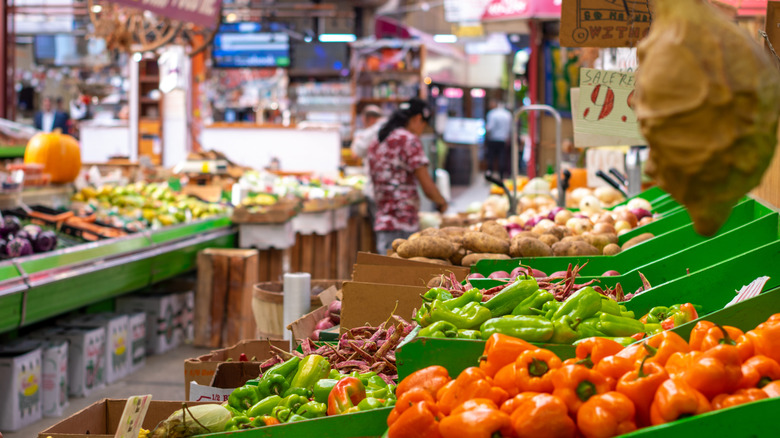
Often considered more authentic today than Manhattan's Little Italy, Arthur Avenue in the Bronx is where many Italian families relocated from Manhattan as New York grew and changed in the early 20th century. Today, Arthur Avenue welcomes visitors, current residents, and past residents alike with old-school butcher shops like Vincent's and Biancardi's, bakeries like Madonia, opened in 1918, and pasta stores like Borgatti's Ravioli & Egg Noodles, which has served locals since 1935. In keeping with small family-operated shops in Italy, many of the community's businesses have been run by the same families for generations, producing cured meats, authentic Italian pastries, and handmade pasta using the same methods their ancestors brought from Italy. The neighborhood has even become a favorite haven for celebrities over the years, with Frank Sinatra, Liza Minnelli, and Neil Patrick Harris all avid fans.
On Arthur Avenue, the restaurants also have an air of authenticity. There aren't flashy street signs and souvenir stands here, but spots like Zero Otto Nove and Frankie's Restaurant offer menus filled with authentic Italian American dishes like Margherita pizza and fresh spaghetti and meatballs. The Arthur Avenue Retail Market is another must-visit location. A major part of neighborhood life since 1940, the market is a fantastic place to pick up everything from spicy Italian sausages to hand-rolled cigars to fresh flowers to souvenirs for your family. One of the things that is sure to stand out during any visit to Arthur Avenue's Little Italy is its sense of community. Events like the Ferragosto festival — which has existed in some form or another since ancient Roman times — further strengthen the ties that bind the Italian American families here together.
North End — Boston, Massachusetts
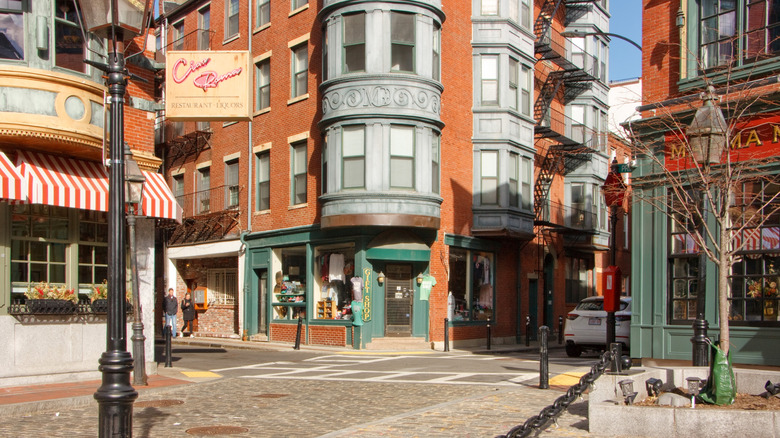
Boston's North End is one of the most vibrant and enduring Little Italys in the United States. Home to a variety of historic sites, including Copp's Hill Cemetery and the Old North Church, where Paul Revere famously hung his lanterns to alert colonists that the British were coming, the North End became an Italian-centric neighborhood in the 1900s. The historic Italian churches here are still a cornerstone of everyday life. Churches such as St. Leonard's and St. Stephen's are much more than gorgeous architectural landmarks. They have active congregations that gather for Bible studies, weekly services, and masses, as well as special annual events like Christmas concerts. St. Stephen's, an Episcopal church, is located in Little Italy and, although it's not Catholic, it is an example of missionary work that some Protestant denominations did when Italian immigrants arrived in droves at the turn of the century. These institutions play a key role in the North End's numerous religious festivals, which take place nearly every summer weekend between June and early September. It's important to note that, nationwide, festival goers can enjoy these religious events if they themselves are not practicing Catholics.
Food, as in Italy itself, is an absolute cornerstone of the North End's identity. The neighborhood is particularly famous for its pastry shops that rival those in Tuscany. Since 1946, Mike's Bakery has been serving up lobster tails, cannoli, and other authentic delicacies, while Bova's Bakery, open since 1932, offers 24-hour service so travelers can sate their sweet tooth anytime. Family-run restaurants like La Famiglia Giorgio's Restaurant, which boasts a rustically elegant interior and an exceptional wine list, and Giacomo's Boston North End, known for its authentic, delicious dishes, add to the European feeling of this Italian American enclave. The Revere Hotel is a great place to stay if you want to immerse yourself in Boston's Little Italy during your next trip to Beantown.
Little Italy — Chicago, Illinois
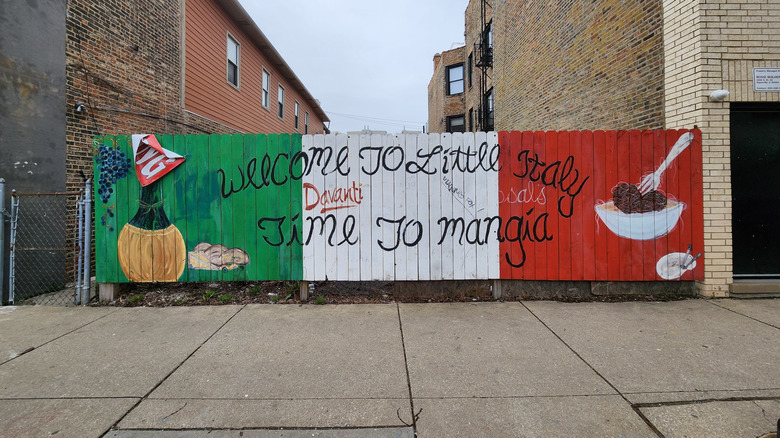
Chicago's Little Italy centers on Taylor Street and the surrounding residential neighborhoods. Beginning in the mid-19th century, Italian families came to Chicago to work in construction, railroads, and manufacturing. The Italian American population in the Windy City's Little Italy reached its height in the mid-20th century, but many longstanding families and their cultural legacy remain today. Though changes have come with the growth of the nearby University of Illinois at Chicago campus, many businesses in this part of town have been serving families for generations. Scafuri Bakery has been making cookies, pastries, and espresso since 1904, while Mario's Italian Lemonade is still operated by the DiPaolo family, who founded the legendary drink stand in 1954.
Historic churches, which can be found on practically every corner in Italy itself, still anchor this neighborhood and its cultural activities, just like they do in Italian towns. The Shrine of Our Lady of Pompeii Church and Santa Maria Incoronata (SMI), in particular, play a role. Constructed in 1925, Our Lady of Pompeii is the longest-tenured Italian American congregation in Chicago, and SMI proudly hosts the annual Feast of Maria SS. Incoronata festival. These institutions still preserve cultural and religious traditions that are important to Chicago's Italian American community. Unsurprisingly, food culture is also important here. Chicago, of course, is known for its signature deep-dish pizza, available at restaurants like Giordano's. Italian American restaurants go beyond pizza. Dishes like chicken vesuvio and baked mostaccioli were created by Chicago's Italian community and are still served at restaurants like Harry Caray's Italian Steakhouse today.
Federal Hill — Providence, Rhode Island
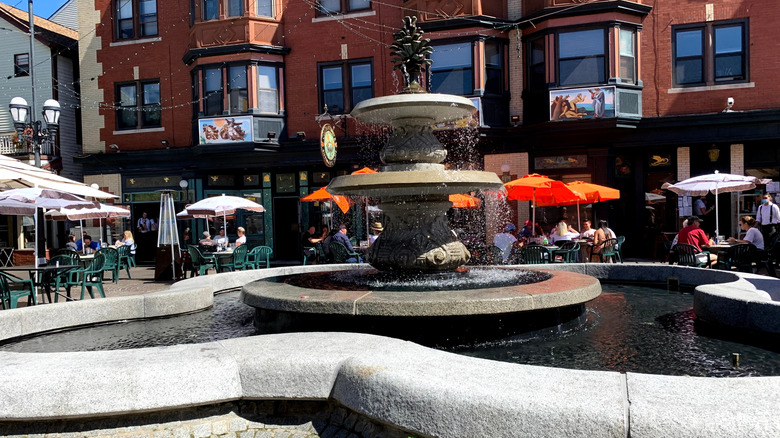
Federal Hill is one of the Northeast's most underrated, authentic Little Italy neighborhoods. Due largely to its location in Providence, outside of a major tourist center like NYC, it never became a major tourist attraction. Due to that, it has retained much of its day-to-day lifestyle over multiple generations. Since the early 20th century, this neighborhood has been shaped by Italian American immigrants and their families. Today, it is widely known for offering some of the most incredible Italian food culture not just in the United States, but anywhere. Angelo's Civita Farnese is one of the neighborhood's most iconic dining establishments, serving Italian comfort food since 1924. Camille's, meanwhile, is an ultra-elegant spot that opened a decade earlier in 1914.
Unlike some of its more well-known counterparts, Rhode Island's Little Italy still has a remarkably residential feel. Atwells Avenue has long been the heart of the community, and it is still home to old-world bakeries, delicatessens, and Italian markets that offer a true taste of Europe (sometimes literally!) Tony's Colonial Food offers dry goods, olive oils, and wines imported from Italy, while Scialo Bakery has been operated by the same family since it opened over 100 years ago. These are places where locals go to buy their daily groceries or grab a coffee and a pastry for breakfast. The fact that businesses on Federal Hill exist for the local Italian American community, not for tourism alone, adds to the authentically European feel of the neighborhood. Church life is also still important here, and the local Roman Catholic parish, the Church of the Holy Ghost, hosts multiple festivals annually, including an October Harvest Festival and the Feast of St. Joseph.
Little Italy — San Diego, California
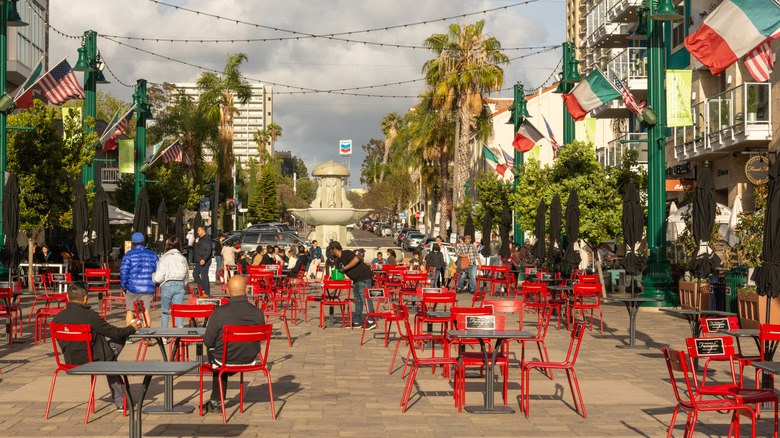
San Diego's Little Italy offers a distinctly West Coast interpretation of Italian American heritage, mixing historic Italian American culture with the city's modern coastal lifestyle. The neighborhood, which is so architecturally similar to Italy that travelers will feel like they're teleporting, was settled by Italian fishing families in the early 1900s. Many of these immigrants were drawn by jobs along San Diego's waterfront. Tuna fishing was the biggest industry here for years, and, although it eventually fizzled out, this Southern California Little Italy neighborhood remains the United States' largest. Catholic traditions still shape daily life here, just like they do throughout the nation of Italy. The neighborhood parish, Our Lady of the Rosary, is housed in a beautiful Italianate structure that is reminiscent of ornate churches in Rome and Florence.
Another distinctly European feature here is the piazzas. San Diego's Little Italy is home to multiple public gathering places, including Piazza della Famiglia and Piazza Basilone, all of which are reminiscent of the piazza-centered social life common in Italy. An Italian market that is held on Saturdays and Wednesdays, "Little Italy Mercato" is a great place to shop for everything from fresh pasta to imported olive oils and cheeses to espresso drinks. If you're looking for a sit-down meal, try Herb & Wood, which offers a once-weekly bluefin tuna menu in honor of the neighborhood's history, or Piedra Santa, which specially ages its own Himalayan salt! And, don't miss the annual Galbani Bella Vita Fest, which celebrates Italian art, food, and culture on select dates throughout October.
Little Italy — Cleveland, Ohio
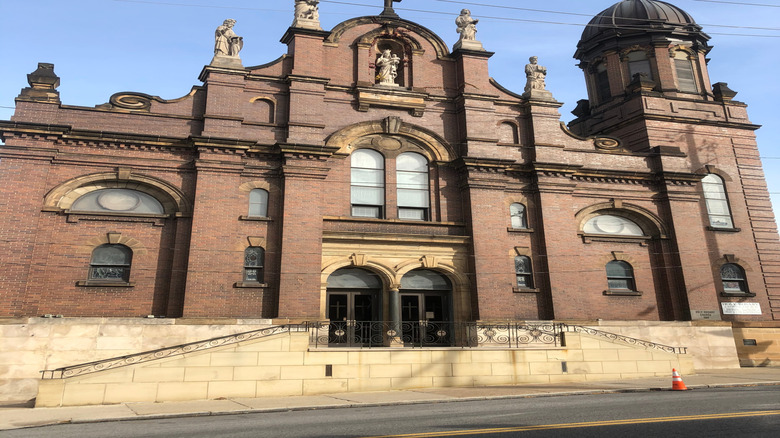
While Cleveland is sometimes snubbed as "The Mistake on the Lake," it actually has a surprising amount of art and culture to offer. In addition to the excellent Cleveland Museum of Art, it's also home to one of the nation's best Little Italy neighborhoods. This area became an official Italian enclave in 1885, when Italian immigrants settled in the area between Murray Hill Road and Mayfield Road. From the start, this neighborhood has been close-knit, built on the deeply Italian principles of faith, family ties, and supporting one another. One of the things that makes Cleveland's Little Italy unique is the unwavering passion of its residents. Restaurants like Mama Santa's, which has been open since 1963, and Guarino's, founded by Sicilian immigrants over 100 years ago, have been supported by locals for generations. These businesses, much like restaurants in small Italian villages, cater to longtime residents even more than they do locals, which makes the experience incredibly authentic for those who get the chance to drop by.
If you're looking to take home souvenirs, there are some fun places to shop in Cleveland's Little Italy. La Bella Vita offers housewares, including popular brands like Mackenzie-Childs, and Moonstruck CLE is known for its gorgeous vintage fashions, just like the vintage shops in Florence and Milan. The cultural heart of this Northeast Ohio neighborhood, though, is the yearly Feast of the Assumption. This massive street fair takes over five city blocks every August with food (and more food), live music, and religious processions. The grand finale, if you will, is a traditional Feast Mass at the neighborhood parish, the Holy Rosary Church. Over 100,000 people attend this Italian American extravaganza annually, making it a destination in and of itself.
Little Italy — Baltimore, Maryland
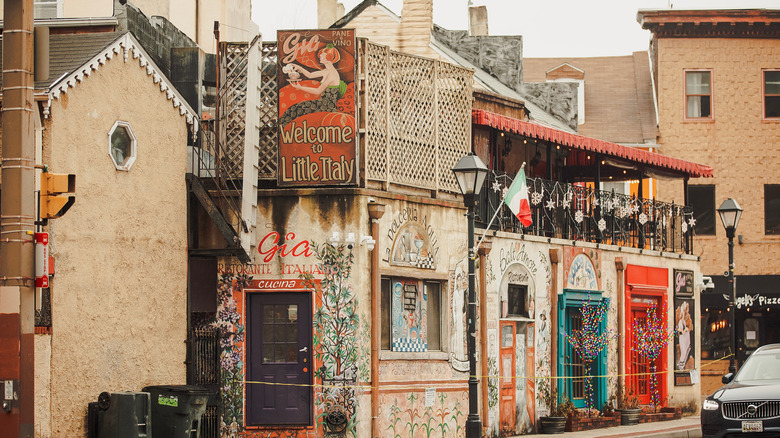
As one of the most underrated U.S. cities in general, Baltimore's Little Italy should definitely be on any traveler's list of reasons to visit soon. It may be smaller in size than many others on this list, but it is among the most culturally authentic Italian American neighborhoods anywhere in the nation. Established, like most Italian enclaves in the United States, in the late 19th and early 20th centuries by Italian immigrants, life in this area has not changed much over the years in many of the ways that matter most. Catholic life remains the backbone of "The Neighborhood," as it is fondly called by locals. St. Leo the Great Church has been the spiritual and social hub of Baltimore's Italian community since 1881, hosting religious celebrations, community gatherings, and operating the Pandola Learning Center, where local residents can connect to their Italian roots.
Family-owned restaurants are another defining feature of this Little Italy enclave. Like small, local eateries in towns throughout Italy, many of these establishments have been operating for decades, serving the same menus. Dalesio's has been a neighborhood staple since 1984, while Chiapparelli's has been treating diners to classic Italian dishes since 1940. Italian social clubs are also important in Baltimore. The Order of the Sons and Daughters of Italy in America and the Italian American Civic Club of Maryland both offer a sense of community, not unlike that in Italian towns where people have lived for generations. Institutions like this give "The Neighborhood" an authentic, lived-in feel where visitors are sure to feel welcomed.
Little Italy — San Francisco, California (North Beach)
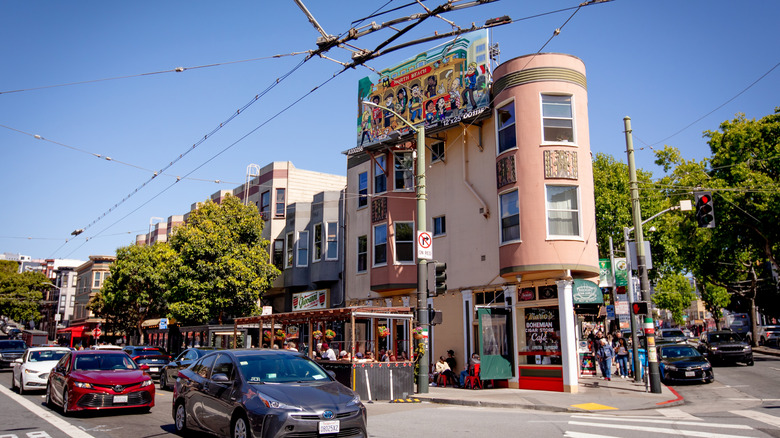
North Beach is San Francisco's historic Little Italy, which perfectly blends Italian American heritage with the city's famously bohemian spirit. While Little Italy is not as well-known as San Francisco's iconic Chinatown, North Beach has been a major Italian enclave for well over 100 years, with Italian Americans' influence on the area truly taking hold around 1906, following the Great Earthquake. It has had its share of famous residents over the years, including North Beach native Joe DiMaggio and his one-time wife, Marilyn Monroe. The neighborhood was also a haven during the Beatnik movement, with Allen Ginsberg, Neil Cassady, and the most famous Beat of all, Jack Kerouac, all calling the area home at one point or another. Today, travelers and locals can check out places like City Lights Bookstore, opened by a Beatnik poet, and Vesuvio Cafe, where literary culture still thrives.
The main drag in this Little Italy borough is Columbus Avenue, where many family-owned businesses have served locals and travelers for decades. The Italian Homemade Company is a must-visit for those in the market for authentic goods like freshly-made pasta, imported meats and cheeses, and other delicacies straight from Italy. Meanwhile, those in the mood for a sit-down meal should check out Italian seafood spot, Sotto Mare, or Tony's Pizza Napoletana for a variety of delicious pizza pie options taken from various Italian regions, including Rome and Naples. Every year, the San Francisco Italian Heritage Parade is a hallmark event for the neighborhood, drawing over 50,000 spectators to celebrate.
Little Italy — New Haven, Connecticut (Wooster Square)
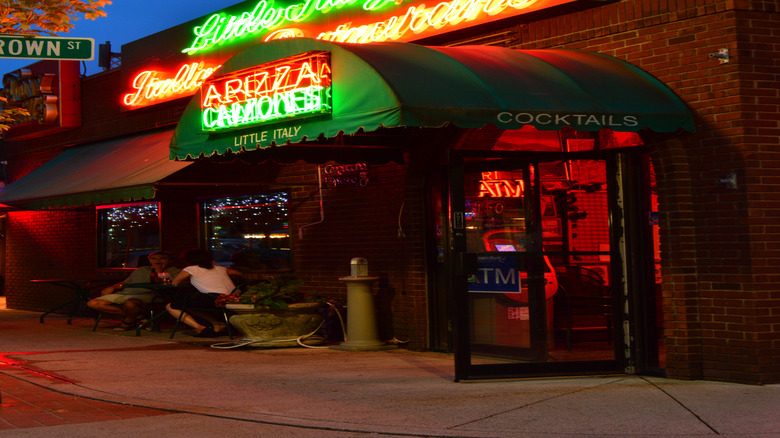
Centered along Wooster Street in New Haven, Connecticut, Wooster Square is an enclave that has continually been shaped by the Italian families who call it home. By the early 20th century, this neighborhood had restaurants, markets, various service providers, and a parish, St. Michael the Archangel. Many of those families are still running businesses in the neighborhood today. Many historic businesses, like Pepe's Pizzeria Napoletana, which was established in 1939, have been operating in the same storefronts for decades. Sally's Apizza is another long-running pizza parlor in a neighborhood that has become famous for its pizza legacy. Guests should also check out Libby's, a delicious Italian pastry shop!
Community institutions play a major role here as well, which gives the area an authentic, European feel. Italian American social clubs and cultural organizations help people stay connected to their heritage: The Amity Club was founded in 1936 and is still going strong; the East Haven Italian American Club offers bocce ball leagues; and the Society of Santa Maria Maddalena exists to maintain cultural heritage, as well as interact with a sister church in Italy. Additionally, the annual Greater New Haven Italian American Heritage Festival celebrates Italian influence on New Haven proper and five other surrounding communities.
Methodology
To put together this guide, I used multiple high-authority travel and experience sites like Airial.travel, Yelp, The Lazy Italian, "Travel + Leisure," and Thrillist. I also relied on official tourism and preservation websites for Providence, San Diego, and Baltimore. The websites for various restaurants, shops, and hotels also played a key role in this article. To determine which neighborhoods offer the most authentic Italian experiences, I also leaned into my own Italian travels and cultural identity as an Italian American person.