

13 Of The Most Dazzling Places On The Planet Worth Exploring
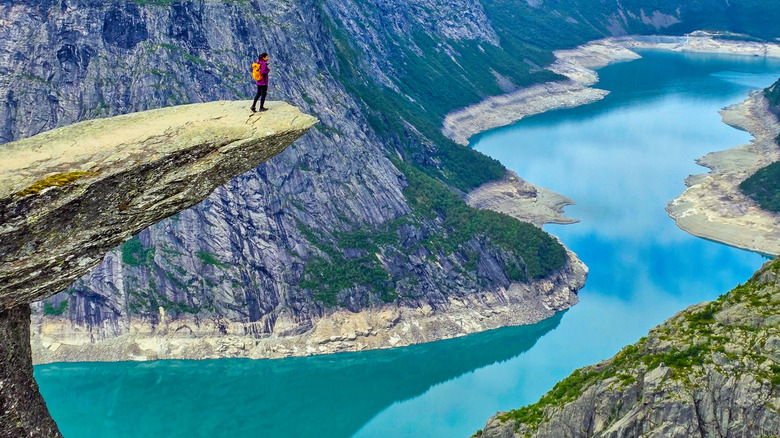
Ibn Battuta, a 14th-century explorer, wrote in "The Travels of Ibn Battutah" (via Goodreads), "Traveling — it leaves you speechless, then turns you into a storyteller." If you're looking for a few of those places that'll leave you speechless, we'll be straight with you: they are everywhere, even in your backyard. There are, however, certain destinations that are renowned for their dazzling qualities, guaranteed to leave you, well, speechless.
To narrow down what could be a very, very long list, we consulted travel experts, travel bloggers, and, of course, we went to the people (Reddit, that is). In addition to incorporating personal experience when applicable, we also aimed to include at least one destination from each continent (with the exception of Antarctica) to showcase the world's incredible diversity through 13 of the most dazzling places on the planet worth exploring, many some of the most iconic tourist attractions around.
Cliffs of Moher, Ireland
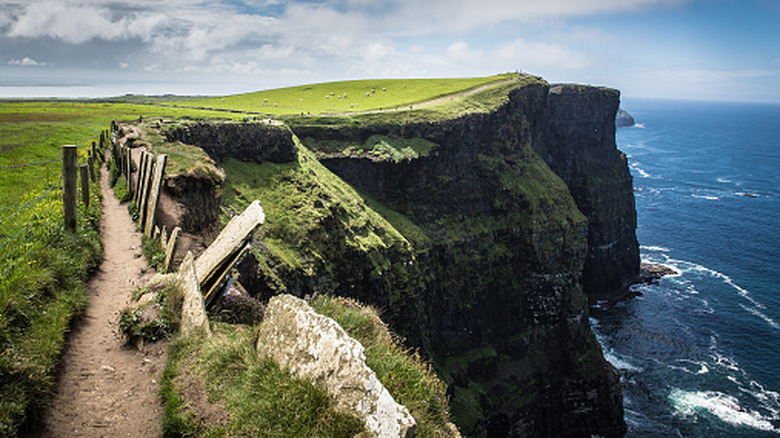
The Emerald Isle is renowned for its mystical beauty, and one of the best places to appreciate said beauty is the Cliffs of Moher, stretching for several miles along western Ireland. Considered one of Ireland's must-see tourist attractions, the Cliffs of Moher stand tall at over 700 feet above the crashing Atlantic Ocean and have been featured in several movies like "The Princess Bride" (hello Cliffs of Insanity!). On a clear day, you can have incredible views clear out to the mystical Aran Islands. Located under two hours from Galway, by car or bus, the Cliffs are best explored by the fenced path that begins near the visitor's center.
Of course, this is Ireland, and clear days can be hard to come by. Although you have a chance for sun in July and August, it's also when the Cliffs are most crowded. Consider visiting in May and June for better weather — plus, this is when Atlantic puffins, aka the world's cutest birds, come nest on the Cliffs (they're usually back at sea by mid-July).
If you do visit in the summer, consider a round-trip boat tour from the charming town of Doolin. Bring your binoculars to appreciate the geological variety visible from the water, and to hopefully spot a puffin or two (along with a variety of other seabirds). The Cliffs are also a stop along the gorgeously scenic Wild Atlantic Way, which follows Ireland's western edge for 1,600 miles — one reason Ireland is a great place to rent a car (be warned: they do drive on the left side of the road). In addition, on exceptionally clear days, you can even see the Cliffs from Inis Oírr (Inisheer), the nearest of the Aran Islands to the Irish mainland.
The Fjords of Norway
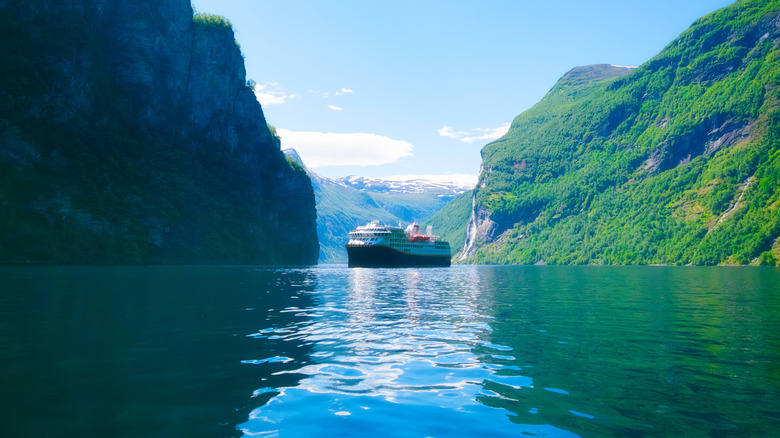
Norway is considered one of the most beautiful countries in the world, full of some of the most mesmerizing places on Earth , so it's hard to choose just one spot in this vast wonderland. However, as Norway is practically synonymous with fjords ("fjord" is a Norwegian word, after all), it's just right that the incredible Norwegian fjords make this list.
There are more than 1,700 fjords scattered throughout Norway, which have been carved into the landscape by glaciers and the ocean over hundreds of years. While each fjord has its own beauty, one that stands out is the "King of Fjords," or Sognefjord, which stretches for 127 miles inland from north of Bergen. Not only is it the deepest fjord in the world, but many of its "arms" are some of the most famous places in Norway, including the UNESCO-listed Nærøyfjord. One of the narrowest fjords in the world, some sections of the Nærøyfjord are just 820 feet across. Not far from Nærøyfjord is Geirangerfjord, and combined, these are the most stunning fjords in the world.
One of the many ways to explore Norway's fjords is on the famous "Norway in a Nutshell" tour, which takes travelers on trains, buses, and boats from Bergen to Oslo (or vice versa) via the incredible fjord landscape, including Nærøyfjord. If you have time, though, stay the night right on one of the fjords. Options include the Viking village of Gudvangen on the edge of the Nærøyfjord, in Geiranger along the Geirangerfjord to explore the famous waterfalls, or Solvorn, along the Sognefjord, for a bonus visit to the UNESCO-listed Urnes Stave Church.
Mount Fuji, Japan
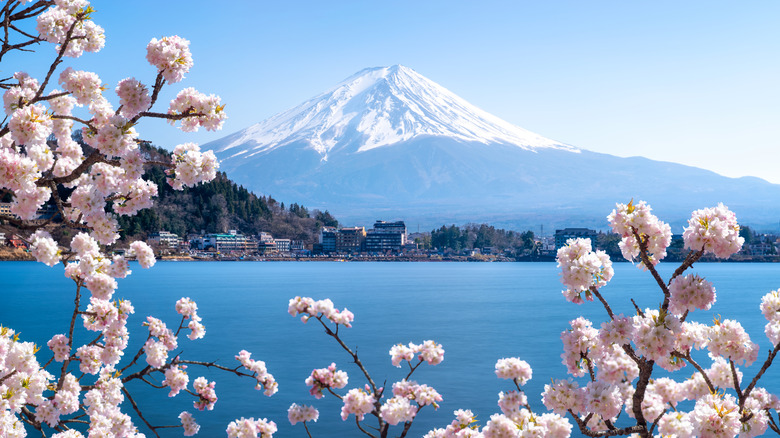
Japan's most iconic mountain is truly a sight to behold, whatever the season, although it's particularly spectacular in the autumn and the spring (cherry blossom season!). While you can spot Fuji from Tokyo on a clear day, getting even closer to this active volcano, especially from one of the nearby glacial lakes where its perfectly reflected in the water, is the best way to appreciate Fuji's majesty.
Known as Fujisan to the locals, this UNESCO-listed site is one of Japan's best destinations to snap beautiful pictures. To take full advantage of the views, head outside of Tokyo to the foothills of the mountain itself. The Fuji Five Lakes region has some of the most iconic views of Fujisan, from Lake Kawaguchi or Arakurayama Sengen Park, for picturesque views of the mountain from the Chureito Pagoda. The onsen (hot springs) town of Hakone gives you a chance to soak with a truly incredible view, although it's a bit harder to reach. Consider spending at least several days in Hakone or other nearby towns, like Fujikawaguchiko on Lake Kawaguchi, to ensure you have the best chance for clearest views — Fujisan can be shy and moody!
Patagonia, Argentina and Chile
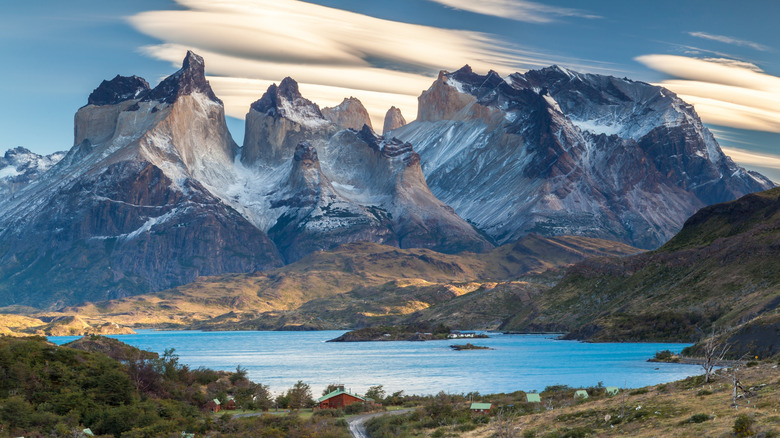
The long Andes Range essentially spans the entire length of South America, and scattered throughout are a vast number of incredible vistas. However, the mountains and lakes of the Patagonia region add their own drama with glaciers and a distinct otherworldly feel. Patagonia makes up the southern tip of the continent, straddling the borders of both Chile and Argentina and nearly reaching Antarctica.
The Patagonian landscapes are a once-in-a-lifetime vacation destination you don't want to miss out on due to their dazzling beauty and difficult access. The Andes make for an impressive border between the two countries, and the Patagonia region stretches on either side to both the Atlantic and the Pacific oceans (and the Southern Ocean at its tip). The biodiversity of the region is immense, from the glacier-lined Strait of Magellan filled with whales and penguins to the soaring Andes, home to llamas and pumas.
Patagonia's two main national parks — Chile's Torres del Paine and Argentina's Los Glaciares — are where you'll find some of the best views, as well as the most amenities (although hey, this is basically the end of the world). South American distances are vast, so it's best to fly to Patagonia from Santiago (Chile) or Buenos Aires (Argentina). Chile's main gateway is Punta Arenas, while Calafate and Ushuaia are Argentina's. Another favored spot in Argentina is the mountain paradise of Bariloche (also reachable by plane), the "Argentine Adventure Capital" known for skiing, extreme sports, and chocolate.
Victoria Falls, Zambia and Zimbabwe
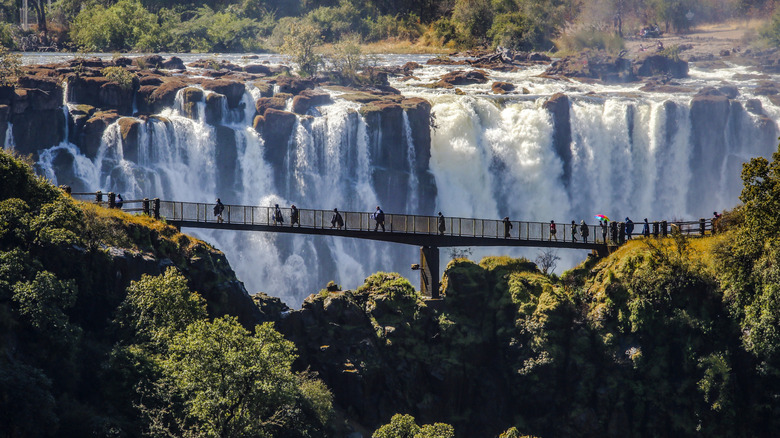
Waterfalls are always incredible, but there's something particularly special and eye-catching about Victoria Falls in Africa, on the Zambezi River along the border of Zambia and Zimbabwe. Locals call it Mosi-oa-Tunya, or "The Smoke that Thunders," for the mist that can be seen across the landscape and the distinct crashing sounds of the water, which can be heard for miles around. One of the most beautiful waterfalls in the world, the UNESCO-listed Victoria Falls are also the world's largest uninterrupted sheet of falling water, with a width of 5,604 feet and a height of 354 feet.
To view this truly impressive spectacle, consider visiting the falls from both countries. Each side offers different experiences, but you're guaranteed insane views, however you decide to experience the falls. Swim in the famous Devil's Pool at the very top of the falls (seasonal), take a cruise along the river, or head up into the sky for some incredible aerial vistas.
Machu Picchu, Peru
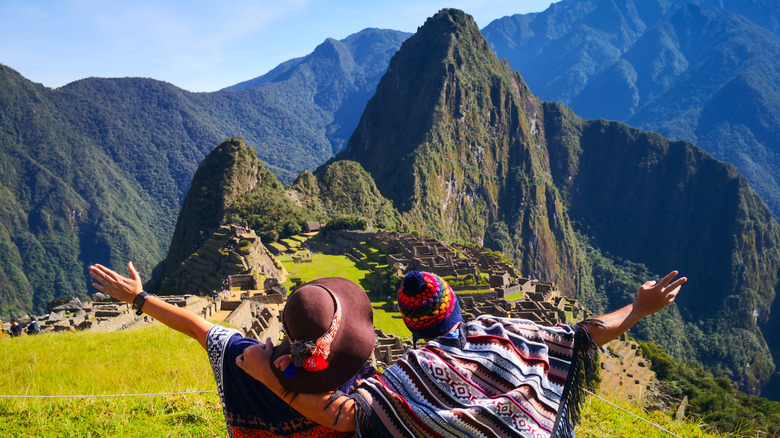
The Andes are brimming with incredible sights, and one of the most dazzling in South America (and in the world, period) is the abandoned Inca ruins of Machu Picchu. High in the mountains above Peru's Sacred Valley, Machu Picchu is stunning on a variety of levels, from its jaw-dropping location to its intricate construction. Built at approximately 8,000 feet above sea level above the lush Urubamba River Gorge, the lasting nature of the citadel is a testament to the enduring architecture of the Incas, who likely abandoned Machu Picchu by the 16th century (for reasons unknown). Rediscovered by an archaeologist in 1911, the so-called "Lost City of the Incas" has captured the imagination of the world for decades.
Despite modern infrastructure, Machu Picchu remains difficult to access. Trains are the best way to reach Aguas Calientes from Cusco, and from there, it's either a short hike or bus ride up to the citadel. Alternatively, the 26-mile Inca Trail famously ends at Machu Picchu, providing an extra sense of achievement. Whatever your method of reaching Machu Picchu, make sure you're there at first light: the sun rising through the mist over the iconic view is truly dazzling.
Great Wall of China

The Great Wall of China is, in a word, epic. Spanning thousands of miles, part of its allure is its history and stunning, varied location, but also in the many ways to experience this world wonder. Following the northern border of China for 13,000 milesbefore ending dramatically in the Bohai Sea, this historic icon was built from approximately the 3rd century B.C.E. to the 17th century. The Great Wall isn't simply a "wall," but rather a series of signal towers and other military structures connected by an endless stone road.
The Great Wall passes through a total of 15 Chinese provinces in varying levels of repair. Certain sections known as the "wild Great Wall" are in ruins and can be best accessed via a multi-day trek. It's easiest to reach the Great Wall from China's capital, Beijing, where several restored sections are within an easy day trip, from the ever-crowded Badaling to the oceanside Shanhaiguan Pass. Mutianyu is considered one of the most scenic sections, and with cable cars, is suitable for all ages. And if you've always dreamed of camping overnight on the Great Wall, head to Simatai, the only section open at night.
Lake Bled, Slovenia
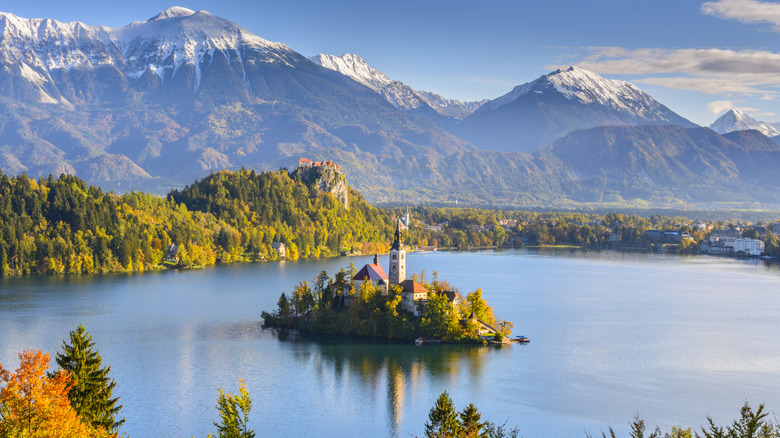
The entire country of Slovenia could be on this list, from the seaside town of Piran to the dragon castle of Ljubljana — it's truly underrated and so charming. Yet, even in a country as gorgeous as Slovenia, Lake Bled stands apart. A pristine lake, surrounded by the Julian Alps, crowned by a castle on a cliff and a charming church island, Lake Bled is a favorite of everyone who visits.
Lake Bled is just under an hour's drive from Slovenia's capital, Ljubljana, and could easily be visited on a day trip. However, rent a car and stay a little longer, and you'll be richly rewarded. The lake is lined with charming inns, both in and out of the resort town of Bled, that are ideal for a weekend stay (or longer). The countryside around Lake Bled is gorgeous, and the lovely Lake Bohinj (with its own picturesque church), just thirty minutes away, is just one of the many highlights.
Lake Bled itself will charm your socks off. A visit to the gravity-defying, 1,000-year-old Bled Castle, a short hike up from the lake, is a must. It's also the best place to sample the famous Bled cream cake (kremna rezina) with a side of Slovene wine and killer views. Get more vistas than your heart can handle on the circular Lake Bled trail (about four miles long), and during a leisurely paddle on the lake. It's an easy rowboat trip to Bled's iconic little island, home to the 15th-century Church of the Assumption.
Antelope Canyon, Arizona
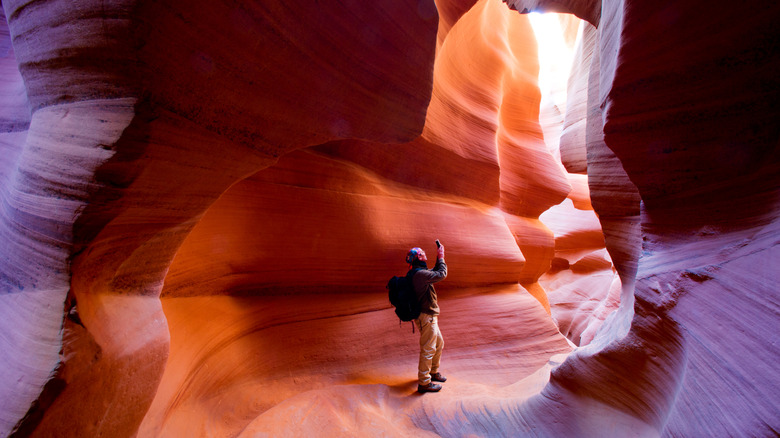
The United States also has its fair share of dazzling places, with its vast wilderness, diverse landscapes, and epic national parks. One particularly unique place in the state of Arizona is a slot canyon, a very narrow canyon formed over hundreds of years in the desert bedrock. The sinuous curves and layers of colors are invisible to the casual passersby, and can only be discovered on a (guided) trek deep into the Earth.
Antelope Canyon, considered one of the most beautiful canyons in the US, is located outside of Page, Arizona, on Navajo Tribal Lands; a guided tour with a member of the Navajo Nation is required to visit. The fragile environment is prone to extreme weather, like flash floods, and is vulnerable to overtourism, so the entrance is heavily regulated (read: book well in advance).
Antelope Canyon is split into two main sections: Upper Antelope Canyon and Lower Antelope Canyon. Upper is easier to access and sees more visitors, although it's just 100 yards long. Lower is just as gorgeous, but requires a longer trek to reach, and can only be entered from above via stairways and ladders.
Great Barrier Reef, Australia
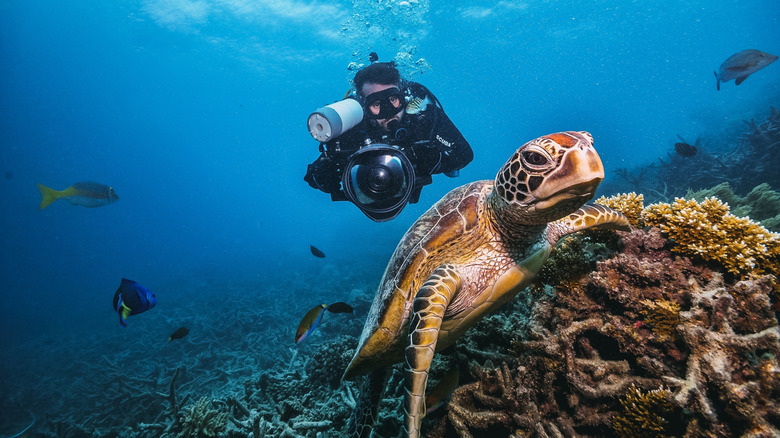
The Great Barrier Reef, spanning approximately 1,500 miles along the coast of Australia, is rightfully one of the seven natural wonders of the world, as it's the world's largest living structure. In fact, it's so massive it can be seen from space! The scope of the reef is immense, covering hundreds of islands, 3,000 smaller reef systems, and could fit approximately 70 million football fields (!).
The northern Australian city of Cairns is the best jumping-off point to explore the Great Barrier Reef, although many islands are also inhabited. Planes and helicopters can give you some idea of the sheer size, but an underwater visit (snorkeling or scuba diving) is essential to experience the vibrant colors and biodiversity — over 600 types of coral, over 1,500 fish species, along with various whales, sharks, rays, and sea turtles. Note: the Great Barrier Reef is exceedingly fragile, so visit responsibly and choose reputable tour operators.
Tiger's Nest Monastery, Bhutan
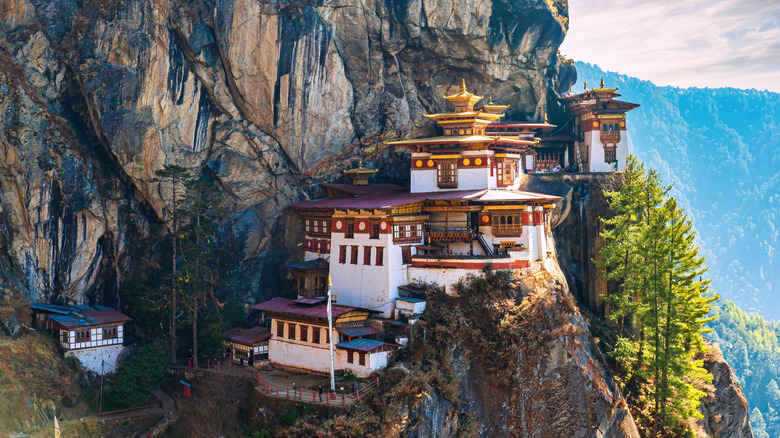
Another spectacular structure in the mountains — are you sensing a pattern here? High in the Himalayas, in the mysterious Bhutan, the world's last Buddhist kingdom, is the gorgeous Tiger's Nest Monastery. The white, golden-tipped building is guaranteed to take your breath away — and not just because of the required hike and the requisite altitude.
While Bhutan has plenty of other incredible temples, the Tiger's Nest, or the Paro Taktsang Monastery, is one of the most unique travel experiences on Earth. The 17th-century monastery can only be reached by a four-mile round-trip trek from the bottom of the Paro Valley up into the Himalayas, where it clings to a cliff at an altitude of nearly 10,000 feet above sea level. In addition, Bhutan, the "Land of the Thunder Dragon," is not easily accessible. Only eight pilots in the world are certified to land in Bhutan, thanks to its notoriously tricky runway, and tourism in Bhutan is tightly regulated. Every visitor must pay a Sustainable Development Fee of at least $100 per day, on top of applying (and paying) for a visa.
Ha Long Bay, Vietnam
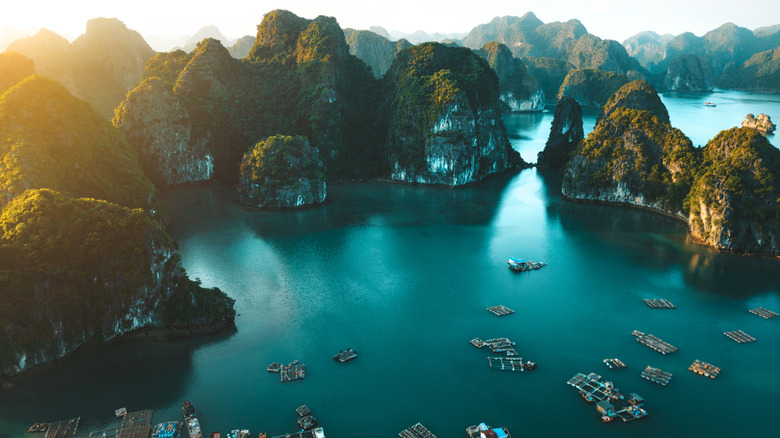
The UNESCO World Heritage Site of Ha Long Bay and the Cat Ba Archipelago in Vietnam, comprising over 1,000 islands in the turquoise ocean waters of the bay, was, according to local legend, created by a heavenly dragon flying down to Earth to protect the people from invaders. The dragon and her offspring remained, and thus the "Descending Dragon Bay" was born. Although the strange green stone formations jutting out of the ocean, often shrouded in fog, do have an otherworldly feel, the karst towers were (probably) formed over hundreds of years by erosion.
The best way to discover Ha Long Bay is via water on an overnight (or longer) cruise so that you can experience the bay at sunset, sunrise, and everything in between. Part of Ha Long's allure is the many hidden caves and centuries-old floating villages, some of which can be explored on a cruise. In addition, cruisers can also get out in the water on their own kayak, go for a swim (weather depending), and climb or hike on several of the islands, including the famous Cát Bà Island (where you should also consider spending a night if you have the time).
Fjaðrárgljúfur, Iceland
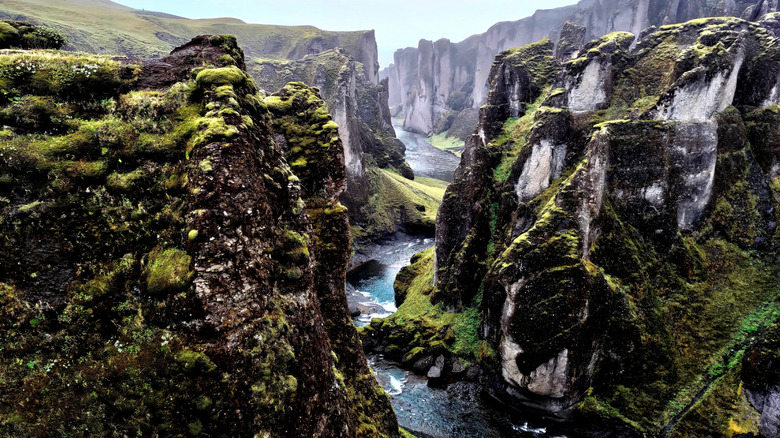
Iceland, one of the safest countries in the world to visit, is yet another place with an astonishing number of natural marvels, including the incredibly picturesque and green Fjaðrárgljúfur Canyon. Located in south Iceland, the narrow walls of Fjaðrárgljúfur seem fairytale-esque (and the locals will tell you it's filled with elves). The canyon itself, formed at least 9,000 years ago, stretches for over one mile through the stunning Icelandic landscape, and in some places, the walls are over 300 feet high. Within these steep walls, the turquoise Fjaðrá River winds through. One highlight of the gorge is the Mögáfoss Waterfall, which cascades down the western wall, viewed by platforms and nearby trails.
Whatever time of year you visit, you're guaranteed beautiful views, whether it's when the slopes turn white with snow, and the waterfall freezes, during a moody and foggy spring, or on a rare dry day in the summer. To reach Fjaðrárgljúfur, it's necessary to have a car or join a tour. The landscape is fragile, so check the opening hours before visiting, as it can occasionally close. In addition, follow all posted signs and stay on trails.
Methodology

For this article, we consulted the opinions from Reddit and other review sites to help narrow down the list of dazzling destinations, with acknowledgement that "dazzling" is a highly subjective term. We also used personal experience when applicable and the experiences of various travel experts, as well as sourcing information from local travel websites, tourism bureaus, UNESCO, and National Geographic.