

10 Unspoken Etiquette Rules Tourists Should Know Before Visiting Italy
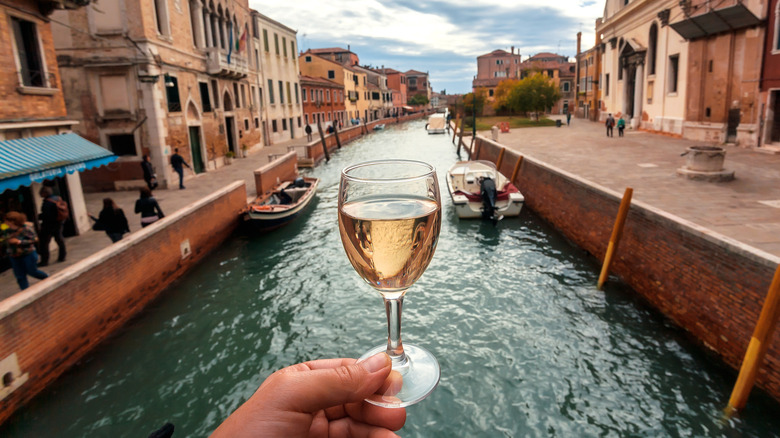
Italy is a famously warm and welcoming country, but, like all nations, it has a unique set of social norms and expectations that locals grew up with. And some of these customs can be understandably foreign — literally — to tourists from other countries. As such, to avoid standing out like a sore thumb in Italy, it's important to understand some of the deeply ingrained social codes that visitors don't always see at first glance. While locals are generally forgiving of tourists, breaking certain unspoken etiquette rules can instantly mark you as "not from here," potentially altering how you're treated in certain situations.
This guide breaks down 10 unspoken etiquette rules that tourists should know before visiting Italy — from dining habits and attire expectations to everyday behaviors that Italians instinctively understand. Learning these small cultural cues will help travelers experience Italy more naturally and authentically. The more travelers are able to blend in during everyday interactions, the easier it becomes to experience Italy — and any country, really — the way locals do, with an easy confidence that marks one as a citizen of the world.
Don't order cappuccino after breakfast

Throughout Italy, cappuccino — often served alongside a pastry — is firmly considered a breakfast beverage. Typically speaking, locals won't order cappuccinos after 11 a.m., and ordering one after lunch or dinner is one of the clearest signals that someone is a tourist in this Mediterranean nation.
The main reason this drink is a morning exclusive is that it requires milk, and Italians believe that drinking milk on a full stomach can lead to digestive problems. Hence the humble cappuccino's place at the breakfast table while stomachs are empty. Along with that, there's also a historic basis for cappuccinos as an early-morning Italian beverage. When the drink first became popular in the early 20th century, the cappuccino and pastry combination was a staple for dock workers and other manual laborers who needed a grab-and-go meal.
Nowadays, locals often switch to espresso after meals — called "caffè" — which is richer but easier to digest, making it the perfect post-meal drink. Travelers craving another type of post-meal coffee should consider a macchiato — espresso with just a splash of milk — or caffè corretto, which is espresso with a dash of liquor. Ultimately, skipping cappuccinos later in the day is a relatively small adjustment for most Americans, but it is an instant sign of cultural awareness to residents. It's also worth noting, though, that this Italian cultural norm is not as rigid as it once was. Younger people are starting to drink cappuccinos throughout the day, but it's still not a widespread habit.
Dress matters more than you think

In Italy, as in much of Europe, certain common clothing choices immediately mark people as tourists — and there's a clear distinction between wearing something casual and looking careless. As a general rule, you likely won't see Italians engaging in everyday activities like grabbing coffee, grocery shopping, going to dinner, or even going to university classes in athletic attire, flip-flops, or anything remotely unkempt. You'll rarely see locals running errands of any kind in leggings, oversized hoodies, or loungewear. Those who look like they just left the gym or walked off the beach tend to immediately stand out — and not in a good way — outside of very specific settings like, well, gyms and beaches. This doesn't mean that Italian people dress in ultra-formal attire all the time. However, it does mean that they take pride in looking put together and dressing intentionally.
For some, a sundress, tailored trousers or wide-leg jeans with a sleek top, stylish sneakers, and a scarf are perfect for Italian sightseeing. For others, tailored denim or chinos with a button-down and designer sunglasses are always ideal.
To get in the mindset of dressing like an Italian, consider this: the way in which you present yourself reflects respect for the place you're visiting and the people around you. If, for example, you're headed to the Uffizi Gallery in Florence, consider how you want to be perceived as a patron of a world-class art museum. A good rule of thumb when packing for an Italian getaway is to select neutral-colored separates that fit you well and look polished, no matter how you combine them.
Italian greetings have deep meaning

While "ciao" is easily the most well-known Italian greeting, it isn't always the most appropriate choice. A quick "ciao" is typically acceptable among close friends and family members, but if you're engaging with someone in a professional setting or interacting with anyone older than you, "ciao" is too familiar. Generally, the slightly more formal everyday greetings "buongiorno" ("good morning/good day") and "buonasera" ("good evening/good night") are the correct terms.
Italians take greetings seriously, and not saying the appropriate "hello" when you enter a shop, café, restaurant, or even an elevator is considered rude. The choice of greeting depends on the time of day and the level of formality the situation calls for. Generally speaking, native Italians use "buongiorno" until mid-to-late afternoon, typically around 4 p.m. Then, they switch to "buonasera" for the evening hours. "Salve" is another common Italian greeting. This form of "hello" can be used any time of day, from morning to night, but it is the most formal option and is typically reserved for settings where one needs to show respect. For example, students might use this with a professor, and businesspeople might use it with higher-ups at work.
Remember, rules about getting greetings right in Italy aren't about speaking flawless Italian. Locals appreciate when travelers make the effort to understand their societal norms, so a well-placed "buongiorno" or "buonasera" can make all the difference in opening the door for other deeply authentic interactions.
Don't clink plastic glasses or cheers loudly

In Italy, raising a glass isn't as casual as it is in the United States. Culturally, it's a moment of connection, respect, and, in some cases, long-held superstition — all part of the fabric of Italian social life. Should you find yourself drinking with Italians, there are some key pieces of etiquette you should take to heart. They take their brindisi, or toasting ritual, seriously.
First, while toasting with a simple "cheers" is common in nearly every American social situation, in Italy, you're more likely to hear "salute!" ("health!") in a formal setting or "cin cin" (from the Chinese "qing qing," or "please please") at a more casual affair. Meanwhile, "auguri" is another Italian toast exclamation, typically used at milestone events like birthdays and weddings.
Making eye contact with everyone you are toasting is also crucial in Italy. This signals sincerity and respect, and not doing it can be considered offensive. Additionally, Americans may commit another unknowing faux pas if they automatically raise whatever glass they are holding — especially if it's a plastic cup or bottle. Traditional Italian etiquette — a holdover from Renaissance-era Venice, when Murano goblets were de rigueur — requires that toasts be made with glassware. Furthermore, toasting with an empty glass or with water is frequently viewed as bad luck or overly casual. Finally, the toast itself is almost always conducted by the event host, regardless of the occasion. They will never clink a glass to get others' attention, though, as this is widely considered gauche in Italian social circles.
Drink espresso standing up
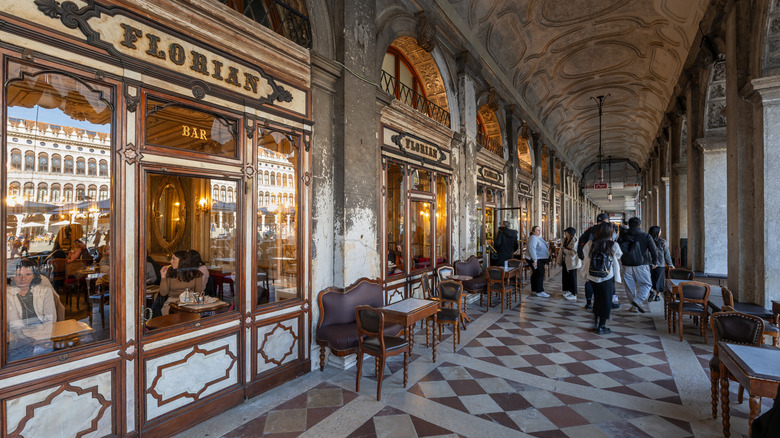
Italy's coffee culture is very different from the lingering sit-and-chat coffee culture Americans are used to. At most local bars — the colloquial term for coffee shops and cafés — Italians drink their espresso quickly while standing at the counter. This custom isn't rude, though, and there are several practical reasons for it. First, space is generally very limited in Italian coffee bars, and a standing counter for espresso drinkers makes more sense than bulky tables. It also makes lines more efficient during busy times of day, encouraging patrons to engage socially, which is a cornerstone of Italy's bar culture.
Although some establishments do have tables and chairs, patrons who choose to sit are sometimes charged a "servizio" or "coperto" fee. These charges are slightly different: a coperto is a set per-person charge, while the servizio is generally a percentage of the total bill. Either way, they both represent an additional cost associated with table service.
The fact that Italian coffee culture doesn't invite people to sit for hours doesn't mean it's unfriendly, though. In fact, people who frequent bars are generally quite social and open to conversation. Drinking a caffè with the barista, sharing laughs and stories with locals, or simply spending time with your travel party while standing at an espresso counter are all great ways to connect with others in true Italian fashion. It's worth noting, however, that there are exceptions to this rule. In historic or tourist-oriented cafés like Caffè Florian in Venice, getting a table and taking one's time to enjoy coffee, prosecco, or dessert while watching passersby is the norm, and the high prices are a reflection of the experience.
Churches have dress codes
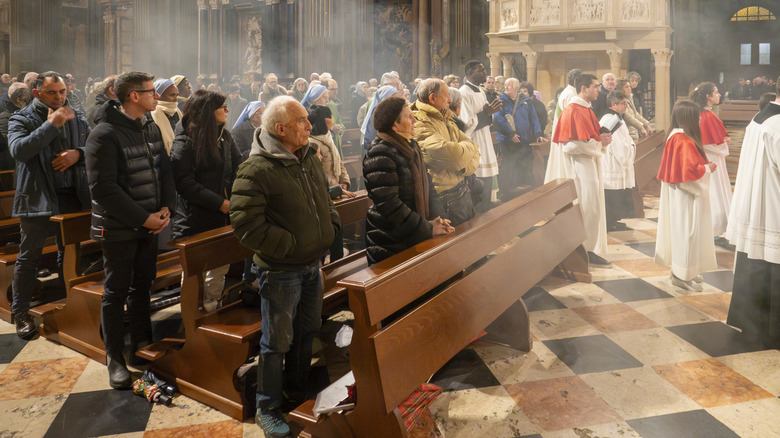
Throughout Italy, there are more than 100,000 Catholic churches, some of which are famous the world over. The Vatican's St. Peter's Basilica and the Pantheon in Rome, St. Mark's Basilica in Venice, and Milan's iconic Duomo di Milano, for example, are not just spectacular tourist attractions but also active places of worship. Because of this, visitors are expected to show basic respect for these religious sites via their attire and behavior.
As a general rule of thumb, visitors should cover their shoulders and knees if they plan to enter a Catholic church. In some cases, churches may have shawls available. Beyond that, it's also wise to wear closed-toe shoes. Some facilities might even have specific dress code requirements. For instance, at St. Peter's, men are not allowed to wear hats inside. At the Sistine Chapel, cell phones must be put away or turned off.
Dress codes are taken seriously at Italian churches, and those wearing inappropriate attire will likely be asked to leave. For those who plan to attend Mass, it is important to look up any additional rules ahead of time. For practicing Catholics in Italy, these dress codes and other codes of conduct are about respecting centuries of tradition. Adhering to their belief systems, even if you are not Roman Catholic yourself, is one of the ultimate signs of cultural respect.
Cars don't typically stop for pedestrians
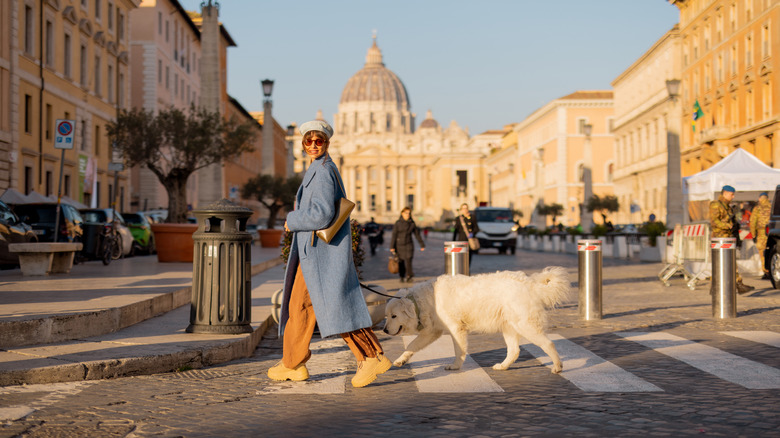
While pedestrians do legally have the right of way in Italy, the on-the-ground reality can feel quite different — particularly for travelers from the United States and Canada. In actuality, Italian drivers tend to stop only at traffic lights or clearly marked crosswalks. Even at these intersections, pedestrians are expected to be alert, decisive, and hyper-aware of their surroundings. Following this unspoken etiquette rule while walking around Italian cities is a surefire way to impress locals. Stepping into the street without looking — à la New York City — or hesitating midway as vehicles approach will quickly mark you as a tourist.
In Italian cities, crossing the street is something of a negotiation with motorists. If a pedestrian makes eye contact with a driver, the driver often assumes the person on foot will stop — even if they technically have the right of way. However, it's important to remember that the way Italians drive is not intended to be rude. Rather, locals generally feel quite confident behind the wheel and simply want to get where they are going as efficiently as possible. This is merely a cultural norm that locals inherently understand.
In short, Italians expect pedestrians to cross streets with purpose, not hesitation. If you're a pedestrian in Italy, especially for the first time, use crosswalks when they are available, watch traffic carefully in both directions, walk confidently into the road, and do not stop once you've begun.
Aperitivo has guidelines
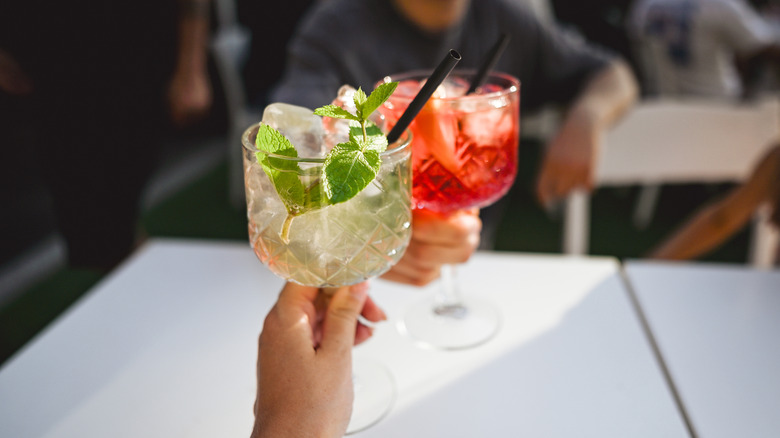
There is something of a misconception in some American circles that Italy's aperitivo tradition is merely a version of happy hour. In reality, though, this social construct — whose foundation was laid in Turin in 1786 — is far more than discounted drinks and free bar snacks. An everyday ritual that plays a highly specific role in Italian social and culinary culture, the word "aperitivo" stems from the Latin term aperire, meaning "to open." As such, Italians view it as a way to literally open up one's appetite ahead of dinner each evening.
Aperitivo typically takes place in the early evening hours, often from about 7 to 9 p.m., and it's as much about the experience as it is about what's on one's plate or in one's glass. Some dining establishments also offer lunchtime aperitivo around noon, but this is not as common nationwide.
Locals often opt for classic drinks like Aperol Spritzes and Negronis, both of which are easy to sip and savor. Non-alcoholic beverages are also typically on the menu. Remember, however, that the snacks served during aperitivo are designed to prepare you for dinner, not serve as dinner themselves. Filling up on things like rice balls and cheese boards, and then skipping dinner, can be a red flag that one is missing the point of the tradition. After all, aperitivo is not merely a selection of free samples like one might find at a Costco; it's a buffer between work hours and dinner when Italians take a beat to finally linger. If you want to blend in, order a proper aperitivo cocktail or mocktail, sample a few snacks, and move on to a dinner menu when the time feels appropriate.
Don't use a spoon to eat spaghetti
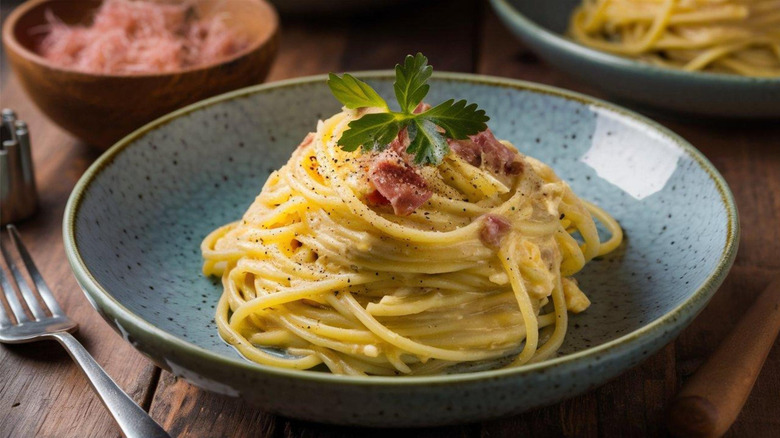
In Italy, how you eat pasta matters nearly as much as what you order. If you want to immediately be outed as a tourist at the table, use a spoon to help twirl your spaghetti. Italians, generally speaking, don't use any utensil outside of a fork when they are eating a plate of pasta. The only exception, perhaps, is the occasional pasta dish served with a true broth, not traditional sauce.
Italian pasta etiquette, as a matter of fact, necessitates twirling long pieces of pasta around one's fork, with the bottom of the plate serving as support if needed. The reasoning behind this is simultaneously cultural and practical. Italian pasta is typically cooked al dente — a term that refers to the perfect consistency of not too hard and not too soft — so shorter styles can often be easily speared with a fork rather than twirled.
Using a spoon to eat spaghetti or other pasta noodles is seen as unnecessary and slightly childish in Italy. For actual children, pasta is normally cut until they can master the twirling technique. Doing this as an adult, however, will instantly mark you as a tourist who hasn't yet become accustomed to local dining norms. Fear not, however: mastering the fork-only twirl isn't as hard as it initially looks. Italians typically anchor the fork by spearing a few strands against the plate, twirl those pieces, take a bite, and continue the process until their meal is gone. Overall, following this simple Italian dining etiquette rule will go a long way toward earning credibility with locals.
Respect daily rhythms (riposo and meal times)
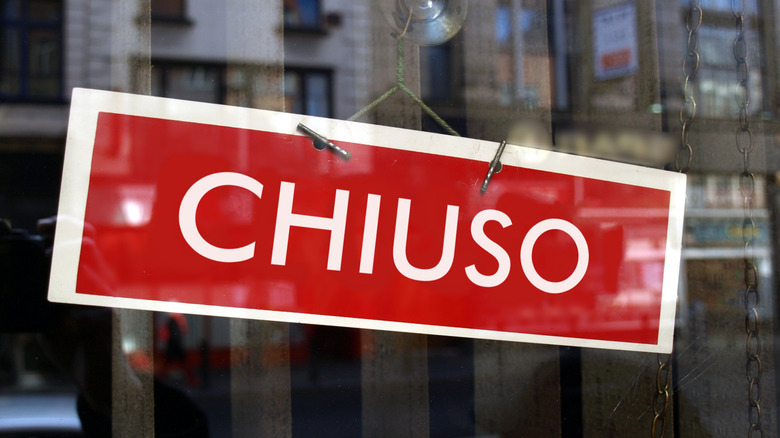
For those visiting Italy for the first time, the rhythm of daily life is likely to be the biggest surprise. Italians don't follow the 24/7, convenience-driven schedule many Americans, Canadians, and even metropolitan Brits are used to. Being aware of this cultural difference before arriving is a good way to avoid frustration when planning meals and sightseeing.
Riposo, a traditional midday break that is similar to a Spanish siesta, is a notable custom that can impact daily scheduling. Between roughly noon and 3 p.m., many shops, restaurants, and cafés close their doors before reopening from mid-afternoon well into the evening.
While riposo is most common in southern Italy — where cities like Naples and Palermo get very hot during summer afternoons — it exists throughout the country. My favorite Roman restaurant, Ristorante da Sabatino, for example, takes a lengthy daily riposo from 3:30 p.m. to 7 p.m. for aperitivo. Similarly, Italian mealtimes often feel distinctly foreign to travelers. Because lunch is often served later in the afternoon during the riposo period, dinner is typically eaten after aperitivo anywhere between 8 p.m. and 10 p.m. Although this schedule can take a couple of days to get used to, it's well worth adapting to in order to experience Italian daily life as authentically as possible.
Methodology
A wide variety of sources were used to put together this guide of the top 10 unspoken etiquette rules in Italy. We primarily relied on the writer's first-hand knowledge of Italian culture, gained through numerous visits, and supplemented these insights with a range of sources. This included high-authority travel publications and blogs from Italia Like a Local, Segafredo Coffee, Tourist Italy, Eataly, Italy Translated, and Forbes.