

What Happened To Trunkster Smart Luggage From Shark Tank?
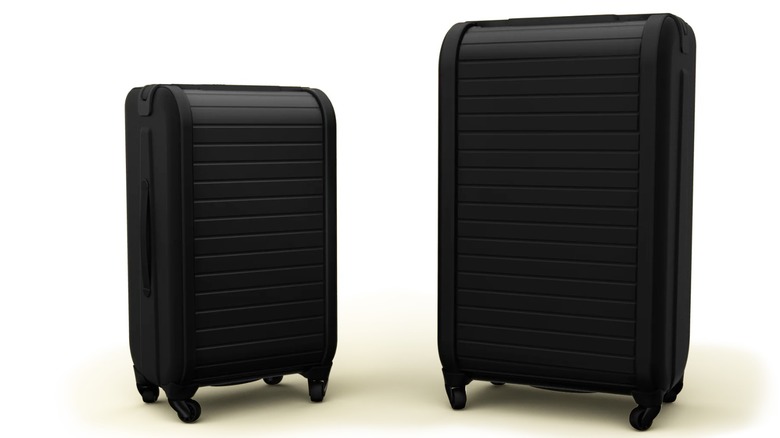
When Trunkster burst onto the "Shark Tank" scene, the smart luggage startup stood out for its attempt to rethink how modern suitcases work. Sleek, smart, and packed with tech, the product drew attention as an innovative alternative to traditional travel bags. If you're visiting a city like Annecy, the "Venice of the Alps" in France or a faraway Asian escape, choosing the right bag for those long travels is a concern for many travelers, and that's what Trunkster claimed its suitcase could address. But years after it debuted, travelers are still asking the same question: What actually happened to Trunkster?
Trunkster, which started as a smart luggage brand, made its appearance on "Shark Tank" in 2015. Created by founders Jesse Potash and Gaston Blanchet in 2014, the company came with the sole aim of improving travel luggage with features such as a roll-top opening, a built-in digital scale, and a GPS tracker to know where your lost luggage is. In addition, there were USB charging ports to charge phones or other devices. And when Trunkster sought $1.4 million on "Shark Tank" in exchange for 5% of the company, it looked like a deal had been landed with investors Mark Cuban and Lori Greiner. Although the deal was announced on TV, it never became official after the show. The investors didn't proceed after checking the company's legal and financial details.
Even before "Shark Tank," Trunkster already had strong crowdfunding success. They had raised millions of dollars from people on Kickstarter and Indiegogo, the two most popular crowdfunding platforms, and became the top travel-tech product campaign at that time, according to Shark Tank Tales. But even at that, big problems still befell the establishment.
Why Trunkster failed, and what happened next
The problem with Trunkster started just after the appearance on "Shark Tank." Comments on both the Kickstarter and Indiegogo campaign pages confirm that backers didn't get what they had paid for, as Trunkster struggled to manufacture and deliver products. Many supporters complained that their orders were delayed for too long, and many said the quality of the luggage was nothing to write home about. Some even didn't receive theirs at all. But instead of attending to the customers' complaints, the company stopped responding to them. Not only that, the refund requests of their customers were allegedly never honored, leaving many people upset.
As if that wasn't bad enough, Trunkster's website and social media accounts also went inactive, and the brand itself disappeared into thin air before finally closing down in 2017. Currently, the company no longer operates or sells products, and some estimates place its net worth at $0. The two founders of the company are now involved in other things. Gaston Blanchet went on to co-found Storypod, a children's audio storytelling platform. Jesse Potash has also been involved in work outside the travel-gear space following Trunkster's closure.
No one knew the story of Trunkster would end this way. Even though the company started strongly with significant funding and a high-profile TV appearance, it still ended poorly, taking all the innovative design ideas with it. Many startups face challenges in manufacturing, fulfillment, and customer service. And more often than not, overcoming those hurdles ultimately determines whether a product can make it to the market or not.