

The Most Mysterious Destinations In The World We Can't Fully Explain
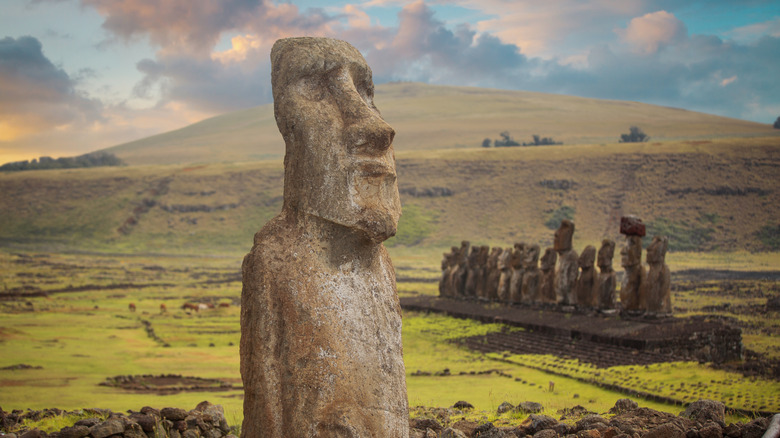
Despite the best efforts of science and humanity, there are still enigmatic destinations around the world that defy explanation. For this article, we embarked on a quest to outline the most mysterious destinations we can't fully explain (adding personal experience when applicable). We endeavored to select places that are genuine mysteries, from a scientific or historical perspective, and not just places of legend (although there are certainly destinations that combine all of the above).
Of the 11 places on this list, there are some of the world's most iconic tourist attractions, as well as hidden destinations well off the beaten path. From mysterious forests to lost mountain cities, otherworldly desert lines and ancient monuments, there are still mysteries in every corner of the globe, some of which may never be fully solved.
Stonehenge (UK)
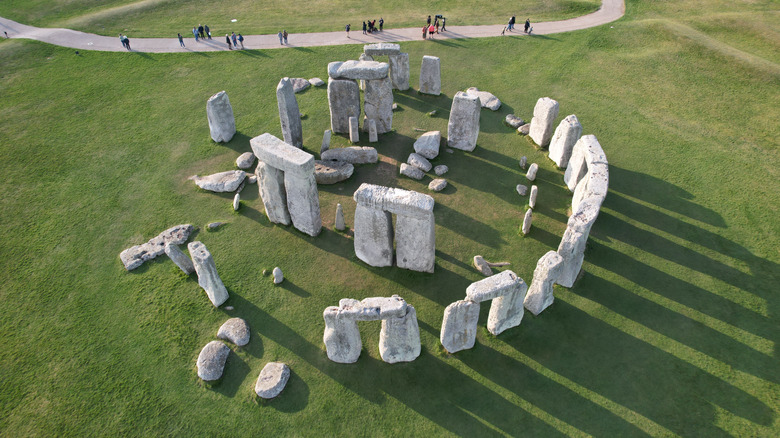
Stonehenge is an enigma in nearly every way. Who built it, why they built it, how they built it, and where the stones came from are all part of the mystique, making Stonehenge one of the most mysterious places around the globe that leaves more questions than answers. So, what do we know about Stonehenge? We know it was built approximately 4,500 years ago, perhaps to commemorate celestial movements, and that the stones originated from Wales, nearby in England, and even as far away as Scotland. The giant nature of the stones is particularly flummoxing, as these prehistoric peoples in England had no easy way to transport giant monoliths across the landscape.
Although remains have been found near Stonehenge, further evidence suggests it was more than a burial site, perhaps as a spiritual or religious gathering place, or even as an observatory. Other theories cover healing rituals, aliens (again), Roman ruins, fertility symbols, and more. Some say the stones can still sing, if you listen hard enough, adding to the folklore and legends surrounding this ancient, UNESCO-listed monument. If any stones could tell a story, it would be the stalwart sentinels at Stonehenge.
Crooked Forest (Poland)
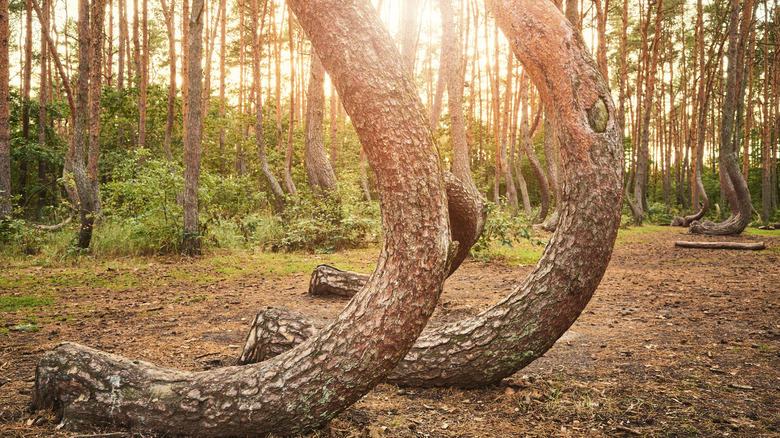
One of the most mysterious places in the whole world can be found in an unassuming forest in Central Europe. About 400 trees in Poland's Crooked Forest (Krzywy Las), near the town of Gryfino, all have the same curve at the bottom of their trunks. Adding to the eerie phenomenon, each tree's curvature points north before shooting straight towards the heavens; some of these otherwise healthy trees reach heights of 50 feet.
The reason for these "crooked trees" has mystified locals, visitors, and experts alike. The trees were likely planted in the 1930s, with the curve occurring when the trees were between 7-10 years old. One guess is a particularly harsh winter that damaged the trunks, although that doesn't explain why other pine trees in the forest grew normally. Some theorize that a magnetic or gravitational pull caused the trees to curve, or that locals coaxed the trees to grow in shapes for wood building — a not unheard of practice. As Gryfino was nearly abandoned during World War II, any local explanation for the trees seems to be lost, and perhaps the farmers who allegedly manipulated the trees never returned. To reach the mysterious Crooked Forest, it's best to rent a car or take a bus from Berlin, Germany (about two hours away). Visit in early spring or the fall, and make sure to visit in the morning for the best light.
Pyramids of Giza (Egypt)
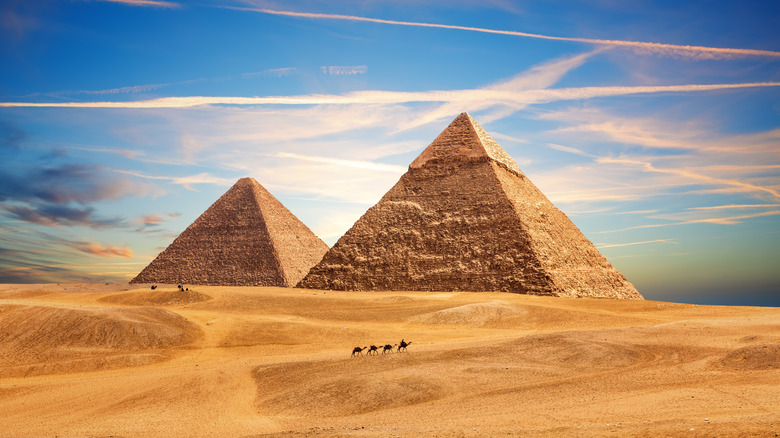
The last remaining wonder of the ancient world, Egypt's Pyramids of Giza, are so enduring that they've long outlived the culture that built them (although they used to look completely different). Constructed during the "Golden Age" or the "Age of the Pyramids" during Egypt's Old Kingdom, approximately 4,500 years ago, the three main pyramids are named after the pharaohs they were built to entomb: Khufu, Khafre, and Menkaure. The Great Pyramid of Khufu is the largest, with millions of stones weighing in at over 2 tons each.
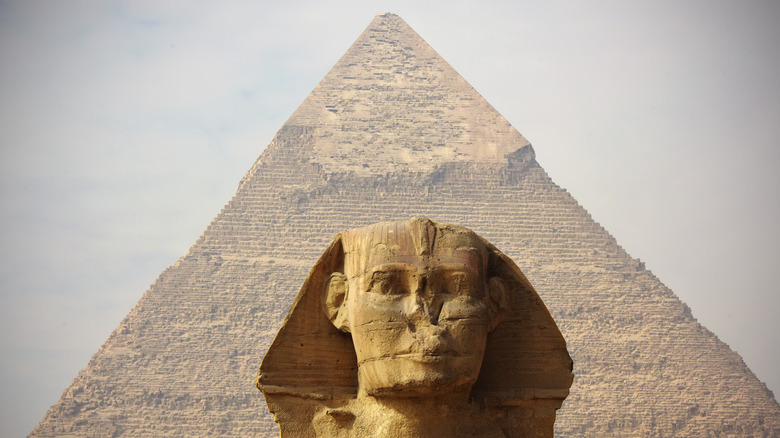
And while the very image of the pyramids rising straight out of the sands, guarded by the stalwart Great Sphinx, evokes a sense of wonder and mystique, the pyramids themselves hold many secrets. Despite extensive research, no one is certain how the pyramids were built in the first place, although there is strong evidence that they were constructed by a skilled, well-treated workforce, not slaves as previously thought. Different points of the pyramids may align with certain stars or the sun, and various newly discovered rooms within the pyramids have no clear purpose.
Scientists know that most of the huge stones were transported to Giza via the Nile, and canals were built for this specific purpose. Once there, builders likely used a ramp system, spiralling around the outside or perhaps from inside the structure itself. How they did all of this without modern tools and infrastructure, though, is another story, and the astonishing feats of architecture and engineering that have contributed to the pyramids' durability remain lost to time — although some believe aliens built the pyramids, too.
Yonaguni Monument (Japan)
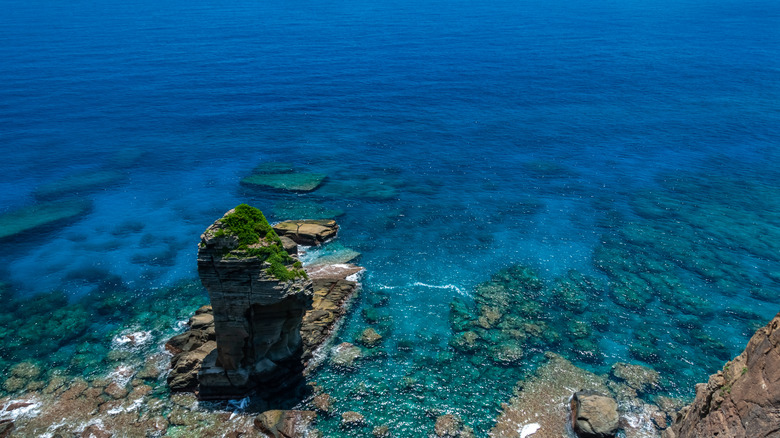
Some say call it the "Atlantis of the Pacific," some call it an intriguing geological formation. Whatever it is, deep in the waters off the coast of Okinawa, Japan, lies an underwater anomaly that's intrigued the world since its original discovery in 1987. The Yonaguni Monument, in the Pacific near the small island of Yonaguni, can only be explored by scuba diving, which increases its mystique. Experts and visitors alike are divided on what exactly Yonaguni is, as the sprawling monument, stretching 165 feet long and 65 feet wide, with a height of around 82 feet, has a series of sharp steps, passageways that look manmade, and reputedly carvings in the stone. Some divers leave the site sure that it is in fact a submerged city — possibly part of the mysterious Mu civilization — while others are sure it was created by natural forces.
One prominent marine biologist, Professor Masaaki Kimura of Ryukyu University, is one of the leading experts who believes Yonaguni is man-made, with right angles and distinct carvings in the stone (it should be noted, he has dived there many times). Other experts point to local geological processes that have shaped rock like this nearby, both on and off the island, as proof that Yonaguni is naturally occurring, and several scientists who've dived there themselves believe the carvings are just ... scratches. Underwater sites are notoriously difficult to explore, and little evidence of human activity has been discovered at Yonaguni so far. Perhaps further explorations will shed light on Yonaguni's true origins, but in the meantime, visit yourself and report your findings back (just make sure to hire an experienced guide, as the waters surrounding the monument can be tricky!).
Monarch Butterfly Biosphere Reserve (Mexico)

Every year, millions of monarch butterflies migrate down from Canada to central Mexico, to the UNESCO-listed Monarch Butterfly Biosphere Reserve. The reserve protects wintering forests for these millions of butterflies that fill the air and weigh down tree branches. Not only do the endless butterflies swarming the trees make for an unforgettable sight, but the unique migration pattern of the monarch butterflies is one of the Earth's great mysteries. Just like turtles can always find the beach where they hatched, monarchs making the long journey from north to south (and vice versa) always know where to go, too. Yet the life cycle of a monarch is not long enough to see through the full migration; it takes at least four generations of butterflies to make the full circuit. This includes the main migratory generation, the "Methuselah," who delay maturity until they reach Mexico, and therefore live much longer than the average monarch.
No matter their age, the monarchs unerringly know where to go, and their annual arrival in Mexico has traditionally symbolized both the harvest and the return of the spirits of the dead (Mexico's famous Día de Los Muertos, Day of the Dead, occurs November 1-2, around when the butterflies usually arrive). Scientists have several ideas on how the monarchs migrate, such as using the sun as a compass or tapping into the Earth's magnetic field, but there's no consensus. Whether or not scientists ever fully solve the mystery of the monarch migration, when you stand in their winter forest, hearing their many wings "sing," you may have all the answers you need.
Nasca Lines (Peru)
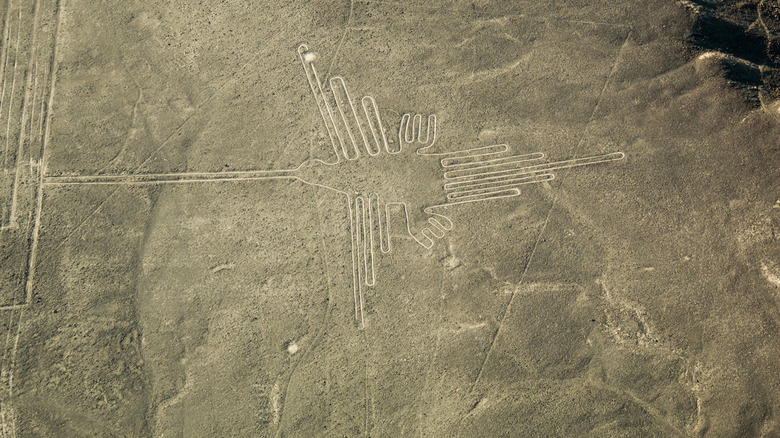
One of the world's most enduring mysteries can be found in the coastal desert of Peru. The Nasca Lines are giant etchings, or geoglyphs, drawn into the sand, deep enough to reach the paler sand below. Thought to be created by the Nasca people over a period of 1,000 years (the oldest dates back to 500 BCE), the Nasca Lines, sketched into giant animal or geometric patterns, have survived the harsh desert sands for up to 2,000 years. The full scope of these mysterious lines wasn't realized until the introduction of commercial flight in Peru during the 1930s. The lines, some of which are as long as 30 miles, encompassing 70 biomorphs (animal or plant designs), at least 800 straight lines, and 300 geometric designs, stretch across the Pampa de San José for over 170 square miles.
The Nasca Lines are considered the "most outstanding group of geoglyphs anywhere in the world" (via UNESCO). And yet there's no definitive answer to the purpose of these giant desert designs, best viewed from above. Some experts think they were drawn to track the skies, while others believe the lines were for water rituals — always of utmost importance in the desert. (And yes, some do think they were drawn by aliens). Recent technology has revealed even more Nasca lines than originally thought — and so the mystery of the Nasca Lines continues to evolve.
Easter Island (Chile)
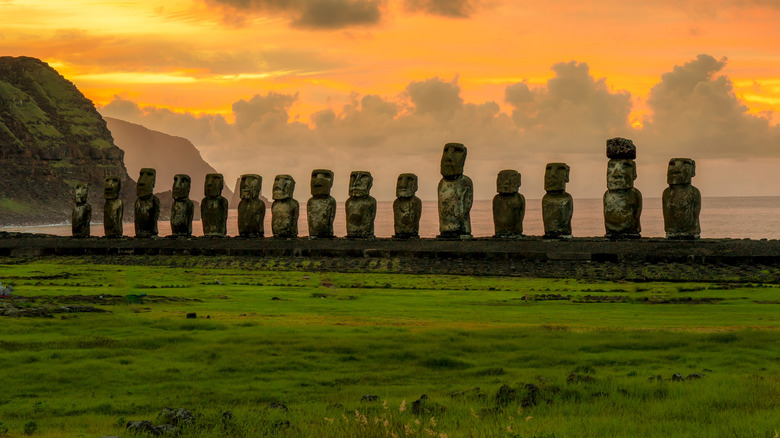
The most remote inhabited place in the world, Easter Island, or Rapa Nui, lies 2,000 miles off the coast of Chile. This tiny piece of land, home to one of the most isolated towns in the world, is inhabited by at least 1,000 massive, carved statues known as moai, built by the mysterious Rapanui culture. The statues, carved from volcanic stone in the island's quarry, could weigh up to 86 tons, yet they're found all over the island. According to Rapanui legend, priests with mana (powers) would "walk" the statues, and scientists can agree on no other explanation, although there have been several experiments conducted that provide clues. One prominent study supports the idea of the statues "walking," but less mystically, with a large crew and ropes slowly rocking the statue over the landscape
The practice of building moai endured for hundreds of years, as the small Rapanui civilization thrived. However, when the Dutch landed on the island in the 1700s, only about 3,000 islanders remained. While there is debate about how many the island could sustain — some experts argue it peaked at 20,000 — there is some evidence that the Rapanui were already in decline, seen in the changing nature of the moai, as well as their toppling and the abandonment in mid-project. Scientists suggest the island's resources could have been depleted, causing strife, but one fact is known: the Rapanui's numbers dropped to 110 by 1877, and histories were lost.
Plain of Jars (Laos)
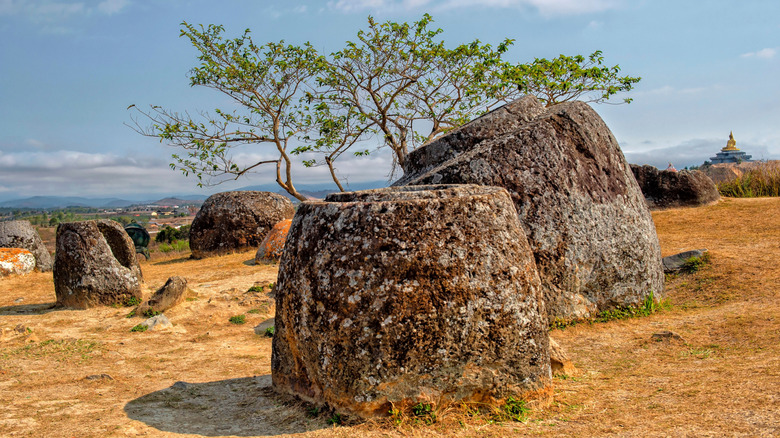
The Plain of Jars in Laos, an important archaeological site called "Asia's Stonehenge," is in a remote corner of this hidden gem country. Over 2,100 massive stone jars litter the Xiangkhoang Plateau, about 250 miles northeast of Vientiane (the capital). Due to years of war and its aftermath — namely, hundreds of unexploded bombs leftover from the U.S. bombardment during the Vietnam War — the Plain of Jars is truly off the beaten path, for visitors and scientists alike. However, certain sections of the area have been cleared recently for visitors, but it's highly advisable to visit with a knowledgeable local guide (and pay heed to any posted signs — over 20,000 locals have been reportedly killed or injured by landmines since the end of the Vietnam War).
The jars, dating back to the Iron Age, can weigh up to 10 tons and stretch as high as 10 feet tall. Their origin is thought to be a quarry, 6 miles away from the plain, with limited clues to how (and why) they were moved. Scientists speculate the jars could have been moved using elephants or water buffaloes, via a pulley system, or even just by rolling them across the landscape. The use of the jars remains unclear, with theories running the gamut from a depository for human remains (which have been found in some jars) to wine jugs for giants (if you take local lore into account). Perhaps, as the land is cleared and more research is undertaken, we'll find out more. For now, visit the provincial museum in Phonosavan to learn more and view artifacts excavated from the site. Phonosavan is also considered the gateway to the Plain of Jars, and is an ideal base when visiting.
Carnac Stones (France)
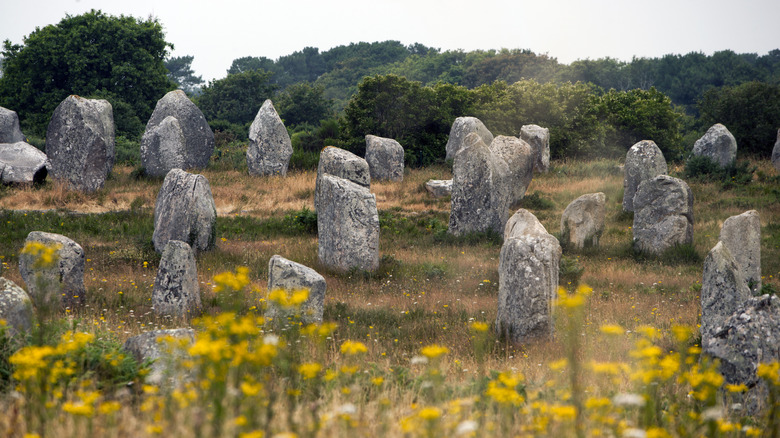
The amount of strange carved rock formations throughout the world, without explanation, makes one wonder: Do humans just really like carving rocks? It would appear so. Yet another unexplained series of rock formations is the Carnac Stones in Brittany, France's version of Stonehenge, complete with mysterious ancient monoliths.
The Carnac Stones actually predate Stonehenge itself by about 1,000 years, but like Stonehenge, the Carnac Stones have unknown origins, and little is known about the creators. Yet thousands of large, upright stones spread across the countryside, over a distance of about four miles, are undeniably arranged in specific patterns. Many of the stones have engravings of animals or other shapes, and were likely built over a period of 2,000 years. Considered the largest group of standing stones found anywhere on the planet, there are many theories about the Carnac Stones, ranging from an attacking Roman army turned stone (despite pre-dating the Roman Empire) to a celestial tracker to funeral grounds. For more information on the Carnac Stones, visit the Mason des Megaliths in the nearby town of Ménec, which makes a handy base for your explorations of the stones and the rest of Brittany. Pro tip: The site is free to visit between October and May, so visit then (or join a guided tour from April to September).
Fosse Dionne (France)
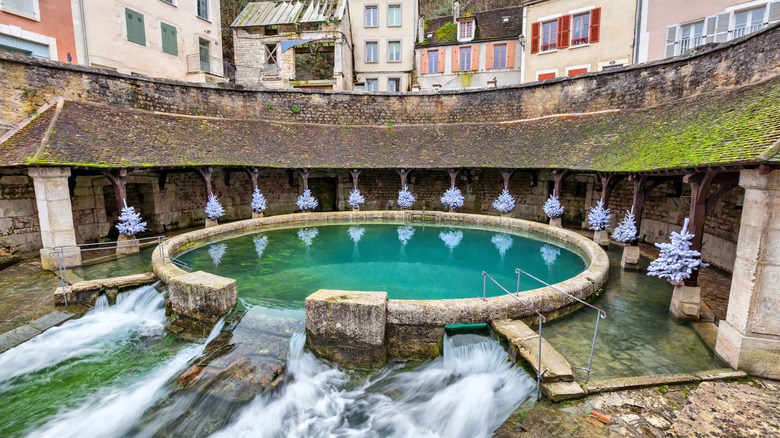
In a quintessential French town in France's Burgundy region, a lovely, ancient, color-changing well has consistently flowed since at least the time of the Romans. Fosse Dionne ( "divine pit") in the town of Tonnerre is the focal point of this charming hamlet, and a never-ending source of water as well as legend and mystery. The main mystery surrounding Fosse Dionne is its origin. Divers following the spring underground have found a series of dark, limestone passageways carved by the water that seemingly go on forever. Or, at least so far as humanity has been able to explore. Multiple diving explorations have ended in death, so diving has been forbidden or severely restricted. During a 2019 dive, Pierre-Éric Deseigne was able to reach depths of 229 feet, over 1,200 feet from the entrance... but there was still no end in sight. Experts have conducted dye tests in an attempt to trace the source, finding that around 80% of the spring's water comes from a nearby underground river. But this doesn't account for the entire spring, and the complex diving conditions — collapsing walls, tricky passageways, silty water, strong currents — make thorough exploration dangerous.
Many legends have sprung from Fosse Dionne, and its consistent flow and continuously shifting water colors have added to the mystery. When you visit, you'll understand why the Romans harnessed the spring, and the Celts considered it sacred, and you may even believe the ancient stories about basilisks and devil's coins that surround Fosse Dionne. Perhaps one day someone will find Fosse Dionne's missing source — here's hoping it never dries up.
Machu Picchu (Peru)
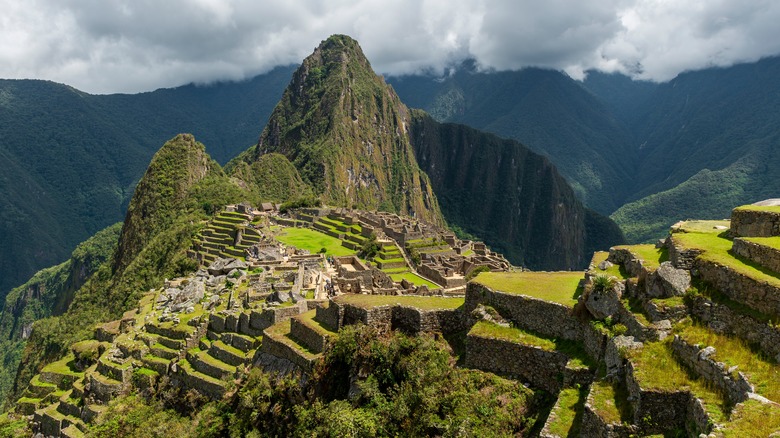
Although the "Lost City of the Incas" is a misnomer, the mysterious Machu Picchu in Peru was once an Inca city. Machu Picchu's location high in the Andes makes it notoriously difficult to reach. Situated at an altitude of nearly 8,000 feet, Machu Picchu can only be reached via the Inca Trail (either the full length or the last portion), or by a train-bus combination from the former Inca capital of Cusco.
So what do we know about these enigmatic ruins, besides the fact that they make up one of the most awe-inspiring vistas on the planet, and are one of the top must-see World Heritage sites? We know that this monument, "among the greatest artistic, architectural and land use achievements anywhere and the most significant tangible legacy of the Inca civilization" (via UNESCO), was constructed in the 15th century and largely abandoned by the 16th century. It was likely built as a retreat for the Inca ruler, Pachacuti Inca Yupanqui. As one scientist noted to National Geographic, however: "It probably was a royal [retreat] ... but to say it's a retreat ... doesn't tell me why it is where it is, and why so much effort went into building it."
The precise engineering of the stonework has enabled Machu Picchu (and other Inca ruins) to withstand Peru's famously volatile fault lines is somewhat of a mystery (predictably, some believe Machu Picchu was built by aliens). New technology points to potential hidden chambers, which may give clues to why Machu Picchu was abandoned. Evidence, such as left-behind belongings, suggests it was abandoned fairly quickly, but nothing to indicate strife or disease has been found. The fast-growing, thick jungle surrounding Machu Picchu means much may remain forever lost to time.
Methodology
For this article, we sourced information from scientific websites and expert publications, like National Geographic, NASA, and UNESCO, as well as news sites, like CNN, the New York Times, and the BBC. We utilized reviews from Reddit and Tripadvisor, and incorporated data directly from the location's website, when applicable (and possible). We also used personal experience and tourism websites to provide more detailed observations of certain destinations.