

10 Of Europe's Most Spectacular Fairytale Castles Worth Visiting At Least Once
Europe is home to approximately 150,000 castles, each with its own history, mystery, and beautiful architectural features. For travelers (myself included) who grew up loving stories of knights, princesses, and enchanted kingdoms, few experiences beat stepping inside one of these real-life fortresses. If only for an hour or two, it's easy to pretend that you, too, are living a storybook life in these places. Whether they're built on craggy cliffs, beside glittering lakes, or in misty forests, the continent's most magical castles are more than historic remnants. They invite visitors to imagine what it might have been like to live in their very own Camelot: a world of legends, romance, and splendor.
In this guide, we'll explore 10 of Europe's most spectacular fairytale castles worth visiting at least once. From France to Germany to Denmark to Slovakia, we'll journey to some of the world's most enchanting castles that have inspired classic Disney animated films, stirred the imaginations of writers and playwrights, or simply captivated travelers since medieval times. Some of these castles were the direct inspirations for Disney Princess castles that pop culture has come to love, while others are reminiscent of darker fairytales, exuding Gothic energy that the Brothers Grimm would have loved.
Neuschwanstein Castle (Germany)
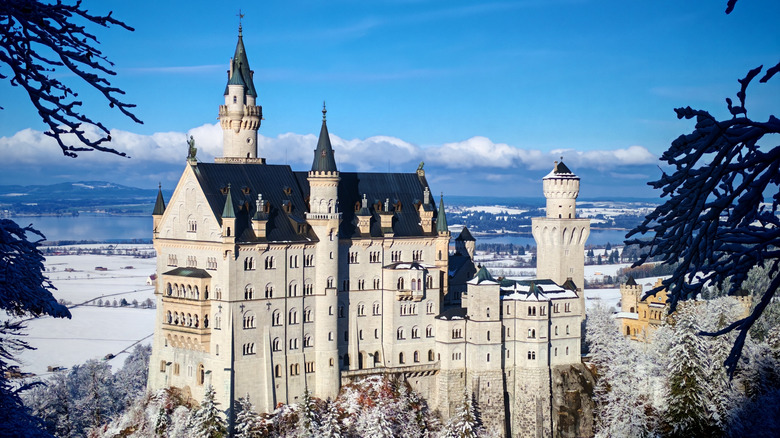
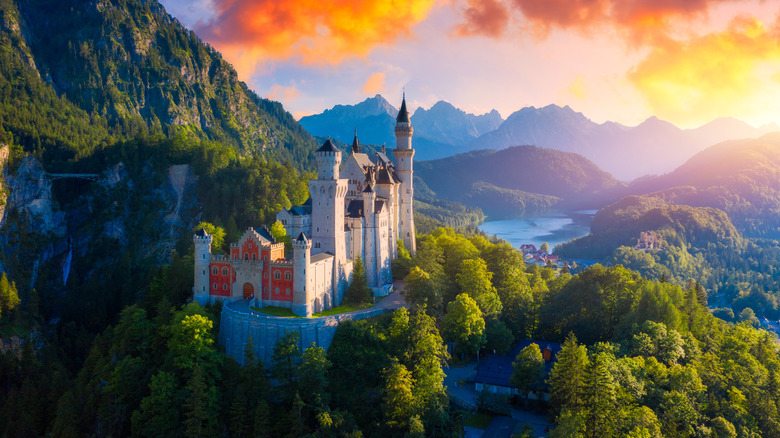
One of the most famous fairytale castles in the world, Neuschwanstein Castle feels almost unreal when you see it in person. Situated in southern Bavaria, on a picturesque cliffside, it features white limestone towers, spired turrets, and a romantic silhouette that, collectively, looks as if it was plucked from the pages of a storybook. As such, it comes as no surprise that this castle was the real-life inspiration for Disneyland's Sleeping Beauty Castle. In fact, Walt Disney famously fell in love with Neuschwanstein, using it as the visual blueprint for his original "Castle Park" concept.
The real-life castle was ordered to be built in the 19th century by Ludwig II of Bavaria, a monarch often referred to as the "Fairytale King." The king's Neuschwanstein was designed to feed his fantasies: he dreamed of living a wildly romanticized life that immortalized medieval chivalry, German folklore, and played into his rather obsessive love of Wagnerian opera. Although Ludwig II perished before he ever saw the finished castle, modern visitors can enjoy Neuschwanstein in all its glory.
The interior rooms are filled with oversized murals based on literary figures and poets, ornate woodwork, and fantastical motifs inspired by mythical heroes, knights, and swans, Ludwig's personal symbol. The castle, one could say, is the eccentric king's swan song in a very literal sense. A guided tour is required for all visitors, and tickets can be purchased online in advance. The setting here is stunning in every season, and for photography enthusiasts, the view of the castle from Marienbrücke (Queen Mary's Bridge) is among the most iconic in all of Europe. That said, it's no wonder that Neuschwanstein holds the distinction of being Germany's most popular castle to visit.
Château de Chambord (France)
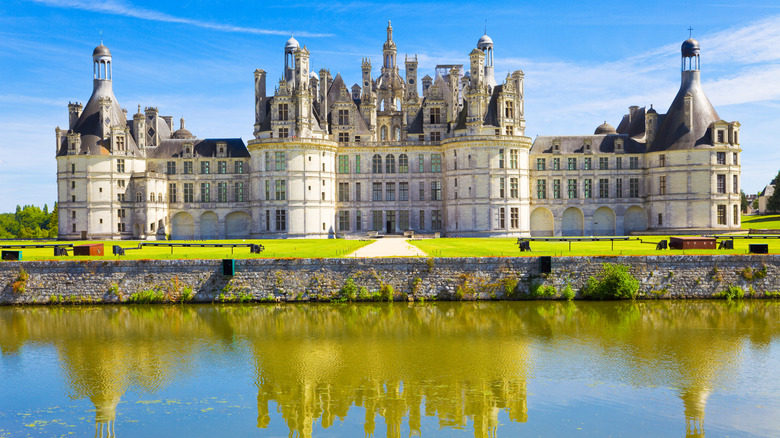
With its eye-catching towers and ornate roofline — complete with beautifully restored lanterns, spires, and perfect symmetry — Château de Chambord looks like it was designed to be animated. It's not shocking, therefore, that it's widely believed to have inspired the Beast's castle in Disney's animated classic "Beauty and the Beast." In fact, one still half-expects to see Belle scurrying through the halls with a book tucked under one arm and Cogsworth running behind her!
Built in the early 16th century as a hunting lodge for Francis I, Chambord is one of the most opulent examples of French Renaissance architecture that survives today. Its most famous architectural feature is the double-helix staircase, which is believed to be based on concepts by Leonardo da Vinci. This magical marvel allows two people to ascend and descend the steps without ever actually crossing paths.
Today, visitors can enjoy exploring over 60 rooms at Château de Chambord. Highlights include the green-and-gold Salle des Chasses, which has served as everything from a gathering place for courtesans to an auction hall over the years; the Galerie des Trophées, where stag horns adorn medieval-looking stone walls; and the extravagant Salle des Illustres, decorated with deep red tapestries and a massive painting of Louis XIV, the "Sun King," who built Versailles. The grounds here are, unsurprisingly, another high point, since the castle was originally used for hunts. The French Formal Gardens were restored to their former glory in 2017, and guests can once again stroll through them. Meanwhile, the more untamed forest and park areas of the estate are home to a nature preserve and canal, both of which visitors can tour.
Château de Chenonceau (France)
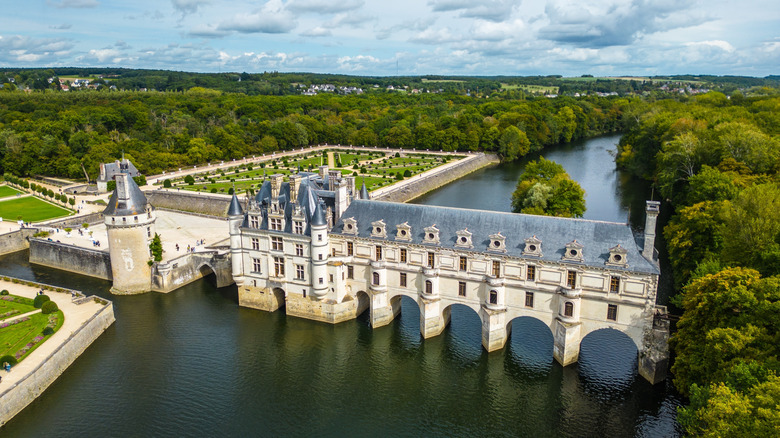
Graceful, romantic, and almost impossibly elegant, Château de Chenonceau is located on the River Cher in a storybook setting. Unlike many European castles that were built for fortification, defense, and power, Chenonceau is refined — an example of the softer, more lyrical side of fairytale castle construction. Often called the "Ladies' Castle," Chenonceau was deeply influenced by the women who once lived in it, most notably Diane de Poitiers, Henri II's beloved longtime mistress, and his wife, Queen Catherine de Medici. The women's reputed rivalry has left a lasting imprint on Chenonceau, and their infamous relationship — which culminated in Diane being cast out by the Italian-born queen upon Henri's death — is no doubt one of the reasons that this castle is the nation's second most popular, behind Versailles. The fact that the real-life story of the château's residents reads like a tragic fairytale has cemented it as a must-see castle in France for anyone intrigued by romantic tales with not-so-happy endings.
Modern visitors will find that the castle's most striking feature is its long gallery that crosses the river, supported by a series of elegant arches. Looking at its beauty today, one would have never guessed it played a key military role during World War II. One side of this hall was in occupied France, while the other was in free territory not invaded by the Nazis. As a result, many resistance fighters and refugees escaped via Chenonceau. Today, guests can walk through this gallery and many other richly decorated interior rooms that include ornate furnishings and artwork by Rubens, Van Dyck, Bassano, and more. The gardens here, cared for by both Diane and Catherine, feature a maze, a floral studio, and manicured grounds to explore.
Alcázar de Segovia (Spain)
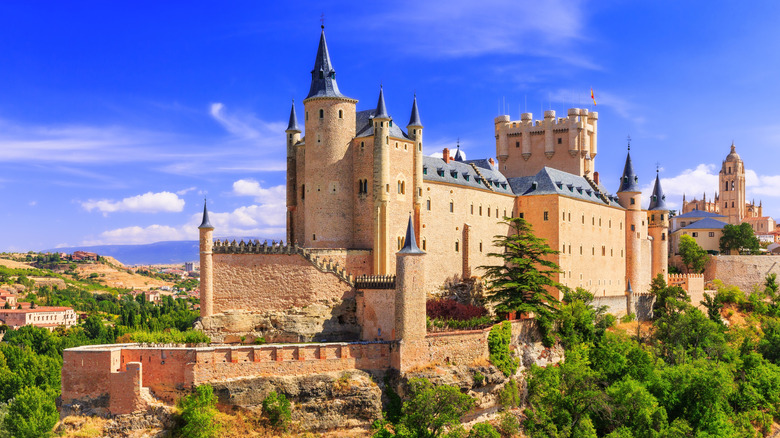
With its needle-like spires and a dramatic silhouette on an equally dramatic cliff, Spain's Alcázar de Segovia is the quintessential storybook castle. If it looks familiar, it was, as a matter of fact, one of the first fairytale castles to enter American pop culture: it is often cited as an inspiration for Walt Disney's Snow White castle in his 1939 film, the first feature-length animated movie. Adding to its fairytale résumé, live-action "Snow White and the Seven Dwarfs" actress, Rachel Zegler, performed here to promote the studio's 2025 adaptation. Finally, it also served as a major set for Amazon's three-season "The Wheel of Time" fantasy series.
The Alcázar was built in the 12th century to fortify Segovia. From there, it was converted for various uses — including a royal residence and a military academy, the Royal College of Artillery. Standing outside, the structure looks at once imposing and elegant, a perfect photo opportunity for tourists. The exterior has changed over the years, with the now-famous spires ordered by Philip II in the 1500s.
Inside, the Alcázar de Segovia feels a bit like a medieval fever dream come to life. With ornate halls, gilt vaulted ceilings, suits of armor lining the corridors, stone staircases, and royal chambers, it transports visitors to a world of kings, queens, and courtly intrigue. In fact, the interior spaces feel almost theatrical — which makes sense, since this palace has served as a film set more than once. Unlike softer-looking castles like Chenonceau, the Alcázar is bold and unmistakably medieval, a perfect mix of fairytale fantasy and legitimate historical importance.
Eilean Donan Castle (Scotland)
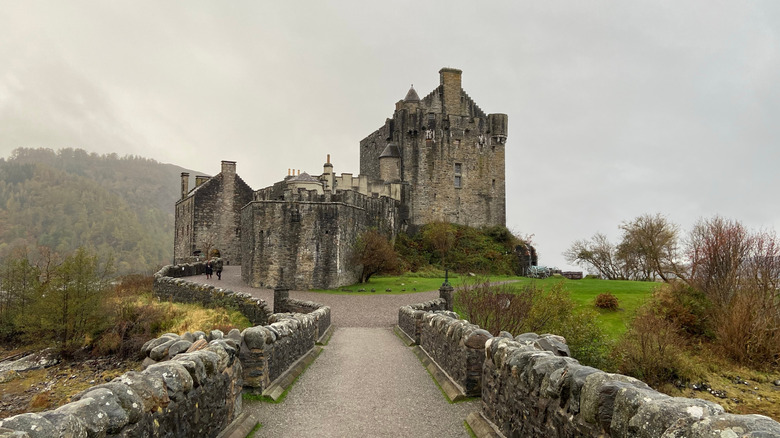
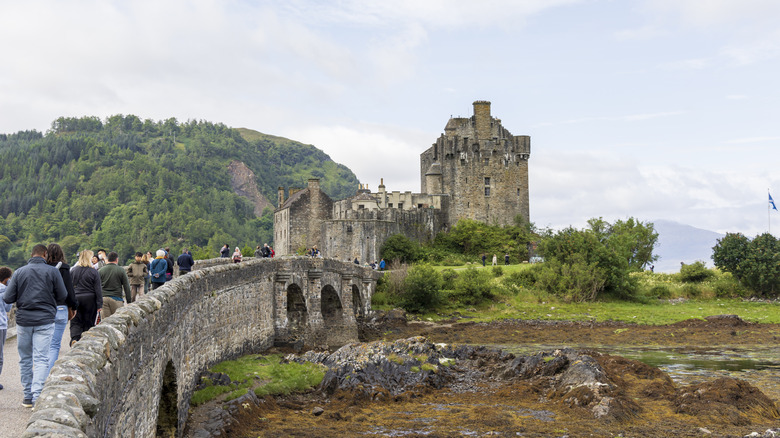
Built at the confluence of three lochs, Eilean Donan Castle is one of Europe's most atmospheric landmarks. Sitting on a tiny island, this fortress is now connected to the mainland by a narrow stone bridge — though it was historically only reachable by boat. Purchased by the MacRae family in 1911, Eilean Donan is still looked after by members of this Scottish clan.
It looks, truly, as if it were lifted from an ancient Celtic legend, and visitors are encouraged to explore nearly every part of this fairytale structure — from the Billeting Room, which now serves as a museum celebrating the castle itself and the MacRae family, to the grand Banquet Hall. Less opulent than some of the other castles on this list, the inside of Eilean Donan is decidedly medieval, with stone walls and floors. While the castle was originally built in the 13th century, the current structure dates to the early 20th century, though it is believed that the small island where it stands has been inhabited since the seventh century.
On foggy days, which are plentiful in this part of Scotland, Eilean Donan takes on a rather supernatural quality, as the castle perfectly personifies the mystery and drama of the Scottish Highlands. Its rugged stone walls and isolated position make it easy to imagine clans battling here, setting the stage for folklore tales — such as the dratsie, or "otter kings" — that are still told today. Eilean Donan is also often billed as Scotland's most photographed castle, and it's easy to understand why. Every angle of this structure feels cinematic. It comes as no surprise, therefore, that it has been featured in numerous famous films, including "Highlander," "Elizabeth," and James Bond's "The World is Not Enough."
Hohenzollern Castle (Germany)
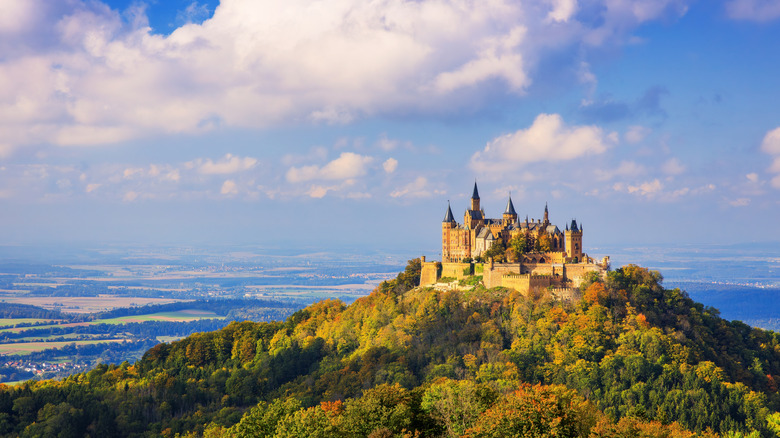
Sitting at the peak of the dramatic Mount Hohenzollern, Hohenzollern Castle appears to float amid the clouds. With tall towers and fortified walls, this storybook castle transports visitors to a fairytale land. In fact, Hohenzollern feels like the ultimate high-fantasy stronghold brought to life, and the structure has been a major player in German royal history over the centuries, serving as the governing seat of the Prussian royal family and the House of Hohenzollern. One of its claims to fame is that it is still owned by the family who originally constructed it, which is quite rare in the world of castles.
It is worth noting that the Hohenzollern Castle visitors see today is not the original structure. Although there has been a fortress on this mountain since the Middle Ages, the current castle was built around 1850. This iteration was designed in the Gothic Revival style, complete with a classic drawbridge entry. The reasons for constructing the newest version of Hohenzollern are similar to those behind Neuschwanstein — this third castle on the site was not intended to be militaristic in nature. Instead, Friedrich Wilhelm IV had a dream to create a fairytale-inspired structure where the German royal family could live. He certainly succeeded. For travelers seeking a castle that feels heroic and straight out of a fantasy epic, Hohenzollern is the perfect locale.
Kronborg Castle (Denmark)
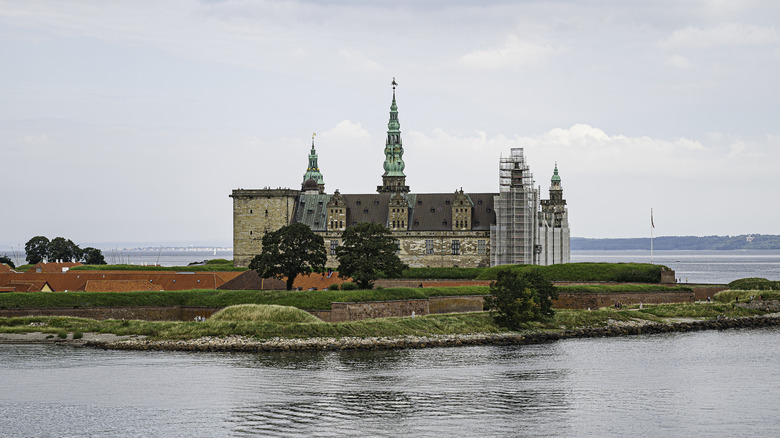
Located slightly north of Copenhagen, near the Øresund Strait, Kronborg Castle is steeped in history. While it's best known on a global scale as the inspiration for Elsinore, the setting of Shakespeare's "Hamlet," Kronborg also plays a role in Denmark's own literary traditions. Specifically, it influenced Hans Christian Andersen to expand the Danish legend of Holger the Dane. In 1846, Andersen wrote a tale explaining that this mythical warrior sleeps under Kronborg until Denmark needs him again.
Architecturally, Kronborg Castle is not as whimsical as some of its counterparts. Instead of sheer romance, it conjures images of fairytales involving knights and battles, and kings and their cabinets. Rather than ornamentation, the main features here are the huge ramparts and thick stone walls that remind modern visitors of its original purpose as a powerful Renaissance fortress controlling maritime traffic.
However, the interiors are not stark. Kronborg features opulent rooms, including the famous Chapel — the only remaining room from the original castle structure after other spaces had to be reconstructed following a devastating fire. Other highlights include the Royal Apartments — pay special attention to the gorgeous paintings on the ceiling of the King's chambers — and the Royal Ballroom, which features heavily in "Hamlet" and is northern Europe's biggest. Kronborg Castle staff lead special tours and talks on specific dates throughout the year. These include a 15-minute explanation of the castle's most historic moments and ghost tours after dark on select days. A bronze statue of Holger, located beneath the castle, and an inlaid bust of Shakespeare in the courtyard are reminders that this isn't just a historical site, but a place where legends and lore live on every day.
Pena Palace (Portugal)
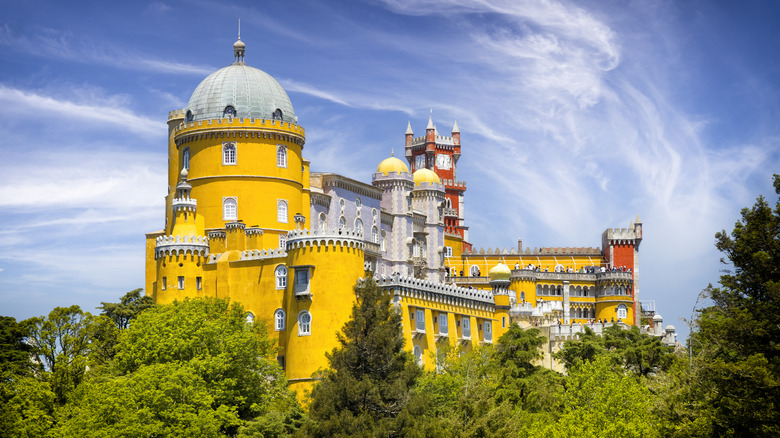
By far the most colorful castle on this list, Portugal's Pena Palace is a whirl of reds and yellows, playful turrets, and swirling towers sitting above Sintra. In many ways, Pena doesn't even look real. Instead, its whimsical design could be the centerpiece of an animated kingdom in a franchise like "Shrek." Built in the 19th century by Ferdinand II, this castle is every bit a product of its era. A contemporary of Romanticism, the king's goal was to create a royal summer residence that was inspiring and dreamlike, not militaristic. As a result, this magnificent palace is a vibrant mix of architectural styles — blending Gothic, Manueline, Moorish, and Renaissance styles into a single structure that feels like it fell out of a dream. Due to its mountainous location, Pena Palace is often referred to, somewhat mystically, as "The Castle in the Sky."
Known for its incredible interior tile work, modern travelers can explore both indoor spaces and beautiful gardens here. Among Pena Palace's many amazing features is the trompe-l'oeil paintwork visible in numerous rooms, a technique that uses paint alone to create the illusion of ornate moldings, draped fabric, and other architectural features. Some of the most popular rooms for travelers to explore are the dining room and pantry, Queen Amélie's tea room and dressing area, Ferdinand II's bedroom, and the ornate smoking room. Outside, guests can enjoy a perfect storybook setting surrounded by thick forests, hidden pathways, buildings, and greenhouses that look positively enchanted. Overall, the experience of approaching Pena Palace feels like one is entering another realm entirely.
Bran Castle (Romania)
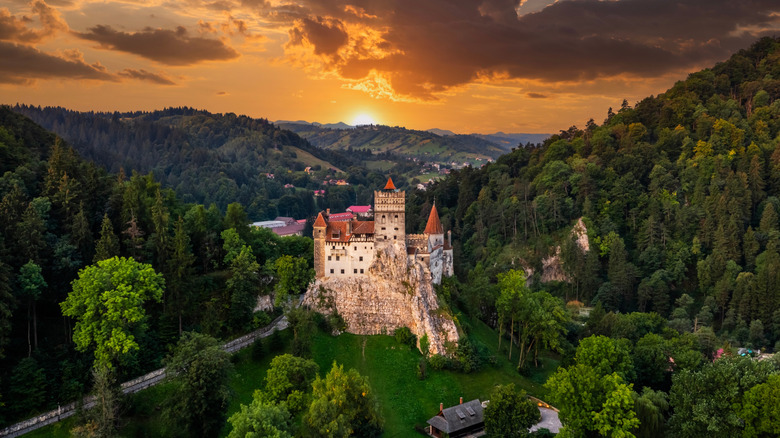
Transylvania's Bran Castle is forever associated with Vlad the Impaler and the Dracula legend, making it one of Europe's most iconic dark fairytale settings. While the historical connection between the castle and the notorious Romanian prince is more complex than pop culture suggests, Bran Castle's atmosphere fully delivers on all Gothic expectations — with narrow arched corridors, hidden passages, and enormous stone walls that look like they could hide a thousand secrets in their keep.
Unlike the whimsy and romance of some castles on this list, Bran Castle is as unapologetically dark as its reputed one-time resident. A fortress first and foremost, this castle was built by 14th-century Saxon clans to defend their turf. Its looming presence looks perfectly at home in the Carpathian Mountains, where the terrain is as craggy and rough as the castle itself. In short, the structure feels foreboding in the best way, making it perfectly suited to the vampire legends for which it has become world famous.
The 57-room medieval residence is open for guests to explore throughout the year, and it's wise to purchase tickets well in advance due to the popularity of this particular site. Those whose admission includes a complete guided tour will gain access to some restricted areas, including the castle's torture chambers. Periodically, castle staff offer sought-after nighttime tours, which have been known to include the opportunity to sleep in Vlad Tepes' lair. All in all, Bran Castle embodies a dark side of fairytales that's less enchanted kingdom and more Brothers Grimm. And for travelers drawn to the Gothic side of myths and legends, it's a reminder that not all fairytales are meant to end happily ever after.
Bled Castle (Slovenia)
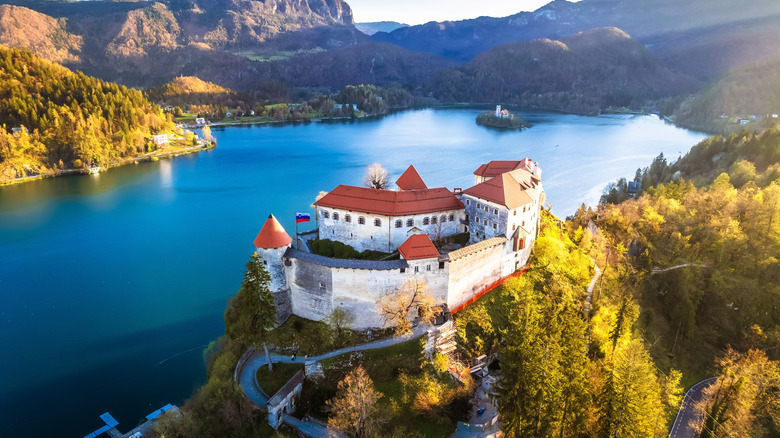
Built on a cliff above the beautiful Lake Bled, Bled Castle looks like it could be the illustration on a classic storybook cover. From its vantage point, visitors — and the clergy and nobles who once lived there — can enjoy stunning views of the water below. At over a millennium old, Bled Castle and its occupants have seen an unbelievable amount of history unfold in the Alps. In a tale that reads like a real-life chess match, the land where Bled Castle sits was originally granted to the Bishops of Brixen, who entrusted the care of the site to the Knights of Bled. Later, it passed into the hands of various nobles — including a Protestant baron in the Middle Ages. From there, it continued to pass through various hands until a 1952 state-funded restoration. Since 1999, Bled Castle has been a national cultural site and a popular tourist attraction in Slovenia.
However, compared to some other European castles, Bled Castle is still unhurried and quieter, giving it a somewhat "undiscovered fairytale" feeling. Today, guests can enjoy its peaceful courtyards and explore historic rooms and terraces. The blacksmith shop, chapel, and Gutenberg printing press replica are all popular stops while touring Bled. Combined with the lake itself — which features a 15th-century Gothic island church and a dramatic mountain backdrop — Bled Castle is a fairytale setting come to life for 21st-century travelers.
Methodology
In order to create this guide, we relied heavily on the official websites for various castles — including Neuschwanstein, Chambord, Eilean Donan, Hohenzollern, Kronborg, and Bran. Similarly, high-authority publications like Travel + Leisure and Country Living also provided key information. Additionally, travel sites and blogs like Munich Day Trips, European Waterways, Flights and Fables, Sarah Freia, Experience Loire, Teaspoon of Adventure, Hand Luggage Only, and both Denmark and Spain's official tourism websites were used to fill in any remaining details about these storybook locations.