

US Citizens Don't Need A Passport To Visit This Gorgeous Caribbean Destination
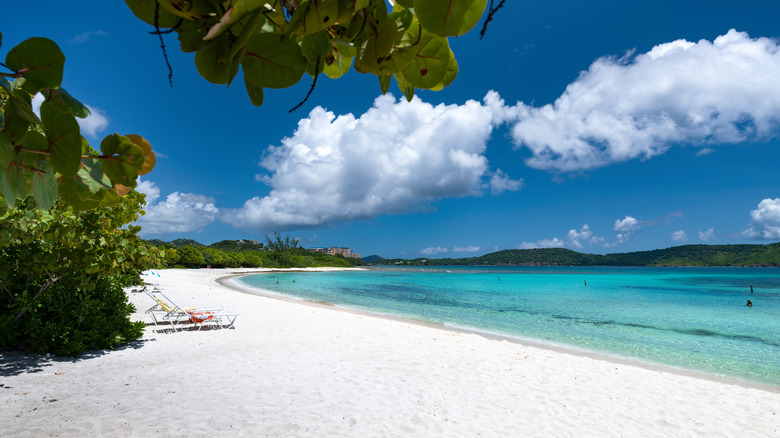
Sometimes you get the urge to get away from it all. But to truly get away from everything, you may think you need a passport or a visa — both of which can come with hefty price tags and a long waiting period. Thankfully, if you have your sights set on a tropical vacation in the Caribbean, there is an option that doesn't require a passport for U.S. citizens: the U.S. Virgin Islands. All you need to travel is a valid government-issued ID. And better yet, they're only a short plane ride away.
The islands that make up the U.S. Virgin Islands have been part of the United States since their purchase in 1917. Formerly called the Danish West Indies and located near Puerto Rico's east coast, their acquisition marked one of the country's last territorial expansions. Ever since becoming a U.S. territory, the group of islands has been known as America's Caribbean Paradise.
Unlike some other Caribbean destinations, the U.S. Virgin Islands are not located within the Caribbean's hurricane-free zone — which means they can be more susceptible to storms depending on the season. Nonetheless, they still offer a passport-free, tropical reprieve for Americans hoping for a dose of sun and sand mixed with turquoise waters. Better yet, along with no passport requirements, travelers can also expect simpler logistics, including easy online check-in for most U.S. departures.
Tourism and retirement are thriving in the U.S. Virgin Islands
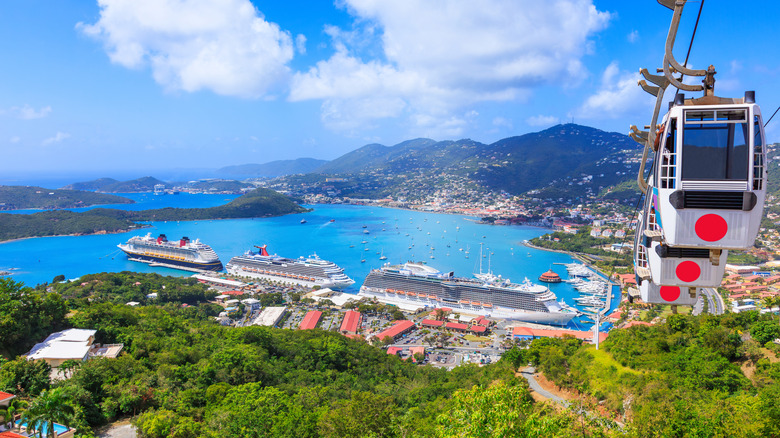
According to the U.S. Virgin Islands Department of Tourism, roughly 2.6 million visitors traveled to the territory in 2024. Much of that tourism traffic was fueled by the cruise industry and new airline routes. The islands' residential population is also increasing thanks to its attractive incentives for American retirees. Besides not needing a visa or passport, the islands have no sales tax, and the fact that they use the U.S. dollar also makes everyday purchases familiar. There's also no need to learn a new language, since English is the official language across all the U.S. Virgin Islands.
One drawback, however, is that the cost of living on the islands is higher than on the mainland. That price comes with its own trade-offs, as the U.S. territory is often considered safe to visit and reside in, making it a popular spot for cruise lines like Royal Caribbean, which regularly dock at the port.
Technically, the U.S. Virgin Islands are made up of more than 50 individual islands, but the territory's three most well-known spots include St. Croix, its largest; St. Thomas, home to the territory's capital city of Charlotte Amalie; and St. John. The larger islands offer different experiences for Americans looking to get away without worrying about passport requirements, and more vacationers are discovering them, a trend that should soon land the U.S. Virgin Islands on any list of the best tropical vacation destinations on the planet.
Domestic flights abound to the U.S. Virgin Islands
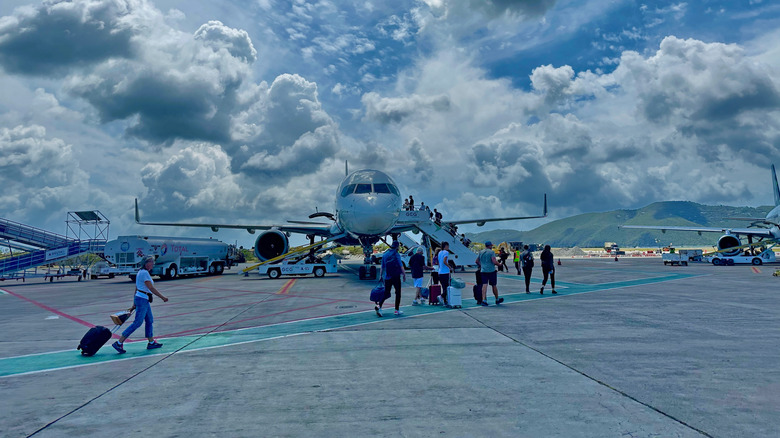
Two international airports serve the U.S. Virgin Islands. Sitting on St. Croix is the Henry E. Rohlsen International Airport, while St. Thomas is home to the Cyril E. King International Airport. Both of these travel hubs welcome daily flights from major domestic airports in cities like New York, Miami, Atlanta, and Chicago. As a result, Americans will find that planning a budget-friendly vacation to the U.S. Virgin Islands is relatively easy and convenient.
Those looking to have a more lively experience may want to schedule their U.S. Virgin Islands vacation around one of its many festivals. Mardi Croix, for example, is St. Croix's take on a lively Mardi Gras celebration, which takes place every February. Then, there's the St. Thomas Carnival. Happening in late April, the celebration features parades, dance parties, and calypso and reggae music. However, the U.S. Virgin Islands see their biggest crowds from December to February, while the period from September to November tends to be quieter, with fewer tourists and more affordable experiences.
Despite a busy events calendar throughout the year, the main destination for many visitors is the islands' plentiful beaches. Boasting miles of undeveloped shorelines that provide a true getaway from modern life, these offer secluded escapes alongside more developed beaches brimming with opportunities for snorkeling, sailing, and other water-focused activities.