

The Best National Parks In California For Camping Adventures, According To Visitors
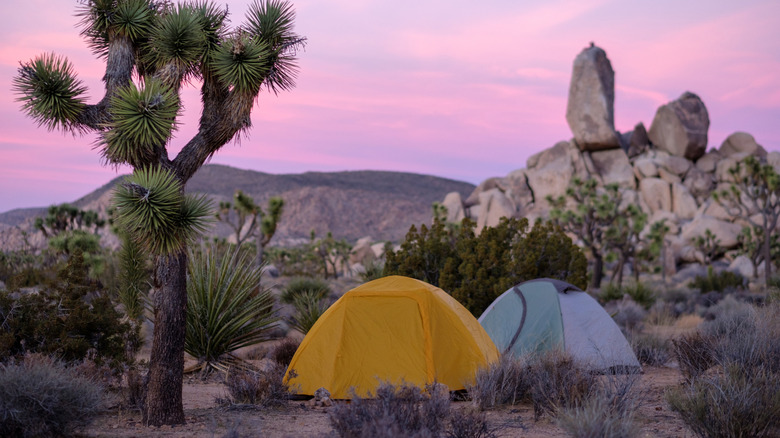
California is home to more than any other state, boasting a total of nine protected sites. They vary greatly in their landscapes, sizes, ecology, and attractions, but one thing they all have in common is excellent camping. From Pinnacles National Park's singular family-friendly campground to Kings Canyon and Sequoia National Parks' combined 14 options, there are myriad different experiences to choose from.
Camping can mean a range of different things to different people depending on travel style, budget, group size, and other preferences, such as how rustic you like to be. Perhaps access to creature comforts like electrical hookups and showers are a must, or maybe the whole point is to escape it all and be as in-touch with nature as possible. Fortunately, no matter your style, you're in luck with plenty of camping options in California's national parks that span a huge range of sizes, plus a wide variety of terrain, elevations, and climates.
Many national park campgrounds are only available via reservation on Recreation.gov — especially during peak season, which varies by park, as hugely popular destinations like Yosemite tend to fill up fast. Depending on the park and how flexible you're willing to be, the trick is to do your research well ahead of time to avoid disappointment when you arrive. Meanwhile, others offer some first-come, first-served (FCFS) spots if you want to try your luck with an early-morning arrival, and in some cases, entire campgrounds are FCFS during the off-season. To get the wheels turning for your next trip, check out California's best national park camping experiences.
Yosemite National Park
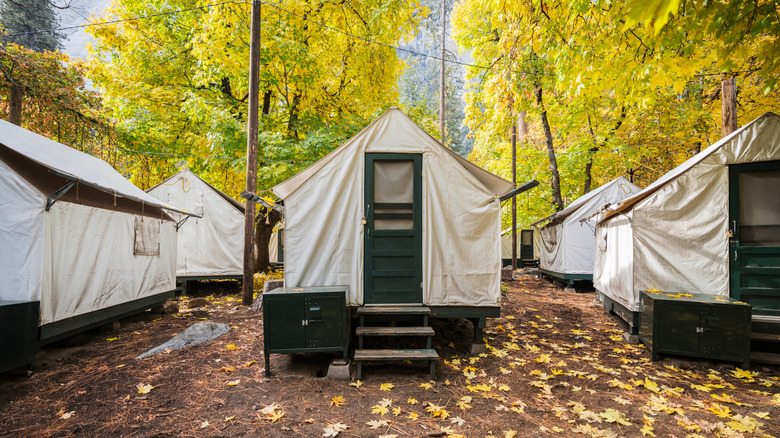
Nestled among the conifers, it's hard to beat the feeling of winding down in a hammock or around a campfire after a great hike in Yosemite, California's most famous national park. Home to towering granite peaks, waterfalls, and historic trails, the park's lodges, glamping villages, and 13 campgrounds fill up quickly, with the busiest time of year typically running from May through October. Most are accessible for RVs and trailers, with the exception of Camp 4 in the valley, which is walk-in only, and Tamarack Flat and Yosemite Creek, both of which are located north of the valley. Alternatively, if you want to experience the pleasure of camping without packing quite so much equipment, head to a tent cabin at Curry Village or Tuolumne Meadows Lodge.
Between April and October, all of Yosemite's campgrounds require reservations, which are released on a rolling basis anywhere from two weeks to five months in advance depending on the site — and it pays to be prepared if you're really angling for a specific spot. The rest of the year, for the wintry adventurers among us, three campgrounds — Camp 4, Wawona, and Hodgdon Meadow — remain open on a first-come, first-served basis. Previous visitors on Reddit have mentioned how they enjoy the communal vibe of Camp 4, with its close-together spaces. Meanwhile, Lower Pines or Upper Pines Campgrounds are more accessible and generally quiet, with a little more space.
Yosemite's expansive wilderness — about 95% of the park — is also second-to-none when it comes to backcountry camping. Keep in mind you'll need a wilderness permit if you plan to do an overnight trip, which can be reserved via lottery a few months ahead of time. Otherwise, you can try your luck when you arrive to see if there happen to be any walk-up permits available.
Redwoods National and State Parks
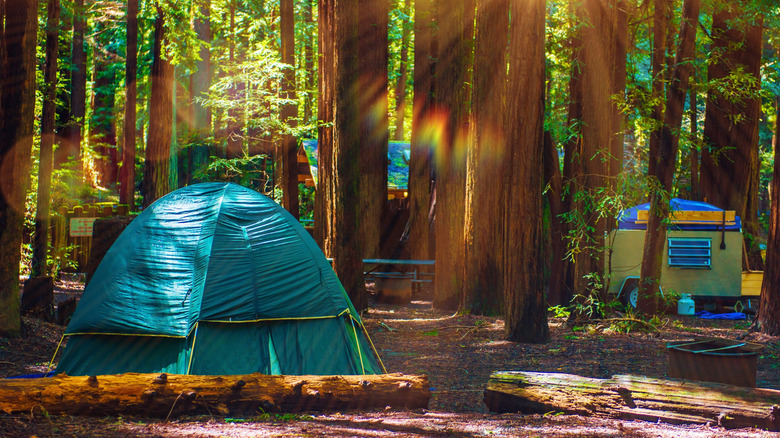
Redwoods National and State Parks is a unique cluster of public lands comprising three California state parks and one national park, and cumulatively spanning nearly 132,000 acres. Home to the world's tallest trees, the destination feels otherworldly — and there's nothing quite like pitching a tent or parking a travel trailer beneath its gentle giants, which can reach well over 300 feet tall.
The state parks were established during the 1920s, and the national park followed suit about four decades later. California kept Prairie Creek, Del Norte Coast, and Jedediah Smith Redwoods State Parks from being absorbed into the National Park Service because, due to their earlier protection from logging, the trees are truly state treasures. The national park boundary encompasses these, and it's also where you'll find the parks' four campgrounds. If you have an RV, make sure to book early, because visitors on Reddit have noted that spaces large enough to accommodate rigs can go very quickly.
Gold Bluffs Beach Campground and Elk Prairie Campground — tucked away inside Prairie Creek State Park — along with Jedediah Smith Campground, are open year-round. Meanwhile, Mill Creek Campground, in Del Norte Coast State Park, is open seasonally. As for which to choose, Mill Creek Campground is a real treasure that, while larger than some of the other campgrounds, also has more of a spacious feel, with second-growth redwoods, maples, and ferns in a lush valley along its titular brook. It requires a bit of a drive to reach, though, which can be a positive depending on your style. That said, if you want to camp amid some of the oldest redwoods, head to the spacious Jedediah Smith Campground. The tradeoff is a bit of highway noise, but you'll have easy access to hikes and the scenic Smith River.
Kings Canyon & Sequoia National Parks
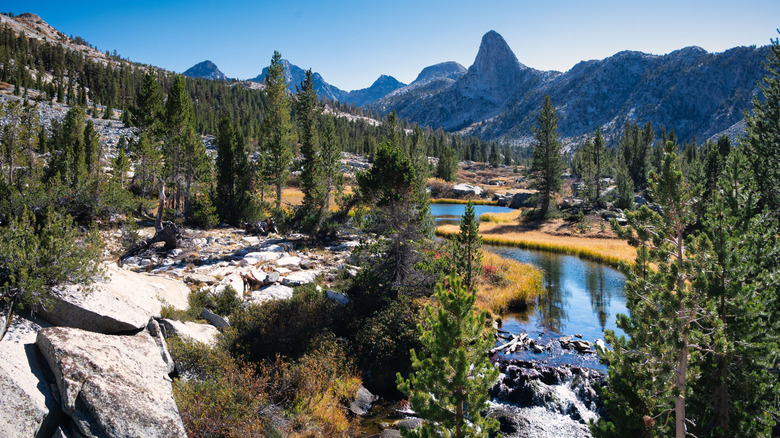
Sharing a border, Kings Canyon and Sequoia National Parks are jointly managed but both offer very different features. There are a whopping 14 campgrounds between the two of them, with options spanning different elevations and landscapes. Two campgrounds are open year-round: Azalea and Potwisha Campgrounds. These are located in the Grant Grove and Foothills areas, respectively. The rest are open from May to August or November depending on elevation and access.
You'll need to book a site in advance for most campgrounds, and the larger, more popular spots — such as Lodgepole and Azalea — generally open for reservations four months in advance. By comparison, some reservations open just one month in advance, while the small Crystal Springs Campground in the Grant Grove area of Kings Canyon is an option for more spontaneous trips, with reservations available just two days ahead of your visit. The Grant Grove area is like a little "thumb" sticking out from the northwest edge of Sequoia National Park, and it's home to the immense General Grant Tree. The Foothills area offers views of the mountains, but if it's exceptionally big trees you're after, head to the Lodgepole and Giant Forest areas of Sequoia National Park.
A benefit of camping here is that you can take in a quieter hike or a less crowded vista early in the morning before the day visitors arrive, as this region can get busy during the summer. Evening ranger programs in the campgrounds' amphitheaters are also a great way to learn about the area. One visitor who reviewed their stay at Lodgepole Campground on Tripadvisor enjoyed the "great balance of being informative yet still manageable to understand regardless of your background or age — it even had an interactive part of the lecture, which was fun!"
Channel Islands National Park
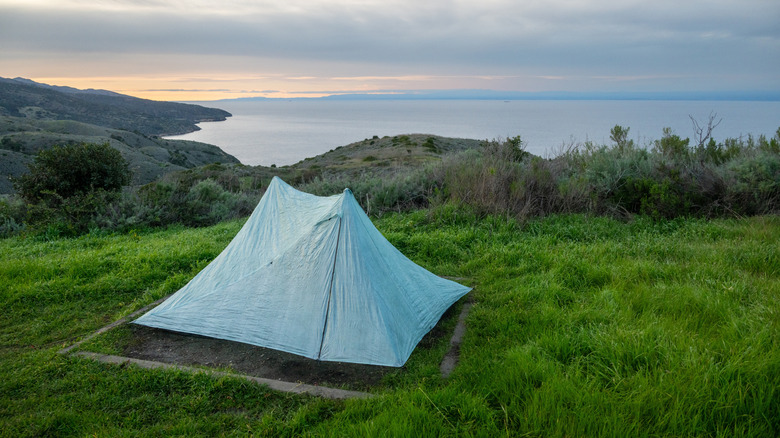
All five of the islands that comprise Channel Islands National Park have one campground apiece, and for those who don't view camping as a strictly seasonal activity, the good news is that they're all open year-round. Take in uninterrupted views of the Pacific Ocean from Anacapa, Santa Cruz, Santa Rosa, San Miguel, and Santa Barbara Islands, where you can revel in the sight of seabirds, seals, rock formations, bluffs, and expansive skies. "The island has very harsh weather and can make hiking, sleeping, and even beach activities a bit challenging," wrote a camper in a Tripadvisor review, who was nonetheless wowed by their experience on San Miguel Island and emphasized the joy of taking it all in stride. "Going camping is an escape for me away from daily life, so taking on these challenges is something that I enjoy immensely."
Sometimes referred to as "the Galapagos Islands of North America," there's no entrance fee to this park, and you might find that its facilities are generally more primitive than other parks with more developed campgrounds. For example, while restrooms are available, you'll find no other services, including food. Additionally, Santa Cruz Island's Scorpion Canyon Campground and Santa Rosa Island's Water Canyon Campground are the only two where potable water is available. This means you'll need to carry everything you bring, so a good backpack is a must in addition to other useful, budget-friendly camping essentials, such as a good light.
Getting to Channel Islands National Park takes some planning, but that's half the fun. Transportation has a tendency to book up faster than the campsites, so the park recommends making sure you can sail to the island of your choice first. Boat trips from a concessionaire company called Island Packers run regularly from Ventura and Oxnard.
Joshua Tree National Park
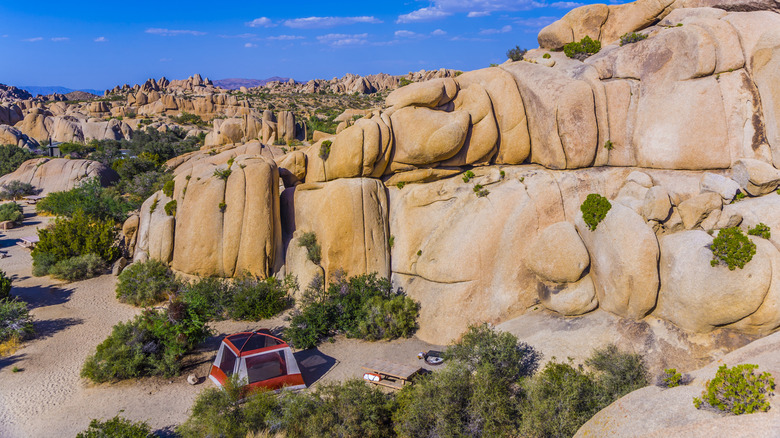
Among the best winter destinations for a weekend getaway in California, Joshua Tree National Park is a desert gem just about 2.5 hours east of Los Angeles. Unique boulders and the park's namesake Joshua trees — which are actually tall relatives of the agave — punctuate the Mojave Desert. Within the park, campgrounds like Indian Cove, Hidden Valley, and the aptly named Jumbo Rocks are sympathetically nestled into this landscape. That said, previous visitors have pointed out on Reddit that Indian Cove doesn't have vehicular access to other parts of the park, so plan accordingly depending on how much you're willing to drive around.
Eight developed campgrounds throughout Joshua Tree National Park include five that are reservation-required and three that are first-come, first-served — which means it's possible to make either a well-planned entry or a spontaneous trip if you're more flexible. Just note that, during the weekends, FCFS sites tend to go very quickly, so make sure to either arrive very early or have a plan B in mind. A great option in case you don't snag a site is camping outside the park at one of numerous privately owned campgrounds and RV parks. Dispersed camping isn't allowed within the technical boundary of the park, but BLM land nearby does allow it.
Joshua Tree's high season runs from October to May, with especially busy times during the spring, so it's a good idea to book as early as you can — up to six months in advance — to make sure you secure a spot.
Lassen Volcanic National Park
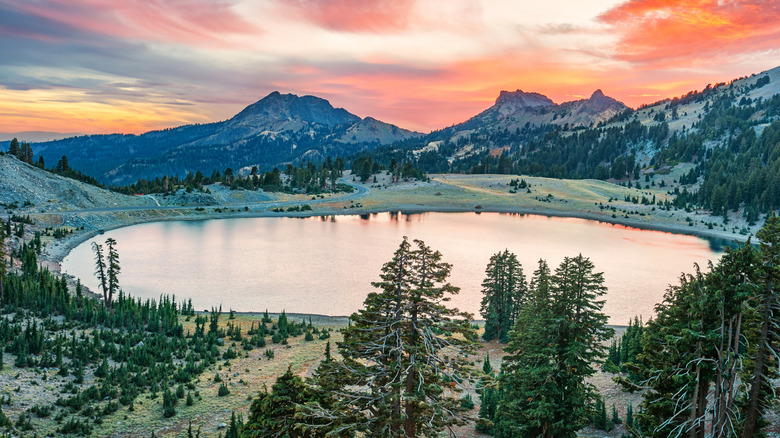
The western U.S. and Pacific are spectacular destinations for volcanic landscapes — from Hawai'i Volcanoes National Park's incredible and explosive natural beauty to Washington's Mount Rainier National Park. The Golden State is no exception thanks to the stunning Lassen Volcanic National Park, located in northern California. Alpine lakes, meadows, and forests are dotted with steaming hydrothermal features like Sulphur Works, known for its colorful mineral mounds. Popular hikes include trails to the top of Lassen Peak and the Cinder Cone Trail, each offering spectacular views over this unique landscape. However, Redditors on r/nationalparks have pointed out that there may still be snow at high elevations into July, so plan accordingly.
Eight developed campgrounds dot the frontcountry of Lassen Volcanic National Park. Summit Lake North and South Campgrounds sit right in the middle, while four are located near the park's outer edges, and Warner Valley sits in the south-central area. The two largest options are Butte Lake, which is tucked away in the northeast corner of the park, and Manzanita Lake, situated along Highway 89. The latter is ideal for families, especially thanks to its easy access, RV and tent sites, and modern restrooms. It also boasts access to its namesake lake, perfect for paddling, fishing, and hiking.
Lassen spans 106,000 acres, nearly 75% of which is designated wilderness, so its backcountry exploration potential is fantastic. You'll need to reserve a wilderness permit to camp overnight, but unlike some of the state's bigger parks, there are no trailhead quotas, so you can go anytime.
Death Valley National Park
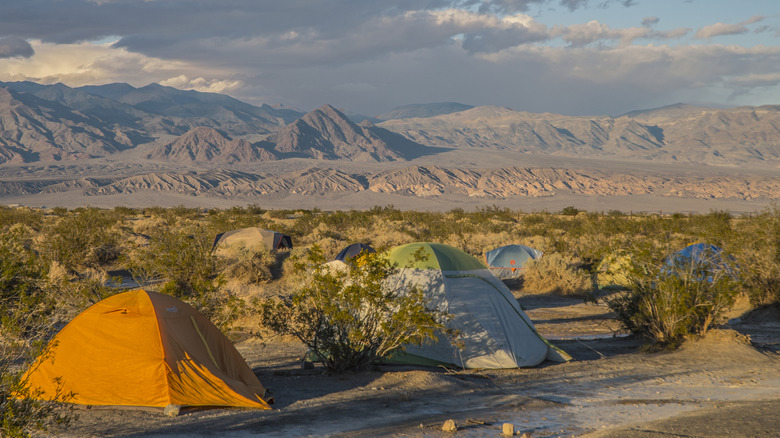
Like Joshua Tree, Death Valley National Park is an ideal escape in the winter when its temperatures are less intense. It's renowned both as the hottest place on earth — with summer temperatures that can reach 120 degrees Fahrenheit — and as North America's most parched region, as it only sees an average of about 2 inches of rain annually. But don't let these extremes or its foreboding name deter you: camping here is a unique treat, especially during winter and spring when it's much milder.
Death Valley is the most expansive national park in the contiguous U.S., clocking in at about 3.3 million acres — that's more than 5,100 square miles — with 93% of the park designated as wilderness. The park is also home to unique landmarks like Scotty's Castle, a 1920s holiday home that's scheduled to reopen in 2026 after a 10-year closure due to flood damage. You'll also find seven developed campgrounds and five primitive campgrounds that are only reachable with a high-clearance vehicle.
One perk of Death Valley is that, even during the busiest times of year, campsites are generally easy to come by. That said, sought-after spots such as Furnace Creek and Texas Springs typically fill fast. Furnace Creek even has a pool, accessible with a day pass. On Tripadvisor, previous visitors have noted that generator noise can be an issue, but the facilities are generally clean and well-maintained. Backcountry camping, including along the roadside, is also possible in some areas as long as you're at least a mile away from any paved road or route designated as "day use only." Depending on where you go, you may need a permit, and you can check any requirements in advance and reserve one, if needed, up to six months ahead of your visit.
Pinnacles National Park
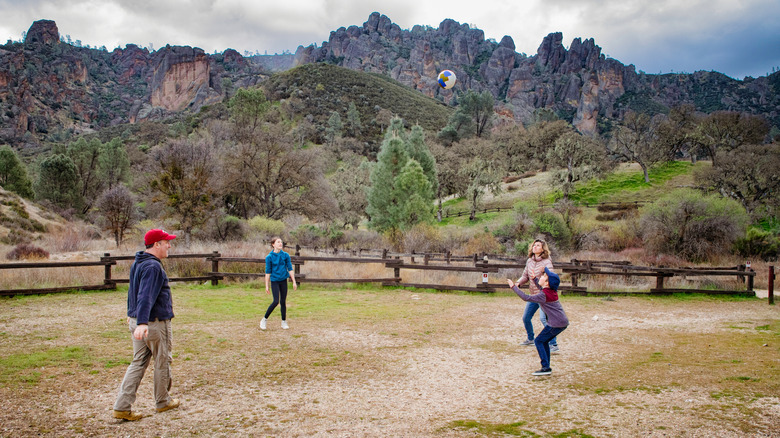
Among the most spectacular and unique landmarks in U.S. national parks, eroded cliffs and jagged peaks are what make places like Pinnacles National Park such a treat. Located about 50 miles east of Monterey in the Gabilan Mountains, this underrated California destination exists thanks to a series of volcanic eruptions that left canyons and dramatic outcrops in their wake, perfect for hiking and rock climbing. Keep an eye out for immense — and critically endangered — California condors, and explore the park's unique talus caves, which form when fallen boulders wedge themselves inside canyons or pile atop one another, creating atmospheric cavities and corridors visitors can climb through.
The eastern side of the park is the most popular, and it's where you'll find the primary visitor center and its one campground. A combination of tent and RV sites are available here, and as a bonus, guests can even enjoy access to a swimming pool. Visitors note in a number of Campendium reviews that the sites can be a little close together, but the showers are hot, and RV sites are level. "Had power for our 23-foot camper and a water spigot not far for fill-up," one guest wrote. "Could see condors from our spot."
Although there's a ranger station on the west side of Pinnacles National Park, there's no direct road access between the west and east entrances. As a result, to get to the campground, you'll have to enter from California State Route 25. The park gets very busy with day visitors during the spring and summer, especially on the weekends. So if you want to get some good hiking or climbing in and have expedited access to popular spots like Balconies, High Peaks, or Moses Spring Trail before the midday rush, camping in the park is a perfect way to get an early start.
Methodology
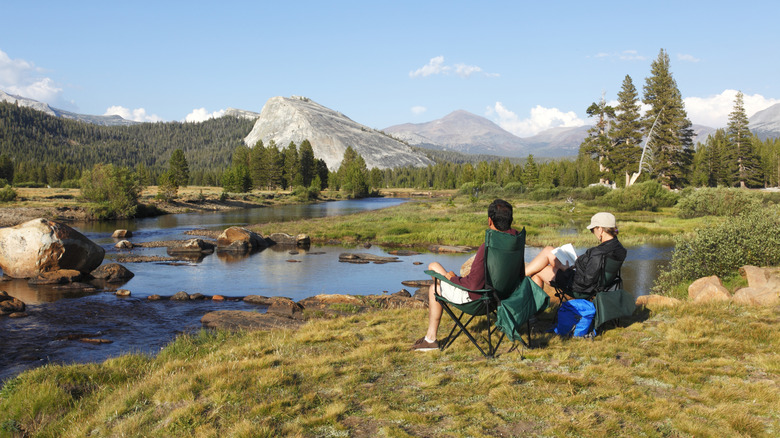
Camping is one of the most timeless, fun, and fully immersive ways to experience our national parks, whether you're kitted out with a full-size RV or love nothing more than hiking into a remote spot with everything you need contained in a backpack. Depending on the park, options abound for spending the night under the stars however you prefer.
In addition to the author's experiences visiting a couple of these parks, we focused on discussions and reviews of specific camping experiences on Reddit, Tripadvisor, and Campendium. We created this roundup with the help of travel resources like VisitCalifornia.com, RedwoodHikes.com, and TheDyrt.com. Finally, we gathered the majority of information regarding campground amenities, regulations, locations, accessibility, and fees from NPS.gov, with additional context from SmithsonianMag.com, PlanPackDiscover.com, and EBSCO.com.
With this in mind, it's worth noting that storm damage and renovations may affect some campgrounds from season to season, and it's always a good idea to check different parks' reservations or arrival guidelines. The information provided here is intended as an overview, but parks are constantly updating their policies and availability, so it's always prudent to check NPS.gov or Recreation.gov before you go to make sure you have the most up-to-date information.