

The Best US National Parks For Stargazing, According To Science
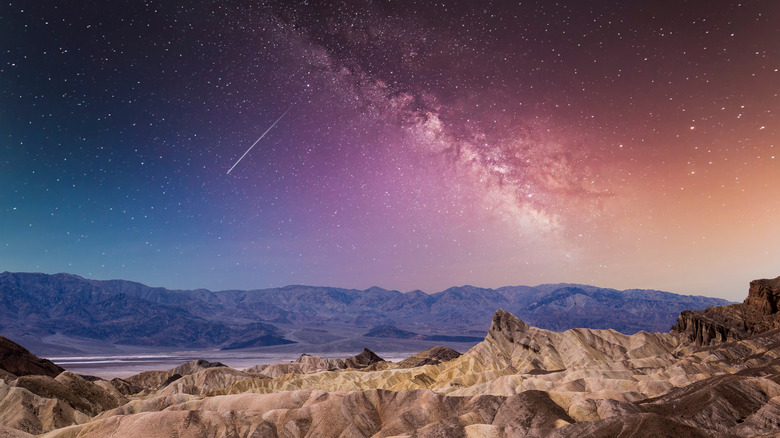
Stargazing in a U.S. national park can feel less like sightseeing and more like time travel. Far from city lights, under some of the darkest skies in the country, the Milky Way sharpens into view, constellations twinkle brightly, and meteor streaks feel startlingly close. But not all night skies are created equal. Using measurements of sky brightness and DarkSky International designations, we can get scientific about where the stars truly shine brightest.
A little planning also makes the experience dramatically better. For the best stargazing experience, plan to go around a new moon. When the moon isn't shining, the sky is naturally darker and faint celestial objects won't get washed out. Stick to red-light flashlights or headlamps; white or blue light instantly wrecks your night vision and is often not permitted at Dark Sky Parks.
In addition, many of the parks on this list are deserts in the West and Southwest. In summer, expect scorching temperatures during the day that may make hiking difficult. Heat escapes quickly after sunset, so warm layers are essential for a night under the stars. Of course, viewing stars is also weather dependent, so check the forecast ahead of time. With the right timing and a bit of preparation, the parks below offer stunning rare views of the night sky.
Death Valley National Park, California
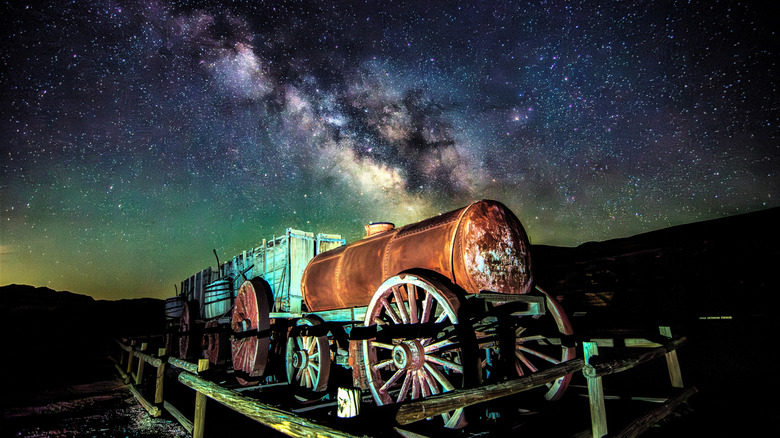
Death Valley National Park is both a "Gold Tier" Dark Sky Park and a Class 1 on the Bortle Scale. This scale measures the quality and visibility of the night sky in a particular area, and Class 1 indicates that it has the darkest skies on Earth. Together, these indicators suggest that Death Valley National Park holds the greatest promise for stargazing. Achieving Gold Tier status means the park has pristine or near-pristine night skies that average close to natural conditions, and is committed to keeping it that way. In these conditions, visitors should be able to observe astronomical phenomena visible only in the darkest places on Earth.
With 3.4 million acres of wilderness, there are many, many places within Death Valley to go stargazing. A few popular spots include Harmony Borax Works, Mesquite Flat Sand Dunes, Badwater Basin, and Ubehebe Crater. The park also sits at one end of an astronomy route called Park to Park in the Dark. Located in Nevada, the 336-mile route connects to another Dark Sky location, Great Basin National Park, with noteworthy stops for budding astronomers along the way.
Death Valley National Park is also home to the annual Dark Sky Festival. Every spring, there are several days of workshops and talks led by experts, including from NASA, local universities, and DarkSky International. Because the desert temperatures can reach extreme highs during the summer, this park is much more comfortable to visit between October and April.
Great Basin National Park, Nevada
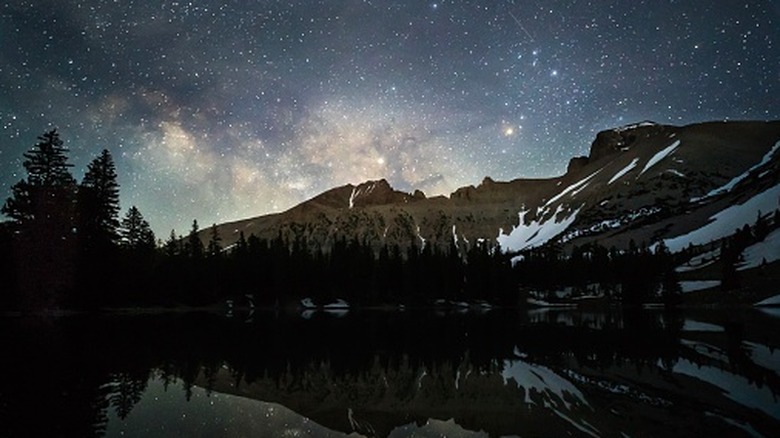
On the other end of the Park to Park in the Dark route is Great Basin National Park. The Gold-Tier Dark Sky Park is also a Class 1 on the Bortle Scale, and is considered by some as the best stargazing experience in the U.S. The park has an Astronomy Amphitheater, where park rangers host stargazing events during the summer months. Over the two hour program, rangers discuss astronomy basics, and visitors can use the park's telescope.
Behind the Lehman Caves Visitor Center, visitors will find solar telescopes set up on summer afternoons to allow them to view our closest star, the sun. These special telescopes are designed to allow viewers to safely observe sunspots, solar prominences, and filaments at the sun's surface. In addition, the park has the first and only research-grade observatory ever built in a U.S. National Park: the Great Basin Observatory. It's only accessible to the public by guided tours that happen during the park's annual end of summer Astronomy Festival. The festival lasts several days and is one of the busiest times at the park, so the campgrounds book up quickly. It features a number of hands-on activities as well as more scientific talks by experts from nearby universities.
Grand Canyon National Park, Arizona
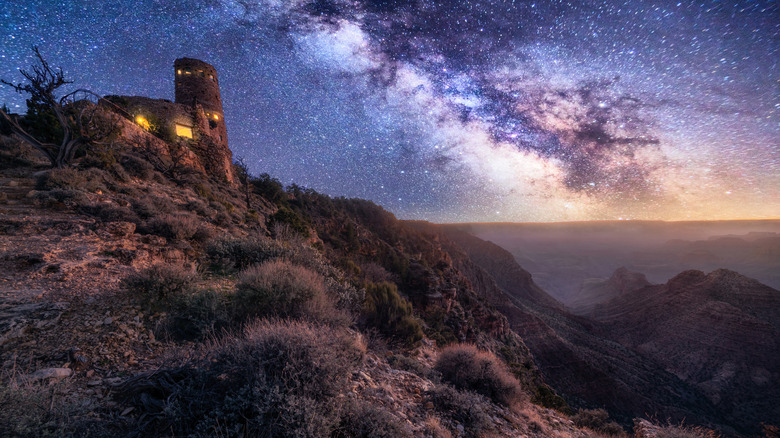
Grand Canyon National Park draws many visitors for its ancient geological wonders. What they may not know is that the park is a Dark Sky Park and Class 1 on the Bortle Scale. One of the park's signature astronomy experiences is the annual Grand Canyon Star Party, held each June on the South Rim. This free, multi-night event includes evening programs with guest speakers and constellation tours, followed by telescope viewing behind the Visitor Center. It's all open to the public and included with park admission. Amateur astronomers from across the country volunteer their equipment and expertise to help visitors explore planets, star clusters, and deep-sky objects.
Beyond the star party, the Astronomer in Residence program, run by the Grand Canyon Conservancy, brings visiting scientists and educators to the park to deepen their own and the public's understanding of the cosmos. When going out on your own, viewpoints such as Mather Point, Desert View, Moran Point, and Lipan Point offer broad horizons and clear skies. The canyon's silhouettes serve as a dramatic foreground for Milky Way photography and casual star gazing.
Capitol Reef National Park, Utah
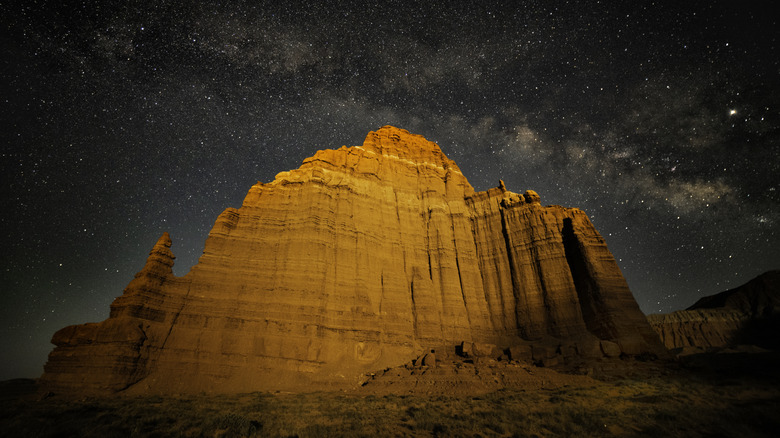
Capitol Reef National Park in south-central Utah's canyon country is another Dark Sky Park and a Class 1 on the Bortle Scale. Across the park, panoramic horizons and elevation at about 5,500 feet above sea level provide excellent stargazing conditions. Great locations to stare towards the heavens include Panorama Point just west of the visitor center, Danish Hill and Slickrock Divide along the Scenic Drive, and Cathedral Valley Primitive Campground in the park's northern district.
Each September, visitors can take part in Heritage StarFest, the park's free, annual night sky celebration. Come for telescope viewing, constellation tours, ranger talks, solar viewing, and astronomy activities both inside the park and in the nearby town of Torrey. Activities range from afternoon solar telescope viewing and kid-friendly astronomy programming, to nighttime telescope sessions and discussions with guest speakers, all designed to deepen appreciation for the cosmos and dark-sky preservation. For additional guided experiences, local tour operators in Torrey offer stargazing excursions with expert-grade telescopes and interpretive commentary.
Canyonlands National Park, Utah
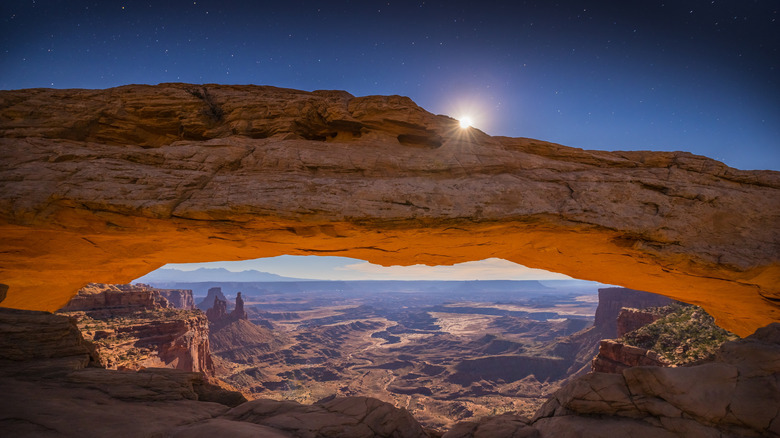
Canyonlands National Park is another Class 1 Dark Sky Park in Utah. People come to this park to witness gorgeous flat-topped hills called mesas, as well as other rock formations like buttes and spires. These geological wonders were carved by the Green and Colorado Rivers over millions of years, and give the Milky Way an incredible foreground for anyone taking photos or just gazing upwards.
To get the best view, keep in mind that stars are clearer at higher elevations. When possible, find a spot to watch the stars along the canyon rim rather than down in the valley below. Some of the best and most accessible locations are in the park's Island in the Sky area, closer to the city of Moab. Mesa Arch and Green River Overlook offer great views with the least amount of hiking. Grand View Point Overlook is a 1.8-mile trail in and back, and rewards hikers with sweeping views of the maze of canyons below and thousands of stars above.
Each year, Canyonlands National Park also participates in the Southeast Utah AstroFest that also includes Arches National Park and Dead Horse Point State Park. Across several days, experts, amateurs, and curious members of the public gather to celebrate some of the darkest skies in the U.S. Rangers set up telescopes and offer tours of the visible constellations and astronomical phenomena in our solar system.
Big Bend National Park,Texas
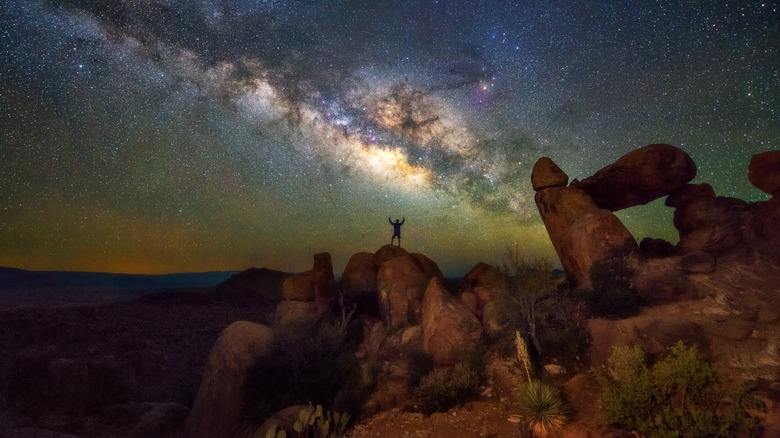
Because of its extreme remoteness and very low surrounding population, Big Bend claims it has the least amount of light pollution of any U.S. national park in the lower 48 states. It's a Dark Sky Park with skies that rate around Class 1 on the Bortle Scale, making it a premier destination for truly dark night skies and bright Milky Way views.
The vast desert and mountain landscapes provide expansive skies. Some great stargazing locations include Santa Elena Canyon Overlook, Hot Springs Historic Area, Rio Grande Village, and the Panther Junction area, all of which offer unobstructed sky views far from lingering campground lights. Chisos Basin is another favorite with its higher elevation that helps reduce atmospheric haze and expands the stretch of visible sky for observers.
Nearby is The University of Texas at Austin's McDonald Observatory. While it's not technically located inside the park, it is part of a larger Dark Sky-designated area that includes both the observatory and the park: Greater Big Bend International Dark Sky Reserve. It's actually the largest dark sky reserve in the world. The observatory acts as a regional astronomy hub. It hosts public programs, guided astronomer-led field trips, and telescope nights that can complement your Big Bend visit.
Bryce Canyon National Park, Utah
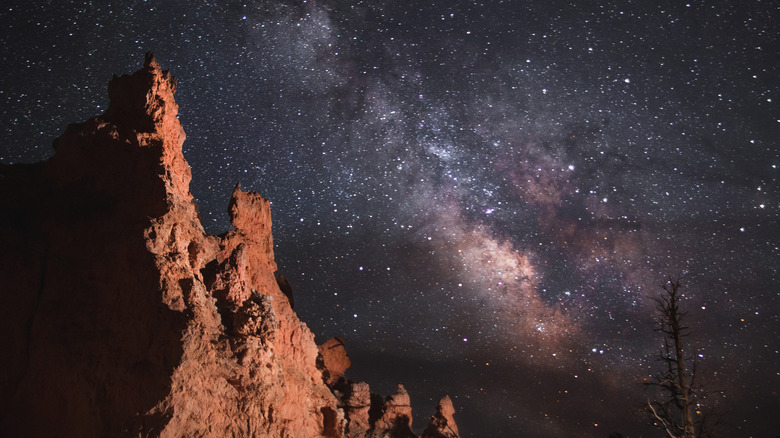
Utah's otherworldly Bryce Canyon National Park holds Gold Tier status as a Dark Sky Park, and its skies register around Class 2 on the Bortle Scale. The park's high elevation — over 8,000 feet in many areas — means clearer air, which enhances the visibility of stars overhead. The park's distinctive geology includes thousands of towering hoodoos, some of the most spectacular landmarks in U.S. national parks. These make for unforgettable framing structures that catch and reflect even subtle light and add dramatic silhouettes beneath sprawling fields of constellations.
Popular sky-viewing spots include Sunrise Point, Inspiration Point, and the Paria View area. Every year, Bryce Canyon also hosts an annual Astronomy Festival, which features daytime talks, nighttime constellation tours, astro-photo workshops, telescope viewing, and ranger-led sky walks. During the festival, participants can deepen their understanding of the cosmos with expert guidance and practical tips for photographing stars and planets.
Great Sand Dunes National Park, Colorado
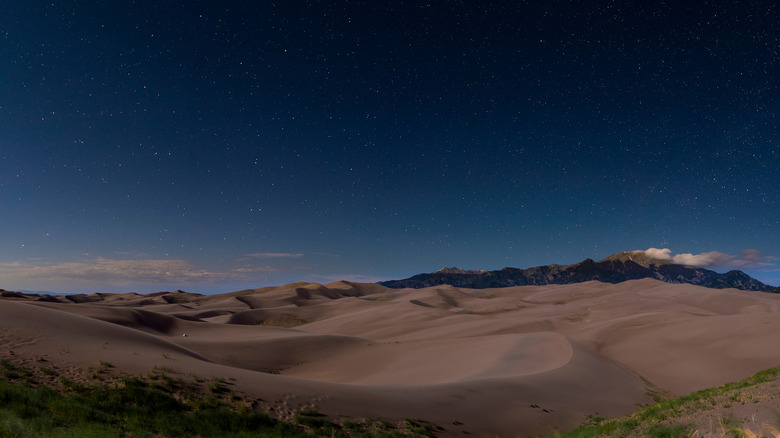
Great Sand Dunes National Park holds Gold Tier status as a Dark Sky Park and sits at Class 2 on the Bortle Scale. Light pollution is minimal and the conditions are excellent for seeing faint stars, the Milky Way, and deep-sky objects with the naked eye. "The dry air, high elevation, and lack of light pollution all make the park an ideal dark-sky destination," said Great Sand Dunes Superintendent Pamela Rice to DarkSky International. In addition, the mountain ranges on the northeast side of the park help shield the park's skies from the tremendous light pollution coming out of Colorado Springs.
The massive dunes in this park form an otherworldly foreground for night-sky viewing and photography. Giant sand slopes stretch to the horizon. According to visitors, popular spots to set up your stargazing session include hiking up to some of the highest dunes in North America: High Dune and Star Dune. Piñon Flats Campground also offers accessible sky-viewing areas.
During summer and early fall, the park hosts night sky programs and dark sky celebrations at the outdoor amphitheater, where rangers lead constellation talks, telescope viewing, and educational activities like the Junior Ranger Night Explorer program. These engagements often include guided stargazing and opportunities to learn about astronomy and night-sky conservation, making them ideal for both beginners and seasoned observers.
Arches National Park, Utah
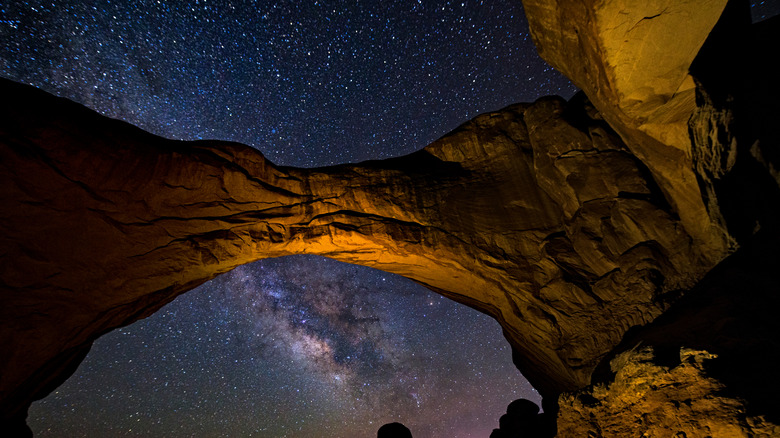
Arches National Park holds Silver Tier Dark Sky status and a Class 2 rating on the Bortle Scale, meaning light pollution is still low enough to reveal rich star fields, the Milky Way, and even objects like the distant M33 Triangulum Galaxy to the naked eye. Its remote desert location in the Colorado Plateau helps keep the night sky impressively dark, although the southern portion of the park may be slightly affected by light pollution from the nearby city of Moab.
What sets Arches apart is the natural rock architecture itself. Millions of years of wind and water have carved sandstone into arches, fins, and balanced rocks that make dramatic foregrounds for astrophotography and stargazing alike. Known stargazing spots include Panorama Point, a dedicated viewing area with wide, unobstructed skies and ranger-led night sky talks. There's also the Balanced Rock Picnic Area, the Windows Section, and the Garden of Eden Viewpoint, all of which offer compelling vantage points framed by iconic rock formations.
From spring to fall, rangers host night sky programs that may include telescope viewing and constellation tours in partnership with other parks in Utah. The park also participates in Annual Southeast Utah AstroFest that brings experts and enthusiasts together under these protected skies.
Lassen Volcanic National Park, California
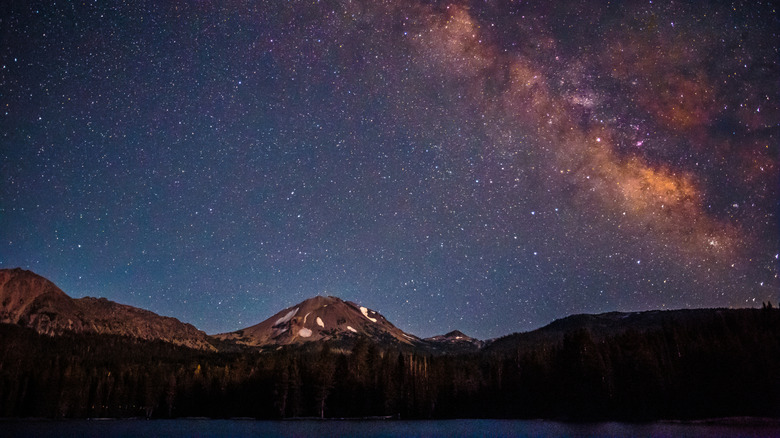
Located in northeast California, Lassen Volcanic National Park has a Class 1 rating on the Bortle Scale. With little nearby development and large areas of high-elevation wilderness, the park offers exceptionally clear views. In addition, the park's extremely unique volcanic terrain creates a distinctive nighttime setting. Jagged lava flows, deep craters, giant cones, steaming fumaroles, and glassy alpine lakes form dramatic silhouettes beneath the stars, making this a favorite destination for night-sky photographers looking for unusual foregrounds. Reflections on the water at Lake Helen and Manzanita Lake can double the visual impact of bright constellations and the Milky Way.
Lassen is also known for its full moon hikes, with routes such as Cinder Cone and Lassen Peak drawing experienced hikers who want to witness geothermal features and high-elevation landscapes under natural lunar light. In addition, the Shasta Astronomy Club partners with the park for special events and telescope programs. Volunteers help visitors identify planets, star clusters, and seasonal constellations.
Denali National Park, Alaska
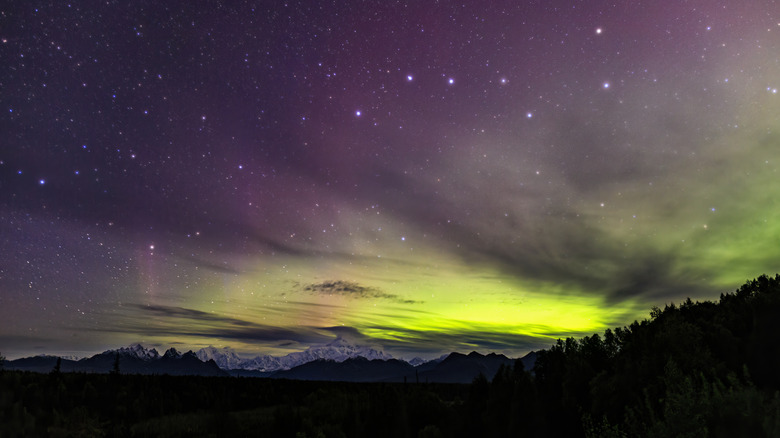
Stretching across 6 million acres of remote tundra and boreal forest, this Class 1 Bortle Scale park offers some of the darkest and most pristine night skies in all of North America. While this makes for spectacular star-filled evenings year-round, Denali is particularly celebrated for another celestial phenomenon: the aurora borealis. Visitors can often see the northern lights from virtually anywhere in the park on clear, geomagnetically active nights. Bands of green, purple, and red light ripple across the sky above rugged peaks like Mount Denali itself, creating a mesmerizing atmospheric spectacle.
For stargazing, areas near campgrounds such as Riley Creek and Wonder Lake provide excellent vantage points, with broad views to the north, south, and west. If you're planning a trip to this remote destination, or any other of Alaska's gorgeous national parks, keep in mind that the park's high latitude also means that summer nights around the solstice never truly get dark. Fall, winter, and early spring bring long, dark nights ideal for celestial viewing.
Yellowstone National Park, Idaho, Montana, and Wyoming
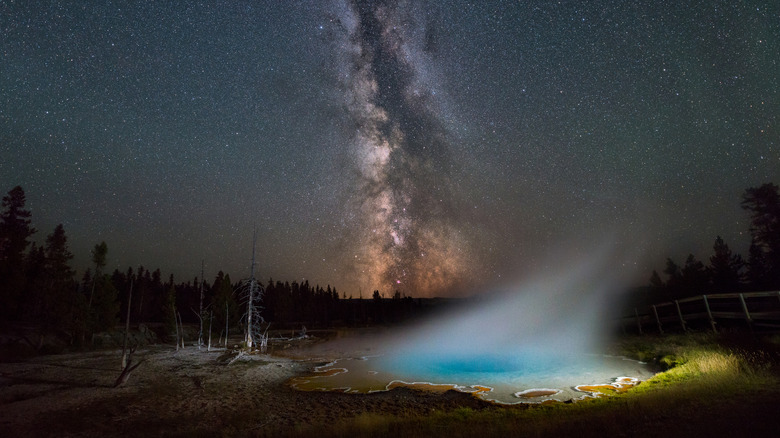
Yellowstone is rated Class 1 on the Bortle Scale, placing it among locations with the darkest skies measurable on Earth. That said, it's not yet recognized as a Dark Sky Park. That may in part be due to the more than 5,000 light fixtures spread across the park. In more developed areas of the park, where there are parking lots and amenities, lights are found in high concentrations, polluting an otherwise remote wilderness. Over the last few years, the park has been working to remove lights and reduce artificial brightness wherever possible.
Nevertheless, most areas of the park's 2.2 million acres remain very dark. Most of the park is also about 6,000 feet above sea level, giving it strong baseline conditions for astronomical observation. The experience of the night sky here is shaped by Yellowstone's geothermal terrain. Geyers, basins, and valleys create unusual nighttime landscapes.
Some visitors opt for moonlit walks near geyser basins, where steam rising from hot springs and fumaroles reflects natural light. Darker nights away from developed areas will provide the clearest celestial views. In summer, the park hosts astronomy programs at the Madison Amphitheater, where rangers cover night-sky basics and help visitors identify visible constellations and planetary objects.
Yosemite National Park, California
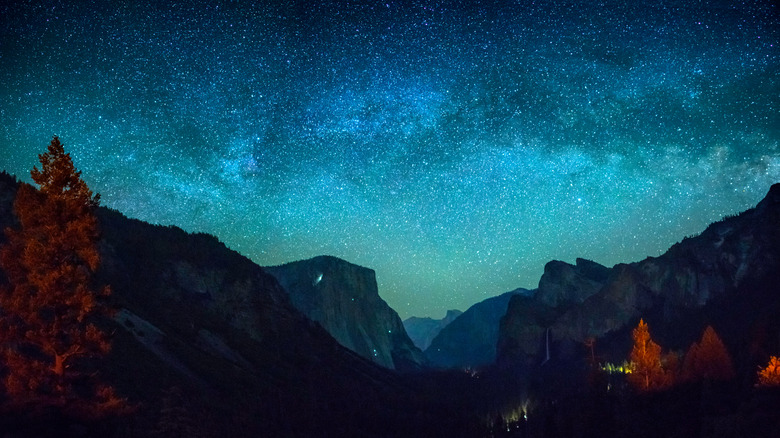
Yosemite's night skies are impressively dark, and the park is rated Class 1 on the Bortle Scale. For guided experiences, the nonprofit Yosemite Conservancy offers two-hour astronomy programs in Yosemite Valley. Experts lead small groups and point out stars, planets, and constellations along the way using laser pointers. They also share stories that connect the night sky to science and local culture. These programs run seasonally and usually require advance registration. Throughout the summer, the park also hosts public "star parties," where amateur astronomy clubs set up telescopes and guide visitors through celestial sights under truly dark skies.
Yosemite's landscapes add unique nighttime attractions beyond stargazing. On select full moon nights in spring and early summer, the light of the moon can create "moonbows" in the mist of the breathtaking, towering Upper and Lower Yosemite Falls, a rare lunar rainbow best seen near the falls shortly after moonrise. Some great spots for viewing include Glacier Point for high-elevation panoramas, Cook's Meadow and El Capitan Meadow in the valley for stunning silhouette backdrops, and Tenaya Lake in the high country for reflective starlit water views.
Methodology
This guide was developed using two official sources: DarkSky International and the Bortle Dark Sky Scale. The Bortle Scale rates night sky darkness based on the visibility of celestial objects, on a scale from 1 (darkest) to 9 (brightest). A Dark Sky designation, meanwhile, indicates that a park is committed to protecting dark skies and is below a standard level of light pollution. Some parks are further ranked based on the Bronze, Silver, and Gold Tier system. Other parks are simply designated without a tier ranking, or are working toward a Dark Sky designation.
There are approximately 18 U.S. national parks with Dark Sky Park status. The author cross-referenced that group with parks rated in Class 1 or 2 on the Bortle scale. The first eight parks on this list hold both a Dark Sky designation and a Class 1 or 2 Bortle rating. The remaining five parks are included for their Class 1 designation, indicating exceptionally dark skies. The National Park Service was also used to gather details about each park's night sky programming for the public, prime stargazing locations, must-visit attractions, and natural phenomenons, such as the moonbow at Yosemite and aurora borealis at Denali.