

10 Old-School American Cities With Attractions That Feel Stuck In The 1980s
The 1980s evoke a time before cell phones, the internet, and even digital screens. The decade saw the advent of the CD-ROM, "yuppie" culture, and the first disposable camera. Movies that became instant classics premiered during the decade, such as "The Lost Boys," "Ferris Bueller's Day Off," and anything starring the Brat Pack. It was an era often characterized by economic optimism and consumerism, though the decade opened with a recession and saw other challenges, such as the AIDS epidemic.
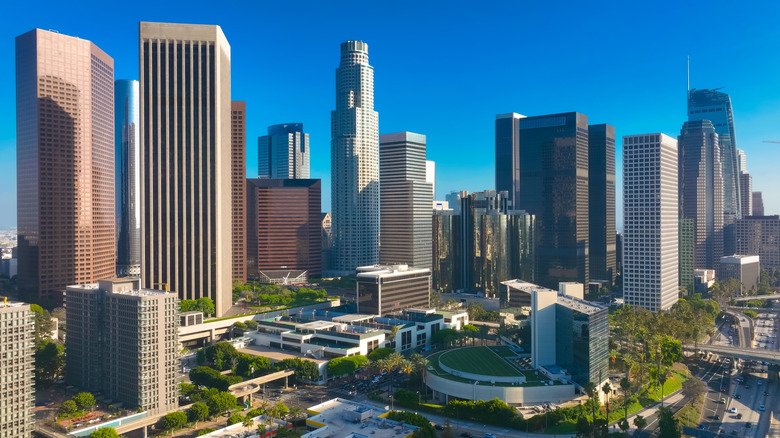
Just as we do now, people flocked to beaches, theme parks, and video arcades to escape — and you can still ride classic '80s coasters like the "Scorpion" at Busch Gardens Tampa Bay, one of many amusement parks in the South worth visiting. Architects also responded to the starkness of modernism with gleaming, sometimes quirky and ironic postmodern designs that remain indelible features of city skylines in places that saw huge development booms during that time, like New York City, Los Angeles, and Chicago.
Whether it's a walk down memory lane or a brand new experience for the more youthful among us, thankfully there are plenty of ways to revisit the 1980s — or at least get a feel for some elements of the so-called "decade of decadence." You can see iconic buildings that defined the era, walk along seaside boardwalks that feel locked in time, or be transported into your favorite '80s movie scene with a visit to these 10 cities across the U.S.
Chicago, Illinois
As the setting of one of director John Hughes' most iconic films, "Ferris Bueller's Day Off," the Chicago Loop has something of a throwback quality about it if you know where to look. Stand in front of George Seurat's "A Sunday on La Grande Jatte" at the Art Institute of Chicago, take in the view from the Willis Tower Skydeck, take in the daily clamor at the Chicago Board of Trade, or catch a Cubs game at the iconic Wrigley Field.
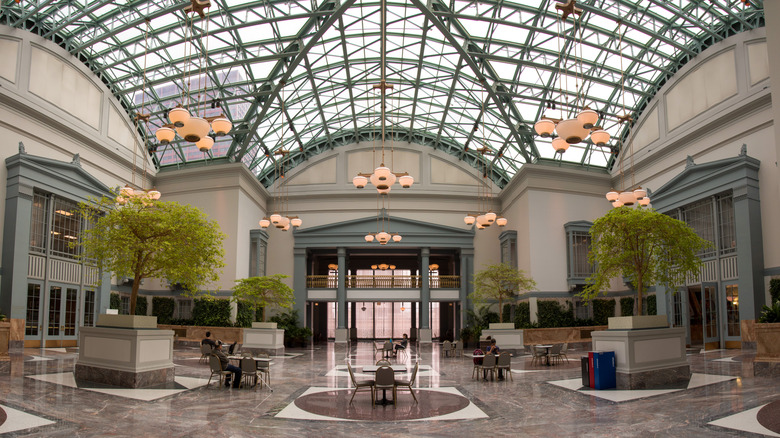
Chicago is also home to myriad acclaimed skyscrapers and a riverfront that was transformed from a grim industrial zone into a thriving pedestrian paradise. On an architectural boat tour, you won't miss some of the city's most impressive postmodern masterpieces — such as the Kohn Pedersen Fox building on Wacker Drive, with a curved glass facade that literally reflects the city around it. Another striking must-see from the era is the Harold Washington Library Center, which technically opened in 1991 but has postmodernism written all over it, with a facade that harkens back to earlier styles while sporting a glass ceiling and oversized artist-designed sculptures on its pediment.
Finally, there's the striking James R. Thompson Center, completed in 1985, which Google is currently renovating into a new hub. It will still retain its 13-story, naturally lit rotunda, and although its blue-and-salmon interior color palette with visible trusswork will be toned down, the '80s are still there in spirit.
Miami Beach, Florida
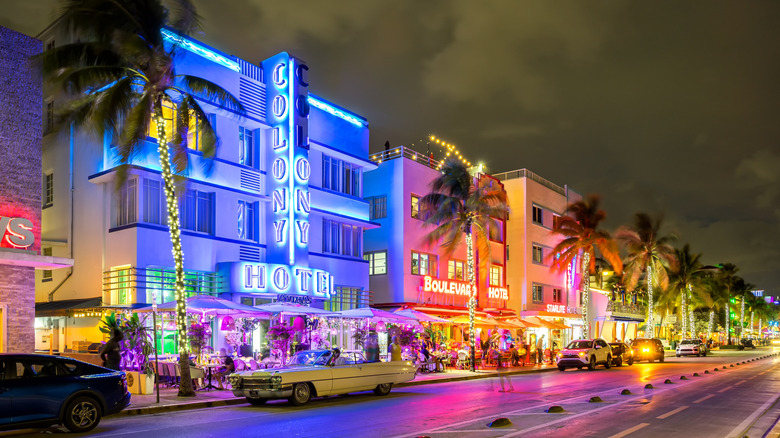
While Art Deco is typically associated with the 1920s to the 1930s, when it became all the rage internationally, Miami Beach's famous pastel-colored South Beach neighborhood has the 1980s to thank for its well-preserved architecture. Think white-sand beaches and "Miami Vice." The Art Deco District was added to the National Register of Historic Places in 1979, part of a concerted effort to preserve blocks upon blocks of buildings brimming with Art Deco details like slick lines, portholes, "eyebrows" over the windows, glass blocks, and stepped rooflines.
Some buildings were demolished into the 1980s despite protests, even as art world luminaries of the time, like Andy Warhol, took a keen interest in the city's unique vibe as preservation efforts ramped up. Wander along Washington Avenue or any of the smaller cross streets and you'll see retro hotels, restaurants, and shops showcasing Art Deco details. You can even visit the Miami Design Preservation League's Art Deco Museum on the famous Ocean Drive to learn about the hundreds of stylish buildings in Miami Beach from the first half of the 20th century.
There's also, of course, something timeless about heading to the beach to take a dip in the Atlantic and soak up Florida's sun and humidity, bask in the glow of Ocean Drive's bright neon lights, and grab your skateboard — or rent rollerblades from an outfit like 305 Rentals and Tours — to cruise along the winding, palm tree-lined, 7-mileBeachwalk.
Atlantic City, New Jersey
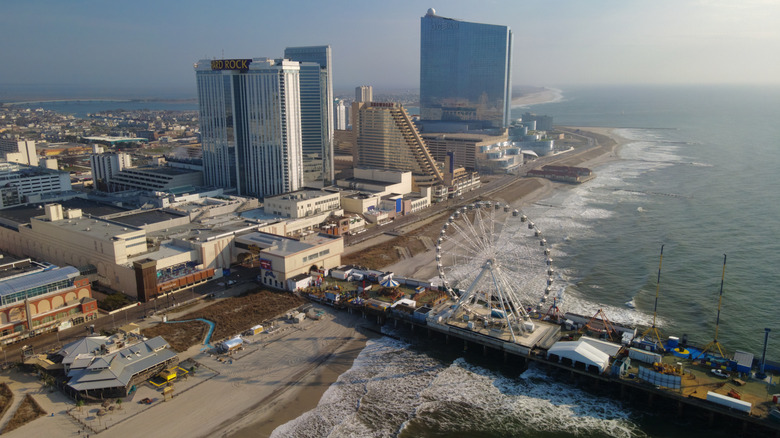
Gambling in Atlantic City was legalized in 1976, and its first casino — Resorts International — opened in 1978. From there, the coastal New Jersey destination took off in the '80s with real estate developments for new hotels, restaurants, gambling halls, and other attractions. Some of that nostalgia can still be found, such as at video arcades like Lucky Snake at the Showboat Hotel, which comes complete with go-karts and a roller skating rink. Even Harrah's Resort has an arcade to go along with its other gaming options.
Along with Resorts International, several original 1980s-era additions to Atlantic City's casino scene — such as Bally's, Tropicana, and Golden Nugget — are still around. The rooms have been remodeled since then, but there's still something timeless about the elevated views over the harbor. And isn't there something inimitably '80s about colorful casino carpeting, too?
Along with its oceanfront location, New Jersey is also home to the longest boardwalk in the world, the Atlantic City Boardwalk, which is dotted with shops, cafes, and attractions like mini-golf, the Central Pier Arcade, bumper cars, and amusement park rides. Take a scenic boat ride, get aerial with a helicopter tour, or take in the views from the Steel Pier, an iconic feature of the Atlantic City skyline since 1898.
Los Angeles, California
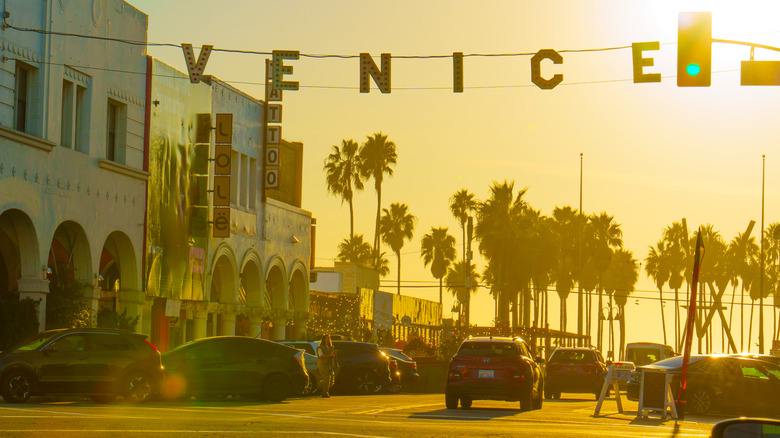
Along with other cities that saw widespread new development in the 1980s, Los Angeles became home to some amazing postmodern buildings that make it a fantastic destination for architecture lovers. The Museum of Contemporary Art (MOCA), for example, was established in 1979 by a group of artists, and its sandstone exterior with a barrel-topped entrance and square windows is postmodern with a capital "P."
Also downtown, the 777 Tower is a feature of the skyline with its grid of glass and steel in off-white. Beyond that, acclaimed architect Frank Gehry has more than 20 buildings throughout L.A. — with '80s masterpieces like the Norton House in Venice Beach, the elegantly blocky Frances Howard Goldwyn Hollywood Regional Library, and the playful Binoculars Building (technically completed in 1991). You can also see the house Gehry designed for his own family in Santa Monica.
Speaking of the Pacific Coast, planning the perfect 3-day weekend in Los Angeles is easy when city culture is combined with beachy vibes. There's a fantastically retro feel about the Venice Beach boardwalk, where people rollerblade, walk, and bike along the shops, cafes, and beaches — including Muscle Beach, where bodybuilders like Arnold Schwarzenegger and Lou Ferrigno historically worked out. Ride theme park rides on Santa Monica Pier, then head inland again to the Petersen Automotive Museum, which has an exhibit specifically dedicated to '80s and '90s cars and culture, aptly called "Totally Awesome!"
Santa Cruz, California
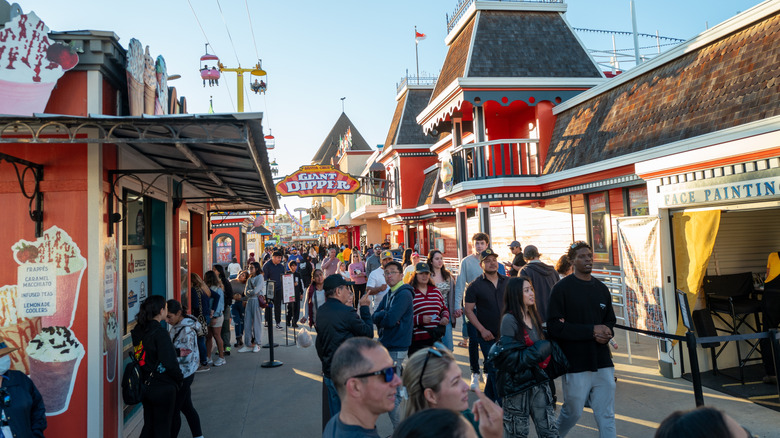
About 350 miles north of Los Angeles, along California's scenic Central Coast, Santa Cruz is another West Coast city with attractions that nod to its '80s past. This buzzing beach town is where surfing first came to America, and it's still an attractive getaway for its beach boardwalk, amusement park, and other entertainment that feel firmly rooted in the early digital age.
Try your hand at Skee-Ball and pinball machines in the Casino Arcade, then grab a snack and play a round or two of mini-golf at Neptune's Kingdom. There are also rides for all ages, from thrilling coasters like the Giant Dipper to a variety of kiddie carousels and other family-friendly activities. You might even recognize some details from movies set on the boardwalk in the 1980s, including "The Lost Boys" and "Dirty Harry: Sudden Impact."
Las Vegas, Nevada
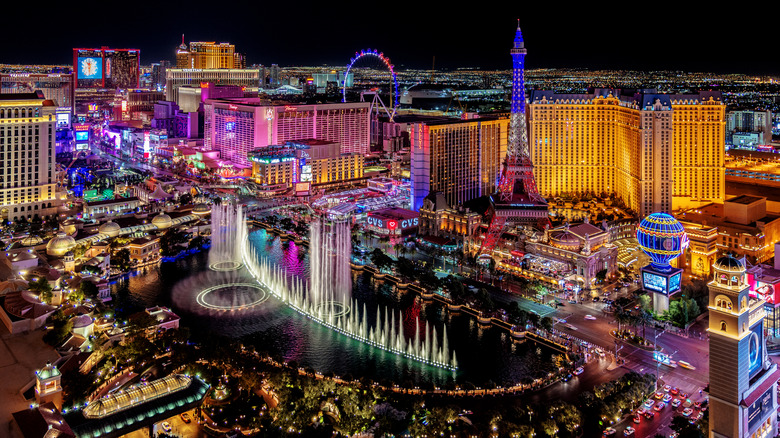
Las Vegas became a major tourist attraction in Nevada following the state's legalization of gambling in 1931 — and for a couple of decades, it was known as a mobster hangout as much as a refuge for Hollywood celebrities and musicians like Frank Sinatra, Sammy Davis Jr., and Elvis Presley, among others, who flocked to the city for its burgeoning nightlife. By the 1980s, Las Vegas was a well-established gambling mecca, and organized crime outfits gave way to corporations that began running major hotel-casino operations. After gambling became legal elsewhere, the city had to diversify its offerings beyond casinos in order to attract people to the Strip and Fremont Street.
Las Vegas has always been characterized by its knack for reinvention, and the giant casino-hotels we think of today can be traced to the 1989 opening of the first themed mega-casino-hotel, The Mirage. Although it closed in 2024 and is set to become a Hard Rock Hotel & Casino, The Mirage was renowned for themed shows, its more than 3,000 rooms, VIP high-stakes gaming, dining, and other attractions. This set the stage for numerous other resorts you can still visit, such as the Luxor, with its huge pyramid, and Excalibur.
Keep an eye out for a new attraction coming to town called RetroEscapes, where visitors will be able to wander through a portal into immersive realms ranging from the 1950s to the 1990s. Until then, one of the best things to do with kids in Las Vegas is a visit to The Neon Museum to see hundreds of signs from bygone eras.
Daytona Beach, Florida
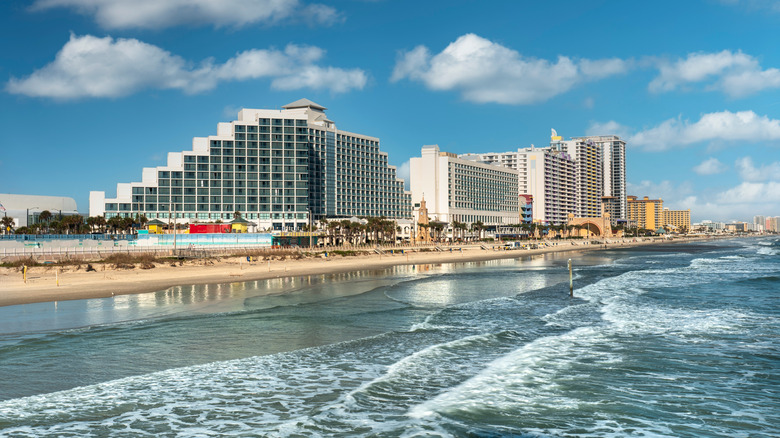
Spring break has always been something of a rite of passage for college students, and in the 1980s, Daytona Beach became such a go-to for parties that MTV took note. Daytona's Bandshell was the locus of major televised concerts by R.E.M. and the Red Hot Chili Peppers, among many others — even though by 1989, the sheen had begun to wear off as hundreds of thousands of students descended on a city that didn't have the infrastructure (or the patience) for a party scene that got out of control. Still, Daytona Beach promotes itself as a fantastic destination for family-friendly springtime breaks, taking advantage of the timeless sun, sand, and swimming.
While Daytona Beach's vibes still have a flavor of the '80s, it continues as a go-to destination for car lovers, as the Daytona International Speedway is home to one of the biggest races in the country, the Daytona 500. In March, head to the Turkey Run, a giant car show that emphasizes models 30 years or older, including a wide range of sports cars and muscle cars that ooze 1980s attitude.
And on the topic of vehicles, Daytona Beach's annual Bike Week — which has been around since 1937 — is a motorcycle rally drawing visitors from all over the U.S., on par in scale with the Sturgis Motorcycle Rally in South Dakota. During the '80s, Bike Week got a little rough around the edges, adding to its legendary character. Today, it's an event for all ages.
Wildwood, New Jersey
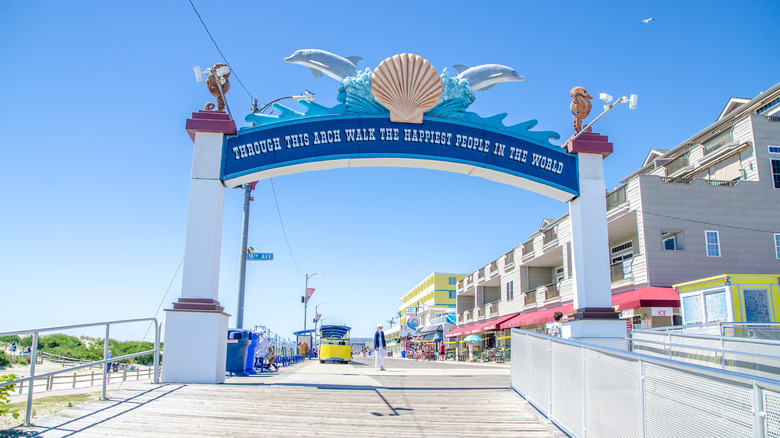
About 40 miles south of Atlantic City sits the small coastal city of Wildwood, New Jersey. It's an Atlantic hub for its beach and classic boardwalk experience — plus Morey's Piers, an oceanfront amusement park with water slides, roller coasters, mini-golf, and more for the whole family. Stretching for 2.5 miles, much of the boardwalk's look and feel still reflects the boom years of the 1980s, when neon lights and arcades dominated.
Today, visitors can experience it by walking past shops and eateries or cruising along in the bright yellow Sightseer Tramcars. There are a whopping nine arcades along the boardwalk, too, featuring old school units like Skee-Ball, video games, and "merchandise casinos" chock full of toys and other trinkets you can win.
Wildwood is just one part of what's known collectively as the Wildwoods, a New Jersey resort city with award-winning, free-to-visit, spacious beaches. In its entirety, the Wildwoods comprises a barrier island stretching 5 miles long that also includes areas called North Wildwood, Wildwood Crest, Wildwood Gables, and Diamond Beach. All of these are punctuated by the timeless Cape May National Wildlife Refuge at its southernmost part for a natural escape.
Branson, Missouri
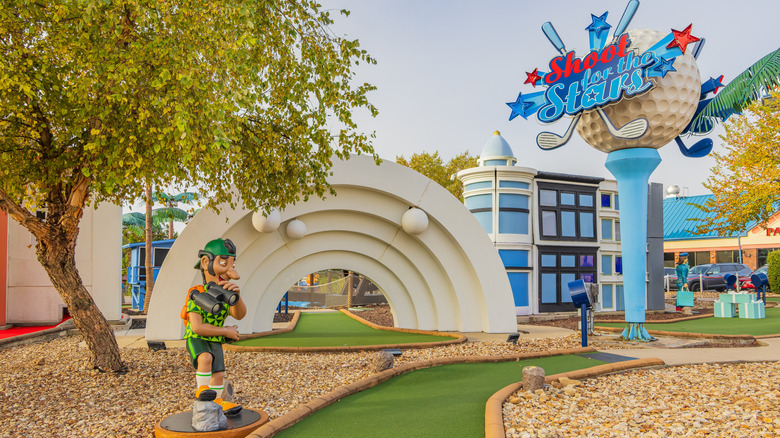
If you're looking for shows, retro experiences, and even gambling, but prefer not to travel all the way to Nevada, look no further than the glitzy, kitschy entertainment of Missouri's "Las Vegas of the Midwest": Branson. A hub for long-running stage performances and music, there's something ineffably throwback about it — especially since its popularity rose so much in the '80s that it led to national attention.
In town, you'll find classic amusements like mini-golf and the 1984 Branson Arcade, brimming with more than 100 games. The emphasis here is definitely on the decade of big hair and denim jackets, and all of the machines are selected to really highlight that '80s feel. If that's not enough to sate your taste for vintage entertainment, head to RetroMania, an attraction for all ages that includes a museum dedicated to the decade, plus a haunted house, an arcade, an escape room, and more.
Reno, Nevada
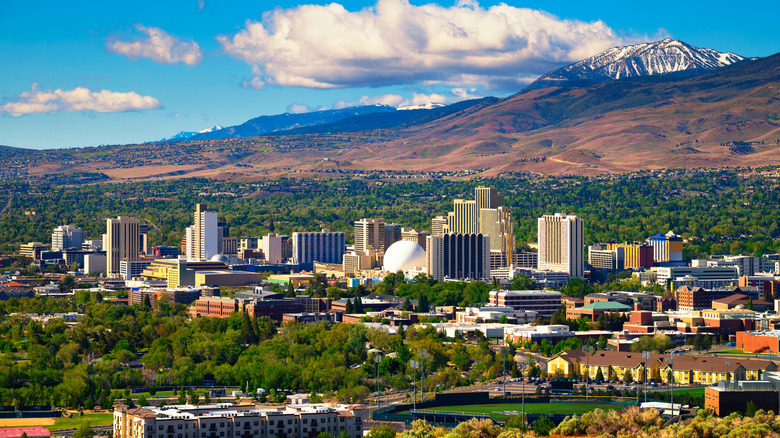
Although it's also a gambling destination in Nevada, Reno has a different flavor than Las Vegas, which can be overwhelming and busy by comparison. Situated at the base of the Sierra Nevada Mountains, making it a popular gateway to Lake Tahoe, Reno is a walkable hub of food, art, and outdoor fun known as the world's "Biggest Little City." As the city is a go-to for casinos, you won't want to miss Peppermill, which features a "Retro Room" in its Game Lab devoted to '80s arcade games. Additionally, Bonanza Casino — technically established in the mid-1970s — still continues with its throwback Wild West theme that's popular with locals. Eldorado Casino Resort also opened in the mid-1970s as a major attraction, now operated by Caesars.
Get super-retro with a stop by Junkee Clothing Exchange and its sibling, Uncle Junkee, where displays of retro clothes and decor transport you back in time. If you happen to be in town in the summer, lace up your roller skates and head to Rollin' Reno, where Believe Plaza transforms into a skating rink in the evenings, complete with live music and food. Skate rentals are available, but it's free if you bring your own!
Astoria, Oregon
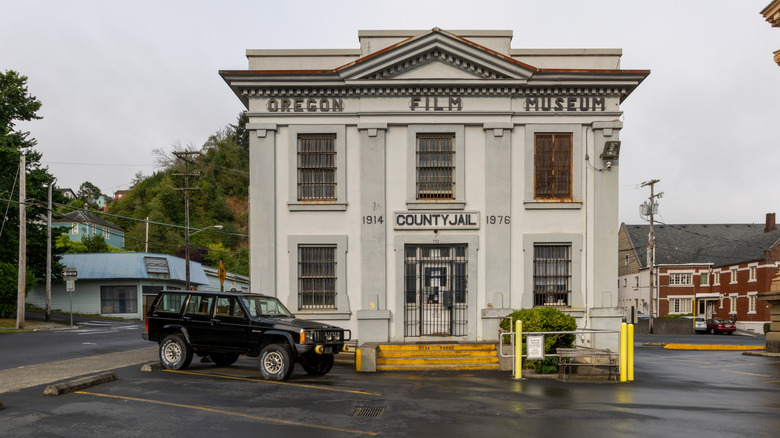
Victorian architecture is, for obvious reasons, not the first thing you'd think of when the 1980s pop to mind. But Astoria, Oregon, is a bit of an exception to that rule. Its atmospheric downtown and moody nearby beaches were immortalized in the cult classic film "The Goonies," which emphasized local buildings in the protagonists' made-up neighborhood of "Goondocks" and the iconic Haystack Rock at nearby Cannon Beach. The Flavel House Museum, for one, is a gorgeously preserved Queen Anne home that serves as one of the characters' father's workplace. Across Duane Street, the historic Clatsop County Jail building, which also features in the film, is aptly home to the Oregon Film Museum.
Astoria's downtown is charmingly walkable, with numerous coffee shops, boutiques, and even a throwback arcade called Galactix that features more than 40 video and pinball games. And it's not alone: Gizmo's Retro Arcade also hosts dozens of games, from Pac-Man and Donkey Kong to Street Fighter and Super Mario Bros. Don't miss the opportunity to get fueled up for some epic button-smashing with excellent fish and chips from Bowpicker, which serves beer-battered Albacore tuna and fries out of a vintage fishing boat.
Myrtle Beach, South Carolina
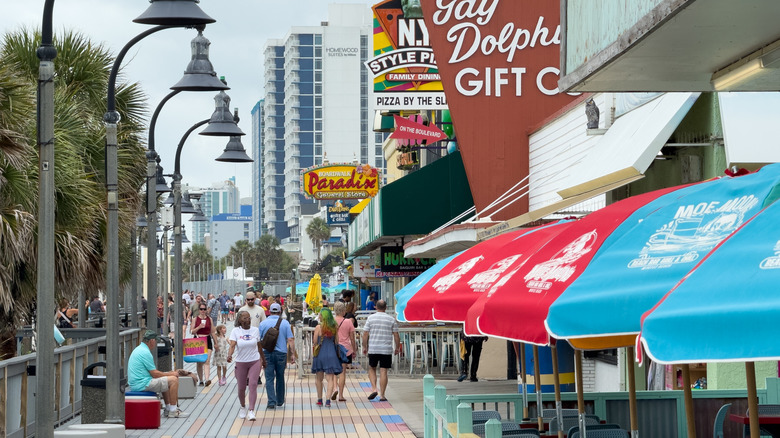
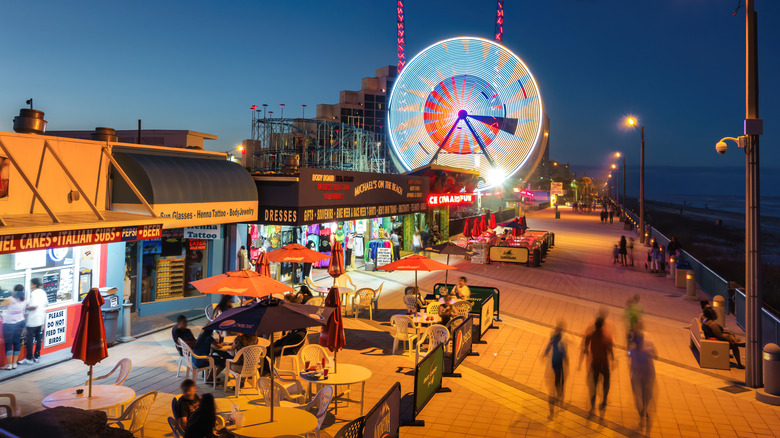
Myrtle Beach, South Carolina, is practically swimming in amusement parks, games, and thrill rides. An icon of the skyline is the SkyWheel, with its enclosed observation pods offering amazing views over the city, ocean, and Myrtle Beach Boardwalk, which stretches 1.2 miles long. Get a taste of decades past at Gay Dolphin Gift Cove, which has been a staple of the district since the 1940s, when it was part of a larger complex of local attractions. Today, it's flanked by a variety of restaurants and other shops.
Golfers are in luck in Myrtle Beach. Thanks to a huge boom in golf course development in the mid- to late-1980s, dozens of public and private courses still dot Myrtle Beach and nearby communities. That growth also extended to residential areas and commercial spaces well into the 1990s. Driving or strolling down Ocean Boulevard, for example, there's still a late-20th-century feel to a lot of the motels, retail spaces, and restaurants — along with their signage. After a day spent on the beach or wandering the boardwalk, take in a little nightlife at the dueling piano bar Crocodile Rocks, where you can come armed with an '80s tune or two to request.
Methodology
Cities are always redeveloping as they evolve along with changes in visitors' tastes, technology, and competition elsewhere. The 1980s is still recent enough historically that, especially when it comes to architecture, buildings are often viewed as "outdated" as opposed to "historically significant," and are often redeveloped or demolished (just think of all the malls!). But that doesn't mean there aren't some fantastic throwback attractions in cities around the U.S., whether they tap into our nostalgia by preserving amazing places from the era or recreating some of the most memorable elements of '80s pop culture in arcades, amusement parks, and entertainment venues.
To land on this list, we started with roundups published on MSN.com and BackroadPlanet.com. To learn about both the history of certain places and the businesses and experiences you can still find today, we researched a number of official tourism sites, including MiamiandBeaches.com, ChooseChicago.com, DaytonaChamber.com, DowntownReno.org, and VisitMyrtleBeach.com. We also found additional historical context and facts from Coaster101.com, History.com, JSTOR.org, Movie-Locations.com, MetropolisMag.com, Architecture.org, Tate.org.uk, Getty.edu, Miami Design Preservation League, LAConservancy.org, NeonMuseum.org, and The Daytona Beach News-Journal. In addition to the author's own experiences visiting several of these cities, we also perused discussions and features by other visitors on YouTube, Reddit, and Quora.