

Texas' Old-School Town Feels Stuck In The '70s With Unique, Retro Art
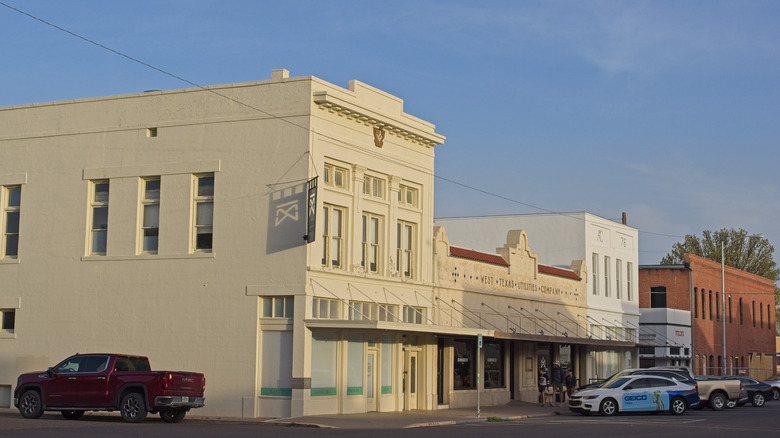
The '70s were a time of individuality and self-expression for photographers and painters, capturing their interpretations of the world. While we've moved from portable transistor radios to Spotify playlists, this pivotal decade in American art is firmly "Stayin' Alive" in the southwest corner of the Lone Star State. The small town of Marfa oozes creative '70s vibes from art galleries dotting the city, amongst scenery where "Gunsmoke" could have been filmed in West Texas. This iconic scenery attracted the well-known minimalist artist Donald Judd to Marfa in 1971, who used the natural scenery surrounding the city as a canvas for art and self-expression. Judd purchased multiple buildings in Marfa, including "The Block" and a decommissioned army base, to showcase his creativity as well as protect local art. Today, the town remains fixed as a minimalist '70s art collection. As Judd once wrote, "The art and architecture of the past that we know is which remains. The best is that which remains where it was painted, placed, or built. Most of the art of the past that could be moved was taken by conquerors" (via Artists Network).
Whether you're visiting for the art or the landscapes, Marfa is truly far out — pun intended. You'll need a good set of wheels to venture out to the rugged Chihuahuan Desert. Despite being in Texas, it's closer to Tucson than Dallas and Houston. Marfa is approximately three hours' drive from El Paso International Airport and Midland International Spaceport. Another option is to take Amtrak to Alpine, the "gateway to the Big Bend," and rent a Jeep to explore in comfort.
Explore Marfa's unique and well-preserved artful past
Since its inception, Marfa has always had an artistic side — it was supposedly named after a character in Fyodor Dostoevsky's book "The Brothers Karamazov." The city's art is not only on display in over a dozen local and independent galleries dotting the artistic town, but also within the buildings and structures of downtown Marfa. Architecture enthusiasts, history buffs, and designers won't want to miss taking a walk through the Central Marfa Historic District, which preserves some of Marfa's remarkable Hispanic and Southwestern architecture using adobe bricks. The district comes alive to support art and culinary festivals throughout the year, including the annual Marfa Invitational, the Agave Festival, and Christmas-themed events in December.
The '70s were also a time when individual artists began to develop and showcase their own professional galleries. In downtown Marfa, the city's second historical district associated with Judd, the Donald Judd National Historic District, displays Judd's artistic work to the public. Judd's work in Marfa is overseen by two separate foundations: the Chinati Foundation, founded by Judd, and the Judd Foundation, founded after his death in 1994. The Chinati Foundation offers tours of large artworks, including Judd's well-known "15 Untitled Works in Concrete," created in the early 1980s, from Wednesday through Sunday, while the Judd Foundation provides a guided look at how and where Judd worked in Marfa. Reservations are required in advance for both tours.
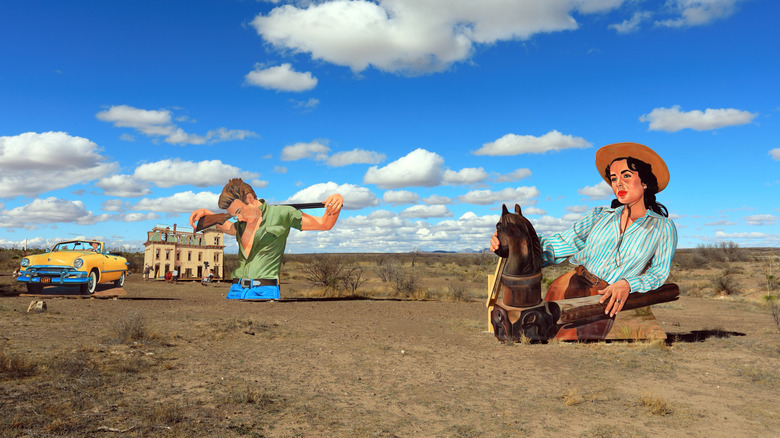
West of Marfa on U.S. 90, you'll continue to find the city's unique, artistic spirit fully on display. The "Giant Marfa Mural" — pun likely intended — pays homage to James Dean, Elizabeth Taylor, and Rock Hudson, who put Marfa on the map in 1955 when they filmed the Hollywood classic "Giant" here.
Get your creative juices flowing in Marfa
Even though Marfa is a small town of 1,600, its collection of culinary delights resembles its diverse local scene. In the one-stoplight downtown, you'll find locally prepared eclectic tastes of the world, including an Italian delicatessen at Bordo: Fine Italian goods; wild boar and escargot at Restaurant Cochineal; and home-cooked, authentic Mexican at a great value at Angel's Mexican Restaurant, complete with an artsy exterior. Marfa also has a wide range of funky bars and cafes, including Planet Marfa, with a school bus and teepee, and new-school Otherside, which is directly behind (in the same building) Glitch Gallery, a digital art studio.
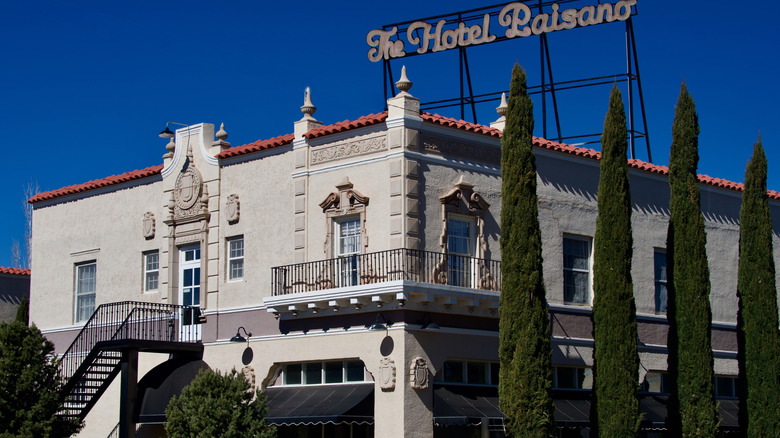
Film buffs won't want to miss visiting the iconic Hotel Paisano and staying where the cast of "Giant" stayed. Other unique, retro gems, including the Thunderbird and the Hotel Saint George, mix artful design and minimalism with modern comfort, and are within walking distance of the Judd Foundation and many galleries in town, including the collections housed at the Chinati Foundation.
While in Marfa, nature lovers won't want to miss heading just outside of town to see the wide-open, desolate hills that put the small Texas town on Hollywood's radar. Head east to the scenic Hancock Hill Trail, where a short trek leads to gorgeous sunrises or sunsets. You may want to stay out late to explore the night sky, or to see the city's head-scratching Marfa Lights. Venture a few hours south to Big Bend National Park, the main star of this part of the state. While you're along the border, don't miss the little-known Big Bend Ranch State Park that has similar iconic views, but fewer crowds.