
The New ID Rule US Citizens Need To Know For Visiting National Parks In 2026

With the new year came a new set of rules surrounding who pays what when entering the United States' national parks. Starting in 2026, an executive order from the White House has officially increased prices for foreign travelers planning to visit some of the United States' best national parks. These "non-resident fees" apply to those who are not U.S. residents or citizens, and require visitors to pay standard entry fees plus an additional $100 per person aged 16 or older. So far the new pricing system and identification rule impact 11 specific national parks: Acadia, Bryce Canyon, Everglades, Glacier, Grand Canyon, Grand Teton, Rocky Mountain, Sequoia & Kings Canyon, Yellowstone, Yosemite, and Zion.
This change also impacts the National Park Service's America the Beautiful Pass, raising the price from $80 to $250 for an annual pass for anyone who cannot show proof of U.S. citizenship or residency. Accepted forms of identification to prove this status range from a valid U.S. passport to a U.S. government-issued driver's license or ID, or a Permanent Resident card — commonly known as a green card.
However, there are already concerns about the massive price increase for foreign visitors, especially since the country already faces a dramatic decline in international tourism. Meanwhile, those who support the new rule say that increased fees from foreign visitors will ensure park officials can afford to conserve and protect the landscape for the future. Some supporters also argue that the fees are equivalent to those paid by foreigners in European countries to enter some attractions, such as the Louvre Museum in Paris. Nonetheless, this change in the national park ID rules could cause additional problems for citizens and foreigners alike, critics argue.
Longer lines and ID challenges could impact national park tourism
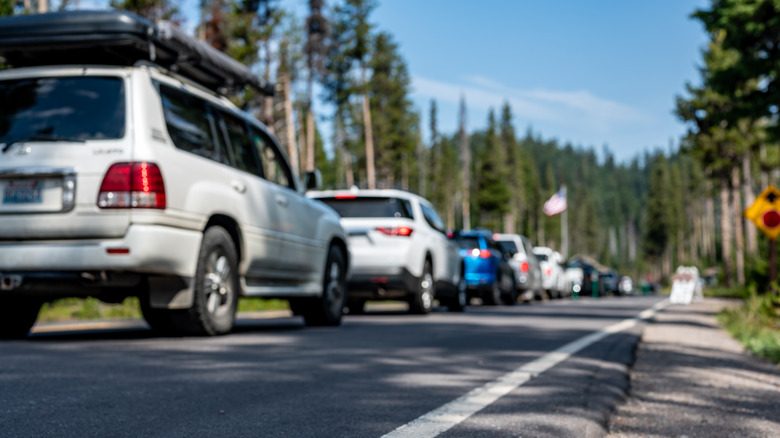
Since losing nearly 24% of its staff due to cuts from the federal government, park services are already working with fewer employees. Some are worried that adding additional duties — such as checking the identification residency status of every individual who enters a park — will cause backups at the gates. Given that park lines are already long due to the cuts, some say this added step will only delay entry and limit visitors' time spent inside the parks.
There are also concerns that requiring visitors to present identification at every gate will lead to unwanted monitoring and surveillance of citizens and non-citizens alike. In fact, immigrant advocacy groups maintain that the new policy is discriminatory and could sow fear among non-residents. Others say that the new system could create a database of personal information, essentially creating a surveillance system that poses risks to personal privacy. Several senators have also objected to the new rules and the speed with which they were implemented.