

You May Want To Think Twice Before Renting A Car In Europe, Per Rick Steves

From impressive architecture to historic museums to the Alpine peaks and Bavarian castles, there's something in Europe for everyone. Many travelers consider enjoying all the views and moments by cruising from one European destination to another in a rental car. And for some rural areas in Europe, where there's limited public transport, this works. However, having a rental car can be a problem if you're visiting a major city.
In a post titled "Thrifty 50 Travel Tips," Rick Steves plainly notes, "Cars are worthless and costly headaches in big cities." The transport infrastructure in Europe is quite different from that of the United States. While the U.S. is a heavily car-based society, most European cities are designed for easy walking, biking, and public transit. In fact, several European cities (such as Rome, Bruges, Florence, and Barcelona) have historic centers that were built long before the advent of cars. Such places typically have narrow cobblestone streets meant for pedestrians, plus crazy parking rules that make having a car stressful. Some cities even have tolls and parking fees that can be costlier than the rental itself. As Steves says, imagine coughing up $20 daily to store a car you're paying $40 a day for. Outlandish, isn't it? Even your hotel may charge extra fees just for having a car. Therefore, European cities are better explored via public transport: the bus, high-speed train, and metro services. On the other hand, you can use a rental car for a drive through the countryside or remote areas.
When a rental car makes sense — and how to maximize it
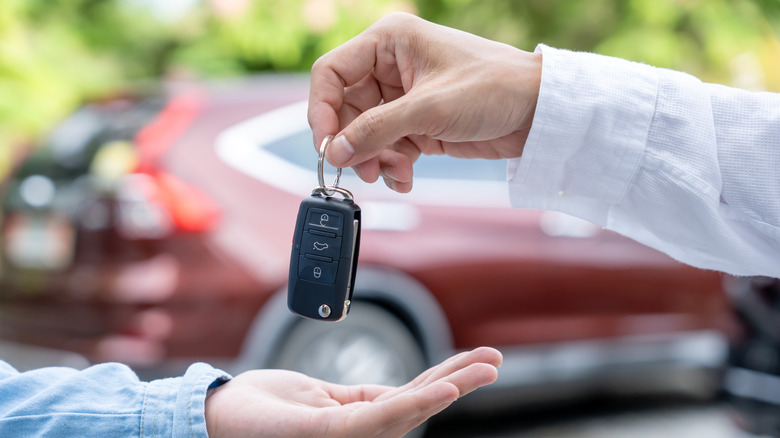
As noted earlier, rental cars are better suited to rural areas and best avoided in urban regions. Rick Steves clearly states in a video that the countryside is "where you're glad to have your own wheels." Of course, you wouldn't want to have rental and parking fees piling up while you're out sightseeing in a city. But then, knowing to reserve rental cars for smaller towns, and public transport for bigger cities, isn't enough. Understanding the right strategy and timing is the key here.
On this note, Steves suggests in his "Thrifty 50 Travel Tips" to "[p]ick up your rental car after the first big city and drop it off before the final big city of your trip." And what does this tell you? Make sure to start your trip in a big city (such as the "Paris of the East," Budapest), and avoid renting a car until you're ready to head into those rustic areas. In case you intend to go to another big city later, it's advisable to return the rental car before leaving the remote town. This helps to avoid parking fees and storage costs.
For a more improved experience during your visit, there are some other travel habits worth noting. For example, you should always confirm whether a city, such as those in Italy, has restricted traffic zones, as you could be fined for entering such zones without permission. When booking trains, do so early (weeks or even months ahead) to save some money. Most importantly, remember the saying "when in Rome, do as the Romans do." The best attitude you should adopt, according to Steves, is to remain humble and plan your trip based on the unique realities of European society, not based on what you're used to back home.