

Avoid This Embarrassing Chopstick Etiquette Mistake When Dining In Japan
Most of us were raised to have at least a few table manners. Keeping elbows off the table and chewing with our mouths closed are probably among the most remembered on the list. But when it comes to eating food from different cultures, there are some customs that might escape us.
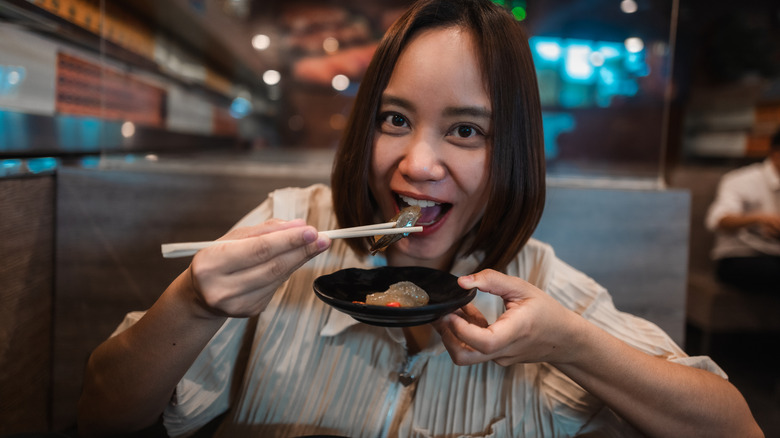
Take Japan, for example. While many of us feel quite accomplished when we master the use of chopsticks, we forget that there is more to using the utensil than simply picking up food. In fact, there are strict rules for using chopsticks properly — especially when dining in Japan. One of the most important is to never lick your chopsticks clean, as the behavior is considered rude and can look odd. Similarly, it's also important to remember to never suck on or chew on your chopsticks, no matter how delicious the meal was.
Chopstick etiquette runs deep, and using them improperly is just one item on a long list of things tourists should never do when visiting Japan. Although it may seem impossible to remember every rule, simply showing an effort is a step in the right direction — especially since politeness is such an important part of Japanese culture. So, don't treat your chopsticks like a popsicle stick on a summer's day. Instead, simply set them down when you're done eating — and yes, there's a proper way to do that, too.
Follow chopstick etiquette when dining in Japan
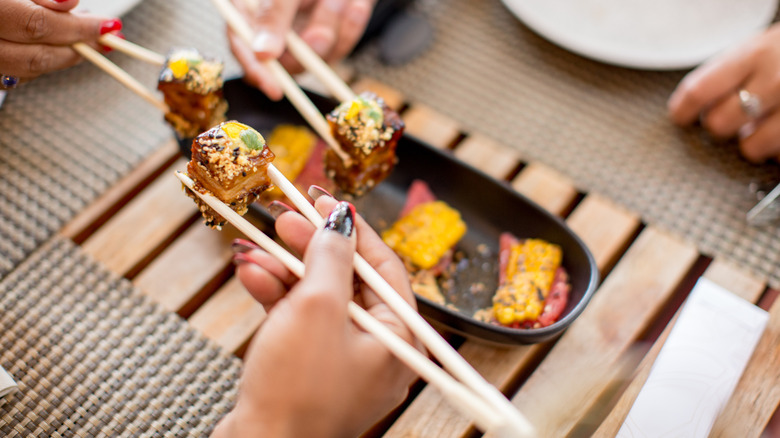
Rice, of course, is a cornerstone of Japanese cuisine and has been the primary staple of the country's diet for more than 2,000 years. It comes in many types and textures, but one thing remains constant: never, ever stand your chopsticks vertically in rice. What may seem amusing to tourists is actually a funeral rite that serves as an offering to the deceased in Japanese culture. Instead, when you're done using them, place the ends used for grabbing food on the chopstick rest near the plate. This keeps the food end of the chopsticks clean and ready for the next course. You also don't want to cross them on your plate, as it's deemed rude and often signifies that you are either done eating or displeased with your meal.
Food and dining are as much a part of Japanese culture as its best tourist attractions for first-time visitors. As such, respecting tradition will go a long way with the locals. For example, there are often small bowls of side dishes with a Japanese meal, and it may be tempting to use your chopsticks to slide the dish closer to you. Don't do it. It's considered rude. Instead, use your hands to slide the dish closer.
Finally, although many of us may want to show off our expertise with chopsticks, doing a few practice clicks before digging in is also considered a no-no in Japanese culture. Playing with your chopsticks is often seen as childlike, and it's essential to remember that these utensils are reserved for eating — not for puppet shows or impersonations of Arctic walruses. Similarly, it's also important to remember to use matching chopsticks. They come in pairs for a reason and using mismatched chopsticks is considered bad luck.
Japanese etiquette extends far beyond the dining table
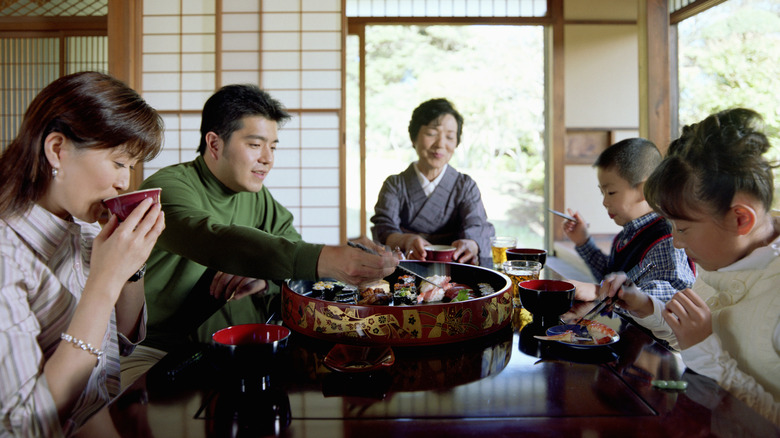
If the rules around chopstick use seem extensive, you're not wrong. Japanese culture is rooted in traditions that focus on bonding between people, which is one of the key reasons the destination is often considered among the safest countries in the world to visit. And understanding the many traditions centered around harmony and mutual respect can actually assist tourists far beyond the dining room. For example, if you make a mistake using your chopsticks, it's okay to apologize. Apologizing is actually appreciated in Japanese culture. Similarly, humility is also important in Japan, so admitting that you have not perfected something — such as chopstick use — is often seen as respectful.
Along with this, guests in Japan should know to wait to eat until others have begun. It's a show of respect to the elders in the family or to those who hold a higher position. Also in terms of showing respect, bowing, rather than shaking hands, is the proper way to greet others while in Japan, and make sure to never interrupt others while they are speaking — a custom that will likely feel familiar to travelers from other cultures. Ultimately, when it comes to being a good visitor while in Japan, common sense can go a long way — and so can genuine respect for, and any attempt to honor, local traditions, no matter where your travels take you.