

The 10 Most Spectacular And Unique Landmarks In US National Parks
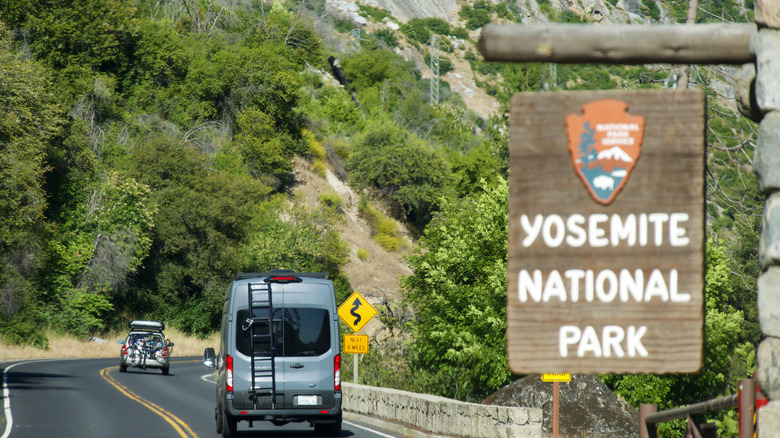
While many people think of Teddy Roosevelt as the catalyst behind America's national parks — and he certainly played a key role — the actual National Park Service was signed into existence in 1916 by President Woodrow Wilson. For well over 100 years, the nation's incredible parks have been delighting visitors. Within a single country, travelers can move from glacial mountain ranges to active volcanoes, and from ancient desert canyons to misty forests and wild Atlantic coastlines. Few nations in the world offer such an extreme differential of geological and scenic variety, all preserved within protected landscapes that allow visitors to experience nature at its most untouched. In short, there are many reasons to love America's National Park System!
In this guide, we'll spotlight 10 of the most spectacular and unique landmarks found inside U.S. National Parks. We'll travel from coast to coast, plus Alaska and Hawai'i, so no matter where you plan to roam, you'll be covered. Each of these places defines the character of its park and leaves an indelible impression on everyone who visits. These are not just famous sights, but unforgettable natural icons that capture the scale, beauty, and raw power of the American landscape.
Half Dome (Yosemite National Park, California)
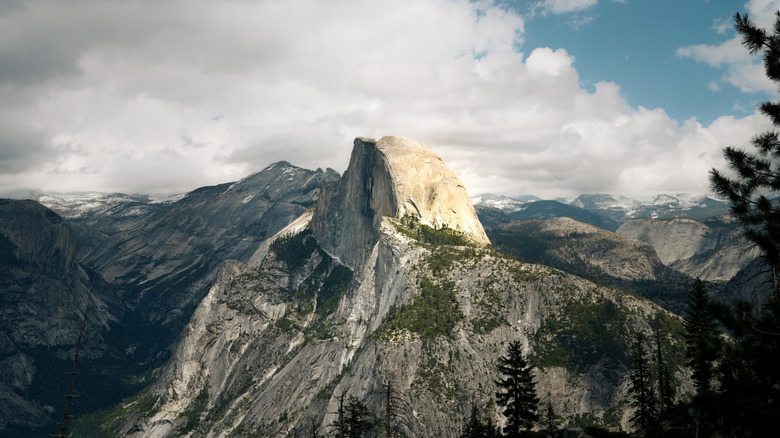
As one of the top tourist hot spots in California, Yosemite National Park is a must-visit destination for travelers who find themselves in the Golden State. And, within the park, perhaps there is no landmark as instantly recognizable as Half Dome. This monumental granite monolith stands 4,737 feet above Yosemite Valley. Its unique shape, a smooth face and curved back, make it appear split in half (hence its name), and it has long been an icon of the American wilderness. The first successful ascent to Half Dome's summit occurred in 1875. Mountaineer George Anderson reached the peak, cementing his name in the history books. Since then, summiting Half Dome has been a bucket-list experience for hikers and climbers.
The Half Dome hike, however, is not for the faint of heart. This is a full-day, 14- to 17-mile trek that takes most hikers a minimum of 12 hours to complete. And, even for those who have conditioned themselves for the hike, the altitude gain of 4,800 feet can be a challenge. Nonetheless, for those who are willing to make the trip, Half Dome's summit — which has been accessible via its famous, permit-required cable system since 1919 — offers incredible, once-in-a-lifetime views. There are also plenty of landmarks along the trail, including the beautiful Vernal Fall waterfall area. For those who want to take photos of Half Dome without climbing it, Glacier Point offers a stunning view and can be reached by foot, car, or bus.
The Grand Canyon (Grand Canyon National Park, Arizona)
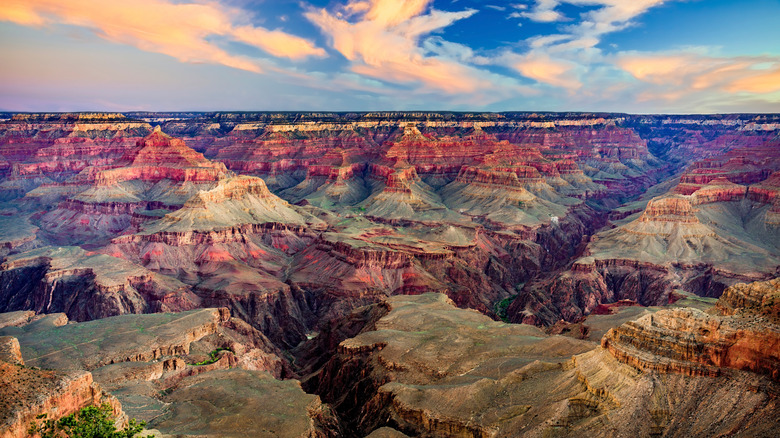
There are impressive landscapes, and then there's the Grand Canyon. This American landmark is in a league of its own thanks to its sheer size, scale, and color. The spectacular gorge was formed by the flow of the Colorado River over the course of millions of years. At 277 miles long and 18.6 miles wide at its widest point, the Grand Canyon attracts between four and five million visitors every year. It's easy to see why. In addition to its colossal scale, the walls of the canyon tell a fascinating geological story. Each stratum represents a specific chapter of the Earth's history over nearly 2 billion years. The stripes of red, orange, gold, and rust that give the Grand Canyon its distinctive appearance also help scientists understand how the landscape has changed over time, and how old the ravine itself really is.
Among the best viewpoints of the Grand Canyon are Grandview Point, the Desert View Watchtower (a testament to architect Mary Colter's passion for traditional Pueblo design), and the Toroweap Overlook, which is part of the park's Tuweep area, where most guests are required to obtain advance permits before entering or filming. One of the park's most iconic and immersive excursions is a mule ride into the chasm with the help of an experienced guide. Riders must be at 9 nine years old, and National Park authorities recommend booking about 15 months in advance. For those who want to experience the majesty of the Grand Canyon for more than one day, the El Tovar Hotel is a fantastic choice. This legendary lodging has played host to Sir Paul McCartney, President Bill Clinton, Albert Einstein, and even Teddy Roosevelt himself.
Old Faithful (Yellowstone National Park, Wyoming)
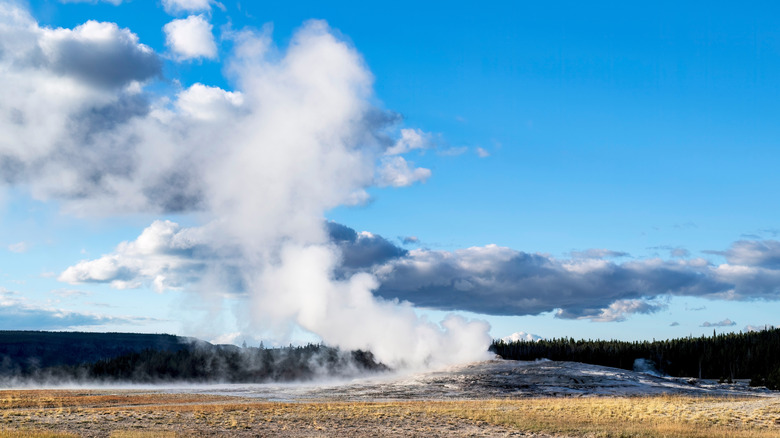
Even if travelers only have one day in Yellowstone National Park, Old Faithful is high on the list of things to see. This world-famous geyser earned its name during an 1870 expedition, when explorers noticed it erupting with remarkable regularity. Geysers do not typically erupt on a predictable schedule. The fact that Old Faithful's eruptions have only shifted by about half an hour over a 30-year period makes it extremely unique. However, it is worth noting that the geyser does not erupt at the exact same time every day. That said, National Park authorities can predict its approximate eruption times with about 90% accuracy. While eruptions can reach a maximum height of 180 feet, the average is about 50 feet shorter.
Watching Old Faithful erupt is a bucket list experience for many nature lovers. And one of the best places to watch it is from the Old Faithful Inn. Known as one of the world's largest and most iconic log structures, this lodge is located right beside the legendary geyser. While not all room types have a geyser view, guests need only step outside to get the perfect view of Old Faithful. The eruptions of all of Yellowstone's 500 geysers, including Old Faithful, are the product of uncontrollable geothermal volcanic activity under the Earth's surface. Although this particular geyser has erupted faithfully (no pun intended) for many years, it could eventually cease without warning.
Kuwohi/Clingmans Dome (Great Smoky Mountains National Park, North Carolina & Tennessee)
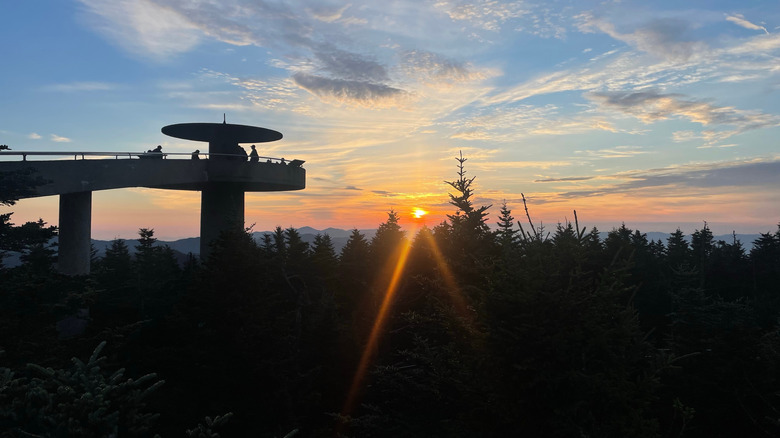
If the American West is known for stark deserts, red rocks, and granite mountains, the Great Smoky Mountains are their exact opposite. This part of the Appalachians is famed for misty ridgelines, deep hollows, and lush ancient forests that comprise about a quarter of Great Smoky Mountains National Park. The highest point here is Clingmans Dome, now called Kuwohi, a 6,643-foot rounded peak that offers a dramatic vantage point unlike anything the Rockies or Sierra Nevadas can deliver. The magic here is in the atmosphere. Throughout the one-mile round-trip hike to the top, Kuwohi Trail features thick forests and mossy boulders, giving it an ethereal, enchanted feel. Once hikers reach the summit, they can check out a 360-degree observation tower that sits above the treeline for an exceptional view of the surrounding landscape.
On a clear day, visitors can see as many as seven states — Alabama, Kentucky, Mississippi, North Carolina, Tennessee, Virginia, and South Carolina — and take incredible photos. One of the coolest features of Kuwohi is its hidden tunnel! Constructed by the Civilian Conservation Corps in the 1930s, today's explorers can still reach the tunnel by taking a short downhill hike that leads under the mountain trail's stone bridge. Additionally, Kuwohi is a notable landmark on the larger Appalachian Trail, a part of the country that has drawn hikers and outdoor enthusiasts for generations. To date, there are more than 21,000 known "2,000 milers," those who have traversed the entirety of the trail from Springer Mountain in Georgia to the peak of Baxter State Park's Katahdin Mountain in Maine.
Denali/Mt. McKinley (Denali National Park, Alaska)
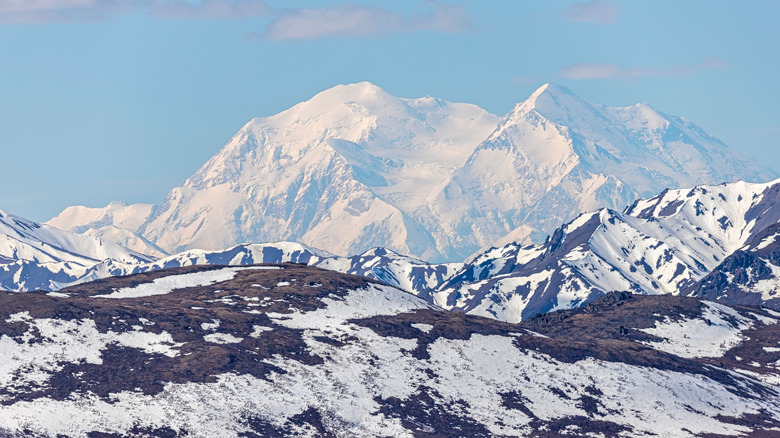
Rising above Alaska's rugged wilderness at an astounding 20,310 feet, Denali, which is also known as Mount McKinley, is the tallest peak in North America. It ranks third among the highest mountains on each continent, a group called the Seven Summits. What makes Denali so awe-inspiring isn't its sheer height, although that is incredible, but the fact that it is measured from near sea level. This gives the mountain one of the greatest vertical rises on Earth — it is about 6,000 feet higher than Mount Everest's vertical rise. Of the approximately 1,200 climbers who attempt to reach Denali's peak each year, around 600 actually succeed. It is a dangerous ascent that should not be taken lightly; people have become seriously injured or even died attempting to scale this mountain.
Fortunately, there are several less intense ways to experience both the mountain itself and the larger Denali National Park, a wild, remote landscape comprised of taiga, tundra, glaciers, rivers, and subarctic forests. One of the most popular ways to see the sights here is on a bus tour. There are various tour options, almost all of which start at the single road that enters Denali National Park. Narrated bus tours, including the Natural Wilderness Tour and the Tundra Wildlife Tour, last between four-and-a-half and five-and-a-half hours. Denali is home to a wide range of wildlife, from grizzly bears and moose to horned Dall sheep and a large population of wolves. There are also non-narrated transit bus rides that are intended purely for moving from place to place within this 6-million-acre National Park. For more adventurous travelers in The Last Frontier, guided trips with built-in excursions -– like those offered by Adventures by Disney -– can be an excellent option. This vacation, in particular, affords guests the option to stay at the incredible Grande Denali Lodge.
The Narrows (Zion National Park, Utah)
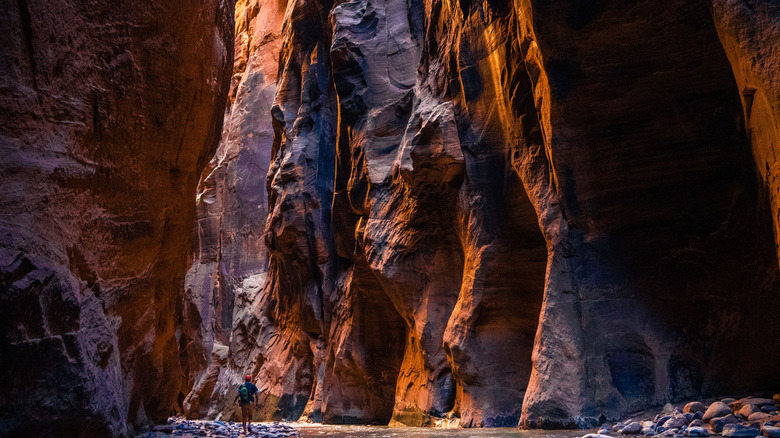
For hikers and photography enthusiasts alike, The Narrows in Zion National Park offers an experience that feels essentially extraterrestrial. Looking more like it should be on Tatooine than Earth, this natural "hallway" of huge sandstone walls stands 1,500 feet tall, but only about 25 feet wide on average, creating a unique visual effect. Utah's Virgin River winds its way between the walls, leaving no space for an actual hiking trail. Unlike a conventional hike up a mountain or through a forest, this adventure sends visitors wading through the water. At any given moment during the trek, the depth can go from foot-deep to waist-deep, so it's important to be hyper-aware of one's surroundings. The Narrows begins in Zion Canyon and is, at the start, one of the best beginner hikes in the national parks. However, the trail through the slot canyon becomes significantly more challenging.
Hikers should be prepared with proper footwear, trekking poles, and snacks and first aid supplies in waterproof bags. During flash floods, which are especially common in The Narrows during summer and fall, severe injury or death can occur as the water level rises quickly, surging as high as 12 feet. Due to the layout of this unique formation, there is nowhere to escape from flooding in most sections of the 7.5-mile trail. Zion National Park has become an incredibly popular destination, due in part to The Narrows being a bucket list hike for many people. About 5 million people a year have come here in recent years to enjoy everything Zion has to offer. After dark, when hiking trails are closed, stargazing is another popular activity for visitors. For those who wish to stay overnight, the Zion Lodge offers several room types.
Crater Lake (Crater Lake National Park, Oregon)
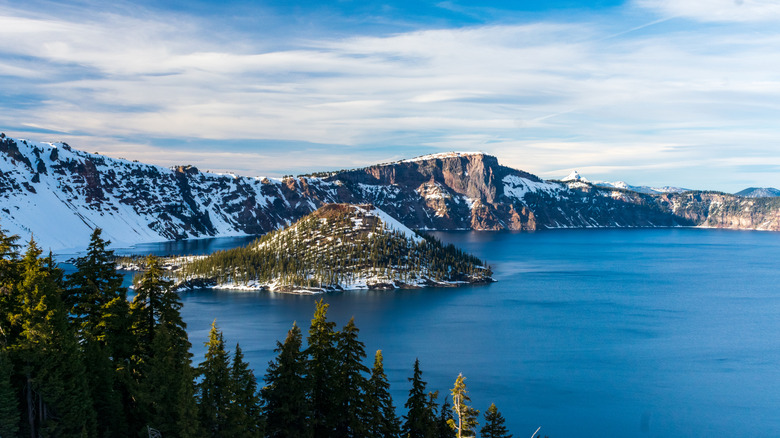
Crater Lake is among the single most mesmerizing natural wonders in the American National Park system. Formed roughly 7,700 years ago when the Mount Mazama volcano collapsed, the lake holds some important distinctions: it is the deepest lake in the nation, with an official depth of 1,943 feet; it is one of the clearest, purest lakes on Earth, and, by some assessments, may hold the record for optical clarity. It is also the United States' snowiest lake, clocking about 43 feet of snow every year. Due to this, snowshoeing is an unsurprisingly popular activity for visitors. The lake is also known for its brilliant blue color, which is a direct result of its purity and massive size. The more molecules of water in a lake, and the purer they are, the more they reflect blue light. Crater Lake is filled with 4.6 trillion gallons of extremely pure water, so simply do the math!
There are two islands on Crater Lake. Wizard Island, a 763-foot-tall volcanic cinder cone, is largely submerged, but tourists can easily see the top portion that is visible above the waterline. Some local boat tours afford guests the opportunity to spend several hours exploring Wizard Island, engaging in hiking, fishing, and more. Phantom Ship, the other island, is a rocky landmark that resembles a petrified pirate ship, hence its moniker. The Phantom Ship Overlook offers an exceptional view of this rock formation, especially for those who want to take photos. Other great viewpoints at Crater Lake include watching the sunrise at Rim Village and seeing the famous panoramic views from Sinnott Memorial Overlook. For those who want to spend a few days at Crater Lake National Park, the Crater Lake Lodge has provided lodging for travelers since 1915.
Cadillac Mountain (Acadia National Park, Maine)
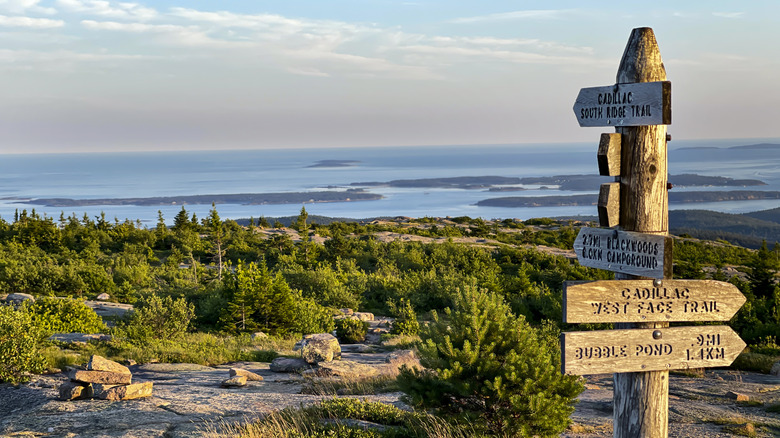
For many visitors to Maine's Acadia National Park, Cadillac Mountain is the highlight. From October 7 to March 6 every year, this landmark offers a one-of-a-kind American natural experience. It is literally the first place in the entire United States to see the sunrise, which has made it an iconic destination for early risers and photographers. As one might expect, it is wise to arrive early to see the sunrise, as this is an unbelievably popular activity. However, Cadillac offers much more than its famous early mornings. It's a place where visitors have the chance to stand at the 1,530-foot summit and watch the wild Atlantic Ocean below. The duality of being so high in the air while looking at the horizon over the water is dramatic in the best way.
One of the most popular ways to reach the top of Cadillac Mountain is via the South Ridge trail. This 7-mile hike is among the longest in Acadia National Park. Hikers can also reach the peak by taking the shorter, four-and-a-half-mile North Ridge pathway. Those who plan to attempt any summit hike should remain aware of their surroundings at all times. Acadia is subject to early sunsets in the fall, winter, and spring, which can make it easier to get lost or suffer injury. However, while it might seem counterintuitive to book a trip to the North Atlantic coast in the offseason, winter is actually one of the best times of year to check out Acadia National Park. The wildlife sightings are often unparalleled due to the lack of crowds, and the entire park takes on an ethereal, preternaturally calm quality.
Badlands Pinnacles (Badlands National Park, South Dakota)
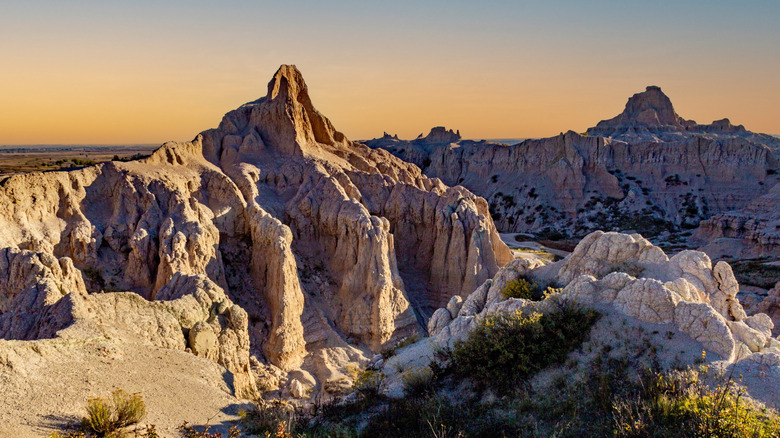
The Badlands Pinnacles in Badlands National Park showcase layers of sharply eroded rock that form jagged spires and ridges, forming an alien-looking tableau that wildly contrasts with the green plains that surround it. It is a place that truly has to be seen to be believed. The Badlands are one of America's most underrated National Parks largely because its surreal landscape often catches visitors off guard. The formations here were crafted by nature over about 75 million years, and each one survives for approximately one million years, according to official data. There are multiple trails here, including the Window and Door trails, which are both under one mile. The 10-mile Castle trail offers a longer excursion for more experienced hikers. For those who prefer to drive rather than hike through this one-of-a-kind landscape, the Badlands Loop Road offers numerous pull-offs and photo opportunities.
As we alluded to previously, what makes the Badlands truly distinctive is its juxtaposition of rocky, red, and orange terrain alongside green prairie grass. Bison, bighorn sheep, prairie dogs, and pronghorn, notable for being North America's fastest creature, roam freely, offering exceptional wildlife viewing opportunities. There is limited lodging available near the Badlands, with the only in-park hotel being Cedar Pass Lodge. A campground and RV park are also available. Another option is Hansen Inn & Cabins, a nearby local hotel in the town of Wall, South Dakota. Staying overnight is a great decision, since the Badlands offer absolutely breathtaking sunset and sunrise views for those willing to brave its rugged terrain.
Haleakalā Crater (Haleakalā / Hawaiʻi National Parks, Hawaii)
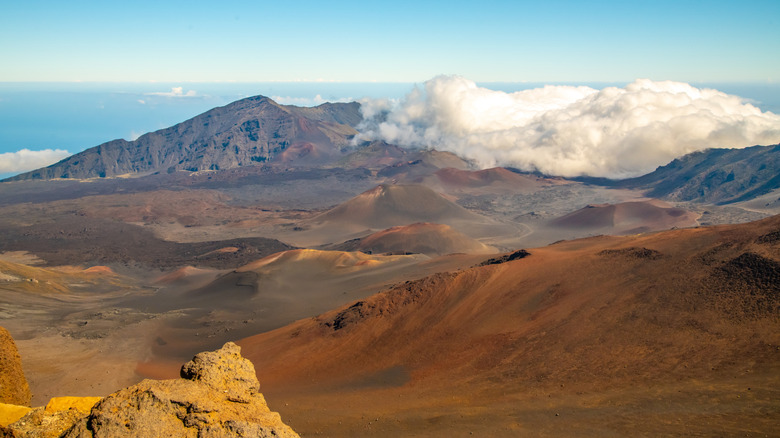
Haleakalā Crater offers one of the most stunning landscapes found anywhere in the U.S. National Park system. The mountain where the crater lies is located at 10,023 feet above sea level on the island of Maui. This massive shield volcano is actually the world's third-tallest mountain; it's simply that the majority of it is located underwater. The crater itself is astounding, with a width of seven miles. The colors here are incredible, with fourteen volcanic cinder cones in red, rust, and charcoal dotting the landscape. One of Haleakalā's most famous experiences is sunrise at the summit. It's so popular, in fact, that guests must have a pre-existing reservation in order to enter Haleakalā National Park between 3 a.m. and 7 a.m. Reservations can be made online as many as 60 days out.
For those who want to hike beyond the summit, Haleakalā offers hiking trails that wind directly into the crater. The Sliding Sands trail is a great, if relatively advanced, choice. As they descend a total of 2,500 feet, hikers who choose to brave this 11.2-mile route will see the mountain's otherworldly volcanic landscape up close. Rare native plants, incredible lava formations, and (almost) complete silence give the crater area a rather spiritual, existential quality. Unlike many national park landmarks that impress visitors via sheer size, Haleakalā almost transports travelers to another plane of existence entirely. Ironic, since it's located on an island named after a Hawaiian demigod, and a must-see for any American adventurer.
Methodology
This guide heavily utilized official National Park Service websites for each of the 10 national parks spotlighted here. Other government sites, like the United States Geological Survey, also played a role. Additionally, high-authority travel sites and publications like "Travel + Leisure," "National Geographic," and assisted in pulling details for various sites and landmarks.