

5 Stunning US National Parks With The Least Tourist Crowds During Winter
Millions of visitors from across the United States and around the world trek to America's national parks, one-of-a-kind gems that showcase some of the best natural scenery and wildlife in the country. Whether it's due to social media, a growing passion for the great outdoors, or both, interest in America's national parks is booming. In 2024, 28 parks across the entire National Park Service (NPS) posted record numbers of visitors, making it harder to find elbow room to enjoy the scenery without the crowds. Despite the boom in interest, even some of the most crowded national parks have quiet seasons, too, where you can marvel in awe without being in earshot of crowds. We've analyzed data from the National Park Service and selected five stunning parks with fewer crowds during the winter. They are: Yellowstone National Park, Theodore Roosevelt National Park, Gateway Arch National Park, Arches National Park, and Dry Tortugas National Park.
For this piece, we defined winter as being from November through February, longer than the meteorological definition of winter for the United States, and used NPS statistics from 2024 to determine which parks are least crowded in the winter. Some national parks, like Joshua Tree and Saguaro National Park, have fewer visitors overall than more popular national parks; they were not included, however, as they their busiest times of year coincide with the winter months. For reference, during this time period, Joshua Tree saw 39% of its annual visitors, and 42% visited Saguaro.
Yellowstone National Park
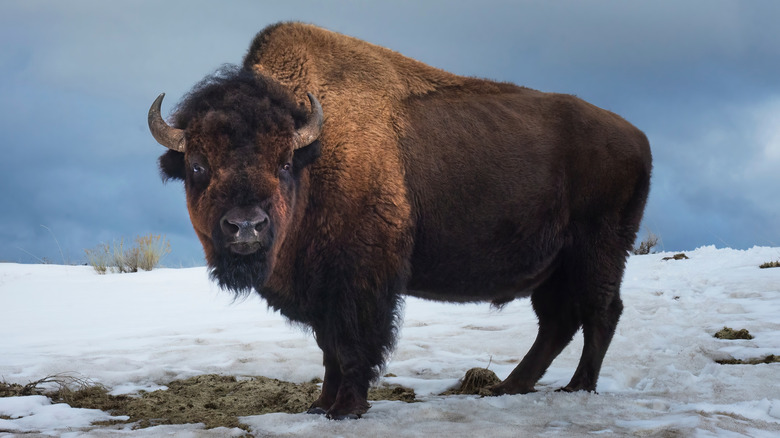
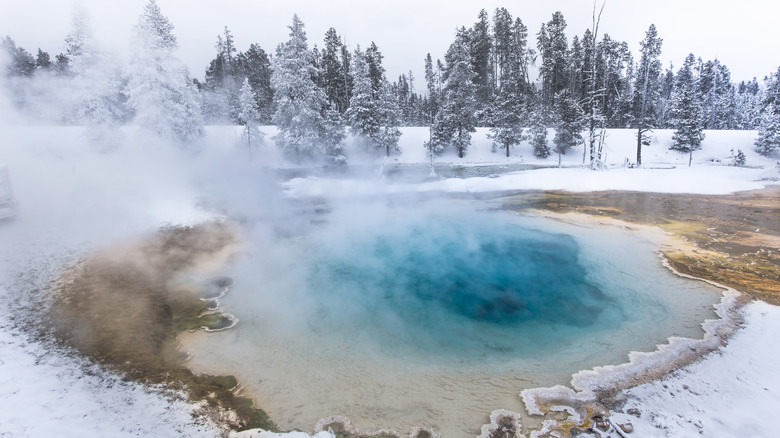
You may not be surprised that the world's first national park is at the top of the list. However, you may be surprised to learn that only roughly 3% of Yellowstone's total 4,744,353 visitors made the trek south from Livingston, Yellowstone's original gateway, to the park's north entrance, the only road into the park during the winter months. While the route into Yellowstone is maintained for public access, you'll have to trade your car for a snowcoach or snowmobile ride to access the splendid, snowy 2.2 million-acre natural paradise. Throughout the winter, two toasty lodges remain open, and guided tours run daily across the snowy landscapes to both the Grand Canyon of the Yellowstone and to Old Faithful, as do winter-only experiences such as backcountry winter camping and guided avalanche safety courses.
If you're visiting to see bison or elk in their natural habitat, and are looking for a bit of adventure, opt for a cross-country ski or snowshoe tour. Summer roads clogged with vehicles are transformed into over 150 miles of snowy trails to explore the winter wonderland. Though their herds are significantly smaller during the winter, bison are still actively searching for food in the winter months around Lamar Valley, Mammoth Hot Springs, and Old Faithful. If you're sold, these are just a few of the reasons Yellowstone is the best national park to visit during winter.
Theodore Roosevelt National Park
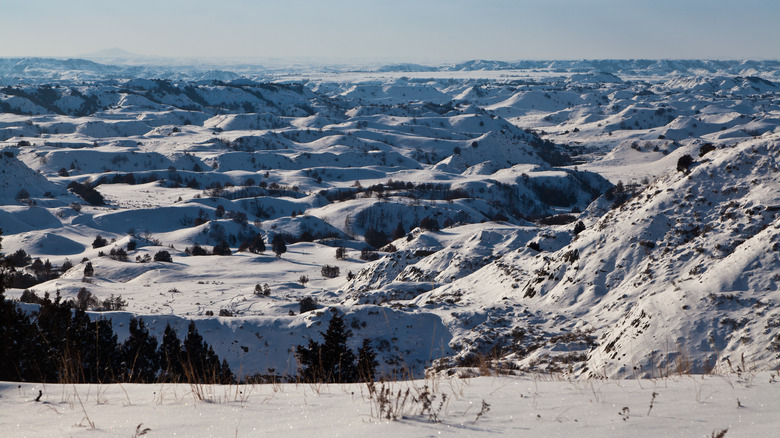
Crank up your heater amidst the bitter winter cold of North Dakota and be rewarded with a unique winter safari that few of Theodore Roosevelt National Park's visitors have experienced. Despite remaining open, only about 3% of the total visitors to Theodore Roosevelt National Park visit during the winter months. During this time, visitors can experience a contrast of wide blue skies and cliffs frosted with snow above the Little Missouri River, with wild horses and bison roaming. In the cold winters, the park cares for hundreds of bison that meander through its North and South Units.
Despite having only 732,951 visitors in 2024, Theodore Roosevelt National Park is a must-visit destination for 2026, according to National Geographic. At the end of November 2025, the South Unit Scenic Loop was repaired, fully reopening the entire 48-mile scenic route to vehicle traffic. This road, along with the North Unit's 28-mile scenic route, leads to miles of stunning views of canyons, buttes, and hoodoos. Both roads are generally open in the winter, though check the road conditions on the national park's website before setting out, and use a vehicle with four-wheel drive. Afterward, you'll find the nearby gateway town of Medora is also relatively quiet compared to in the summer, though the Badlands Motel and the Rough Riders Hotel remain open.
Visitors who don't have time for a full drive around the park can pop into the Painted Canyon Overlook at the visitor center, just off of I-94. Unlike the other two sections, the Painted Canyon overlook and visitor center are free to visit and a great place to stretch while taking in some of the state's most scenic views – provided there isn't a raging blizzard.
Gateway Arch National Park
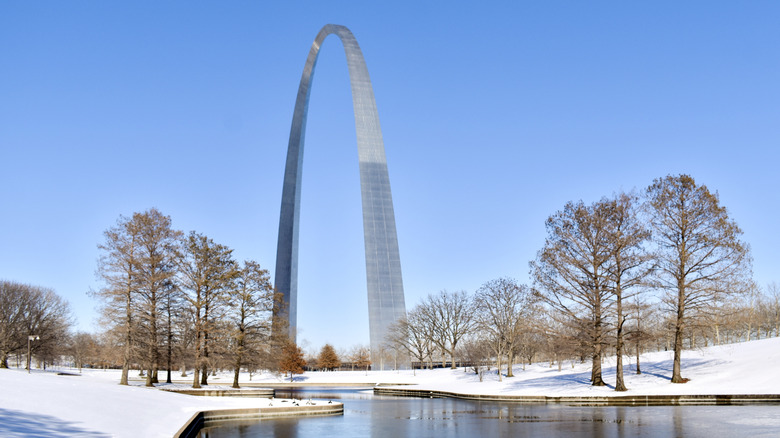
National Parks are known for breathtaking views and incredible marvels. While most national parks put Mother Nature front and center, one of the only national parks in a major city in the United States highlights engineering, architecture, and history instead. In 2024, over 2.5 million visitors stood under the iconic Gateway Arch west of the Mississippi in St. Louis, though just 15% came in the winter months and generally had shorter security lines before hopping on the ingenious tram system to the top of the 630-foot arch. On a snowy day, you'll see panoramic, 30-mile-long picturesque views of the Mississippi River and St. Louis.
While the arch is the centerpiece of Gateway Arch National Park, explorers of the past won't want to miss visiting the historic Old Courthouse, an important landmark on the Civil Rights Trail, as well as the free Museum Under the Gateway Arch telling the tale of westward expansion, from St. Louis to the Pacific. Though it's too cold for riverboat cruises, it's never too cold for Italian food. If you're hungry for an authentic taste of Italy or want to try one of the most unique types of pizza in the country, don't miss taking a quick drive to The Hill.
Arches National Park

If you've seen a Utah license plate, you've seen Arches National Park. While the dry Delicate Arch proudly stands out on the front or back of a vehicle, a dusting of snow on the red rocks makes the southwestern scene pop and, surprisingly, attracts fewer visitors. If you're looking to see the Delicate Arch or the park's other 2,000-plus arches and works of natural art without the crowds and hours of lines, visit during the offseason winter months. In 2024, just 14% of visitors explored Arches during this time. Apart from New Year's and Presidents' Day, Arches averages fewer than 700 cars per day, compared to peak periods when there are more cars than parking spaces, from Easter through mid-October.
During the winters, the Arches Visitor Center remains open (apart from Christmas); however, you'll have to explore on your own. If you are making the trek to Delicate Arch, or to the Fiery Furnace, a bizarre, one-of-a-kind natural maze, dress warm and be careful, as the sandstone can be slippery with just a bit of snow or ice on the ground. Visitors wanting to camp and explore the starry winter skies at night will also have better luck, as the popular Devils Garden Campground is reservation-free during the winter months. The park recommends campers download the Recreation.gov app to make payment easier in the offseason.
Dry Tortugas National Park
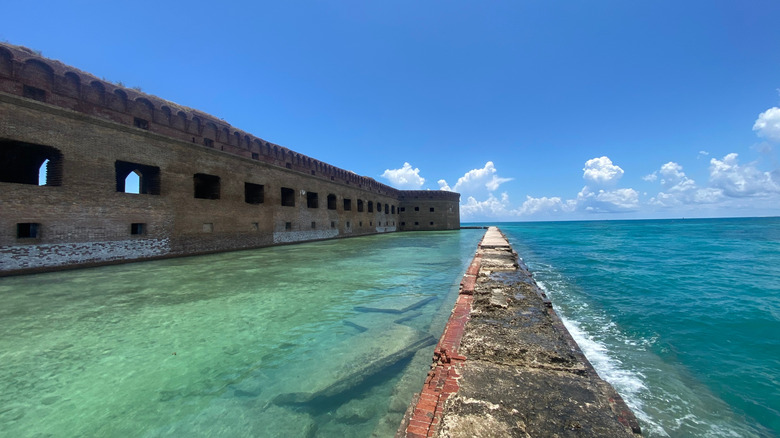
While winter is peak season for Florida's national parks, the state's little-visited Dry Tortugas National Park in the southwestern Florida Keys is a perfect place to escape from Old Man Winter or hordes of tourists at the state's theme parks. On average, Dry Tortugas hosted roughly 7,200 visitors per month during the winter months, with all visitors coming by boat or seaplane. If you're making the trip to the islands from Key West, you'll likely hop on the Yankee Ferry across the majestic blue waters of the Gulf. The ferry sells out in advance (most dates are already sold out for the coming months at the time of this writing), so make sure to book early.
Once you arrive at Dry Tortugas, you'll find a quiet, relaxing getaway from any sort of hustle and bustle. Whether you stroll through unfinished Fort Jefferson, dip your toes into the white-sand beaches, or explore the pristine, clear waters of the world's third-largest reef ecosystem with a mask and snorkel or kayak, you'll need to be prepared for primitive conditions. There are no services and no public restrooms at Dry Tortugas, meaning that you will have to bring everything you need, including all food, water, and shelter, if you plan to sleep on the island. Visitors who would like to rent kayaks or snorkels will have to do so in Key West and haul them on the boat (and have them ready for departure early in the morning). Also, be sure to book space for your watercraft, as there is only enough room for three on board.
Methodology
To create this list, we used official data from the National Park Service (including this stats tool) and built queries for the most recent visitor data (from 2024, at the time of writing). We chose the national parks for this list based on two factors: having fewer visitors relative to other national parks during the winter off-peak season, and having a clear difference in the number of visitors between peak and low-winter visitation times. Moreover, other factors, including access to major landmarks and popular recreation activities during the winter months, were also strongly considered. Additional information about winter-specific trips was gathered from travel websites and blogs, as well as the official websites of each national park.