

The World's First National Park Is A Mesmerizing Destination For Nature Lovers
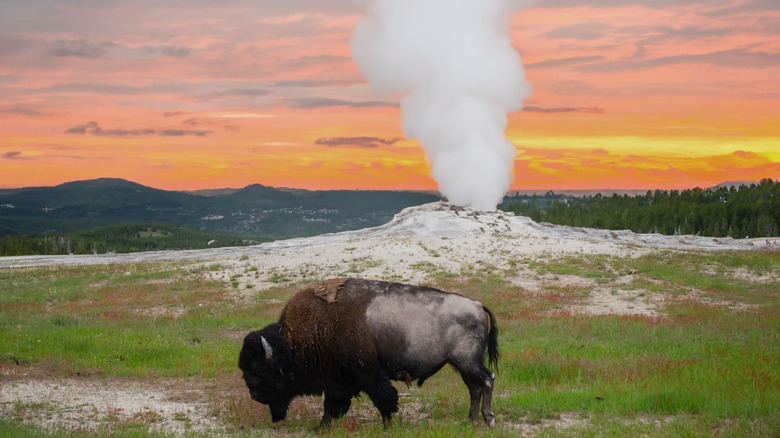
For more than 150 years, outdoor enthusiasts and adventurists have explored the bounty of natural wonders within the world's first national park. And with more than 2.2 million acres of intact ecosystem to discover, there's no shortage of beauty to digest. Yellowstone National Park continues to provide spectacular views, observation points from which visitors can observe wild animals, and incredible sites showcasing thermodynamic activity spouting up through its surfaces.
Covering portions of three states – Idaho, Wyoming, and Montana – Yellowstone provides year-round access to some of the United States' most spectacular nature. On average, over 4 million people visit this natural wonderland each year. One of its many highlights are the diverse animals that call the park home. Birds, amphibians, and reptiles are found throughout the park, and nearly 70 species of mammals wander through its wilderness. Among them are the threatened grizzly bear and Canadian lynx.
Of course, these animals are best viewed at a distance. The park recommends getting no closer than 25 yards from a bison or elk, for example, and staying at least 100 yards away from bears, wolves, and cougars. In fact, the Grizzly and Wolf Discovery Center near the park may be the best place to see these animals, and it's among the 12 must-see attractions to explore at Yellowstone.
Yellowstone's thermodynamics fueled its establishment
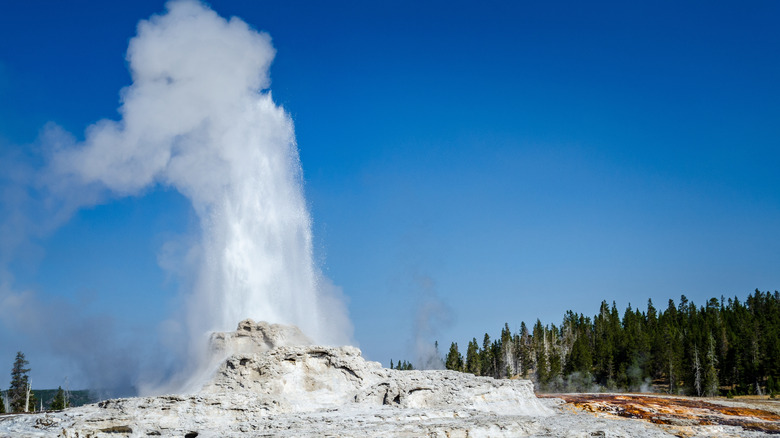
When the first white man wrote of the thermodynamic landscape of what we today call Yellowstone, many disbelieved the tales. In the early 1800s, John Colter wrote of "streams of sulfur" and springs that would "at times burst like a bomb," according to reports (via Sheridan Media). Colter's Hell, as many mockingly called it, was considered an unlikely location and an exaggeration by many. That changed, however, when more settlers made their way west and saw the incredible sites for themselves.
Old Faithful, possibly the most famous geyser in the park, tends to attract the most visitors from around the world. While it is one of the most predictable, with eruptions nearly every 30 minutes, it's just one of nearly 500 geysers in the park. These thermodynamic sites were crucial to Yellowstone becoming the world's first national park in 1872. Today, visitors can safely see the thermodynamic features themselves. The Norris Geyser Basin, for example, offers boardwalks to explore the park's hottest and oldest thermal area. Yellowstone Park also offers sweeping views of nature and is full of canyons and overlooks that are even more beautiful than the Grand Canyon. At nearly 20 miles long, the Grand Canyon of Yellowstone offers three spectacular waterfalls through a canyon formed by the Yellowstone River. It's Upper, Lower, and Crystal Falls all showcase impressive amounts of water pulsating over the rocks throughout the year. It's just one of many hiking destinations in the park, which offers more than 1,100 miles of hiking trails.
Different hikes showcase nature's diversity in Yellowstone
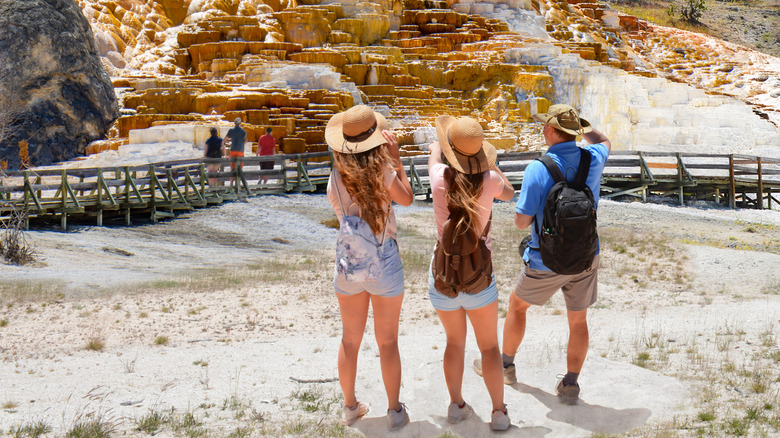
Whether you are looking for breathtaking views of canyons and rivers or to meander through petrified forests on your way to see beautiful clear lakes or geysers, Yellowstone has a trail to capture your imagination. Day hiking in the park does not require a permit, and many trails reach heights of at least 7,000 feet above sea level. One of the most popular hiking destinations in Yellowstone is to the top of Mount Washburn, which offers panoramic views from an elevation of 10,219 feet.
In the colder months, Yellowstone's trails provide opportunities for snowshoeing and cross-country skiing. Regardless of the time of year, its recommended visitors check current weather conditions before exploring the many areas of Yellowstone. And, if you decide to spend the night along your hiking route, consider what you should know before camping in Yellowstone National Park. If you prefer to sleep indoors, Yellowstone offers nine hotels and cabin facilities within its borders. Options are based on location and accommodation preference, and it's recommended to make reservations early.
There are five different entrances to Yellowstone National Park and more than 10 visitor centers and museums. The Yellowstone Regional Airport in Cody, Wyoming, is the closest airport to Yellowstone and provides connections to and from larger, international airports. Bozeman Yellowstone International Airport in Montana is also an option at 90 miles away from the park. The airport has rental car, shuttle, and rideshare options available to make reaching the nature provided by Yellowstone accessible.