

Americans Can Travel To These Countries Without A Visa In 2026

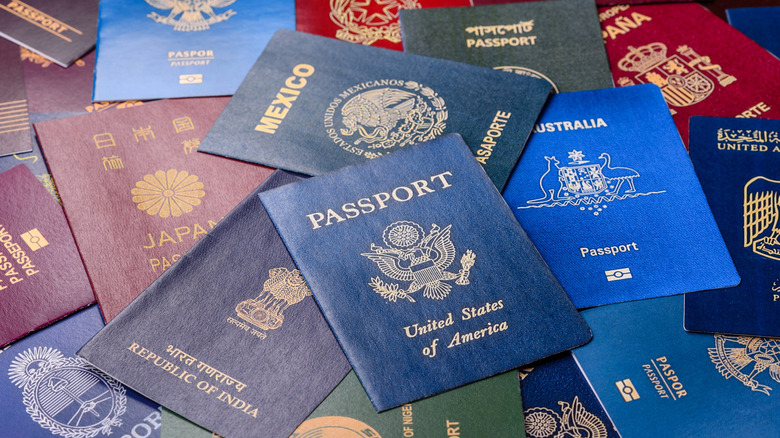
International travel can be complex, but there is one main document that almost everyone is familiar with, and that's the passport. This little booklet is the key to traveling outside of the United States, and the U.S. passport just happens to be one of the strongest there is, recently ranking No. 10 in the world and granting access to 179 destinations without the need of a visa (at the time of publication, according to the Henley Passport Index, which is updated monthly). And while this means that being crowned one of the 10 most powerful passports in the world is an achievement that can and has changed, your U.S. passport will continue to be instrumental in gaining access to countries that don't require a visa.
We aren't going to publish the exhaustive list here because the Henley Passport Index website will give you all of the 227 travel destinations it includes, accompanied by a check mark for visa-free access or an "X" for those countries that require more. But some of the places Americans can visit without applying for a visa beforehand include Japan, Egypt, Chile, Fiji, Morocco, Thailand, and Europe's Schengen Area. Even if your next vacation destination shows up on the visa-free list, that doesn't mean there aren't other requirements you need to be aware of. Read on to learn more about the power of your passport and new travel requirements that may be implemented in 2026.
Additional requirements in visa-free countries

Be sure to guard your passport carefully while traveling, as it's your gateway both to and from the United States. Moreover, pay careful attention to expiration dates, as several dozen countries require you to have a minimum number of months left. This is referred to officially as the six-month passport validity rule, and it includes countries like Brazil, Fiji, Thailand, and Venezuela. This is why it's good to know the best time to renew your passport, and the easiest way to do it.
Once you have a valid passport in hand with an expiration that's at least six months out, your work may still not be over. There are two other classifications to consider: the electronic travel authorization (ETA) and the visa on arrival (VOA). Australia, Israel, Kenya, New Zealand, and the U.K., among others, require an ETA, which is a digital travel document that must be completed online prior to travel, mentioned as part of the Rick Steves-approved checklist to always do before vacation. It automatically attaches to your passport, making traveling with additional documents unnecessary, and its main purpose is to simplify entry into the country requiring it by pre-screening visitors. This differs from a VOA, which simply means that although you will need a visa to enter the destination, you won't be applying for it beforehand. Countries like Cambodia, Egypt, Ethiopia, and the Maldives allow visitors to obtain a visa for entry at the airport, seaport, or land border crossing rather than applying ahead of time from a consulate or embassy. Due to the ease of obtaining these visas, the Henley Passport Index still categorizes countries requiring a VOA as having visa-free entry.
How long can you stay in a visa-free country?

So, you have your passport, and if necessary, you've obtained your ETA or are prepared to get your VOA when you arrive at your port of entry. This may mean you're good to go for a visit, but how long can you plan to rest your head at your new destination? As you may have guessed, the answer can vary greatly depending upon what country you're visiting. Some destinations are more strict than others, and unfortunately, not many are as lax as this Caribbean island where you don't even need a passport to retire.
In Europe's Schengen Area, which includes 29 countries such as Austria, Belgium, Iceland, Spain, and Switzerland, visa-free travelers can stay for up to 90 days during any 180-day period, and are permitted to leave and return the area, as long as they adhere to the 180-day limit. That being said, there are some countries that are more generous. Mexico, Canada, the U.K., and Costa Rica generally allow visitors to stay for up to 180 days, or approximately six months, making it ideal for those wanting to explore for an extended period of time. Albania will even allow you to stay for 365 days, or an entire year!
New European travel requirements for 2026
As of this writing, there are 30 destinations in Europe that will require a new travel authorization for visitors starting from the fourth quarter of 2026. Luckily, no changes are currently necessary, but those planning a trip for later this year should be aware that the European Commission plans to implement something called the European Travel Information and Authorisation System (ETIAS), which will require travelers from visa-exempt countries to not only apply but also pay for the ability to access participating countries like Austria, Denmark, Finland, and Italy.
This new requirement will apply to those traveling with a U.S. passport and will cost €20, or approximately $23. Much like the ETA we previously discussed, it will link to the purchaser's passport for up to three years, or until the passport expires – whichever occurs first. In line with the stay requirements currently associated with the Schengen Area, those who obtain the ETIAS travel authorization will be permitted to stay in participating countries for up to 90 days during any 180-day period.