

5 Popular Countries US Citizens Will Need A Visa To Visit In 2026
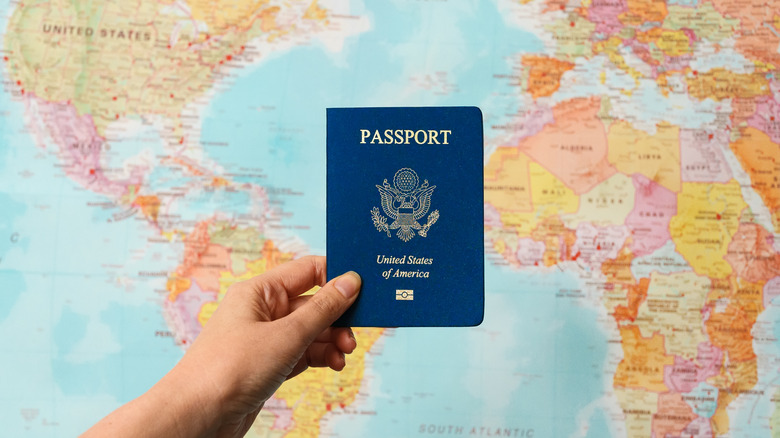
Great travel destinations offer incredible bang for your buck, delicious food, comfortable accommodation, and plenty to do. If your New Year's resolution involves planning the trip of a lifetime to some of the world's top destinations, this article will help you lay some of the groundwork to cut back on stress. Last year, Tripadvisor released its annual list of "must-visit destinations" chosen by travelers spanning all corners of the globe. Though the 2026 list has not been released yet, the site's recommended cities are gateways to discover a deeper sense of self, wellness, and going against the grain.
Though the U.S. passport is seen as a golden ticket for travel, allowing you to visit many countries without much hassle, it can't get you into every country in the world visa free. Over the last few years, the U.S. passport has slipped in the Henley Passport Index, which ranks passports based on visa-free travel access. Currently, the U.S. passport is not in the top 10 most powerful passports in the world, meaning that Americans will need to take more steps to visit foreign countries than in the past, such as obtaining a visa. In the past year, countries such as Brazil have added this requirement for Americans.
To help with this, we've compiled a list of five popular destinations that require tourist visas for U.S. citizens in 2026. They are: India, Vietnam, Indonesia, Nepal, and China. As you'll see in this article, not all visas are equal; some require significant planning in advance, while others need little more than filling out a few personal details and paying a fee. At the very least, when completing your application, you'll need your passport handy, a payment method, and a passport photo that meets the visa requirements to enter your destination.
India
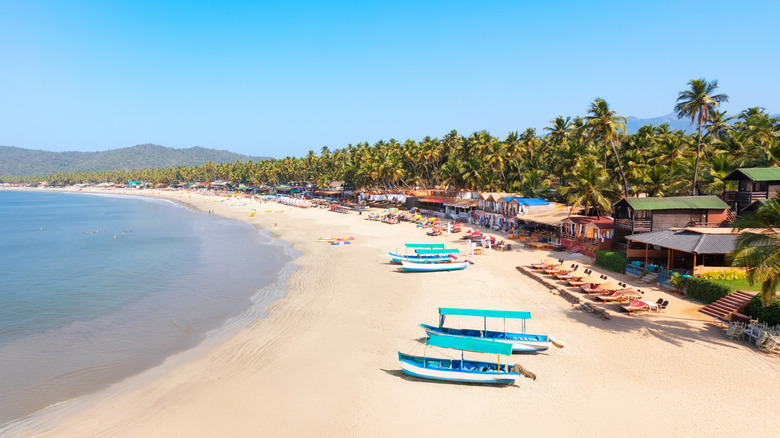
Whether you're planning to explore the megacities of the world's most populous country or trek through the majestic Himalayas, India is another country that requires visas in advance for most nationalities, including Americans. If you're traveling as a tourist for less than 60 days (including short stays for yoga retreats, cooking classes, or volunteering), your best option is to apply for an e-visa through the Indian Bureau of Immigration. The website and e-visa application are cumbersome, though not complicated, and most visas are processed quickly. After completing the application and paying approximately $41, you can receive your application results in a couple of days. I would also recommend, from experience, carrying at least one copy of your visa, as immigration officials and hotels may ask to see it at check-in.
Although the e-visa application requires you to select a port of entry, per the Indian High Commission in Malawi, your e-Visa is still valid if you enter through another city as long as it is a major port of entry. Major ports of entry in India include airports in well-known cities such as Mumbai and Delhi, as well as trendy Jaipur, and Kolkata. Travelers looking to visit India for longer, or who have ethnic origins from Pakistan, will have to take the visa application route through the nearest Indian consulate or embassy. Once you've received your visa and are all ready to go, there's one last step. Don't forget to submit your electronic arrival form before landing. This can be done on the e-visa website.
Vietnam

If you're looking for a rewarding trip for your wallet and palate, Vietnam is the perfect place. In fact, it was one of Anthony Bourdain's favorite food destinations worldwide. Though Americans will have to get a visa to travel to Vietnam, the e-visa process is fairly quick and easy. Typical processing times are between three and five business days. You won't need to provide flight information, but you will need to provide where you plan to enter, exit, and stay in Vietnam, and a timeframe of when you plan to visit. Single-entry visas cost $25, multiple-entry visas cost $50, and both are valid for up to 90 days.
Before starting your Vietnam e-visa application, take a moment to check the website's URL. Multiple fake visa website dupes have been set up to overcharge travelers or collect the personal information of applicants for future scams. The only website you should use is the official Vietnamese government website, which you will find here. Once you've received a result notification, log in to the website again to download your e-visa. Make sure you have a hard copy for the immigration officer upon arrival.
Indonesia
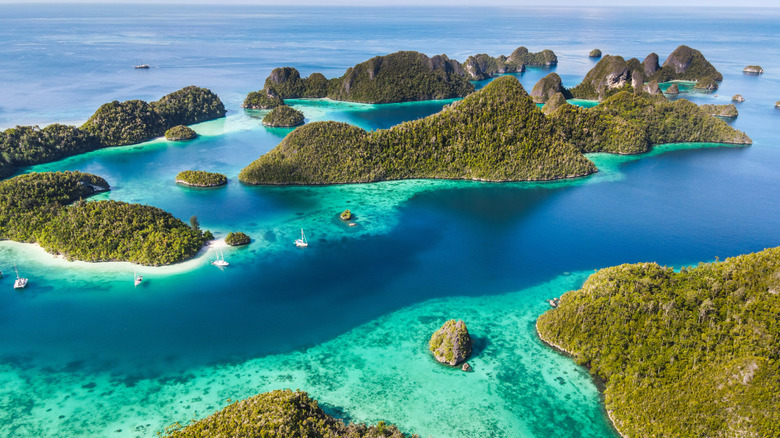
Despite being known as an overcrowded tourist destination, Bali still wins out as Tripadvisor's top cultural destination worldwide. It also takes the silver medal for overall top destinations in the world, according to the travel site. If you're looking to explore the "Island of the Gods," its uncrowded sister to the east, or any one of the other 17,000-plus culturally and naturally diverse islands in Indonesia, you'll need a visa. Indonesia used to be visa-free for Americans; however, that changed during COVID.
If you're planning to visit Indonesia, you have a couple of options to arrange your visa. You can apply for a tourist visa, valid for 30 days for 500,000 rupiah (approximately $35) by cash or a credit card on arrival, or opt for an e-visa before arrival. Applying online is recommended as it can save you time at the airport by allowing you to use the e-gates. If you plan to stay longer, a tourist visa on arrival can be extended one time; however, you can save yourself a trip to the immigration office and apply for a 60-day visa online. Whether you're applying for your visa at the airport or online, don't forget to complete your online customs form on the All Indonesia website. Be sure to save a photo of the QR code on your phone, as you'll need it when going through customs. Moreover, foreign travelers arriving in Bali will have to pay an additional 150,000 rupiah airport levy online or at the airport.
Nepal

Kathmandu, Nepal's affordable and bustling capital, stands a spot away from the top on the list of Tripadvisor's best solo travel destinations. Whether you're planning to explore, trek, or sightsee, you'll have to arrive in Nepal (likely at Tribhuvan International Airport) on a tourist visa. Nepal's Department of Immigration recommends that you fill out the visa on arrival form, available on the NepaliPort website, before arrival as it will save time. All tourist visas are multiple-entry and are valid for 15, 30, and 90 days, and cost $30, $50, or $125, respectively. Cash is the best option at the airport, though they do have ATMs at the airport to allow you to withdraw cash. You can also use a card, but card processing tends to take longer. Another option for Americans is a five-year, multiple-entry tourist visa that allows you to stay for 180 days annually and costs $160, though it has extra requirements, like proof of health insurance, having $10,000 in your bank account, and providing a police report. On top of immigration, be sure to check customs requirements and bring minimal jewelry made from precious metals on your trip, as only small amounts are allowed.
Even though many NGOs will help tourists volunteer in Nepal, according to the State Department, it is illegal on a tourist visa. To go through the proper channels, you'll have to get a Nepali work visa, which requires a lot of paperwork and coordination beforehand. Visitors looking to stay longer may be able to take advantage of a digital nomad visa in the near future, though the application procedure is unclear at this time.
China

Americans keen to witness the breathtaking mountains that inspired Avatar will have to get a visa to visit China. Getting a tourist visa for China (but not for Taiwan, Hong Kong, or Macau) requires time and effort. You'll have to complete an online application through the Chinese government's COVA portal and select the right consulate or the embassy based on your state of residence, then fill out the application completely, including documents showing proof of residence (though no plane ticket or detailed itinerary is required), and pay a nonrefundable fee of $140.
Once you've submitted the initial application, you'll have to submit your passport and any required documents for the physical visa sticker, either in person at a Chinese embassy or consulate or through an approved agency. Once you receive your visa, which is generally multiple-entry and valid for 10 years (even if you get a new passport), you or the agent will have to retrieve it after the allotted pickup date. Per the Chinese consulates in Los Angeles and San Francisco, fingerprints are currently not required for tourist visas; however, this may change in the future.
If this sounds like too much of a hassle or you're planning a last-minute trip, China does offer a 10-day visa-free international transit through the country, though with strict stipulations. You'll be able to visit only a specific city or province in China while there on a multi-country itinerary with a stop in China. For example, you can get visa free entrance to certain cities and provinces if you are planning a trip from San Francisco to Shanghai to Bangkok. If you aren't sure where to go in this large and complicated country, here is a map of China for your upcoming trip.