
The Biggest Mistakes You Should Avoid When Traveling Solo
As a solo traveler, there's a lot to keep in mind. What type of luggage do you need? What tools make it easier to get around on your own? How will you stay on a budget? Whether car camping for a few days or more or flying to distant locales, the amount of time and preparation needed for an organized, stress-free, safe, and — most importantly — enjoyable trip should never be underestimated. There's nothing more annoying than dragging too much luggage up and down stairs in a city you're unfamiliar with. And not much is more panic-inducing than dealing with pickpocketed items or accommodations that just feel "off."
Smart travelers know to take precautions against pickpockets and thieves in major tourist destinations, and you should always use your best judgment and read reviews carefully when booking a new place to stay. If it's your first time heading out on your own, remember to plan ahead and approach everything at a pace that's comfortable for you. Getting too bogged down with the "what ifs" can also dull a good trip, because we can't possibly control everything, and much of what makes travel so fundamentally rewarding comes from encountering the unexpected. Even for introverts, embracing the unfamiliar is one fascinating reason that solo travel can be life-changing. Of course, there are many things you can do — or not do — to increase your chances of a spectacular trip.
Not planning ahead or researching your destination
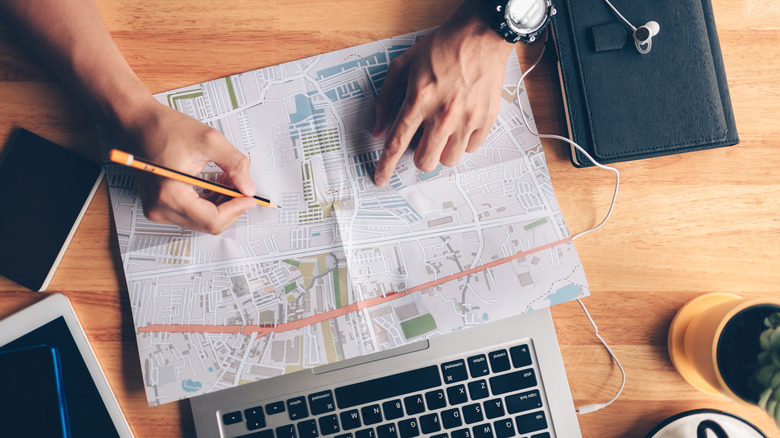
While there's some merit to traveling on the fly, so to speak, it's always a good idea to have some idea of the basics of where you're headed. How do you get around? What kind of money/cards do you need to have on hand? Are there cultural norms to be aware of? Not planning ahead or knowing some essentials about where you're going can lead to stress before you've even really started. While immersing yourself in the culture is one of the reasons to travel, it's a smart idea to know at least some crucial details about your destination well before you arrive.
Start with essential information like where the airport is located and how you'll get to your accommodations. This will introduce you to a range of transportation means, which could be diverse in a large city or sparse in a more remote area, thus requiring a bit more planning. If you're traveling to a country where you don't speak the language, brush up on a few useful words and phrases, or better yet, download a translation app on your phone. And when it comes to money, places like Sweden, a wildly unexpected European country that has the most islands of any country in the world, have moved almost completely to card transactions. Others, like Peru, still rely heavily on cash, especially small bills. Knowing this information ahead of time will save headaches down the road.
Arriving after dark

If you've never been to your destination before, arriving after dark can be a factor in terms of safety and, depending on the lateness of the hour, availability of services. Sometimes it's impossible to avoid flying in late at night, but with the above tip in mind about researching your destination, it's a really good idea to know your plan of action ahead of time so you're not wandering around in the dark trying to figure out where to be.
When we're talking about it being "dark," arriving at a busy train station in a big city in the early evening is quite a bit different than rolling into a remote area very late at night when you're not sure exactly where you're going. Book transportation that feels safest depending on the circumstances, and make sure to thoroughly check any taxi or rideshare driver credentials. Being able to track your route on Uber in real time, for example, can boost your confidence. If you have to arrive late at your accommodation, let your host know an estimated time that you plan to get there, as they'll be able to leave special instructions or potentially make sure someone is there to greet you after hours.
Don't let arriving after dark make you nervous. If you've done your research about your accommodations and the neighborhood you'll be in, your arrival should be smooth sailing. On a side note, getting to a new destination at night only to take in your first view of it in the morning is a particularly nice way to start the first day of a trip.
Choosing the wrong place to stay

There are so many accommodations that cater to different styles and budgets, so it's good to understand what you're getting into. A hostel can be social and cheap, but it might be loud and disruptive to a good night's sleep. It just takes one person in a 10-bunk room to saw logs so loud that it keeps everyone up. A hotel will be more expensive, but you're paying for more privacy and security. So how can you avoid picking the wrong place?
Firstly, it's good to know what you really need. If it's quiet, a private hotel room might be best. If you want to go out and meet people, and you don't mind being up late, a hostel may be the way to go. If it fits your budget, check into a vacation rental or a bed and breakfast, where you may choose to be in the company of other lodgers and probably meet your host face-to-face. A good tip is to check the area on Google Street View to get a sense of the neighborhood. The photos on the website might look nice, but is it a place you'll feel safe getting back and forth from?
Listings often give away more than you might think. Ask yourself if the photos look recent. Read the most recent reviews to see if any of them mention similar issues, and weigh whether any of those might be non-negotiable for you. That might be a hint that you should look elsewhere. Before booking, contact the host directly if you have questions, or book a place that offers flexible cancellation. In my experience, paying a few extra bucks for somewhere I feel sure is safe, convenient, and comfortable is worth the peace of mind.
Being glued to your phone
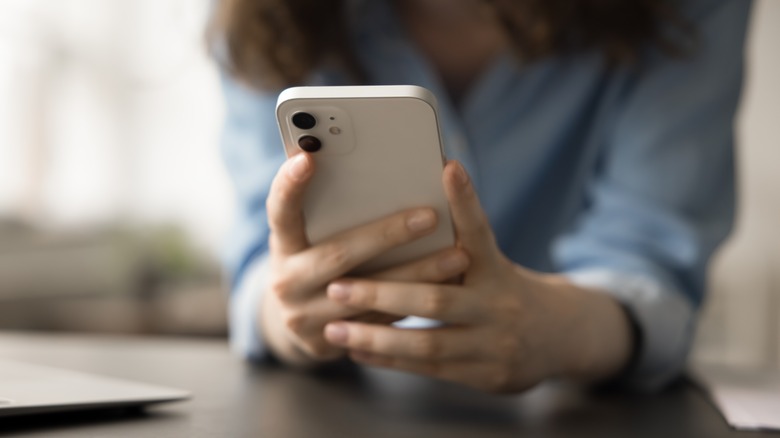
You step out of a subway station, and you pick up your phone so you can map your way to the great bakery or art museum you're heading to. In a flash, someone rides by you on a scooter, and your phone is gone. London has an ongoing problem with people getting their phones snatched out of their hands by intrepid thieves on motorbikes and scooters. Looking at your phone while walking down the street is a sure signal to others that you're — at least momentarily — oblivious to your surroundings. Be aware of how publicly you zone in on your screen, especially in busy areas. And that's not to mention how being glued to your phone when traveling solo also deprives you of the experience of travel.
It's easy to default to our screens when we're sitting in a coffee shop or waiting for a bus because the phone is always handy. As a solo traveler, resisting the urge to scroll mindlessly will not only allow you to be in the present but also create more opportunities to interact with others. Don't be afraid to disconnect or even temporarily disable some of the apps you get stuck on more often. Bring a book or journal, or plan ahead with things to do when your phone suddenly loses service on a road trip.
Keeping to yourself (too much)
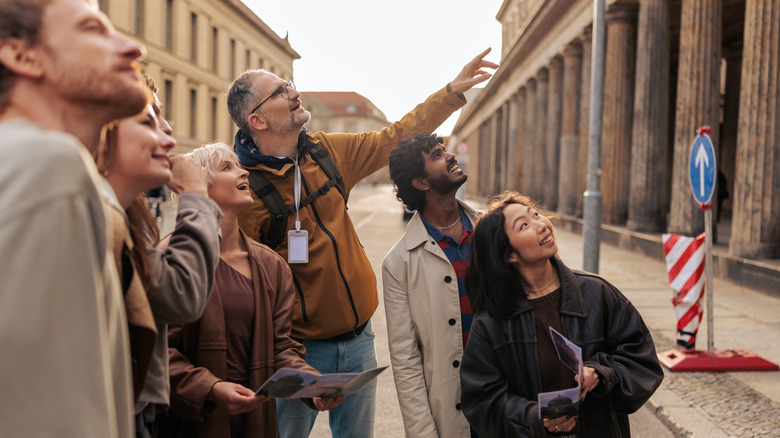
Whether you default to your phone when you're on your own, or you're nervous about meeting new people, try your best to soak up the full experience of solo travel — even the little discomforts. It might surprise you to learn that dining alone can sometimes be just as enjoyable, if not more so, than dining with others. Getting a seat at the bar with quick service can be a bonus. You might also find a local group tour that will introduce you to others, even if it's just small talk for an hour or two as you wander a historic city center.
Some guided tour companies specialize in itineraries perfect for solo travelers, not only for the social possibilities but also because their discounted group rates may also eliminate single supplement fees for experiences or lodging priced on a double-occupancy model, like many cruises and private train cabins. It may go without saying, but solo travelers often really like their alone time, too, so make sure you take as much of that as you need.
Overpacking or packing incorrectly
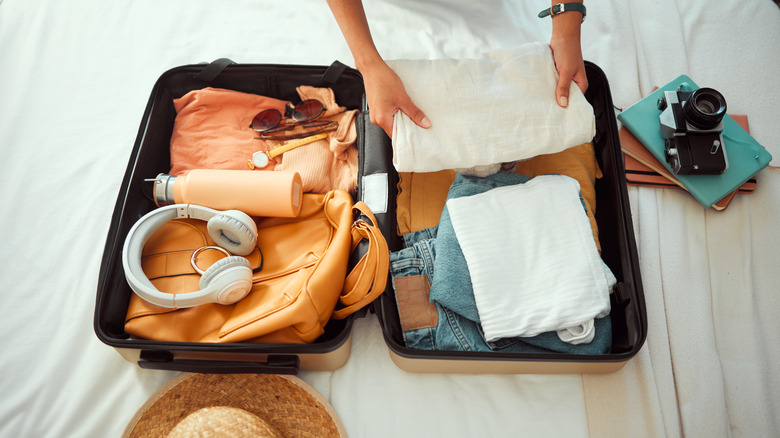
How to pack for a trip is always a big consideration because there are so many different ways to organize your things, depending on how you travel. And when you're traveling solo, there's no one else to hold something for a second or wait with the bags while you run into a shop or use the restroom. Well worth keeping in mind before you've even left the house: don't overpack! It can be a drag — literally.
Not overpacking starts with finding a luggage situation that works best for you, whether it's a backpack or a roller suitcase. Think about how you'll be moving through airports, stations, or cities. Will you need to climb stairs or hills with your suitcase? Will you be able to move through crowds of people relatively easily? Too many bags are at best unwieldy, and at worst, a safety hazard.
When it comes to finding the optimal amount of stuff to bring along with you, keep flexibility foremost in mind. Rather than planning entire outfits, think in terms of mix-and-match items and keep accessories to a minimum. If you think you might wear something — especially if you don't, usually — leave it at home. Once you get things into your chosen vessel, remember to leave room! You'll almost certainly pick up souvenirs along the way or need a place to store your snacks as you go.
Not prioritizing security
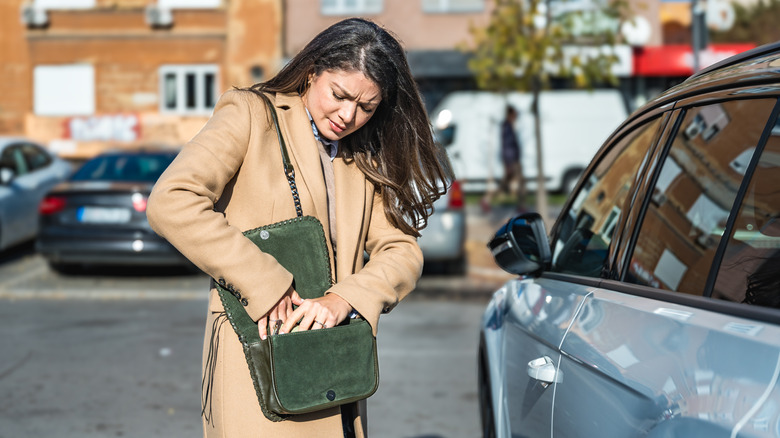
It's no trivial thing to show up at a vacation rental and find that the lock on the door is broken. Or you may be sitting in a coffee shop with your bag out of sight, leaving it easy prey for thieves. Then there's how to handle valuables or your ID while taking a dip at the beach. To avoid items getting stolen, leave them in your hotel room. If you're at the beach, a small dry bag can hold small valuables and your phone so that you don't need to leave it on the sand. On busy public transportation or when seated in a cafe, wear your bag in front of you, select one that isn't easy to access, or use Rick Steves' easy tip that could save your bag from being pickpocketed in Europe — or all three!
Especially when abroad, our documents and ID are extremely important, not just for getting around but for use in case of an emergency. Money, cards, and our phones are super important, too, but our bodily safety should always be the top priority. Bottom line: if you don't feel safe, make alternate plans.
Ignoring your instincts
Whether talking to someone at a train station or a bar, or checking into lodging and finding it doesn't feel right, listen to that voice. This can sometimes be easier said than done, but as a solo traveler, especially, your intuition is quite possibly your greatest resource. It may be tempting to weigh what others will think if you change your mind, but not trusting your gut can be a recipe for disappointment or disaster. The reason may also be something that will affect others, too, such as the weather or impending rail strikes that could throw a wrench in your itinerary. Consider what your alternatives are if you need to switch up your plans, and trust your gut to help keep you out of potentially bad situations. Ask questions if, for example, you're facing a quandary at the airport or you don't understand an item on your hotel bill. Don't hesitate to call or text a friend or family member who can help you weigh your next move.
Ignoring your instincts about potentially disruptive elements isn't the only mistake you can make on a solo trip — you also don't want to ignore when your gut is telling you to do something or try a new experience. Will you regret not riding that zipline or eating at that restaurant? When the voice nags at you about the positive things, it's equally important to listen.
Sharing too much with others

While some of us post on Instagram or TikTok every day, others like to be a bit more off-grid. Social media is a handy way to let people know you're having a great time without having to reach out individually. But it also has the potential to be a bit of a liability. No matter how frequently you share, keep in mind what and when you're publishing. If you're on your own, one method of maintaining privacy is to only post about your specific whereabouts after you're long gone. Avoid location sharing on your apps, such as Instagram's "Maps" feature, or sharing information like your exact hotel, where you're having a meal, or anyplace you have a reservation to be in the near future. Posting too much specific information may enable scammers to take advantage of this dangerous social media mistake that could ruin your trip before it even begins. In any case, it's a good idea to make sure that at least one trusted family member or friend knows your itinerary, in case of an emergency.
On the note of oversharing, it's also a good idea to be aware of how much personal information you're sharing with people you meet while traveling, especially details like where you're staying. If someone is particularly insistent on this type of information, trust your gut and be aware of scams. A good rule of thumb is to always stick to a public place with other people around if you don't know someone very well, and don't share anything about yourself that you're not comfortable divulging.
Budgeting badly
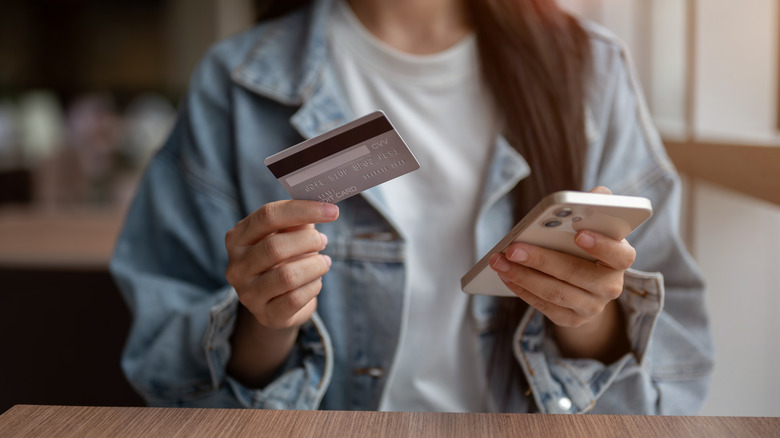
Running out of money while on a trip is no fun, and going solo, things add up a lot faster than they do when you're splitting with others — especially accommodation and transportation. Some services and products may cost more or less in different places than what you're accustomed to, and you'll want to set a realistic goal for daily spending. Remember that you can often save a lot of money by taking public transportation, such as a bus, rather than a private car. Eating out is also a surefire way for the bills to add up, so budgeting for simple meals will help you save. You can also plan to travel at off-peak times of the year, avoiding holidays, such as winter and shoulder season, which is the best way to dodge crowds and save money while you travel. If your schedule is flexible, you can often find cheap tickets to events, too, like last-minute seats to London theatre shows, or take advantage of museums' free times during the month.
One trick to budgeting well is to consider what you think you'll spend in a day and then double it. This will help account for additional expenses like souvenirs, hidden or additional fees, tolls, and tips for dining and services. It can also help to offset when things go awry, such as a missed train or the need to rebook accommodations for any reason. One time, I missed my early morning EasyJet flight from London to Rome. Although affordable, the fare was non-refundable — and it's worth noting that European budget airlines can have high sneaky fees. I was grateful to have budgeted with enough of a buffer that I could rebook for the next day and didn't throw off other plans.
Ignoring your health

Not paying attention to warning signs from your body while you're traveling can sometimes spell disaster. Whether it's the common cold or a twisted ankle, something seemingly small can become a much bigger problem if you don't slow down and care for it, even if it means changing plans. Taking care of your health applies to both your mental and physical well-being, because travel can be stressful.
Echoing advice about trusting your instincts, know when your body is telling you to slow down or when you need to prioritize your emotional welfare. That might mean finding some time to be in nature, which is why "record numbers" of women are solo camping in recent years, or opting out of more intense activities. Plan ahead to make sure you have any medicines you may need, especially if you're headed to someplace more remote where you won't be able to easily stop into a pharmacy, and rest when you need it. Travel insurance for medical emergencies, such as Faye or Freely, provides some additional peace of mind during trips.
Methodology
For those who have never traveled solo, the experience may be uniquely daunting. For those who travel alone often, it can be difficult to imagine a more empowering way to see the world. But even seasoned solo travelers can benefit from a reminder every now and again about what mistakes to avoid. To compile this list, I consulted a wide range of blogs, including SoloTravelerWorld.com, AJulyDreamer.com, TheNomadExperiment.com, RickSteves.com, TheKatieShowBlog.com, and PhoenyxTravels.com. I also perused discussions about solo travel on Reddit. I spend several months of the year on the move, often solo, whether hopping on flights to a wide range of places or taking road trips covering thousands of miles, sometimes with my dog along for the ride.