

The Cozy Lodging Option Rick Steves Prefers For His European Adventures
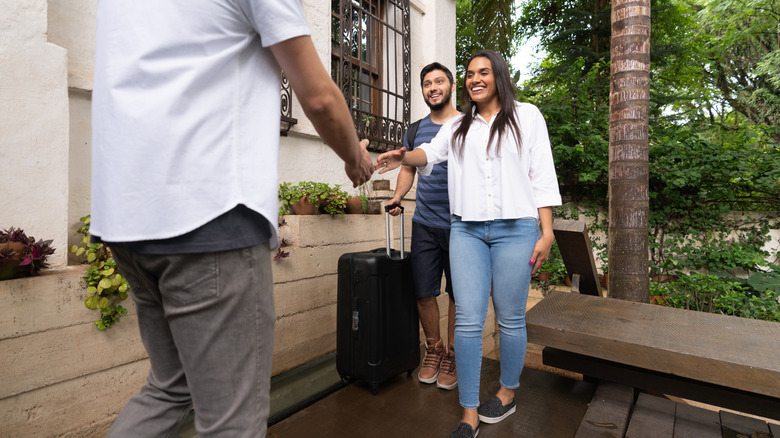
If jetting off to Europe is in your future and you're in planning mode, you may want to skip getting a hotel. While there are certainly lovely ones of all sorts across the continent, you might want to look at a bed & breakfast instead. In fact, travel pro Rick Steves often prefers them for his European adventures. Part of the reason is that they're cozy and far more personal. On his website, Steves says, "The best B&Bs ooze warmth and local color, making these some of my favorite accommodations in Europe." A B&B can make you feel right at home, and may even inform what you choose to do during your stay. They can also be less expensive. Still, it's the personal touch that Steves praises the most, mentioning one place in Ireland where his hostess wouldn't let him leave without offering him her umbrella, and telling him about a musical performance that evening. He says,"Staying at a European bed-and-breakfast is a bit like having your own temporary mother while you travel."
There are some things to know before you book your B&B, which can be a bit different if you're looking at the United Kingdom and Ireland, versus continental countries. You may have to give up a couple of things, but the benefits you'll get in return might change your views on travel altogether. However, no matter where you're staying, one of Steves' go-to strategies for cheaper European stays is to contact lodgings directly rather than going through a comparison website.
All about staying in a bed & breakfast, as per Rick Steves
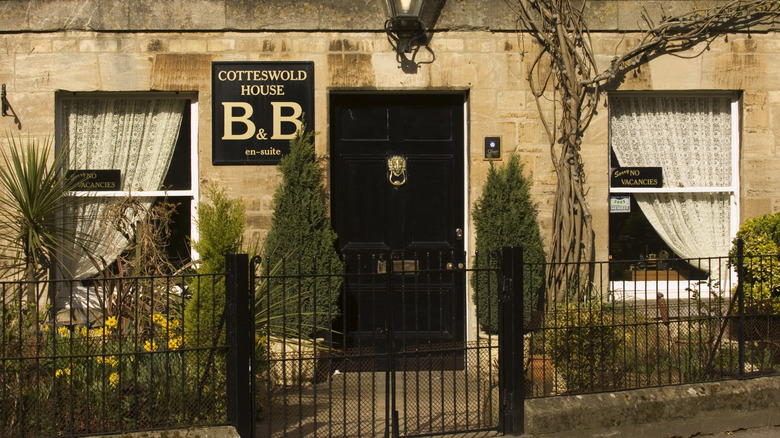
If you've only stayed in a bed & breakfast in America, you may be in for a surprise. Steves says, "Don't confuse these with their frilly, fancy cousins in America. In a European B&B, rather than seven pillows and a basket of jams, you get a warm welcome and a good price." These places are often family-run, and they don't have hundreds of guests to cater to. You may be there alone, or with a few other guests, but you're likely going to have time to actually get to know the people who run the B&B a bit. While Steves mentions that they don't have things like "fancy lobbies, restaurants, and in-room phones," you're getting a person who knows you by name, and might even have suggestions for things to do outside of the usual tourist attractions. While he says that there will be some places where your host may not speak English very well on the continent, remember that you can use the Google Translate app to do some live-translations for you so you can hold a conversation.
Your host might know of a local event happening during your stay, or a sports game that everyone is excited for. They may have a favorite local tavern or restaurant, or know of a fascinating historical site that rarely gets mentioned in guidebooks. For instance, there may be a standing stone that is tied to a local legend in Scotland that most tourists don't see, or the perfect hike with a trailhead nearby. He also mentions that the breakfast or fry-up you're going to get if you hit a B&B in Britain or Ireland is going to be impressive and extensive, so take advantage of it.
Things to know before looking for a bed & breakfast

There are, however, a few things that you may not get at a B&B that you would at a hotel. You may not have a TV in your room, or air conditioning, and your bathroom might be down the hall. He suggests you ask if the place has pets if you have allergies. You may also run into problems if you have mobility issues. There are sometimes stairs or narrow hallways. Again, Steves' advice about contacting the B&B directly is important to remember. You should also ask if they have a minimum stay or only accept children of a certain age if you're traveling with family.
Steves says that his favorite bed & breakfast spots are in Britain and Ireland, and that "True B&Bs are somewhat rare on the Continent, though there are some in the Low Countries, Scandinavia, and elsewhere." However, other European countries have something similar, called pensions. Make sure you know the local names for them. Steves lists a few like, "Gasthaus and Gasthof in German; albergo and locanda in Italian; or fonda, casas de huespedes, and hostal in Spanish (not to be confused with 'hostel' — two very different things)." These places are often in older buildings that he says may have ten or fewer rooms. In addition, he cautions us to check on whether these locations include breakfast, even if they have "B&B" in their name, as some don't. Finally, if you want to go a bit cheaper but still get to meet people, you can look into hostels, which aren't just for younger travelers. If that's what you choose, here's what you should know before staying at a hostel.