

Rick Steves Recommends This Type Of European Tour To Save Money While Exploring
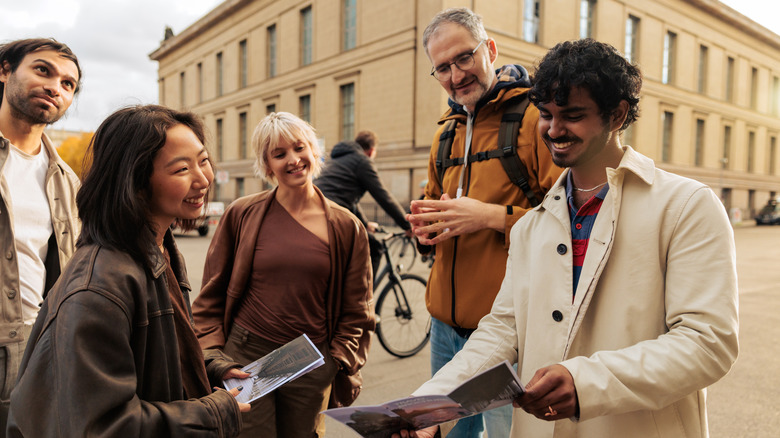
Europe is steeped in history, culture, and opportunities to explore a new landscape full of surprises waiting to be discovered and experienced. But figuring out exactly how to uncover these experiences can be a costly challenge. Rick Steves, television host and travel expert, not only has sound advice for the best type of attitude tourists should have as they roam Europe, but he also has money tips. Steves says the best way to get more for your money is to take a walking tour.
"Walking tours are usually cheaper and better than big bus tours," he explains on his website. "In general, arrange tours through the tourist office and not your hotel." Steves also says that paying for a tour is one of the best ways to make the most of your European trip. Spending a little bit more for an experience isn't throwing away money. Rather, it's securing an experience on a memorable trip.
Steves also recommends using a local guide. Hiring someone with local knowledge to show you historic sites and can't-miss monuments will also likely offer insights on restaurant options and provide some shopping advice. These valuable tips could save you some money later on as you explore on your own.
Walking tours typically cost less than motorized tours
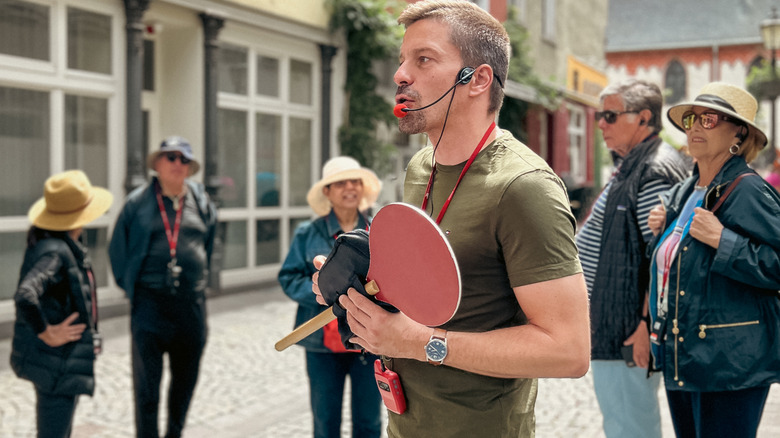
Like with most things when it comes to travel, finding the right tour is a personal decision. Walking tours give tourists a chance to take in the sights, capture photos, and get up close and personal to specific areas. Bus tours, Steves adds, may seem convenient and fast, but there's a catch. "Big bus tours are sold at a nearly no-profit price," Steves explains. "They make their money throughout the tour on commissions from your shopping and by selling you optional sightseeing."
And while almost every traveler loves a souvenir, these pre-planned destinations may not be as authentic as one may expect or hope. A local guide offering a walking tour can also give you a chance to enjoy a more personalized experience and maybe even linger a moment longer for a more intimate experience with the location. Another advantage of a walking tour is that it may pass by shops and restaurants that may not be at a major bus or train stop. Take the opportunity to help infuse the local economy. These restaurants and shops are also a way to connect with locals, which is just one of Steves' many and best travel tips.
Whatever your sightseeing preference, make a strategy

Europe is full of wonderful and historic things to see. Whether you decide to explore them on foot with a guide or through a pre-planned bus tour, it's important to be prepared. A well-planned strategy will make the experience go much smoother, Steves says.
Footwear is of utmost importance. Whether your walking tour covers two blocks or two miles, make sure your feet are comfortable. If castles, palaces, or other sites that require some climbing are part of your plans, hiking boots or other appropriate footwear will ensure the climb is as comfortable as possible, he says. And what you put on your feet is only part of the appropriate dress code.
"A modest dress code (no bare shoulders or shorts) is encouraged at most churches," Steves says. It's even enforced in some religious spaces, so even if the temperatures are warmer, Steves suggests having a light jacket tied around your waist that you can throw on to enter these architecturally stunning houses of worship. It's even important to consider colors when preparing for a day out and about sightseeing. In fact, there's one color palette Steves' son suggests avoiding altogether when touring Europe: pastels.