

Campers Recommend This Low-Tech Hack To Keep Your Sleeping Bag Warmer
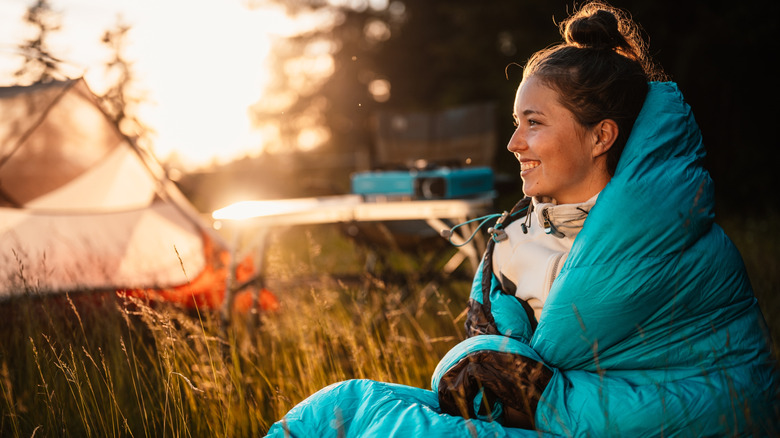
Spending the night shivering in a cold environment is almost guaranteed to make for a miserable sleep, whether you've pulled over at a rest stop or are exploring one of the best national parks for camping in America. While you could purchase an electric blanket or a rechargeable heated sleeping bag to stay toasty, there are also tried-and-true camping hacks that don't cost an arm and a leg, require no electricity, and will keep your body warm from head to toe all night.
Sleeping bags work by trapping body heat and preventing heat loss. One of the easiest solutions to keep your body warm — especially your feet — is to fill the bottom of your sleeping bag with a few articles of dry clothing, like a sweatshirt or a towel, for example. This will bulk up the bag and remove any pockets of cold air, trapping more head inside. By placing the clothes at the bottom, near your feet, you will stay warmer by minimizing the area that your own body heat has to fill inside the sleeping bag. A layer of clothing inside can also act as an additional barrier between you and the cold ground, as sleeping on the ground is another way to lose body heat. Leave yourself a bit of wiggle room, though, otherwise you might get uncomfortable. Another dead-simple sleeping bag hack that seasoned campers swear by is putting the sleeping pad inside of the bag instead of underneath it, which enhances both insulation and comfort.
Sleeping bag tips for warmer nights

Whether you pad it with extra layers or construct a DIY camping heater to stay warm all night, choosing the right sleeping bag is essential for staying comfortable outdoors. Temperature ratings are important to consider while you're shopping around. Ken Knapp, editor emeritus at REI, advises that consumers should choose a sleeping bag based on the coldest temperatures they expect to camp in. Be sure to check the sleeping bag's International Standards Organization (ISO 23537) rating, which is assigned based on its lab-tested insulation capabilities. Men, and warm sleepers, should generally choose a bag based on the Lower Limit temperature, while women and cold sleepers may prefer the Comfort Rating. Sleeping bags made for women are generally more insulated. As you drift off in your cocoon, Knapp warns campers to be aware of overheating in the middle of the night. If you wake up feeling too warm or already drenched in sweat, it's best to change into dry clothing. Not only does sweating lower your body temperature, but it may also dampen your clothing and make the insulation less effective.
While it's fine to shove your sleeping bag back into its stuff sack in the morning — while likely saying a few choice words — you'll want to air it out once you finish your trip, especially if you've sweated in it. Sleeping bag manufacturers including REI, Nemo Equipment, and Sea to Summit, recommend storing it in a mesh bag or hanging it on a coat hook in between trips. This will protect your investment from developing mildew and mold, so you won't have an unwelcome surprise waiting for you on your next outdoor adventure.