

10 Old-School American Towns That Feel Stuck In The 1950s
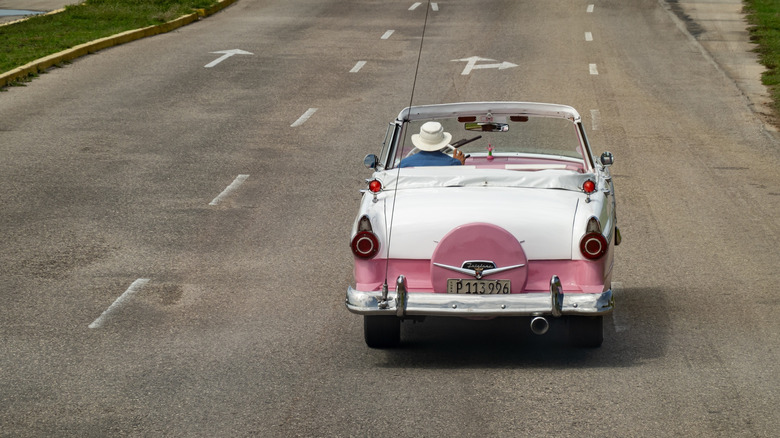
The 1950s occupy a singular place in the American imagination. It was a decade shaped by postwar optimism, booming car culture, and a collective belief in progress fueled — quite literally, in some cases — by automobile production, small business ownership, and the rise of suburban life. Across the nation, high school sports reigned supreme, diners were local social hubs, and neon signs on Route 66 beckoned travelers to take part in the most American of all vacations: the road trip. While most places in the United States have moved on from "Happy Days" culture in the intervening decades, some towns never fully let go of their mid-century identity. In these places, physical markers of the 1950s still exist in preserved storefronts, classic theaters, drive-ins, and retro motels that haven't really changed since the Eisenhower administration.
Just as importantly, though, is the pace of life in delightful small towns in the U.S. This guide features 10 old-school American towns that feel stuck in the 1950s, each in its own way. In each destination, we'll look at specific locations that directly connect the town's history to the decade. These destinations continue to preserve their nostalgic atmosphere in the 21st century, offering vacationers a chance to step into a version of the U.S.A. that feels frozen in time.
Cadillac, Michigan
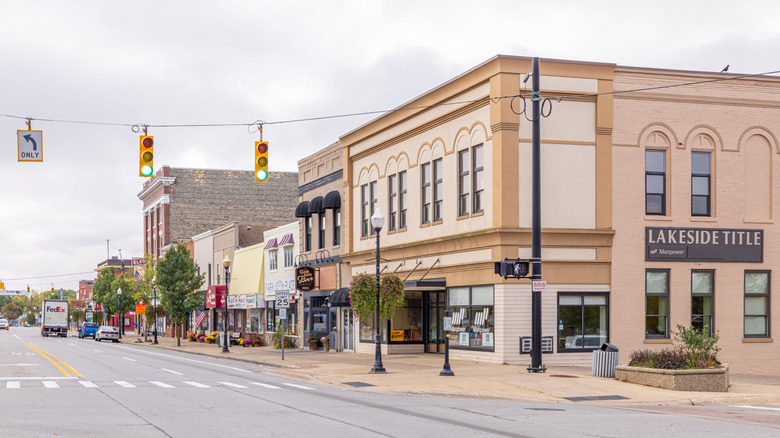
Situated about three hours northwest of Henry Ford's auto empire in Detroit, Cadillac, Michigan was dominated by its eponymous automotive brand in the 1950s. Although the brand wasn't one of the big five automakers, owning one of these luxury cars was the ultimate status symbol in 1950s America. Elvis Presley's iconic pink 1950s Cadillac is perhaps the most famous example of the car company's pop culture impact. In the mid-20th century, Michigan's automotive industry wasn't just about the cars themselves; it was a beacon of the nation's economic prosperity and the freedom to explore newly-expanded highways. With the popularity of the personal automobile in this decade came the rise of car shows. Today, the small city of Cadillac keeps this tradition going with the annual Cadillac Freedom Fest Car Show. The event even includes a retro-style car cruise!
Elsewhere in town, numerous historic buildings still bear marks of the 1950s, both in look and feel. The historic Cooley Public School, for example, operated from 1923 to 2010, educating generations of Cadillac residents. Currently, the building is being converted into affordable housing for local families. Classic signage in the downtown historic district recalls a time when local diners, hardware stores, and fraternities like the Elks Club served as community hubs. The Elks Club continues to operate out of the same building it did in the 1950s. For a bite to eat, R Dub's Pub and After 26 Depot Cafe are especially good spots for those who want delicious home-cooked meals and warm service.
Chillicothe, Ohio
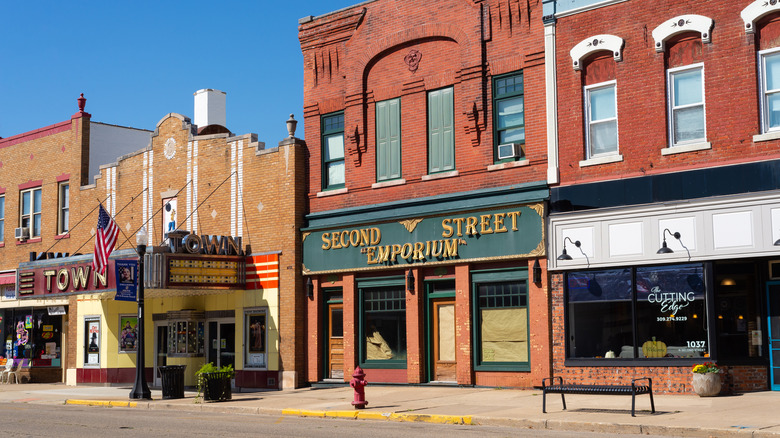
Chillicothe's downtown district still looks very much the same as it did in the 1950s, a time when small Midwestern cities were thriving hubs of manufacturing, Main Street commerce, and community life. In the postwar years, Chillicothe — the first capital of Ohio — was a manufacturing hub. The Mead Corporation's paper mill, in particular, was a major employer in mid-century Chillicothe. Although Mead's operations in this town are long since defunct, the site of its plant remains active today. In 2025, the facility was sold to the U.S. Medical Glove Company.
Paint Street was, and still is, the heart of this town of roughly 22,000 residents. Independent shops and long-standing family-run diners like Allyn's Restaurant were places where neighbors gathered for meals and conversation in the 1950s, and many of those same buildings still stand today. In fact, Chillicothe is still home to several restaurants that remain largely unchanged from their 1950s iterations. This gives the town a retro feel, and allows diners to step back in time, if only for their lunch hour. Carl's Townhouse, for example, has had the same retro signage and striped awning since 1951. Saved from demolition in 2000, Carl's remains a locally-owned institution. Jerry's Pizza is another 1950s holdover still serving Chillicothe residents and visitors today. Originally opened in 1954, Jerry's has only had two owners in its history and has remained a local mainstay for decades. Even the civic structures in Chillicothe, like the municipal administration building, have a retro presence. This Paint Street building served as JC Penney department store during the 1950s, and its exterior has barely changed. Based on these factors, it could be said that daily life for Chillicothe residents is much the same as it was 70 years ago.
Greensburg, Indiana
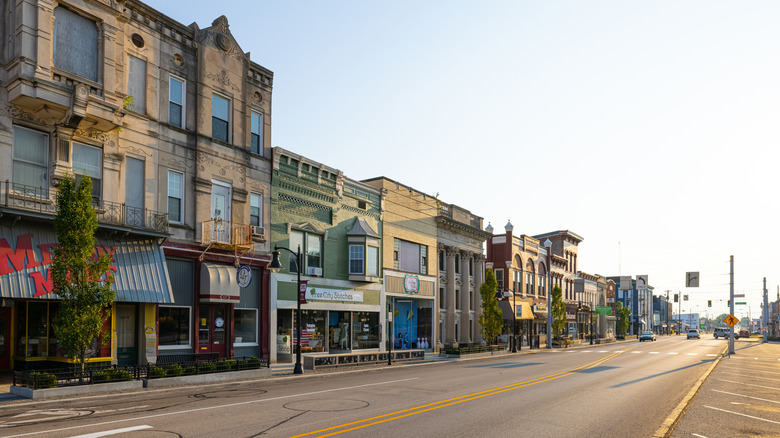
Greensburg, Indiana, a lively small city situated between Indianapolis and Cincinnati, is the kind of place many Americans picture when they think of 1950s Midwestern life. The historic courthouse square — with the Decatur County Courthouse and its famous "Tower Tree" at its center — was where people shopped, dined, and socialized in the postwar years. It remains the heart of the town today, surrounded on all sides by antique stores, restaurants, churches, and everyday necessities like banks. The building that housed the retro Minear's Department Store throughout the 20th century remains a local staple, albeit of a different sort. Today, it is The Beach Tiki Bar & Grill, where people gather to enjoy tropical-inspired cocktails and delicious food. Another courthouse square mainstay is Stephenson's Jewelry, a quintessential local jewelry store that opened in 1953. It is still family-owned and operated today.
Annual festivals and community events also make visiting Greensburg feel like a trip back to the 1950s. The yearly Fourth of July parade, which encourages all children to decorate and ride their bikes, has been a staple for over 100 years. It was a major mid-century social event — today, families continue to line the streets in red, white, and blue attire for the occasion. Then, there's the Tree City Fall Festival. Although this event didn't start until the 1970s, it is a community-minded affair that all the residents participate in, giving the city a wholesome, small-town feel. There are many welcoming small towns in Indiana, but Greensburg is one place that still drums to the beat of 1950s Americana.
Red Wing, Minnesota
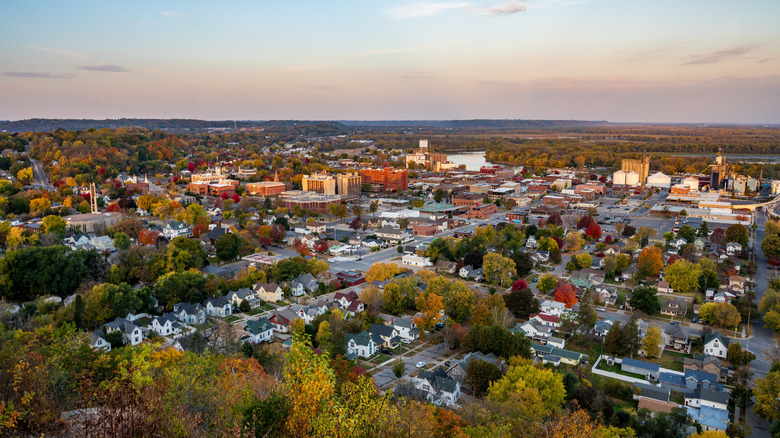
Red Wing, Minnesota — a cute city hidden on the Mississippi River — is perhaps most famous for being the home of Red Wing Shoe Company since 1905. In the decade following World War II, this industrial hub became a bastion of manufacturing, river trade, and regional commerce that led to significant local prosperity for business owners. The shoe company, for example, introduced its Irish Setter boot — arguably its most famous style of footwear — in 1950, cementing a legacy that endures to this day. Today, the company's headquarters is still a major force in Red Wing, a small city of about 16,700 residents. Other manufacturers have also made their home in Red Wing since the postwar boom. Riedell Skates, for instance, was founded here in 1945 and manufactures ice skates and roller skates in the city to this day.
Today, the city's historic buildings reflect a range of architectural styles from the 19th and 20th centuries. Many of them remain unchanged since the 1950s, giving the town a vintage feel, as if one has stepped back in time several generations. The T.B. Sheldon Memorial Auditorium is one such structure. Originally opened in 1904, this theatre first hosted live performances, then films — it has since come full circle and now operates as a live entertainment venue. In the 1950s, it survived a contentious legal battle and is now proud to be one of Minnesota's loveliest playhouses. For a retro-inspired meal, check out Bev's Cafe, a downtown Red Wing diner that has been serving up malted milkshakes, burgers, fries, and slices of pie for decades. Residential areas in Red Wing also lean mid-century, with 1950s ranch houses and bungalows with sprawling front yards. Here, it wouldn't be far-fetched to assume that neighbors know each other by name and kids still play in cul-de-sacs until dinnertime.
Laurel, Mississippi
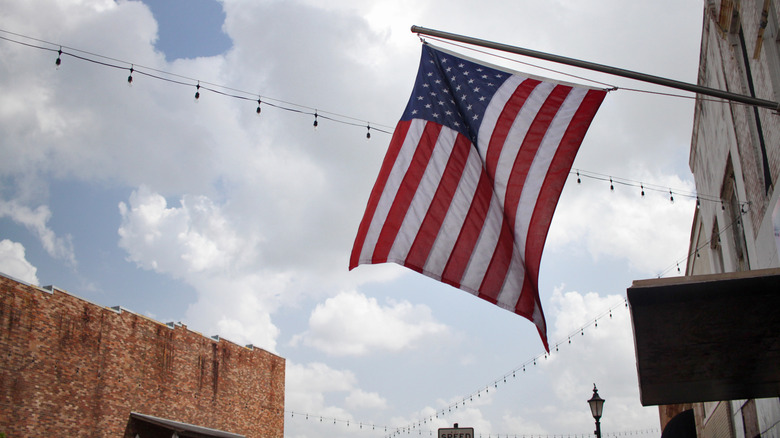
Laurel is a Mississippi town known for its stunning architecture and rare antiques, but it also captured mid-century promise more than many Southern towns. Thanks to a local manufacturing boom in a variety of industries, including walk-in refrigeration, conveyor belts, and metal fabrication, 1950s Laurel was a bustling place. Its downtown district, in particular, still hearkens back to this postwar glory and population growth. This is thanks, in large part, to the involvement of the Laurel Main Street organization. Today, there are numerous shops and restaurants that have either existed since the 1950s, or offer exceptional service that simply makes visitors feel like they've stepped into "Leave It to Beaver."
Pearl's Diner, which opened in 2017, is one of the latter. Diners rave about the down-home menu — especially the mac and cheese — and Miss Pearl herself is something of a local celebrity. Then, there's the Phillips Drive-In, or PDI. This spot opened as a Dairy Queen in 1948 and continues to serve traditional drive-in diner fare today. Laurel's mid-century vibe extends to its annual events. The yearly Cannon Motors Loblolly Festival, for instance, draws the entire community downtown with live music, vendors from throughout the region, and plenty of hobnobbing with friends and family. The annual Gumbo Cook-Off is another event that takes inspiration from 1950s culture, when cooking competitions exploded in popularity.
Gallup, New Mexico
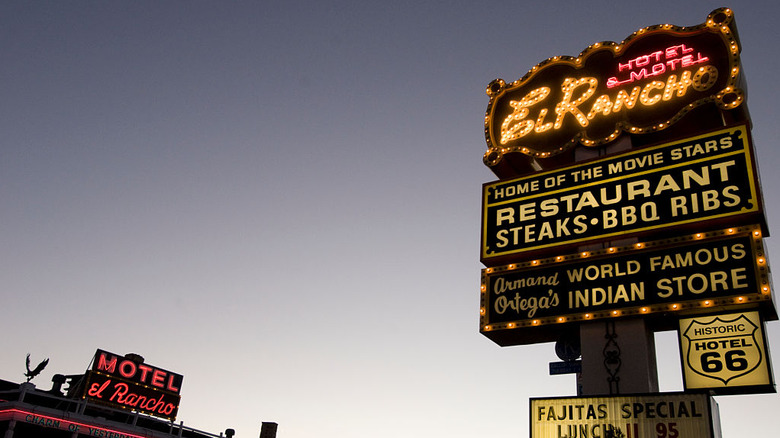
Gallup, New Mexico is one of America's clearest portals back to the 1950s. This Southwestern Route 66 stop is preserved like a postcard of the age when the nation's obsession with the open road reached its peak. In the postwar years, Gallup was a major location on the Mother Road, welcoming desert travelers with neon-lit motels, classic diners, and Native American heritage. From the 1950s to today, it has served as a small oasis for motorists to rest, refuel, and experience the romance of the American road trip. Historic Route 66 still runs right through town, and those passing through can enjoy preserved vintage signage and landmarks that look the same as they did 70 years ago. The Gal-A-Bowl bowling alley is one stop that will make travelers feel as if they've stepped back in time. Founded in 1959 during the bowling craze of the 50s, this spot is still family-owned and operated.
One of the most iconic spots here is the El Rancho Hotel. This property positively flourished in the 1950s, welcoming a variety of famous Hollywood guests including Katharine Hepburn, Gregory Peck, and William Holden. Today, the hotel still reflects a distinctive mid-century Wild West style, and the rooms feature plenty of decorative nods to Route 66. For food in Gallup, there are still plenty of options that look like they fell right out of the 1950s. The aptly-named Route 66 Diner has a collection of mid-century road signs and memorabilia on the walls, the Route 66 Railway Cafe offers traditional "greasy spoon" diner fare in a vintage building, and Earl's Family Restaurant draws inspiration from the 50s with vinyl-covered booths and Formica tables.
Saugatuck, Michigan

Every year, Saugatuck offers a slice of the American 1950s summer that is immortalized in films like "The Little Rascals" and "A Summer Place." During this decade, American families often packed up the car for regional summer vacations, and lakeside towns became the pinnacle of leisure travel. This was a time when road trips, motor lodges, and small-town beach culture were defining features of the summer vacation experience. Towns like Saugatuck thrived as a convenient alternative to long-distance travel, and this legacy continues today. Much of Saugatuck's mid-century atmosphere remains unchanged, particularly on its main drag, Butler Street. The 1950s-themed Drug Store and Soda Fountain is one of the best places to step back in time with a root beer float at a classic counter.
Saugatuck's lodging options also still lean heavily into their mid-century roots. The Pines Motorlodge and Cottages looks straight out of the '50s, with retro signage and a gift shop that stocks vintage-inspired souvenirs. Visitors may see a 1959 Oldsmobile Dynamic 88 welcoming them to the parking lot. The Saugatuck Retro Resort Motel and Starlite Resort both evoke the 1950s — the former has been ranked one of the top retro motels in the country. Saugatuck's Oval Beach, now considered among the nation's best beaches, was a major draw in the 1950s, when families spent long summer days swimming, picnicking, and building sand castles. Today's travelers can do the same. What sets Saugatuck apart is how little the town has changed over the decades. This storybook harbor city on Lake Michigan is a great place for a mid-century-inspired getaway on any summer weekend.
Bristol, Virginia
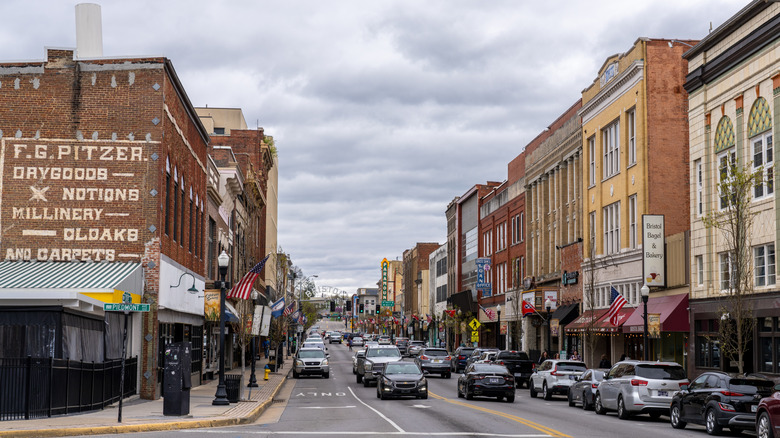
Bristol, Virginia is a unique town that straddles the border between Virginia and Tennessee. Its downtown historic district is a haven of specialty shops and art galleries, a relic of mid-century America when small cities served as cultural and commercial touchpoints. In the 1950s, Bristol's local culture was shaped by the intersection of music, manufacturing, and Main Street commerce, drawing residents from surrounding rural Appalachian communities for shopping and entertainment. This was the era when cinemas, record shops, and diners reigned supreme. Much of this atmosphere has been preserved here, especially along State Street and Piedmont Street. On Piedmont, visitors flock to the Burger Bar, which is thought to be where singer Hank Williams had his last meal before he was found deceased in his car in Bristol in 1952.
Bristol's legacy as the "Birthplace of Country Music" also ties directly to the 1950s. Though the start of the genre dates to the 1927 "Bristol Sessions," the Birthplace of Country Music museum traces the city's contributions to the music industry through the decades. One highlight for mid-century lovers is a signed guitar owned by 1950s outlaw country icon Johnny Cash. The Paramount Bristol is another great stop for those who want to step back into Bristol's history. Although this theatre dates to 1931, it was a hotspot throughout the mid-century years. Moviegoers flocked to see films starring Tony Curtis, Julie Andrews, and many more during the 1950s. Today, there are a variety of live performances at the Paramount, including blues concerts, ballets, and, of course, country shows.
Abilene, Kansas
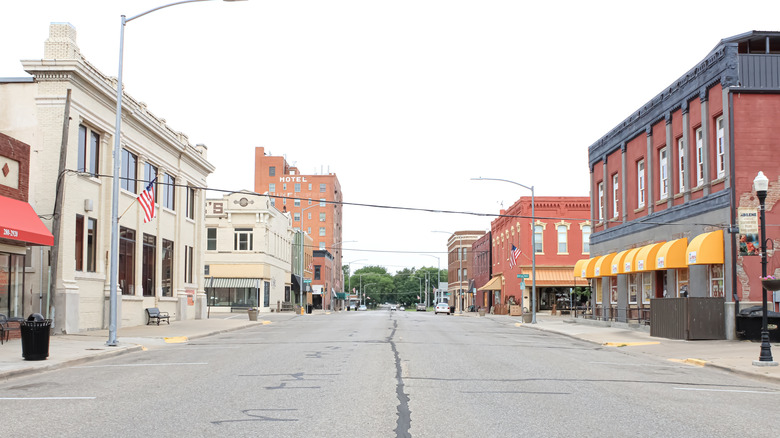
Rated one of the best small towns to visit in the U.S., Abilene, Kansas very much feels like a real-world version of the idealized American towns that were part of nearly every 1950s sitcom. The town also boasts a major connection to the 1950s as the hometown of President Dwight D. Eisenhower, who held the nation's highest office from 1953 through 1961. Even today, Abilene embodies several key values often associated with Ike's post–war administration: modesty, community, and civic responsibility. The town's historic downtown district is a throwback to mid-century life, with brick storefronts, family-owned stores, and quaint cafés that have been serving locals for decades. Joe Snuffy's Old Fashioned Grill is a favorite stop for many travelers. Although it didn't open until 2001, the down-home service and classic diner menu will transport you to the '50s faster than you can say "I like Ike."
One of Abilene's most direct links to the decade is the Eisenhower Boyhood Home, where visitors can explore the household that shaped the future president's values and worldview. The Eisenhower Presidential Library and Museum offers additional information about his life in the White House. History lovers will also want to take photos of the historic Sunflower Hotel, now an apartment building. In 1952, this was where Ike and Mamie watched a local parade in tribute to him. To take home some of your own 1950s treasures, check out Abilene's many antique stores, like the Abilene Downtown Antique Mall, Vintage Bling & Antique Things, and Mud Creek Antique.
Lodi, California
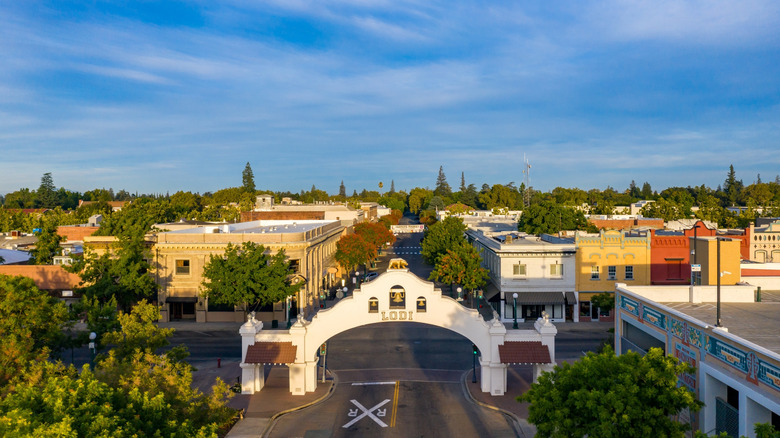
Lodi offers a snapshot of California as it looked in the 1950s, before suburban sprawl and freeways reshaped the state. In the postwar years, Lodi became especially known for its high-quality wine production, an industry that continues to play a major role in the city. During the 1950s, Lodi's main downtown street, School Street, was perfect for cruising. Its mid-century identity is still visible today, with vintage-style street lamps and the same wide lanes that locals cruised seven decades ago. One of Lodi's primary claims to fame is that it is the birthplace of A&W root beer. Although A&W was founded in 1919, the brand's classic drive-in diners were immensely popular in the '50s. The original establishment is no longer there, but the city's current A&W features all sorts of fun vintage memorabilia and still has carhops on staff.
The Hollywood Family Cafe is another retro spot to eat in Lodi. Featuring classic red vinyl seating, checkered floors, and chrome finishes, this spot is also adorned with photos of '50s starlets like Audrey Hepburn and Marilyn Monroe. Travelers will be immediately transported to the decade's diner culture when they step inside. The Richmaid Restaurant is yet another vintage gem here. Though it has been open since 1938, the interior and the outdoor signage have a distinct mid-century feel, and the restaurant prides itself on its delicious home-style cuisine. Those who want to drive around town will be rewarded with all kinds of retro photo ops, including the vintage exteriors of the El Rancho Motel and the Modern Motor Lodge. One of the things that makes Lodi especially fascinating is how naturally its 1950s aesthetic has been preserved. Rather than manufacturing nostalgia, the town has simply retained its classic atmosphere decade after decade.
Methodology

This guide was created using published resources from official tourism boards and city directories, including the regional tourism websites of Cadillac, Chillicothe, Greensburg, Red Wing, Laurel, Gallup, Saugatuck, Bristol, Abilene, and Lodi. Location-specific information related to local businesses, heritage landmarks, and community events, was sourced from the official websites of each establishment. Travel-related details for visitors and local history was drawn from online encyclopedias and reputable outlets such as "Southern Living," "The Detroit Free Press," and "The Chillicothe Gazette."