

The Deepest Lake In The US Also Has Its Own Stunning National Park
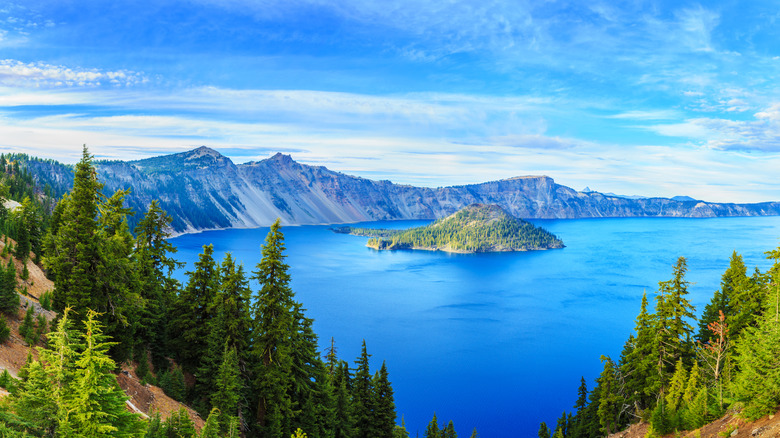
Oregon has no shortage of spectacular scenery. From the rugged Oregon Coast to the Painted Hills, one of the most unique of Oregon's natural wonders, the Beaver State is covered in an array of splendid colors and scenery. Towering high in the Cascade Mountains of south-central Oregon lies Crater Lake, an extraordinary lake in the state's only national park. Crater Lake formed in the caldera of Mount Mazama, a towering 12,000-foot volcano, after a massive eruption 7,700 years ago that was witnessed by Native Americans. After the eruption, the caldera filled with pure rain and snow for thousands of years, forming the deepest lake in the country at 1,943 feet deep, and one of the cleanest bodies of water in the world. The lake's cerulean waters are so clear that visibility extends roughly 120 feet below the surface.
In the late 1800s, William Gladstone Steel, "the Father of Crater Lake National Park," campaigned for decades to have the lake protected as a national park. In 1902, President Roosevelt pushed legislation through Congress and signed the act designating Crater Lake as a national park.
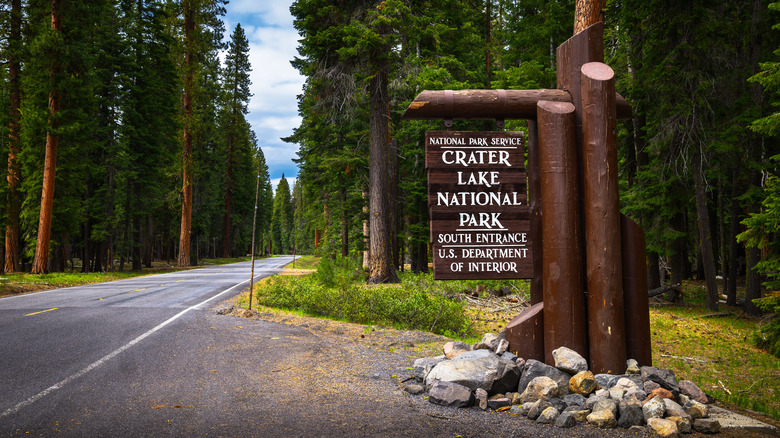
Crater Lake National Park has two entrances: the South Entrance, which is open year-round, and the North Entrance, which is only open during late summer. If you're visiting Crater Lake from out of state, the nearest major airport is in Medford, less than two hours away from both entrances by car. There is one seasonal gas station near the South Entrance in Mazama Village. However, the park recommends that you fuel up before driving into the national park. From Medford, top off in Prospect or near Cascade Gorge, about 41 miles away from the Rim Village Historic District.
Crater Lake's stunning summer views
Summer is by far the most popular season at Crater Lake National Park. In 2024, just under two-thirds of the park's 504,942 annual visitors came between July and September. Once the snow melts in July, the national park's majestic Rim Drive — as much a feat of nature as civil engineering — fully opens for an incredibly scenic 33-mile loop around the lake. To see Crater Lake in all its glory, you'll have more than 30 scenic overlooks to stretch your legs and take in views of the shimmering blue waters. Plan to share the road with motorhomes, RVs, motorcycles, and cyclists.
While driving, you won't miss the miniature "post-caldera" volcano seemingly floating on the island's surface. Wizard Island is a small cinder cone perched above the surface of Crater Lake, and the site where geologists believe the last eruption at Crater Lake occurred nearly 4,800 years ago. If you're ready to stretch your legs, pull over at the Watchman Peak Trailhead and take on one of the most popular trails at Crater Lake National Park. Hike during the day and you'll be rewarded with incredible views of the island and the entire lakeshore. Or, visit at sunset to hike with a ranger and explore the cosmos.
If you're itching to meet the Wizard in person or get down to the water, you'll unfortunately have to wait. The Cleetwood Cove Trail, the only trail to the lake, as well as the boat docks, are closed and undergoing extensive maintenance. This means that fishing, swimming, and playing in the water remains prohibited until the project finishes sometime after the 2028 season. After a magical day exploring the shore, retreat back to Crater Lake's historic lodge, a wildly romantic hideaway.
Crater Lake during the snowy winters

Although some parts of Crater Lake National Park remain open after transforming into a winter wonderland, it receives significantly fewer visitors between the months of November and April. If you're ready to bundle up and are looking for an adventure in deep snow — we're talking up to 42 feet annually — Crater Lake will largely feel like your own private winter day getaway. If you've never gone snowshoeing before, reserve a spot to explore Crater Lake National Park on snowshoes with a park ranger. Apart from the entrance fee, guided snowshoe tours are free and include snowshoes for the whole family. You're also welcome to bring your own snowboard or skis and explore the park's designated trails.
For visitors who are looking for an adrenaline rush, Crater Lake and the Cascades turn into a powder paradise. A 9-mile section of North Entrance Road is groomed and maintained for snowmobile riding. Off-trail riding is generally not allowed in the national park. However, just outside of the park in the Umpqua National Forest — including areas around Diamond Lake and the North Crater Lake Sno-Park — are a powder hound's dream, with countless trails and fewer regulations. Keep in mind that permits may be necessarily before riding. Snowmobiles are available for rent at nearby Diamond Lake, a tranquil alpine lake with cozy cabins.
If you visit in the off-season, it's essential to prepare accordingly, especially for driving in the snow. Be sure to check weather conditions prior to visiting and plan to be largely self-sufficient. The camp store, gas station, and lodges are all closed in the colder months. However, the Rim Village Cafe beside the Crater Lake Lodge on the south side remains open for a quick bite or a hot coffee.