

This Popular California Tourist Destination Is One Of The Deepest Lakes In The US
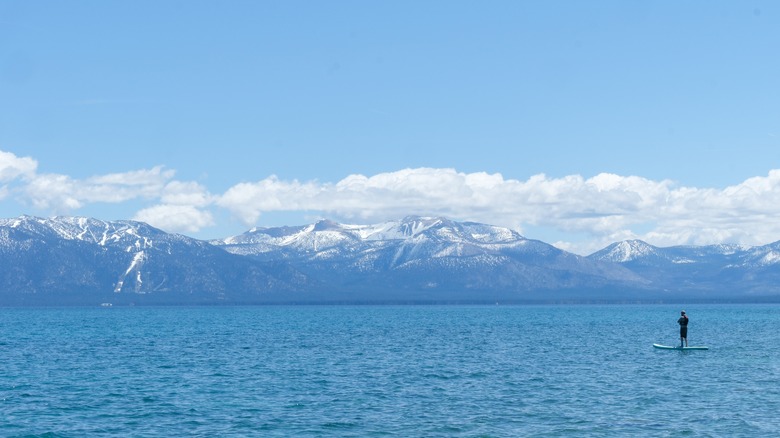
Lake Tahoe in California is most often associated with boating, water skiing, paddleboarding, and jet skiing in the warmer months. But, what many tourists may not realize is that they are enjoying the beautiful waters of the second deepest lake in the entire United States. Lake Tahoe's depths reach as far down as 1,645 feet. By comparison, the deepest lake in the country — Oregon's Crater Lake — plunges 1,949 feet below the surface.
For perspective, the Empire State Building measures 1,454 feet from its base to the tip of its antenna. If a magician was able to transport the massive building to the deepest part of Lake Tahoe, it would still be under about 191 feet of water. All of this waters comes from 63 streams that flow into the lake, and, curiously, only one stream flows out.
Not only is Lake Tahoe deep, but it is also incredibly large. It boasts 75 miles of shoreline for nature enthusiasts to enjoy. From end to end, Lake Tahoe covers 22 miles, and spans 12 miles at its widest point. That means there's plenty of space for both-day trippers and overnight guests at Lake Tahoe's beachy campsites, known for their unparalleled amenities and beauty. No matter the time of year, there are plenty of activities on and around Lake Tahoe to keep outdoor lovers entertained.
Lake Tahoe's crystal-clear waters and quiet charm
The expansive Lake Tahoe is shared by both California and Nevada, and the surrounding community is divided into two distinct regions: North and South Lake Tahoe. North Lake Tahoe has a reputation for its quiet, quaint towns that make for a peaceful getaway. South Lake Tahoe is known for its entertainment and nightlife scenes. Both are beautiful, of course, and offer a variety of experiences depending on your pace and preferences.
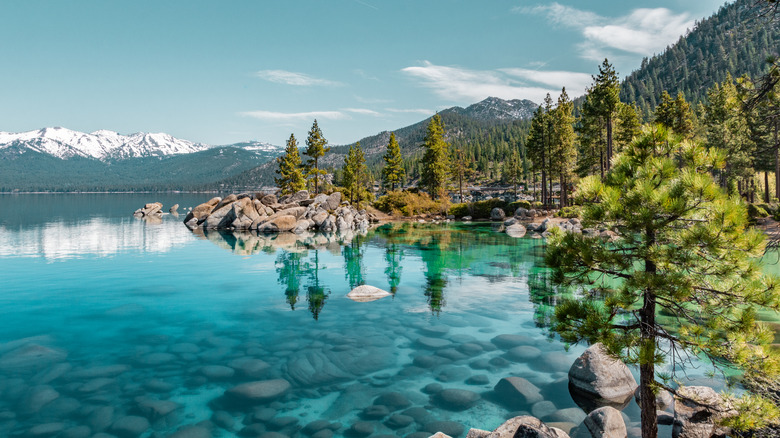
Though the two sides are quite different, one thing never changes: the water is stunning. Lake Tahoe is known for its crystal clear waters. And, interestingly, the future of those clean waters is dependent upon the fate of a single roadside motel. Lake Tahoe's famous blue water is a direct result of its environment. The region's clean atmosphere is a major factor, and the water also absorbs red, yellow, and orange light, which brings out its vivid blue sheen.
Some areas of the lake are so clear that objects can be spotted as far as 70 feet down below. However, the water is not as inviting as it looks — beyond 600 feet, the lake stays at a frigid temperature of 39 degrees Fahrenheit. Much of that water is the result of melted snow from the surrounding Sierra Nevada Mountains. Shallower areas are warmer, especially in the summer, and can heat up to 60 degrees Fahrenheit or more in certain spots. Still cool, but comfortable for those enjoying water sports in the hot sun.
Lake Tahoe is a year-round vacation destination
As we've mentioned, Lake Tahoe is huge. Surrounding it are mountain towns, resorts, and villages that attract visitors in every season. Of course, there's more to Lake Tahoe than the water. In fact, hidden in the mountains above Lake Tahoe is a breathtaking wilderness of granite peaks and glistening lakes.
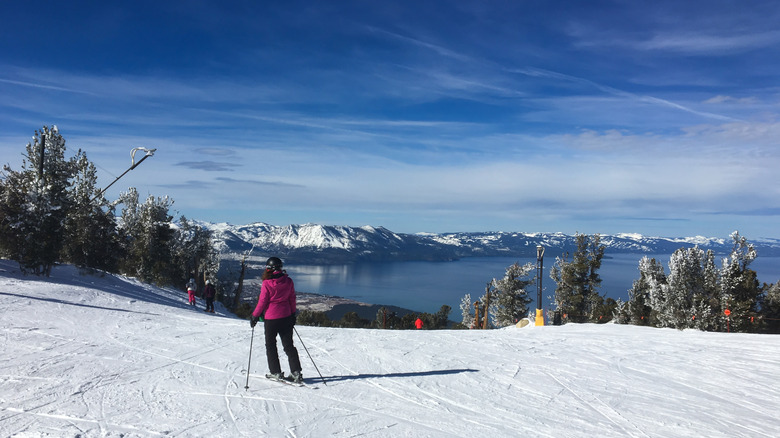
Summers attract water enthusiasts and hikers. Outdoor temperatures can climb to 80 degrees Fahrenheit in July and August, but many explorers will know that mountain weather tends to change quickly. Winters are a big draw for skiers and snowboarders as there are 15 ski resorts in the Lake Tahoe region. Conditions are typically best between January and March, and the weather is extraordinary for outdoor sports, with highs of 40 degrees Fahrenheit, consistent snowfall, and over 300 sunny days per year.
The closest airport to Lake Tahoe is the Reno-Tahoe International Airport (RNO), less than an hour's drive away. Express shuttles and buses offer seamless transportation from the airport, and those who prefer to drive will have multiple on-site rental car companies to choose from. Alternatively, Amtrak's California Zephyr Line makes daily stops at Truckee Amtrak Station, the nearest station to Lake Tahoe. From here, visitors will need a car, ride-share, or taxi, as public transportation is not available.